Tomorrow will mark not only the Armistice declared at the eleventh hour of the eleventh day of the eleventh month in 1918 (which ended four years of staggering loss and destruction inflicted by the First World War) but it also sets aside a day of honor to all of America’s veterans. President Coolidge, looking back in November 1928 over the first ten years following the return of peace, turned his attention to those who had left the safety of their homes and freedoms years before to risk all on the battlefields of Europe. He spoke, “Our first thought…is to acknowledge the obligation which the Nation owes to those who served in our forces afloat and ashore, which contributed the indispensable factor to the final victory. Although all our people became engaged in this conflict, some in furnishing money, some in producing food and clothing, some in making munitions, some in administering our Government, the place of honor will always be accorded to the men and women who wore the uniform of our country – the living and the dead.”
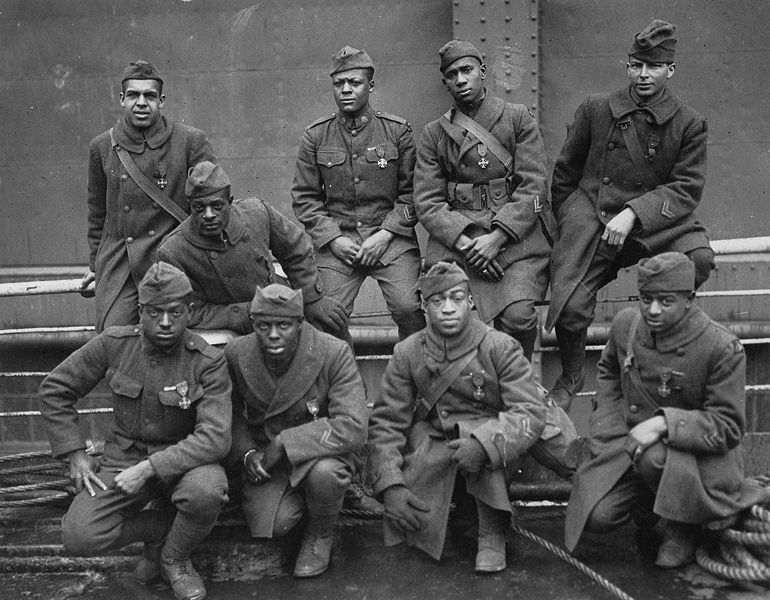
Members of the “Harlem Hellfighters,” 369th Infantry, 1919. As Coolidge said on that November day in 1926, “Our armies could not be said to partake of any distinct racial characteristic…but they were all Americans in the defense of our common interests…”

Members of the 35th Division, marching through the Vosges Forest, France, 1919. They were predominantly comprised of men from Missouri and Kansas, to whom Coolidge offered special recognition while dedicating the Liberty Memorial, 1926.
We are remiss if such honor is neglected in our generation but even more so if it is submissively suppressed and quietly denied. Such is not remaining true to our high estate as Americans. It is the epitome of ingratitude and injustice to condone the animosity some in our own land harbor against those who have worn the uniform. It was only natural that the first World War I memorial would be dedicated in November 1921, in the heartland itself, with Calvin Coolidge present. The people of Kansas City, Missouri, can proudly lay claim to this first in a nation of many exceptional firsts.

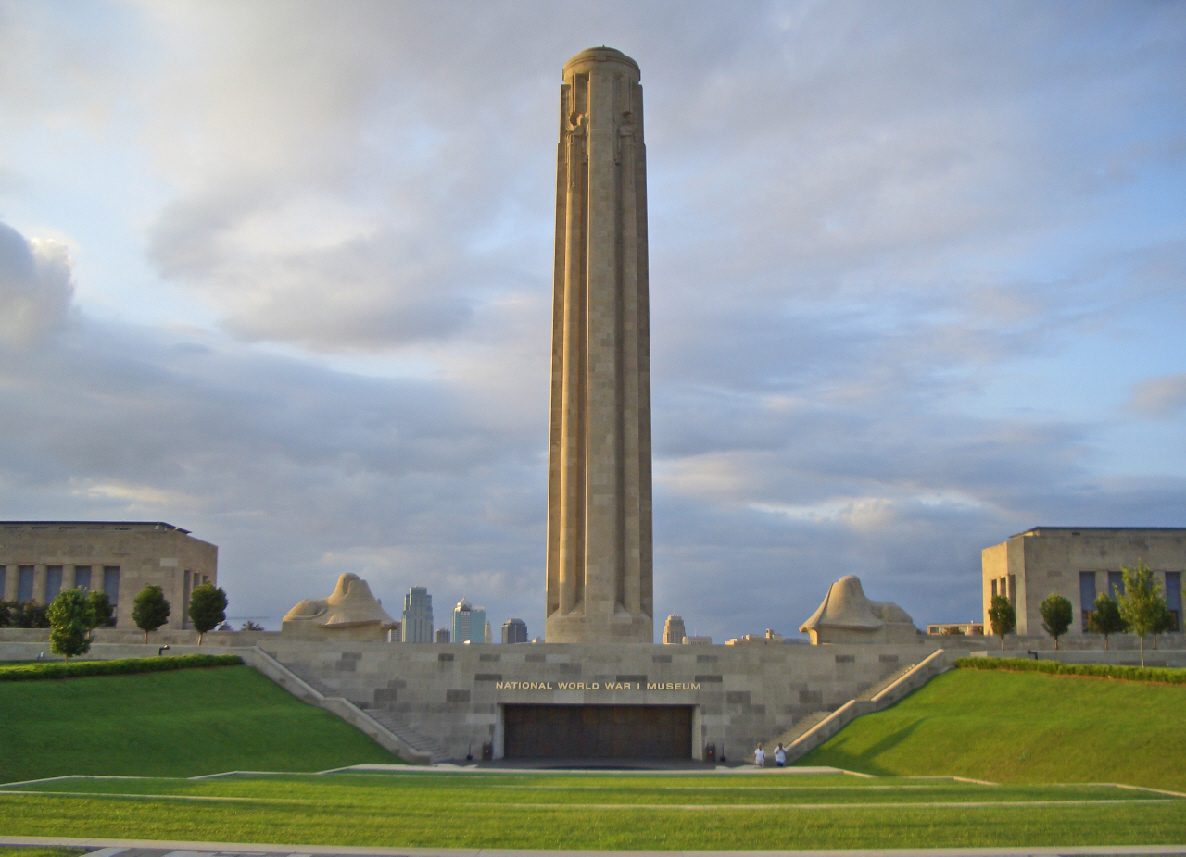
When the Liberty Memorial was completed five years later in 1926, President Coolidge went back to Kansas City to address the 150,000 persons gathered as millions more listened on the radio. Looking up at the 217 foot marker, the sight stirred him to say, “It is with a mingling of sentiments that we come to dedicate this memorial. Erected in memory of those who defended their homes and their freedom in the World War, it stands for service and all that service implies. Reverence for our dead, respect for our living, loyalty to our country, devotion to humanity, consecration to religion, all of these and much more is represented in this towering monument and its massive supports. It has not been raised to commemorate war and victory, but rather the results of war and victory, which are embodied in peace and liberty. In its impressive symbolism it pictures the story of that one increasing purpose declared by the poet [citing Tennyson] to mark all the forces of the past which finally converge in the spirit of America in order that our country as ‘the heir of all the ages, in the foremost files of time,’ may forever hold aloft the glowing hope of progress and peace to all humanity…”
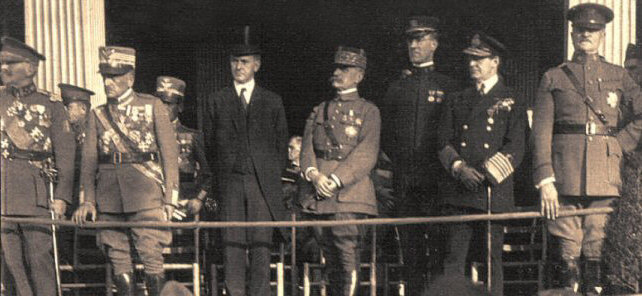
He would recall the august assembly five years before as he stood with General Pershing and those who led the armies of Europe, praising the ideals that prevailed in spite of that conflict’s effort to demolish them. The President continued, “Under no other flag are those who have served their country held in such high appreciation…Our admiration is boundless. It is no mere idle form; it is no shadow without reality, but a solid and substantial effort rising into the dignity of a sacrifice made by all the people that they might in some degree recognize and recompense those who have served in time of national peril. All veterans should know this and appreciate it, and they do. All citizens should know it and be proud of it, and they are.”
Coolidge, scanning not only the massive crowds gathered to observe the dedication on that day, but also looking ahead to what the future would bring, seemed to know such honor and service would not manifest automatically, it would demand renewed effort from later generations. He closed with a question, “If the American spirit fails, what hope has the world? In the hour of our triumph and power we can not escape the need for sober thought and consecrated action. These dead whom we here commemorate have placed their trust in us. Their living comrades have made their sacrifice in the belief that we would not fail. In the consciousness of that trust and that belief this memorial stands as our pledge to their faith, a holy testament that our country will continue to do its duty under the guidance of a Divine Providence.”


 The Importance of the Obvious