On Economy

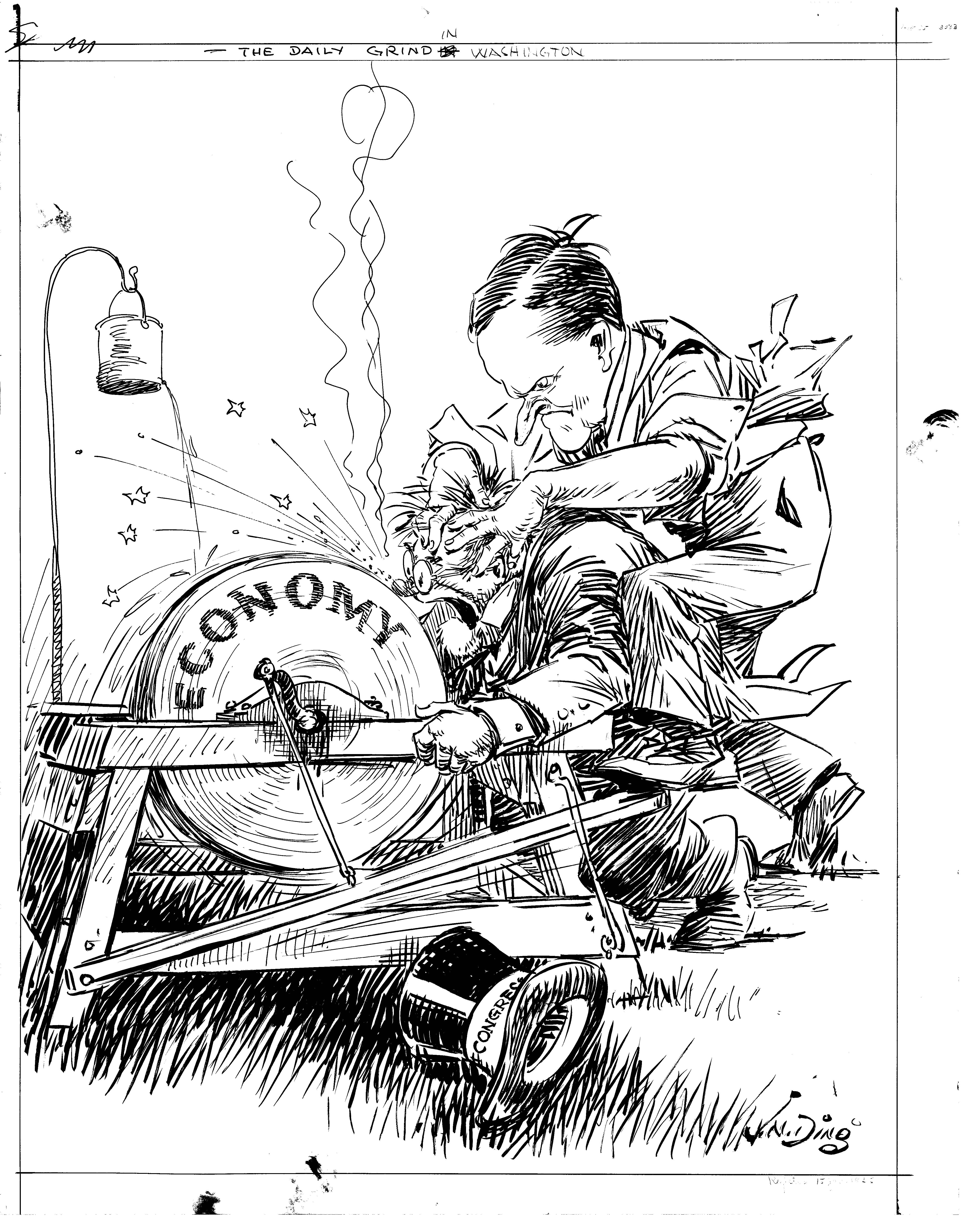
     Calvin Coolidge cherished the classics. He admired the wisdom of older thinkers and writers for what insights they discovered about human nature. He recognized that the old is not equivalent to the wise just as the younger and newer are not necessarily more enlightened or more modern. He distinguished between rediscovering and reapplying what is timeless from the blind emulation of the past. As Sheldon Stern has noted, he translated Cicero and Dante for relaxation. It was the practice of economy in public service that stood pronounced among the lessons he learned. As he knew, “economy” derived from the Greek compound oikonomos, which literally meant, “house law” (Bauer’s “A Greek-English Lexicon” p.559). To the Greeks, it referred to the management and direction of a household.

     Together with Coolidge’s profound sense of service, it was a call to lead by example. If he was to preside as the most powerful man in the world, it meant serious responsibilities were upon him. This meant requiring of himself the standards he expected in others. If he was to convince the Congress that government should economize, cutting wasteful expenditures and unnecessary costs, it would forfeit any credibility were he an extravagant spender on the White House staff. It meant the President would have to demonstrate it in his own “house.” This is why he constantly scrutinized the spending of the White House housekeeper, Mrs. Jaffray. It was wasteful to insist on shopping at specialty establishments when the cheaper grocery stores would save money. Why purchase more hams than could be eaten for the occasion? This is why President Coolidge commended his second, and more conscientious, housekeeper, “Ella” Riley for a “very fine improvement” bringing expenses down $2,550.71 in one year, just short of a 22% decrease. This is why President Coolidge prioritized his meetings with Budget Director General Herbert Lord above those with his own Cabinet and Congress. Their exacting work made possible tax refunds of $150 million in 1926 from budget surpluses of $378 million that year and $599 million in 1927. This is why President Coolidge maintained his original $32 a month, two-family residence in Northampton. He was not going to “live large” at the people’s expense. This is why President Coolidge was personally involved when it came to trimming grocery lists, cutting down ostentatious furnishings, and unnecessary costs, though it meant overturning tradition at times. Not even the seemingly inconsequential ribbon and paper used in official correspondence was spared in order to save tens of thousands of dollars each year.

     Coolidge, Lord and Mellon cut and then kept cutting wherever they could. Such was simply the demand of leading by example. The Congress, when faced with each year’s surplus (largely made possible by the trio’s thrift), would look for every possible device on which to spend it. Not so with Coolidge, as the manager of his “household.” The Presidency was not a chance to spend because it was there or waste because he could. That was not an example befitting the President. If he could not live within his “household” budget, he had no ground on which to demand such habits from Congress and thus no credibility as a responsible leader. If he abdicated this duty, the next expansion of government benefits would likely be assured but the cost would not be merely material. A deep moral debt would be created from which no tangible material could deliver. For Coolidge, the morality of saving people by saving money must start at “home.” Without example, words and intentions alone ring hollow.
            Image

On Entrepreneurs

Randall Stross, in his book “The Wizard of Menlo Park,” recounts a story widely circulated at the time about the drive of Edison, Ford, Firestone and Coolidge to the local factory during their visit in 1924 to Plymouth Notch:

      Something went wrong with the car and they stopped near a farmhouse. The farmer came over to the party and offered his help and at the same time started to lift the hood when Mr. Ford stopped him and said: ‘There’s nothing the matter with that engine: I’m Henry Ford and I know all about engines.’ The farmer then suggested the trouble might be in the battery and Mr. Edison spoke up and said: ‘No, I’m Thomas A. Edison and I know all about batteries. That one is all right.’ The farmer began to look incredulous but tried again by suggesting the tires needed air and offered to pump them up, but Mr. Firestone put in with, ‘No, I’m Harvey Firestone and I made those tires; they’re just right.’ The farmer exploded at this with, ‘Well, Ford, Edison, and Firestone, eh? I reckon that little runt in the back seat’s Calvin Coolidge?’ (pp.256-7).

While hardly flattering of Coolidge, who was taller than Ford and the same height as Edison, it does carry a humorous element of truth. It prompts the question regarding these inventive entrepreneurs, “where would we be today without these men?” Edison alone would produce 1,093 patentable inventions during his lifetime, twenty-one of which were completed during the Coolidge years alone. These included not only batteries and phonograph cabinets but also the development of his unique process for extracting rubber from plants. These men were not politicians. They had not the temperament for careers on the government payroll, holding secure office jobs with ample benefits packages. It was the freedom to create, experiment and innovate — to fail and to succeed — that made their contributions possible. They worked endless hours, invested their own money and demanded excellence in their results. They owed nothing to government grants or federal patronage for who they were or what they accomplished. They remained free men, inspirations of the rewards of hard work, perseverance and ingenuity. As Coolidge would reflect on them in May 1931, just five months before Edison’s death, “The experience, skill and wisdom necessary to guide business cannot be elected or appointed. It has to grow up naturally from the people. The process is long and fraught with human sacrifice, but it is the only one that can work. Edison and Ford are not government creations.” A higher compliment to an individual’s creativity and self-reliance could not be offered.

ImageImageImage

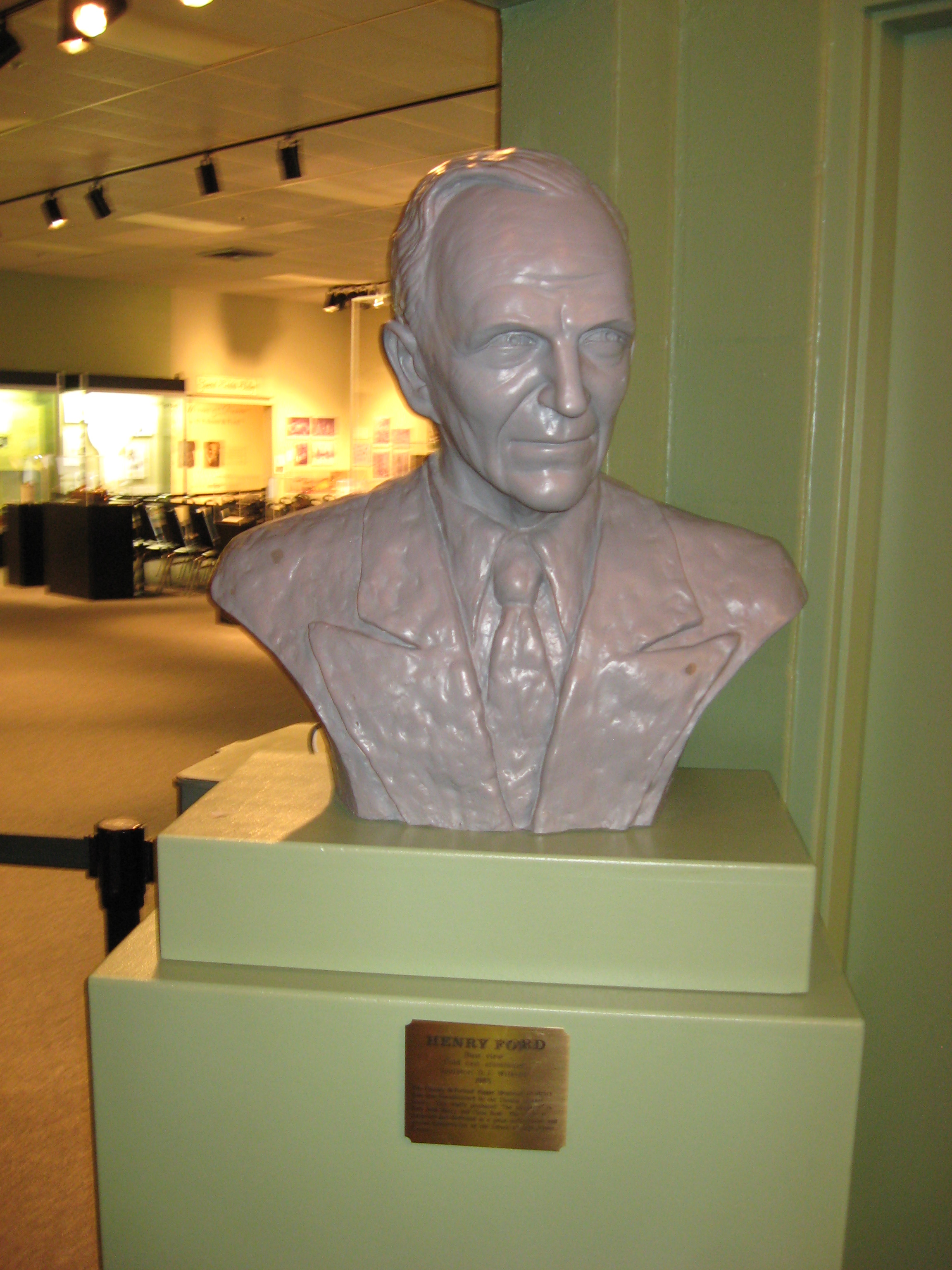
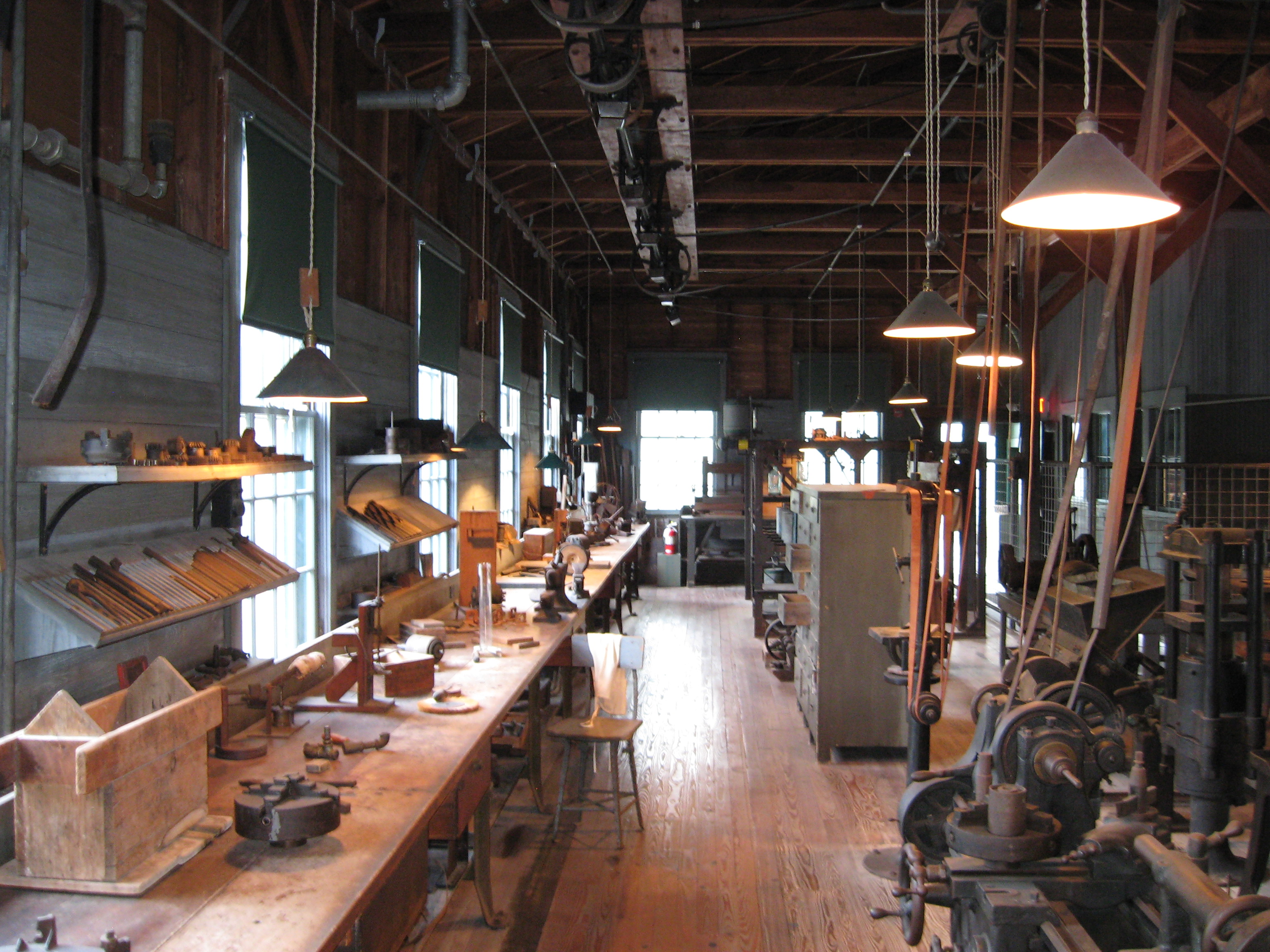
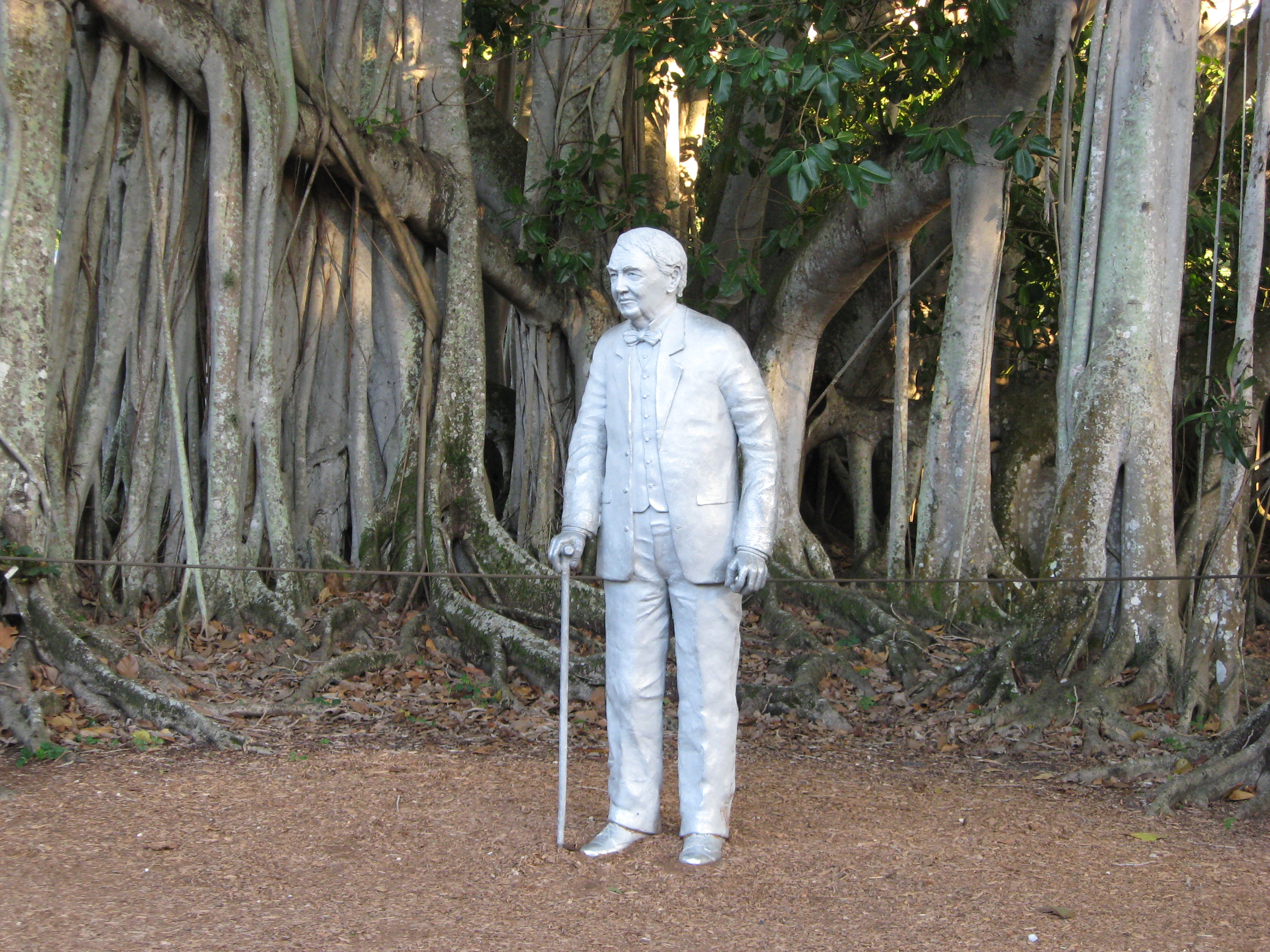
Edison in front of his banyan trees, across the way from his winter home; Ford bust in the Edison-Ford Estates Museum and Edison’s awesome laboratory, all in Fort Myers, Florida.

Annual Message to Congress, December 3, 1924

                  Image

President Coolidge’s first Annual Message to Congress delivered the previous year, December 6, 1923

President Coolidge would open his second Annual Message to Congress by assessing the pervasive destruction of unsound economics, declaring,

          The fallacy of the claim that the costs of government are borne by the rich and those who make a direct contribution to the National Treasury can not be too often exposed. No system has been devised, I do not think any system could be devised, under which any person living in this country could escape being affected by the cost of our government. It has a direct effect both upon the rate and the purchasing power of wages. It is felt in the price of those prime necessities of existence, food, clothing, fuel and shelter. It would appear to be elementary that the more the Government expends the more it must require every producer to contribute out of his production to the Public Treasury, and the less he will have for his own benefit. The continuing costs of public administration can be met in only one way — by the work of the people. The higher they become, the more the people must work for the Government. The less they are, the more the people can work for themselves.

To restore the proper ownership of what people earn was what drove Coolidge and Mellon to insist upon Congress cutting rates across the board, fighting to eliminate penalties like the estate tax and genuinely reducing expenditures (remember this was before baseline budgeting). While the Revenue Act of 1924 retained the tax on estates (to Coolidge’s disappointment), it would continue the decrease of rates from 58 to 46% at the top and down to 1.125% at the bottom. For Coolidge, tax and expenditure reduction was a moral obligation. Higher and higher rates bore inescapable costs on everyone. Though the Federal minimum wage would not arrive until 1933 ($0.25/hr), it (like all taxes on what is earned) only harm everyone, employer and employee, rich and poor alike, shackling the future to government spending habits. Higher rates, as they had become in Coolidge’s lifetime, were an avoidable source of division for what should be a United States. As President Coolidge knew all too well, feeding class warfare as the basis for tax policy would only spread suffering and prevent the return of economic health.