On Calvin Coolidge

CC photo

Though no eulogies were uttered for Calvin Coolidge officially, a massive outpouring of voluntary tributes spread across the country in the months following his death, funeral and burial. Just as Americans had spontaneously raised him to a Vice Presidential candidacy, so now they held services, wrote editorials and considered anew the substance of Coolidge’s leadership and legacy. Three such tributes are especially worth noting not only because these three were on the opposite side of Mr. Coolidge politically, but, having studied the culture for so long, were not speaking as novices but veterans of great influence around the nation.

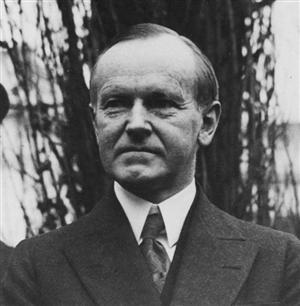
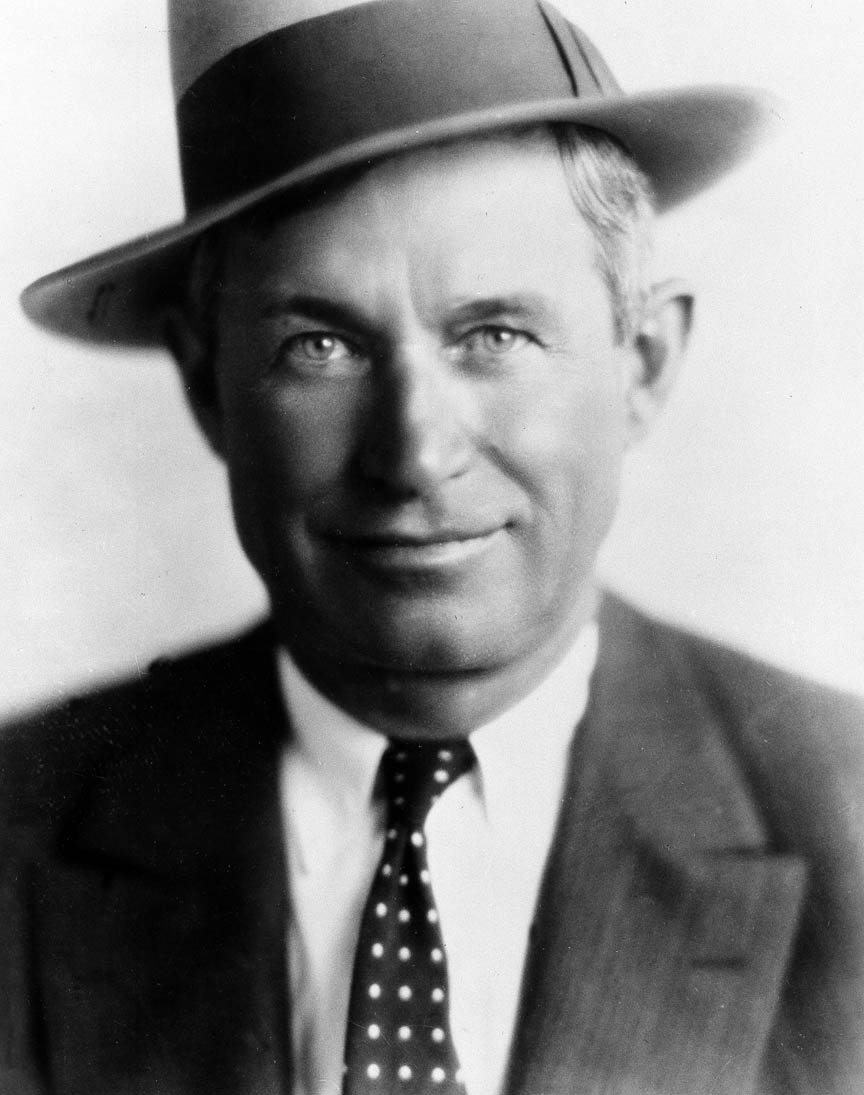
Comedian Will Rogers

Comedian Will Rogers

The first was comedian and columnist Will Rogers, who wrote on January 5,

“Mr. Coolidge, you didn’t have to die for me to throw flowers on your grave. I have told a million jokes about you but every one was based on some of your splendid qualities. You had a hold on the American people regardless of politics. They knew you were honest, economical and had a native common sense. History generally records a place for a man that is ahead of his time. But we that lived with you will always remember you because you was ‘with’ your times. By golly, you little red-headed New Englander, I liked you. You put horse sense into statesmanship and Mrs. Coolidge’s admiration for you is an American trait” (The Autobiography of Will Rogers, p.307).

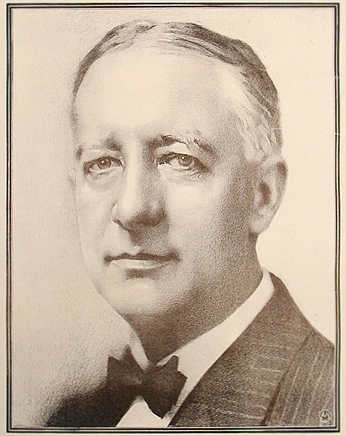
1928 Presidential candidate and Governor of New York, Al Smith

1928 Presidential candidate and Governor of New York, Al Smith

The second had been a presidential candidate, in fact, Al Smith had been nominated in 1928 to run against Coolidge’s successor, President Hoover. The “Happy Warrior,” Al Smith, had served with Coolidge on more than occasion in their retirement from public service. Mr. Smith offered one of the fairest assessments of Coolidge, all the more commendable given the fact that he was a loyal and life-long Democrat. He shatters the mistaken perception of Coolidge with something far more than another cliched attempt to speak kindly of the dead. Smith was offering a sincere and honest judgment,

“I had a great liking and respect for him. Beneath a chilly, reserved, and dignified exterior, he was keen, kindly and entirely free from conceit, pompousness, and political hokum. We are often told politics in a republic produced only demagogues. Calvin Coolidge was a most successful and popular politician, but he had nothing of the demagogue in him.”

Coolidge rightly belonged “in a class of presidents who were distinguished for character more than for heroic achievements. His great task was to restore the dignity and prestige of the presidency when it had reached the lowest ebb in our history, and to afford in a time of extravagance and waste, a shining public example of the simple and honest virtues which came down to him from his New England ancestors. These are no small achievements, and history will not forget them.

“Calvin Coolidge was a salty, original character, an unmistakable home-grown, native, American product, and his was one of those typically American careers, which begin on the sidewalks, or on the farm, and prove to the youth of the nation that this is still the land of unbounded opportunity” (cited by Robert Sobel in Coolidge: An American Enigma, pp.418-9).

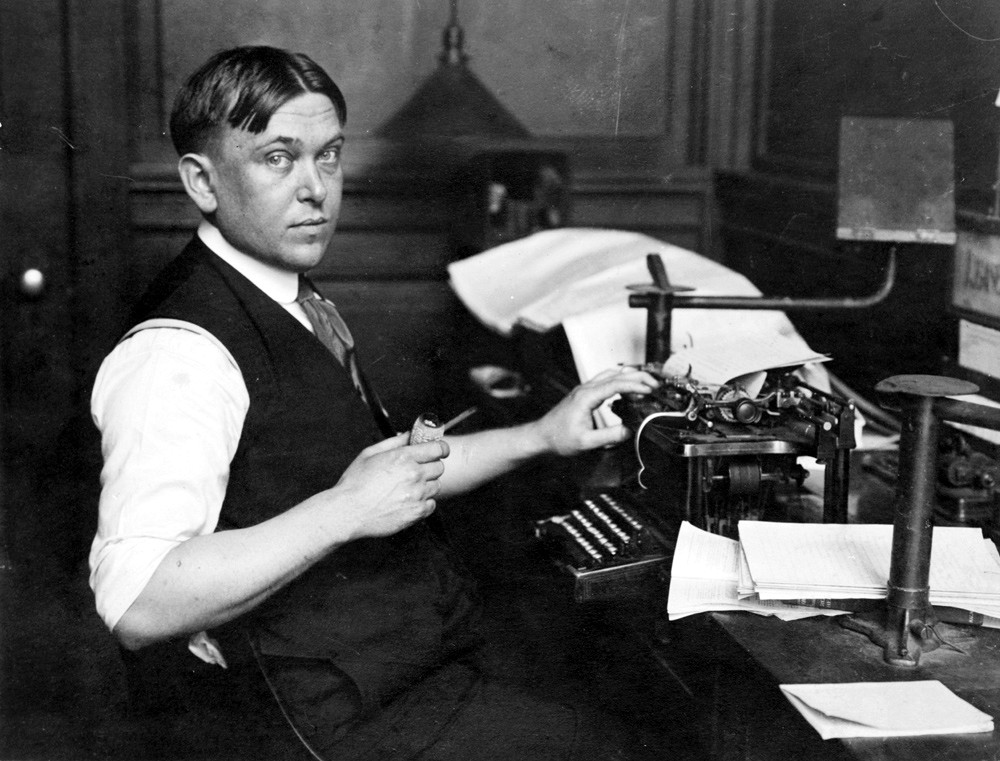
Journalist and critic Henry L. Mencken, the "Sage of Baltimore"

Journalist and critic Henry L. Mencken, the “Sage of Baltimore”

Finally, the third man was a critic and journalist, one who had cynically followed politics for years and who was not one to give praise to anybody, especially to the dead. Yet, of Coolidge’s legacy H. L. Mencken finally wrote, all the more timely given that F. D. R. was already a month into his New Deal program of legislation,

“We suffer most when the White House busts with ideas. With a World Saver preceding him (I count out Harding as a mere hallucination) and a Wonder Boy following him, he begins to seem, in retrospect, an extremely comfortable and even praiseworthy citizen. His failings are forgotten; the country remembers only the grateful fact that he let it alone. Well, there are worse epitaphs for a statesman. If the day ever comes when Jefferson’s warnings are heeded are last, and we reduce government to its simplest terms, it may very well happen that Cal’s bones now resting inconspicuously in the Vermont granite will come to be revered as those of a man who really did the nation some service” (H. L. Mencken, A Carnival of Buncombe, p.136).

Indeed, it may and not a moment too soon.

On Life and Death

headstone

Elaborate state funerals, even for former Presidents, have become familiar events to many of us. These afford a formal and dignified occasion to honor the office and the man who once exercised such great responsibility, once at the head of the most powerful nation in the world. The deaths of Presidents Nixon in 1994, Reagan in 2004 and Ford in 2006 remind us of what modern Presidential funerals consist, combining the wishes of the family with the ceremonial observances expected for those who were once Chief Executives. The Air Force One used by President Nixon during his terms of office was deployed to bring the body from New York to California, to rest at the Nixon Library after an elaborate funeral including every Presidents Ford through Clinton, numerous foreign heads of state and other dignitaries. The Capitol Rotunda, on the other hand, has seen the bodies of former Presidents Reagan and Ford lie in state for multiple days preceding formal services at Washington’s National Cathedral attended by countless officials, presented with numerous eulogies and interred from there in their respective homes, the former in California and the latter in Michigan.

These ornate affairs underscore the prestige and glory of the Presidency but they also disclose something more profound about the character and outlook of the person being honored. As Todd W. Van Beck observes, “Death and funerals are mirrors of life styles and life attitudes. The death and funeral of Calvin Coolidge is no exception.” Van Beck elaborates, “For Calvin Coolidge life was being competent, dependable, and devoted. His was a unique life, and in his death and funeral we observe a ritual which reflects Coolidge’s modesty and simplicity. In the funeral of Calvin Coolidge, one sees balance between fame and dignity. ‘Do something, but don’t overdo it,’ is the Coolidge philosophy which is finally and forever played out at his funeral. Calvin Coolidge was a quiet man, and his departure from this life was consistent with the quiet manner in which he lived” (“The Death and Funeral of Calvin Coolidge,” The Real Calvin Coolidge, Plymouth, VT: Coolidge Memorial Foundation, 1988, pp.12ff).

The day after Coolidge’s passing, three very distinct decisions were made clear to a nation ready to express its sympathies to the family of a beloved President:

1. The place of the service would remain close to home. There would be no service in either Washington or Boston, no overdone pomp and ceremony subjecting the family to the national scene once again. To the last, no expensive or ostentatious affair would be charged to the country by Calvin Coolidge, even in death. He would be remembered not in the grand halls of government buildings but in a very personal house of worship, the sanctuary of the Edwards Congregational Church. He had returned to life as a private citizen and it was a wholesome thing that he remain such now in death.

Crowds gathered outside Edwards Congregational Church to remember Calvin Coolidge, January 7, 1933 (Courtesy of the Northampton Historical Society)

Crowds gathered outside Edwards Congregational Church to remember Calvin Coolidge, January 7, 1933 (Courtesy of the Northampton Historical Society)

2. The timetable of the service would remain short. From beginning to end, the schedule of events was very limited. This is incredible considering the number of dignitaries, including President and Mrs. Hoover, Chief Justice Hughes, Mrs. Eleanor Roosevelt, Vice President Curtis, Cabinet members, Governors, diplomats and many others. The weather and the crowds were also present in abundance that day. The outpouring of support extended out the door, into the streets as hundreds of sympathetic Americans stood in the rain. The crowds were so large that the Northampton police department soon lost control and traffic stood still. Nonetheless, the entire funeral service would be over in twenty minutes. It would not be a drawn-out ordeal but adhered to Coolidge’s brevity and sense of proportion.

Viewing of Calvin Coolidge, Edwards Congregational Church, Northampton, MA, morning of January 7, 1933.

Viewing of Calvin Coolidge, Edwards Congregational Church, Northampton, MA, morning of January 7, 1933 (Courtesy of Corbis).

3. The manner of the service would remain simple yet dignified. The body had lain in state but only for a short time on Friday evening and for one hour on Saturday morning, the morning of the funeral. The doors opened for the hundreds gathered to see Mr. Coolidge for the last time would be promptly closed after sixty minutes by 9:30AM. Dressed impeccably as in life, Coolidge’s body had been placed in a solid bronze casket handsomely crafted by the Boston Burial Case Company. At 9:45 the casket was closed and sealed, the floral arrangements surrounding the body put in order and everything prepared for the service which began at 10:40AM. Mrs. Coolidge, John and Florence arrived at a side entrance at 10:25, taking their seats at the front. Throughout, the Coolidges never demonstrated anything but perfect composure and dignified reserve.  Delayed slightly by the rain and crowds, the service began with Police Chief Bresnahan leading five of his officers into the building carrying the casket. The men solemnly conveyed the body of their distinguished townsman past the eleven honorary pall bearers standing in two ranks as the casket passed. The eleven were not famous in the conventional sense, but their greatness rested in their humble service to others, another trademark of Coolidge’s character and the quality of his friends. They were: Frank W. Stearns, Boston merchant; William F. Whiting, paper manufacturer of Holyoke; Clifford H. Lyman, Northampton merchant; Walter L. Stevens, Northampton attorney; Ralph W. Hemenway, Coolidge’s long-time law partner; William M. Butler, Coolidge’s 1924 campaign manager; R. B. Hills of Northampton; Homer C. Bliss, Mayor of Northampton; Charles F. Andrews, Treasurer of Amherst College; and Robert H. Trumbull, former Governor of Connecticut. It had been made clear there would be no eulogies. The occasion was not a time to multiply words of extended oratory. The service, directed by Reverend Albert Penner, would be much simpler. It would consist of music, including the hymn “Lead Kindly Light” and “O Love That Wilt Not Let Me Go” sung by the Edwards Quartet, prayers led by Reverend Penner and the reading of Scripture, including Psalms 46, 121, Romans 8, 2 Corinthians 5 and fittingly from Mr. Coolidge’s favorite book, the Gospel of John, chapter 14.
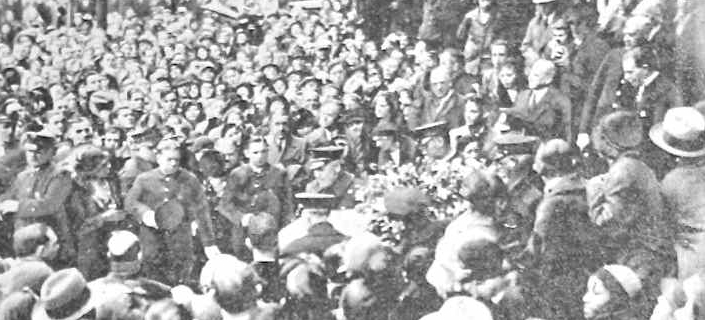
Northampton police try to keep the crowds clear of the procession outside Edwards Congregational Church, January 7, 1933

Northampton police try to keep the crowds clear of those bearing the casket outside Edwards Congregational Church, January 7, 1933

The Coolidge family was escorted out and those who had gathered gradually dispersed. After a brief pause at The Beeches, the funeral procession made the three and a half-hour journey to Plymouth Notch for the second and even simpler service at the gravesite. President Hoover wanted to also attend the gravesite service but Mrs. Coolidge persuaded him to return to Washington. By early afternoon the rain had turned to hail with ice and snow already carpeting the ground surrounding where Azro Johnson had dug the final resting place of Calvin Coolidge the day before.

Arriving around 4:30PM, as the last moments of light remained in the day, six U.S. Deputy Marshals carried the casket to the grave, placing it gently on the lowering device. Arrangements were quickly made and a canopy was erected to shield the family and the site from the elements. Another faithful friend of the family met the procession there, Willard D. Cabot, a Woodstock funeral director, who had helped bury not only the President’s father in 1926 but also his son, Calvin Jr., in 1924.

Children standing respectfully beside the grave of Calvin Coolidge, Plymouth Notch. Notice there is not yet a stone in place.

Children standing respectfully beside the grave of Calvin Coolidge, Plymouth Notch. Notice there is not yet a headstone in place.

Visitors to the gravesite, January 8, 1933 (Courtesy of Corbis)

Visitors to the gravesite, January 8, 1933 (Courtesy of Corbis)

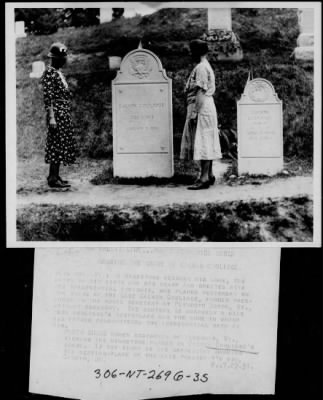
Women of Plymouth beside the newly placed headstone for Coolidge's grave. It is simply marked with the Presidential seal, his name with birth and death dates. Adrian Malloy, who had crafted the stone for their son, Calvin Jr., offered the same service to Mrs. Coolidge in honor of her husband, placing it for the Coolidge family on July 27, 1933.

Women of Plymouth beside the newly placed headstone for Coolidge’s grave, July 29, 1933. It is simply marked with the Presidential seal, his name with birth and death dates. Adrian Malloy, who had crafted the stone for their son, Calvin Jr., offered the same service to Mrs. Coolidge in honor of her husband, placing it here for the Coolidge family on July 27, 1933.

Given the sign to begin, Reverend Penner committed Coolidge’s body to burial and then read a Robert Richardson poem selected by Mrs. Coolidge,

“Warm summer sun, Shine kindly here.

“Warm southern wind, Blow softly here.

“Green sod above, Lie Light, lie light.

“Good night dear heart, Good night, good night.”

The Benediction was read and the service concluded. Florence Coolidge stepped forward to place a single red rose on her father-in-law’s casket (Van Beck p.24). It took less than five minutes but the growing number of those in attendance stood in respectful silence for some time. The playing of taps reminded everyone that a Commander-in-Chief was being remembered that day. As everyone departed from that solemn scene, most for the one hundred miles back to Northampton, Willard Cabot, Azro Johnson and a number of Coolidge’s Plymouth neighbors lowered their dear friend’s body into the earth and filled in the place where he would rest. It was a place beside his son and among five generations of his ancestors on the hillsides he loved so deeply.

The Coolidge family headstones stand in a row at the center of the picture, Plymouth cemetery, The Notch. "Here my dead lie pillowed on the loving breast of our everlasting hills" -- Calvin Coolidge

The Coolidge family headstones stand in a row at the center of the picture, Plymouth cemetery, The Notch. In order from L to R: John and Florence, Grace, Calvin and the smallest stone marks where Calvin Jr. rests. “Here my dead lie pillowed on the loving breast of our everlasting hills” — Calvin Coolidge
On his Last Day, January 5, 1933

Massachusetts State House, flags lowered at half-mast in honor of the late former President Coolidge, January 1933

Massachusetts State House, flags lowered at half-mast in honor of the late former President Coolidge, January 1933

The morning of Thursday, January 5, 1933 dawned like any other weekday. The former President was up by 7AM, as was his custom. He dressed without shaving and went down the stairs of his home, The Beeches, to enjoy a breakfast with Mrs. Coolidge by 8AM. Coolidge went downtown to the old law office to check the mail, answer correspondence, read the newspapers, and take care of any other work that needed attention. However, by 10AM, Mr. Coolidge was no longer feeling well, remarked that he was turning into an old man and might even work out of his office at The Beeches from now on. Wishing to head back home. Coolidge was driven back by his chauffeur, John Bukoski, whom Coolidge affectionately nicknamed “Johnny jump-up,” for his enthusiastic and always helpful manner. Walking back in the door at the house, Coolidge found Grace preparing to go shopping downtown. “Don’t you want to take the car?” he asked. “No, it’s such a nice day I’d rather walk than ride.”

Mr. Coolidge went up to the library after his wife’s departure. There was one of his favorite recreations sitting on the table, a jigsaw puzzle, this one of George Washington. It was his habit never to start a puzzle but to place a few pieces as he went about his day. Mr. Coolidge worked on it a short time and then talked with Harry Ross, the former President’s private secretary, about the homestead in Plymouth. Ross began to notice that Coolidge was not well and even appeared to be uncharacteristically restless. Mr. Coolidge had certainly lost weight and energy throughout much of the winter of 1932, but he seemed to be fighting through it.

Coolidge went back downstairs to get a glass of water in the kitchen. He went to the basement and spoke briefly with the hired man as he shoveled some coal into the furnace. It seems the house was starting to feel colder as mid-day approached. Then, Mr. Coolidge remembered he had not shaved and he better do so before Grace returned for lunch. He ascended the stairs once more and, as was his practice, rolled his sleeves and prepared the old-fashioned straight razor, brush, and mug he used. Having prepared the soap and water, he looked into the mirror and it was there that death quietly took him.

While she had been out, Mrs. Coolidge realized she did not have a black dress in her wardrobe. Something persuaded her that it would be a wise investment. She returned home around 12:45PM, more than twenty minutes after her husband had gone upstairs, and she then set her things down. She discovered Mr. Coolidge on his back laying as if asleep on the floor upstairs. Harry Ross was the next to learn what happened, as Grace called down to him, “My husband is dead.”

The doctor, E. W. Brown, was called and he determined the time of death to be 12:25PM, the cause a coronary thrombosis due to chronic heart failure. Doctor Brown concluded that the President had not been dead more than fifteen minutes by the time Grace found him. Secretary Ross next called John and Florence in Connecticut and word quickly spread from there across the nation. President Hoover established thirty days of mourning for the former President. Coolidge’s body was embalmed and respectfully placed in his own bed during the night of January 5th.

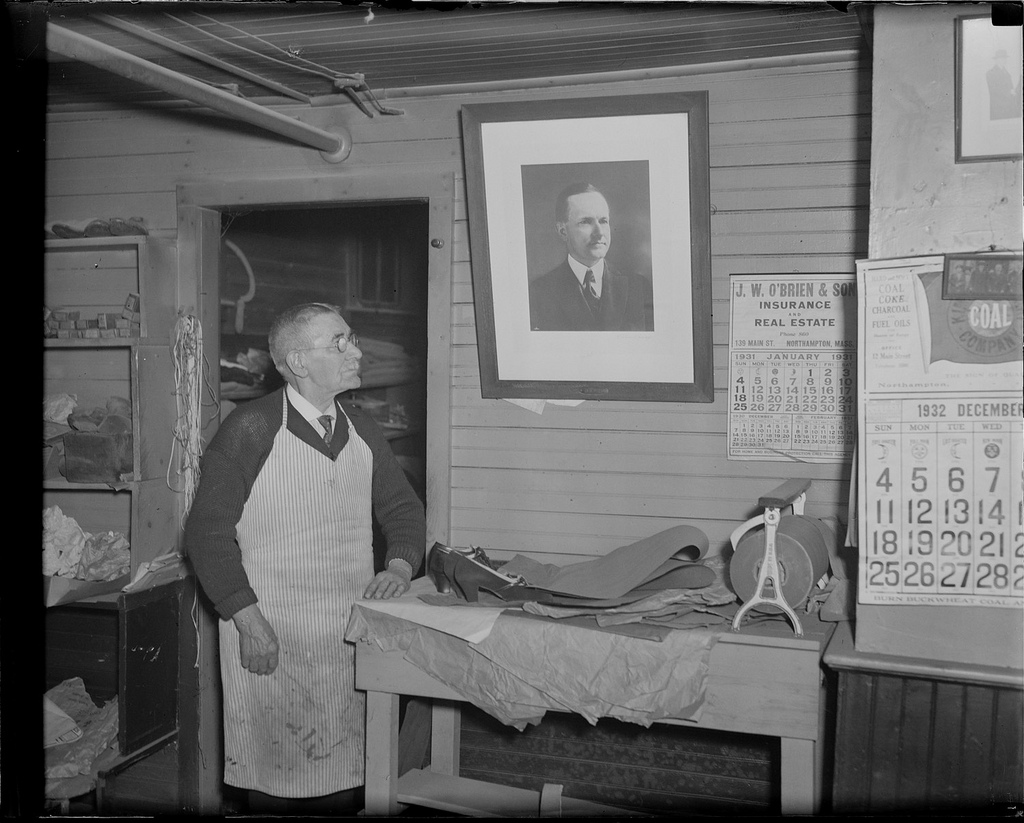
Coolidge’s old friend, James Lucey, upon hearing of the younger man’s death, broke down, “I’m sorry. I’m sorry. He was the best friend I ever had. I’ve known him ever since November of the first year he went to Amherst College. My sympathy goes out to Mrs. Coolidge and their son, John.”

Shoemaker James Lucey in his Northampton shop, January 7, 1933

Shoemaker James Lucey in his Northampton shop, January 7, 1933

That evening via a National Broadcasting Company radio hookup, long-time family friend and respected journalist Bruce Barton spoke,

“It happens that I wrote the first magazine article ever published about Calvin Coolidge. It was in Collier’s. Dwight Morrow suggested it. ‘Don’t you think we ought to begin to get some publicity for our fellow Amherst man who is Governor up in Massachusetts?’ he asked me.

“So I went up to Boston, and Frank Stearns telephoned to the State House, and I had one of the great surprises of my life. This man Coolidge, whom I had heard described as cold and repressed and taciturn, proved that he could be very gracious. He talked intelligently. He had humor. He was very easy to interview. I remember that he pulled out of his desk an old yellow pamphlet. It was the record of a law passed by the Selectmen of Belchertown, Mass., after the Revolutionary War, fixing the prices which the farmers would be allowed to charge for their produce in the Belchertown market.

“Mr. Coolidge said, ‘Isn’t it strange how, in every period of economic disturbance, people have the idea that you can pass a law and fix everything?’ I thought to myself: Here is something new. Here is a politician who has read some history. He knows that some things have been tried and won’t work. A few minutes later I said: ‘Governor, how it is that you have been able to stay in public life all these years and hold office when you have no money?’ His answer was in just two words: ‘I’m solvent.’

“He took care to keep solvent. He never lost his head. He never let anything change him. As Lieutenant Governor he had been living in one room in the old Adams House, for which he paid a dollar a day. When he was elected Governor, Frank Stearns said to him: ‘Now you must rent a house and bring Mrs. Coolidge down from Northampton. The Governor must not live in a room in an hotel. He must have a home where he can entertain.’

“Mr. Coolidge said nothing, but when he was inaugurated as Governor he stopped living in one room in the Adams House at a dollar day; he took two rooms in the Adams at two dollars a day.

“When I came back to New York after that first interview Mr. Morrow sent for me and, taking me into his private office, he shut the door, and said: ‘Now, Bruce, tell me. How big a man is he anyway? I have known him for nearly thirty years, and I can’t make up my mind.’ He added, almost wistfully: ‘You know, I have seen them all now. And none of them look very big to me any more.’

“From that day until the hour of his death Dwight Morrow’s opinion of Calvin Coolidge mounted steadily. He saw him rise to one situation after another. He had a steadily higher estimate of his judgment, his courage and his solid common sense. Coolidge did not wear his heart on his sleeve, but Morrow’s death hurt him more deeply than anything that had happened since the death of his boy. It left a permanent scar. The two men, so different in personality and experience, were very close in spirit. When Mr. Morrow passed Mr. Coolidge mourned. Perhaps he knew even then that the sentence of Fate had been passed upon him. Certainly the loss of Mr. Morrow must have helped to hasten his own end.

“You have heard many people say many different things about this man who now lies dead in his Northampton home. I shall say something about him that I doubt you have ever heard any man say. I loved him. Morrow loved him. There was a very lovable side to Calvin Coolidge. He was unique. God broke the pattern when he was formed. There never has been any one like him in the White House. There never can be. The nation will remember his personality and his dry humor long after it has forgotten most of the events of his administration. And to some of us those memories will bring a pang of loneliness.”

Coolidges in Cambridge