On Aviation

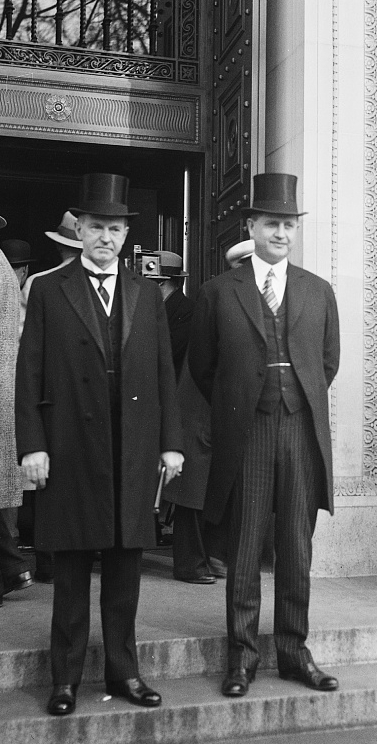
President Coolidge with Secretary Everett Sanders at the International Civil Aeronautics Conference, December 12, 1928.

President Coolidge with Secretary Everett Sanders at the International Civil Aeronautics Conference, December 12, 1928.

Appearing on the opening day of the International Civil Aeronautics Conference on December 12, 1928, President Coolidge marked the first quarter of a century for aviation. So much had been accomplished that seemed absolutely unattainable, except in myth and fable, for all of human existence. That first 12 second flight of a heavier-than-air machine accomplished by Wilbur and Orville Wright on the beaches of Kitty Hawk, North Carolina, opened a world of what was now possible. It would never have happened and certainly never have flourished had not visionary men and women worked to achieve it, perfect it and preserve private ingenuity as the moving force of its future development.

Without President Coolidge’s decisive role in shaping air policy, a strong case could be made that there would have been no private or commercial aviation. It could have remained exclusively under the control of a military establishment. Certainly a civil aeronautics conference would not have occurred. It was through his well-timed deployment of the Morrow Board, his encouragement of the commercial and national defense potential of air technology along independent lines, and his superlative political skill in shepherding and signing the Air Commerce Act in May 1926 brought order out of the chaos in coordinating aviation while keeping the doors of opportunity open to private innovation (Komons, Bonfires to Beacons, p.88). As had been accomplished with the Radio Act of 1927, President Coolidge left a distinct imprint not only on the early development of modern communications but also on the success of air travel.

President Coolidge, speaking to the 441 aviators, inventors, and delegates present (including Orville Wright and Charles Lindbergh), began:

“Members of the Conference:

“This year will mark the first quarter century of the history of human flight. It has been a period of such great importance in scientific development that it seems fitting to celebrate it with appropriate form and ceremony. For that purpose this conference has been called, and to the consideration of the past record and future progress of the science of aeronautics, in behalf of the Government and people of the United States, I bid you welcome.

The first flight at Kitty Hawk by the Wright brothers, December 1903.

The first flight at Kitty Hawk by the Wright brothers, December 1903.

“Twenty-five years ago, at Kitty Hawk, North Carolina, occurred an event of tremendous significance. It was the first extended flight ever made by man in a power-driven heavier-than-air machine. How more appropriately could we celebrate this important anniversary than by gathering together to consider the strides made throughout the world in the science and practice of civil aeronautics since that day, and to discuss ways and means of further developing it for the benefit of mankind?

“Others, whose names will long be remembered, had done much to solve the problem, but it remained for the able, persistent, and modest brothers from Dayton to demonstrate completely the possibility of a machine raising itself by its own power and carrying a man in sustained flight.

“Human flight with wings, which had intrigued the imagination since the beginning of time, became a practical reality on the day that the airplane of Wilbur and Orville Wright rose from the windswept dunes of the Atlantic coast. The elder brother lives with us only in memory, but Orville Wright, who piloted that first plane, is still actively interested in that science. We are glad to have him as one of our delegates to this conference.
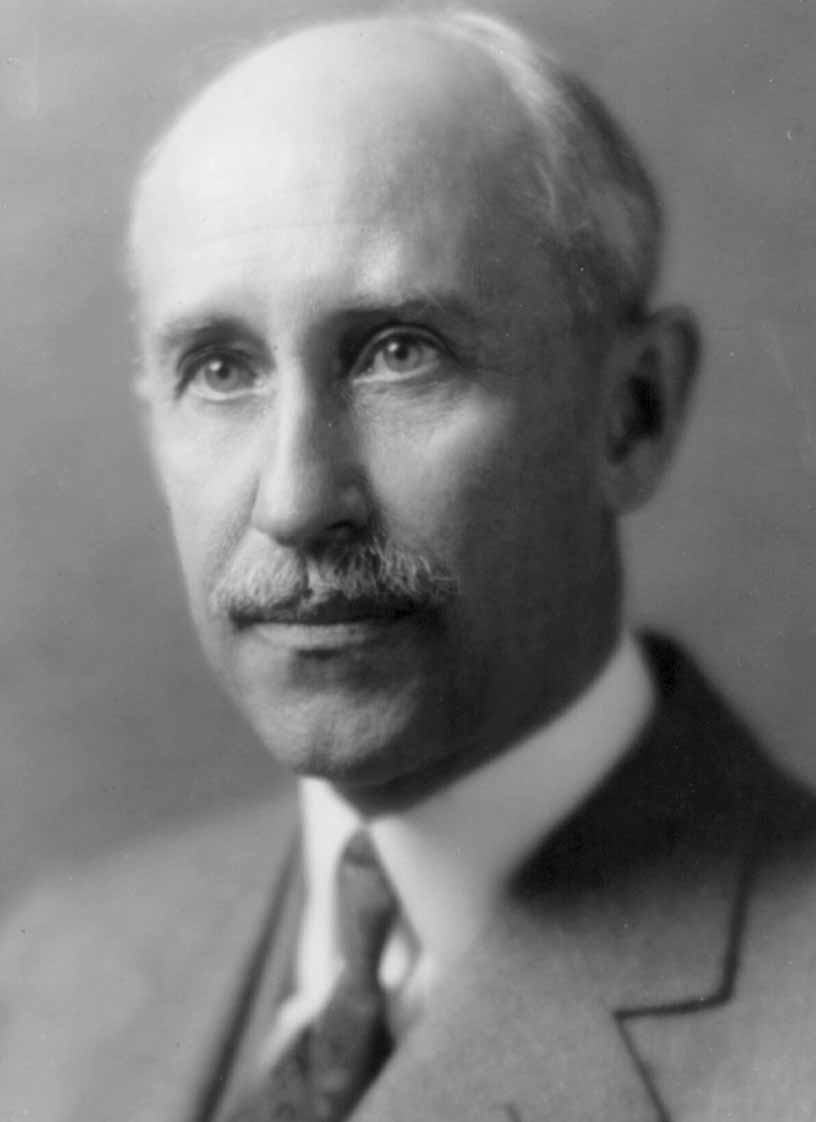
Orville Wright in 1928, at the time of the Conference.

Orville Wright in 1928, at the time of the Conference.

“No achievement of man in the progress of civilization has had a more rapid expansion…Even within our memory utter impossibility was expressed by saying: ‘Might as well try to fly’…

“With genius, indomitable perseverance, and a will to overcome obstacles, the Wrights, mindful of what had gone before, applied themselves to the solution of the problem. They experimented at Kitty Hawk for three seasons; and in the fourth, on December 17, 1903, success crowned their efforts…That first flight lasted only 12 seconds. Three more were made the same day. One of 59 seconds carried the plane a distance of 852 feet. It was wrecked by the wind and tests ended for the time. Further experiments were made in Dayton in 1904 and 1905. In the latter year a Wright plane traveled for 24 miles at the rate of 38 miles an hour. Three years later one was bought by the War Department, our Government being the first to utilize this new device.

“Other countries took up the idea and for a period rather outstripped us in flying…It is to the development of aeronautics as an aid to the peaceful pursuits of transportation, of commerce, and of trade that this conference is to direct its attention…In 1926 this Government officially recognized the importance of flying by establishing the post of Assistant Secretary for Aeronautics in each of the War, the Navy, and the Commerce Departments. Since then we have made remarkable progress. Then the value of the aeronautic industry in the United States was placed at less than $5,000,000. Today it is said to be in excess of $150,000,000. In 1925 the production of aircraft was valued at about $13,000,000; for 1928 the estimate is over $50,000,000…

“Regular flying in the United States, beginning with a short mail line, has increased until this year there are approximately 15,500 miles of airways…The daily mileage is estimated at 52,000 miles. We have three important national lines–New York to Montreal, Seattle to Vancouver, and Miami to Havana. Plans to extend the latter to the Isthmus and South America are under way…The airplane is used for fast day travel, with a transfer to a railroad for the night journey…

“The twentieth century will be known for the development of aeronautics and air transport. The airways of the world now have a greater mileage than the railways did in 1850, the twenty-fifth anniversary of the opening of the first railroad built by Stephenson…

“The country-wide tour of Lindbergh in the United States, following his wonderful and spectacular flight to Paris, did much to make Americans air-minded. A large amount of civil flying is now being done here, and the civilian-owned aircraft number over 6,000…

Charles Lindbergh receives the Harmon Trophy, the annual award for air aces, at the Conference. Beside him, to his left, stands Orville Wright.

Charles Lindbergh receives the Harmon Trophy, the annual award for air aces, at the Conference. Beside him, to his left, stands Orville Wright.

“Air transport means much to the United States, divided as it is in the West by lofty mountain ranges and deserts. In the early days it took six months to go from Missouri to the Pacific coast. An airplane traveled across the continent in less than 24 hours. We are stretching out our arms through the air to Canada and to our other friends and neighbors in the South.

“All nations are looking forward to the day of extensive, regular, and reasonably safe intercontinental and interoceanic transportation by airplane and airship. What the future holds out even the imagination may be inadequate to grasp. We may be sure, however, that the perfection and extension of air transport throughout the world will be of the utmost significance to civilization. While the primary aim of this industry is and will be commercial and economic and the prosperity of the world will be immeasurably advanced by it, indirectly, but no less surely, will the nations be drawn more closely together in bonds of amity and understanding.”
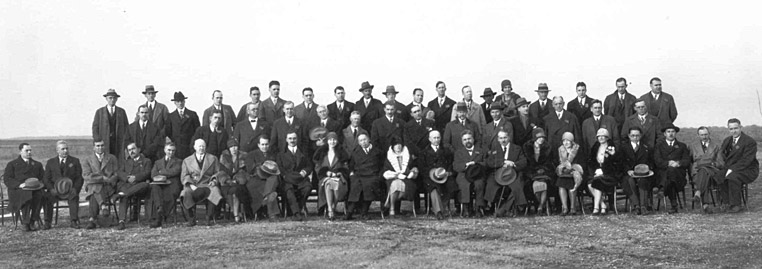
Delegates pose for a group photograph on December 15th, at Langley Memorial Aeronautical Laboratory. Orville Wright is seated in the front row to the right of the woman with the white fur collar.

Delegates pose for a group photograph on December 15th, at Langley Memorial Aeronautical Laboratory. Orville Wright is seated in the front row to the right of the woman with the white fur collar.

The delegates of the Conference made the journey on December 17, 1928, to the site where it all began, Kitty Hawk, North Carolina.
The delegates of the Conference made the journey on December 17, 1928, to the site where it all began, Kitty Hawk, North Carolina.

“Born on the Fourth of July” by Sidney M. Milkis

“Born on the Fourth of July” by Sidney M. Milkis

The latest review of both Amity Shlaes’ Coolidge and Charles C. Johnson’s Why Coolidge Matters adds a welcome take to a renewed conversation of Calvin Coolidge. Mr. Milkis, well-known author and professor with the Miller Center of Public Affairs at the University of Virginia, has much to offer when it comes to the Progressive Era, the period generally classified from 1900 to 1929. In his critique of both books, Mr. Milkis presents the Coolidge neither author may envision but one that resembles the man described by David Greenberg, whose Calvin Coolidge, published in 2006, accepted too many of the assumptions handed down by Art Schlesinger and the New Deal gang. Greenberg unfortunately dug himself into a deeper hole with his 2011 piece further ridiculing Coolidge’s “naive faith in the gospel of productivity” as if Big Government has proven once and for all to be a reliable and permanent fixture of American life.

Mr. Milkis contributes a worthy opinion in the ongoing and overdue discussion about our thirtieth president. However, it is equally as important not to reinforce the same, old misrepresentations of what has, for far too long, been the accepted narrative regarding “Silenced Cal.” The fact that Ms. Shlaes and Mr. Johnson are questioning that narrative with meticulous research is not “revisionist” as much as it is a return to the rigorous standards of scholarship restored by Thomas Silver, popularized by Ronald Reagan, and now being revitalized by, among others, the authors Mr. Milkis has reviewed.

Mr. Greenberg and those who preceded him in defense of the New Deal have more to lose by seeing Coolidge’s principles reintroduced and expounded through the heavy lifting done by those he perceives to be on “the Right,” than they do repeating the tired shibboleth of his naivete and failure. Americans all can appreciate Coolidge not because he identified with this or that “political side” but because the principles he embodied were thoroughly and unabashedly true to the foundations of our exceptional system, declared, constituted and reaffirmed by our ancestors. As Coolidge expressed it on another occasion, “Whether one traces his Americanism back three centuries…or three years…is not half so important as whether his Americanism of to-day is real and genuine. No matter by what various crafts we came here, we are all now in the same boat.” His appeal to eternal truths of human nature and political experience should form ground on which we can all Americans can again be a united and prosperous people.

On the Kennedy Connection

Image

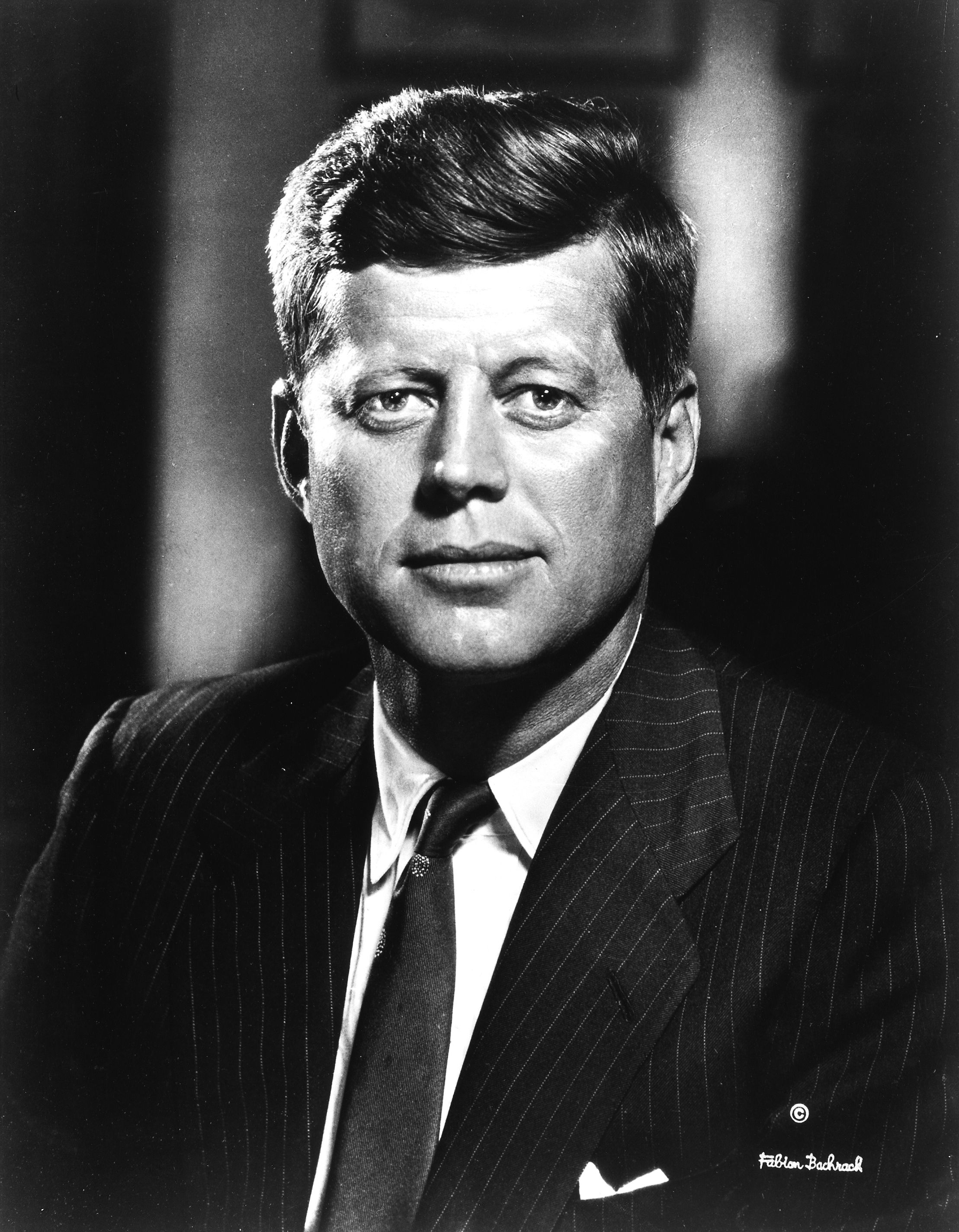
While yesterday marked the remembrance of President Kennedy’s tragic assassination by Communist Lee Harvey Oswald, it is usually not remembered what brought the President to Dallas fifty years ago. Set to address the Dallas Citizen’s Council at the Trade Mart that day, President Kennedy was not only there to bolster flagging national support for reelection — hardly certain that he would even be renominated — but he was also there to gain support for a stronger national defense and an $11 billion permanent, across-the-board tax cut. The tax cut had passed the House two months before and needed to survive the Senate. He had prepared the ground for this sharp cut since his election — taking top rates from 91% to 65% and bottom rates all the way down to 14% from 20%, also cutting corporate rates to 19.5% from 25%. It was not to be a temporary measure helping a few, it was to be permanent, helping Americans in every bracket.

Even more importantly, we need a return to the remembrance of JFK as he was instead of how modern revisionists, starting with the late Mrs. Kennedy, wish him to be. One cannot fault the widow’s grief for the loss of her husband, but, as Piereson observes, one cannot rationally join her and the chorus of voices since who have blamed America for killing the President (Camelot and the Cultural Revolution p.59, 178). They have blamed America first for every societal ill ever since.

Shortly after his death, it was she who lamented, “He didn’t even have the satisfaction of being killed for civil rights…It had to be some silly little communist. It even robs his death of any meaning.” His life had meaning but that meaning did not conform to the higher demands of an agenda already at work to recast history. In that pursuit of an alternative meaning, the modern Left could not bring itself to accept that the ideology they had courted for thirty some years had produced this heinous act. Consequently, the radical Left turned to the only conclusion consistent with their refusal to see communism for what it was — in JFK’s publicly announced conviction, a “Godless tyranny” and “evil” system (Stoll, JFK, Conservative p.64-6). America had to be the problem, they shouted. Thus began a narrative creating “Camelot,” publishing Mark Lane’s conspiratorial theories and now equating 1960s Dallas with the “angry” Tea Party movement of today. It is a fifty-year drum-beat that shrouds the truth, denying what JFK believed, in order to salvage a political worldview he never held.

As we know, an earlier son of Massachusetts, has also been the recipient of decades of mischaracterization and politically-motivated revision: Calvin Coolidge. It is recalled that Coolidge’s only electoral loss was to a Kennedy, when John J. Kennedy narrowly won a seat on the School Board shortly after Coolidge had married. When Coolidge learned his loss was due to not having children yet, he replied, “Might give me time.” He had been married barely two months.

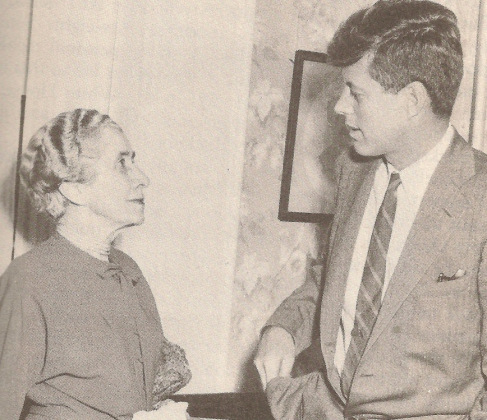
ImageThe ties to JFK, however, go deeper. True, Senator Kennedy helped raise funds and even serve on the Board of Trustees at the Clarke School for the Deaf, working beside Grace Coolidge until her passing in 1957. Upon hearing of her death, Senator Kennedy wrote:

“As a fellow trustee of Clarke School for the Deaf in Northampton I have a strong personal recollection of her untiring devotion and labors throughout her life to this most worthy cause…Since her days in the White House she continued to epitomize the qualities of graciousness, charm and modesty which marked her as an ideal First Lady of the Land” (Ishbel Ross, Grace Coolidge and Her Era, p.312).

In August 1962, President Kennedy enthusiastically sponsored the Coolidge Memorial Foundation’s efforts to promote Coolidge’s legacy nationwide. His support for both Mr. and Mrs. Coolidge speaks not only to their selfless service but also to JFK’s sincere belief that America remained exceptional and that lower taxes, economic growth, religious liberty, protection of property, the rights of the individual against the State, private enterprise, respect for law and order, moral leadership at home and abroad, opposition to unbridled government spending and the eventual defeat of socialism were principles worthy of preserving, regardless of political affiliation. To Kennedy as to Coolidge, they were principles every one of us could proudly champion because America is worth preserving. By keeping America strong, everyone is better for it. This is the Kennedy not allowed to be known by too many self-appointed gatekeepers of our history.

The speeches he gave on August 13, and December 14, 1962, and again, his State of the Union Address, January 14, 1963, embarrassed and shocked the Left of his day. According to Ted Sorenson, one of his closest advisers, Kennedy’s August 13 speech saying “no” to temporary, limited tax cuts, was “without qualification…the worst” speech he ever gave. When he laid out his argument for permanent, across-the-board cuts on December 14, attacks came from all quarters. Senator Albert Gore Sr., mystified why Kennedy was making tax cuts his top priority over health care, education and welfare programs, refused to support it. John K. Galbraith, the devoted Keynesian economist, maligned the message as “the most Republican speech since McKinley.” Galbraith’s disciple, Arthur Schlesinger Jr., excoriated any legitimate consideration of tax cuts as “full of Republican dogma” being “the worst speech the President had ever given” (Stoll p.135). Even Sorenson distanced himself from the President, comparing the substance of his message to something Hoover would say…insinuating, “…and we all know what happened when Hoover tried it.” Even former President Eisenhower decried tax reduction as “fiscal recklessness.” The suspicious distance between Kennedy and liberals of both parties came to a head on this issue in a way none other did.

This internal fight between a President, who was supposed to be of them, and an elite Left who inherited his legacy makes it all the more incredible that his plan – the fundamentals of it, anyway — became law in February 1964, three months after his death. It would validate his arguments that revenue would exceed prior levels and fixed, universal cuts would reinvigorate economic growth in a way more spending never could. Yet, his political heirs obscure that accomplishment to this day. Granted, the cuts were no where near the four Harding-Coolidge reductions in scope or intensity but it illustrated the very real power of the principle whenever championed. It would continue to fuel growth all the way until the recession of 1968. It would provide another potent demonstration for what was to be derisively called “supply-side” or “voodoo economics” when Reagan not only fought for but secured long-overdue tax cuts across-the-board in 1981.

Whether JFK was willing to expressly acknowledge his debt to Coolidge, as Reagan did, remains unsaid. It may be argued, though, that his sponsorship of the Coolidge Memorial Foundation in the midst of his 1962 battle against runaway Federal expenditures and for permanent tax cuts (in order to restore economic growth and then budget surpluses) was perhaps the best tribute he ever rendered to “Silenced” Cal.

Image