Visitin’ ‘Round Coolidge Corners Part 2
The Coolidges stay close to home during the summer of 1924 after Calvin Jr.’s death in July of that year.
Visitin’ ‘Round Coolidge Corners Part 2
The Coolidges stay close to home during the summer of 1924 after Calvin Jr.’s death in July of that year.
Long before Jefferson’s “wall of separation” was reinterpreted to mean a systematic removal of public expression of Christian faith, Robert A. Woods eloquently summarizes the faith Calvin Coolidge held firmly in God. He was not afraid to praise God yet a deep sense of humility kept him from flaunting his devotion and reliance on Him. He would never utilize religion as a tool to gain votes. His convictions were his own but he also knew they were grounded in reason. The strength to bear the responsibilities of office, including the deaths of his son and father, came from an Almighty Creator. As Woods would say,
“Any attempt to understand President Coolidge will go far amiss which does not take the fullest account of the great power of religious faith which has been continuous and increasing in his life. Beginning with his early nurture, greatly strengthened and broadened at Amherst, rising steadily as the responsibilities of life so steadily and so broadly increased — his faith in God with its correlative of faith in men, his sense of sustaining and uplifting spiritual realities, is, in modern terms, not less real to him and not less definite in its command and its reenforcement to righteousness than it was to the Puritans of old. He told an interviewer: ‘I have found that when a man does right, he is increasingly supported. I believe in God.’ There were some at least in the great audience that listened to his address at the dinner of the National Republican Club in New York City who understood him when, at its close, he paused and almost startled his audience with the words of the psalm: ‘He that keepeth Israel shall neither slumber nor sleep.’
“It too often seems in our public affairs that ‘belief and loyalty have passed away, and only the cant and false echo of them remain; and all solemnity has become pageantry.’ Whatever else may be set down as the final estimate of Calvin Coolidge, he will be among those leaders of the people whose reliance upon divine guidance is a part of the very fabric of their being. With a mind so clear, so free of pretence, this means not only a constant and vital constraint to righteous judgment, but as constant an aspiration toward a more righteous and more human order of the common life” (“The Preparation of Calvin Coolidge,” 1924, pp.234-5).
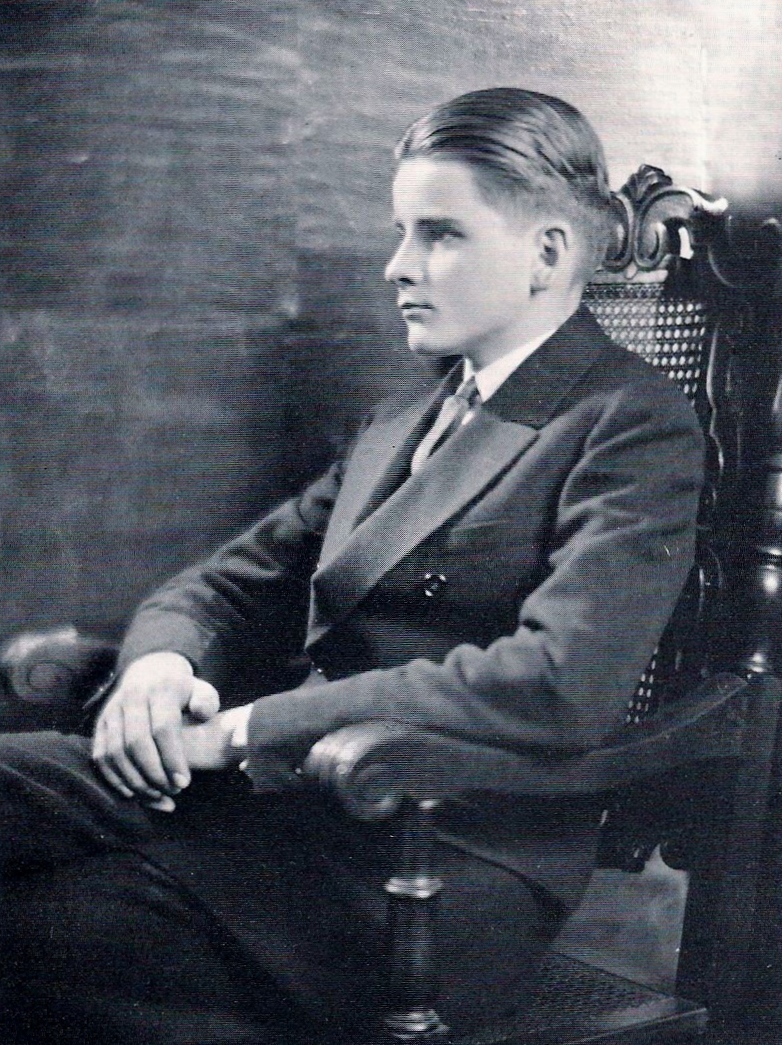
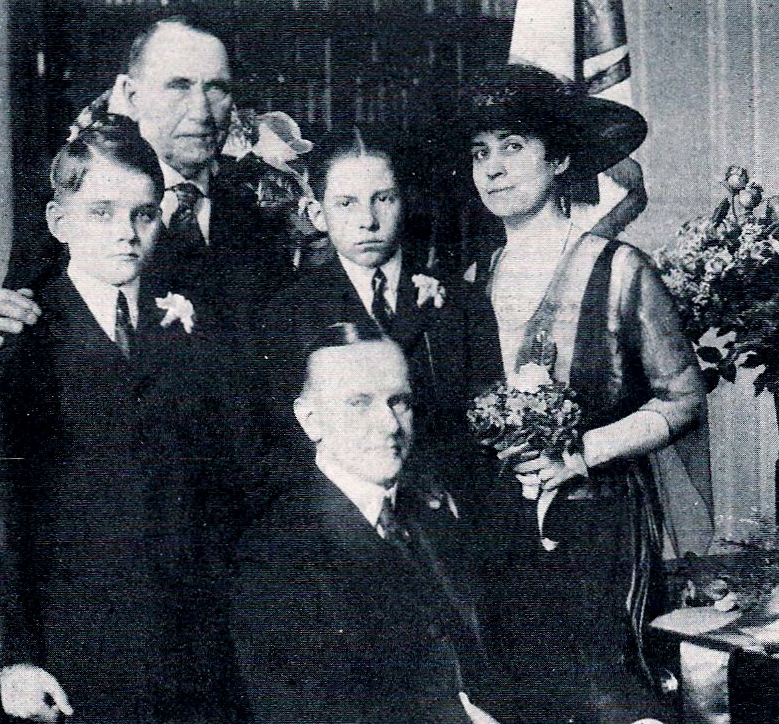
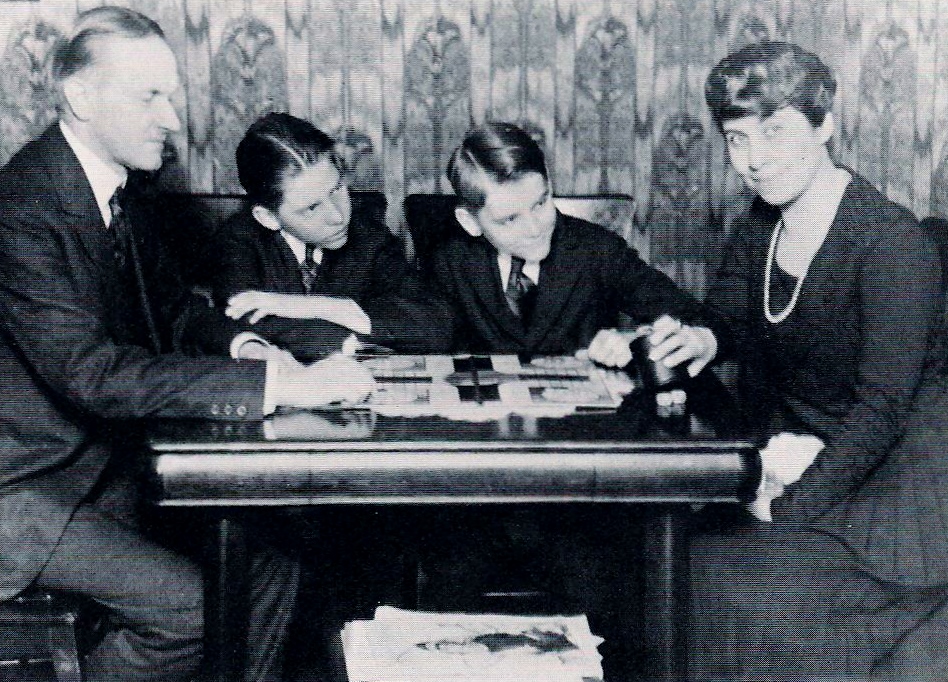
Yesterday, April 13, marked the birthday of Calvin Coolidge Jr., the second son of the Coolidges, who came into the world in 1908. As Margaret Fischer notes in her book on Calvin Jr., “As Calvin was born near Easter his parents called him ‘Bunny’ until a name was chosen. After some weeks Mrs. Coolidge told her husband she thought it time the baby was given ‘a fit and Christian name.’ ‘I was just waiting to see if he knew anything before we call him Calvin,’ he responded. So Calvin it was. But while he was small his father, always given to nicknames, often called him ‘Bunny,’ or ‘Little Bun,’ or ‘Benjamin Bun.’ The little family into which Calvin had been born was a close and devoted one…As a father [Mr. Coolidge]…was a strict disciplinarian, expecting unquestioning obedience, and, preoccupied by serious matters, was usually rather formal with his sons, but he was ever thoughtful and considerate with them. And despite his formality with them he sometimes had a great deal of fun teasing them. But Calvin, Jr., as his mother once wrote, ‘usually caught a joke in the making and sidetracked it with a laugh,’ leading her husband to say there was no use trying his fun there. Mr. Coolidge enjoyed taking the boys on long walks and he occasionally played Authors, Parcheesi or some other game with them. And in his undemonstrative way he was intensely proud of them.”
A reporter from The Washington Star wrote after a visit with young Calvin during his work in the tobacco fields in August 1923, “Calvin Jr. is a powerful reminder of his father, slender, taciturn, and with a love of the economy of speech that has marked his namesake. He flashes the same evanescent smile that comes and goes so quickly that one wonders whether it really has happened, but, as is the case with the President the smile lingers in the bright blue eyes.”
The headmaster of the Academy at which the Coolidge boys studied said of Calvin Jr., “Calvin, like his father, was quiet and taciturn, but under that calm, reserved exterior there was fire and eagerness and tenderness, hidden from mere acquaintances but which won the love and admiration of all who knew him well.”
When sixteen year old Calvin died from blood poisoning in July 1924, the loss of such a good and hard-working boy struck the entire country. There is no question that it profoundly grieved the family. The President told Chief Justice Taft that summer, “I believe he possessed great power for good that would have made itself felt had he lived.”
Even in the midst of that deep sorrow, the Coolidges demonstrated a strength toward death that left an enduring impression on those who were there. The White House social secretary, Mary Randolph, observed, “In all the great East Room,” where the service was held at the White House, “there were few who did not weep. But the President and Mrs. Coolidge and John were dry-eyed. Their dignity and courage never broke–never even wavered. They commanded the loving admiration and respect of everyone there.”
He remained, as his father would write years later, “[p]rivileged, by the grace of God, to be a boy throughout eternity.”


 The Importance of the Obvious