“Ten Ways to Judge a President” by Richard Norton Smith
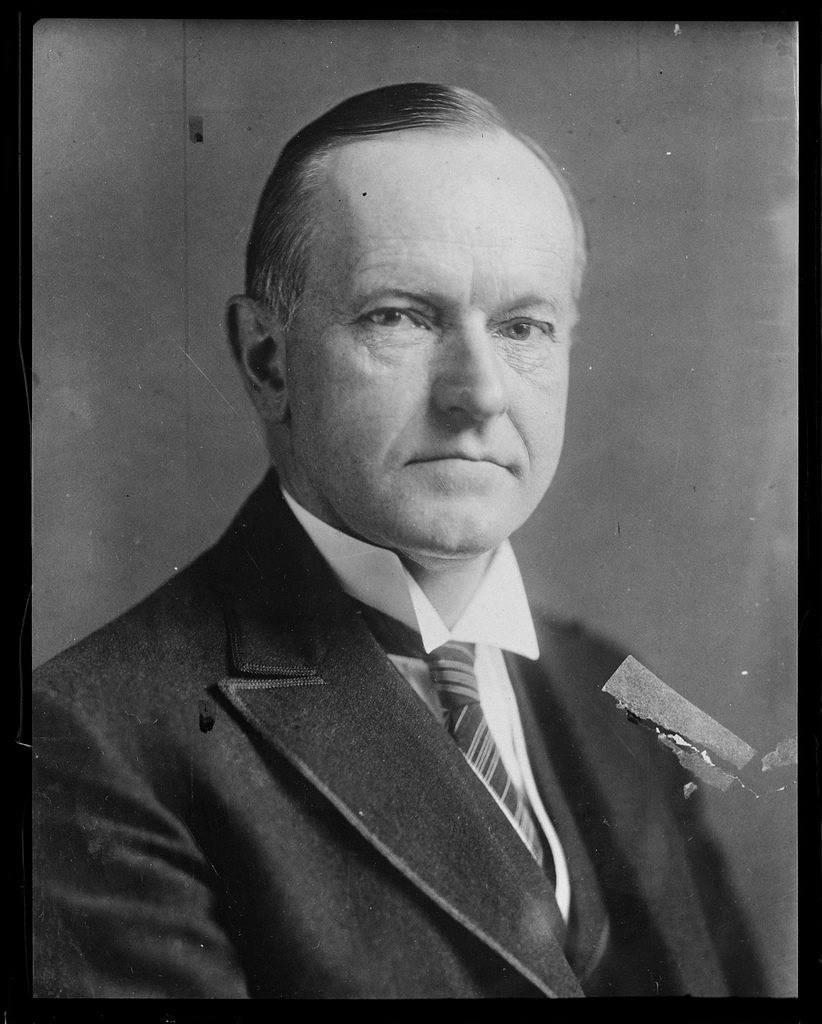
Here is an excellent reassessment of our standards for Presidential importance presented by scholar Richard N. Smith at the Wharton Leadership Conference five years ago. As Smith reminds us there is a need for each generation to “revisit its assumptions,” whether the man be Eisenhower, Washington or Coolidge. An honest retesting of those long-held assumptions is what is underway in these last several years regarding “Silenced Cal” thanks to the efforts of David Pietrusza, Amity Shlaes and Charles C. Johnson among many others. What is being discovered, as Smith pointed out in 2009, is that Presidents are not classified once for all by the biases of the Arthur Schlesingers and William Leuchtenburgs of academia. Coolidge is not so easily dismissed as an intellectual light-weight or do-nothing Chief Executive but, especially after Reagan, is to be taken seriously. “Coolidge’s honesty and lack of an overpowering ego should be all the more valued in an age ‘when so much of our public life is riddled by fakery, when candidates without ideas hire consultants without scruples,’ Smith said. ‘For lack of a better word, I would say that Coolidge was grounded,’ exhibiting the same strength of character displayed by Truman, Reagan and others.
As Smith argues, subjective prejudices have been entertained as settled fact for too long, lacking “a more objective approach in dealing with the past, ‘to understand someone in the context of their own time and not make the mistake of applying our conventions to an earlier time.’ Those who judge presidents do not have license to simply dismiss earlier generations; instead, ‘the obligation is ours to try to understand them.’
As Smith points out, there is a great deal of instructive example waiting to mined from the presidencies of those underrated men like Coolidge and Eisenhower. Even what Reagan adviser, Robert McFarlane, said of the fortieth president could just as aptly fit the thirtieth: ”
“He knows so little and accomplishes so much.” Not that either Coolidge or Reagan slept obliviously through their tenures, rather McFarlane referred to the confidence in delegation coupled with a masterful navigation at the helm that both “Cal” and “Dutch” artfully practiced. While the workload overwhelmed other men, these two made a tough job look easy. Smith’s insightful ten points, as we revisit what makes sound Presidential leadership, are well-worth reading. It contributes to the responsibility ours (and every generation) has to return and reconsider how we should judge our Presidents, asking whether the standard applied is valid or deficient. Smith’s analysis reveals how undeservedly underrated Calvin Coolidge has been…until now. For, as Smith observes regarding the mistaken perception of “do-nothing” leaders, “Sometimes, doing nothing is the most difficult form of leadership of all.” As we have shown throughout the past year at this blog, Coolidge did much more than for which he is credited. Only by deflecting the limelight, delegating wisely and restraining the Presidential temptation to say “yes” with flourish and fanfare, does he seem to be ineffectual and weak to “scholars.” It is Smith who reminds us again that risky displays of power are not the sure sign of strength in our leaders. It takes an immense measure of discipline and inner strength to honor the limits the people, through our laws and Constitution, have placed upon Executive power in our republican system. When it comes to Coolidge, Richard N. Smith could not be more right.


 The Importance of the Obvious