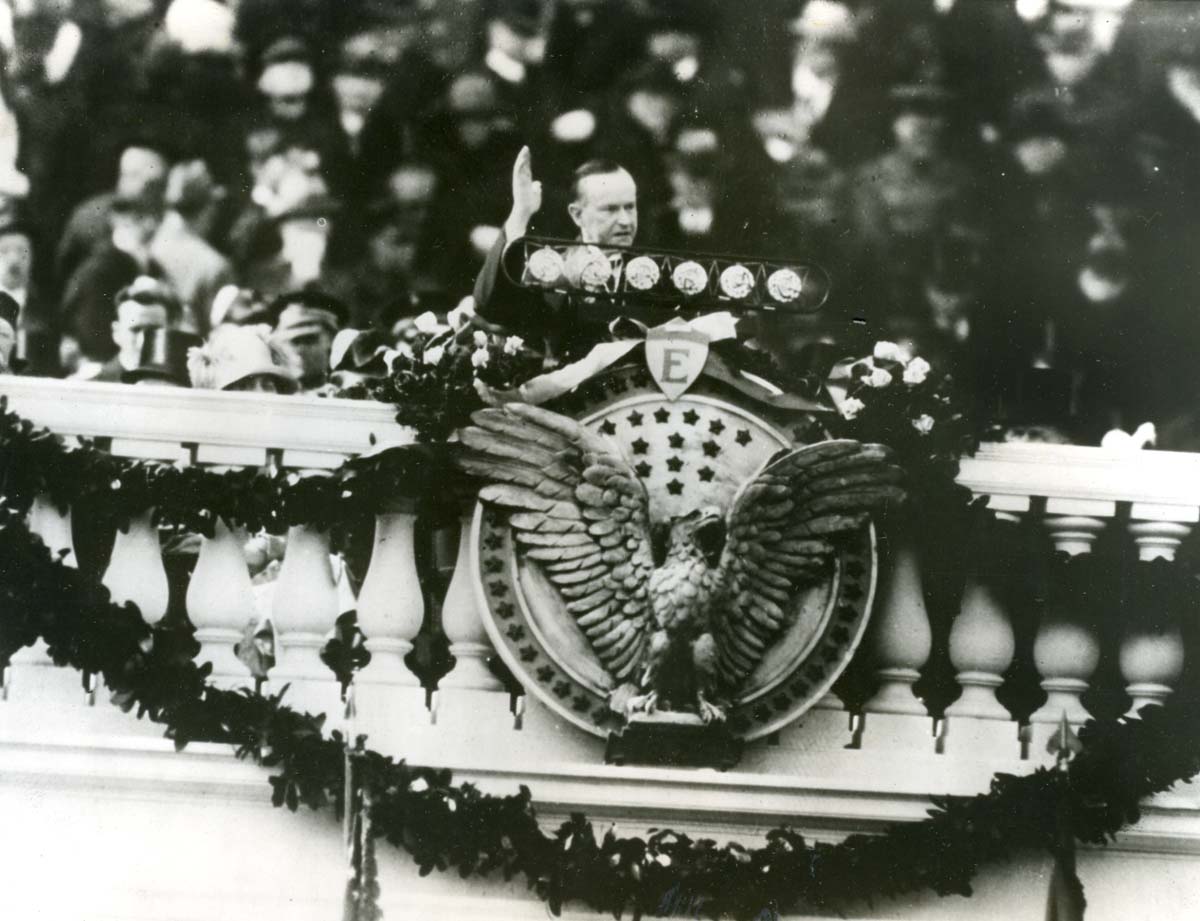
Standing before those gathered at the American Legion Convention in Omaha, Nebraska, President Coolidge on October 6, 1925, offered one of the plainest expositions of what it means to be an American citizen ever uttered. He could have said any number of vague platitudes to avoid alienating anyone. He could have tried placating the supporters of the Klan with sympathetic doublespeak. He could have even appealed to the emotional and racial invectives of two administrations before, under President Wilson. To Coolidge, being “American” meant far more than any of these attitudes could comprehend. Weighing the heavy costs of the war, concluded a mere six years before, Coolidge recognized the long-term burdens but also the exceptional example of service Americans of all national origins had demonstrated to the world. Despite the dangers personal and national, the humble and devoted efforts of individuals serving side by side for common defense of life and liberty, that is, “Americanism” (as Coolidge would call it) shone forth. For Americans, it was not an imperial conquest. It was not the racial or ethnic superiority of “Americanism” that willingly shouldered the burden and cost. It matters not from where you came or how long you have been here. What matters is the sharing of a common respect for law, our founding institutions and our sense of moral obligation.
Being American, to Coolidge, is a unity of spirit not a physical birthright. It is an agreement on what is eternally essential, not earthly, racial and unessential. This is why Coolidge never appeals to class differences or racial distinctions. They are irrelevant and counterproductive to being American. “Americanism” is not a call to absolute conformity, emptying the individual into “cookie-cutter” blueprints. It is a voluntary enterprise ventured upon together with a common set of navigational truths that do not grow old with time or fade with use. By these essentials, Americans assimilate to embrace not only the freedoms of self-government but also the responsibilities. Both are necessary to ensure liberty remains intact. Liberty is not to be a cover for license. Flouting the law is just as un-American as is enforcing laws in contradiction to those essential truths of human nature discovered by the Founders. As Coolidge would aptly summarize,
“We must not, in times of peace, permit ourselves to lose any part from this structure of patriotic unity. I make no plea for leniency toward those who are criminal or vicious, are open enemies of society and are not prepared to accept the true standards of our citizenship. By tolerance I do not mean indifference to evil. I mean respect for different kinds of good. Whether one traces his Americanisms back three centuries to the Mayflower, or three years to the steerage, is not half so important as whether his Americanism of today is real and genuine. No matter by what various crafts we came here, we are all now in the same boat. You men constituted the crew of our ‘Ship of State’ during her passage through the roughest waters. You made up the watch and held the danger posts when the storm was fiercest. You brought her safely and triumphantly into port. Out of that experience you have learned the lessons of discipline, tolerance, respect for authority, and regard for the basic manhood of your neighbor. You bore aloft a standard of patriotic conduct and civic integrity, to which all could repair. Such a standard, with a like common appeal, must be upheld just as firmly and unitedly now in time of peace. Among citizens honestly devoted to the maintenance of that standard, there need be small concern about differences of individual opinion in other regards. Granting first the essentials of loyalty to our country and to our fundamental institutions, we may not only overlook, but we may encourage differences of opinion as to other things. For differences of this kind will certainly be elements of strength rather than of weakness. They will give variety to our tastes and interests. They will broaden our vision, strengthen our understanding, encourage the true humanities, and enrich our whole mode and conception of life. I recognize the full and complete necessity of 100 per cent Americanism, but 100 per cent Americanism may be made up of many various elements.”
It is the current cultural climate that is intolerant of these essentials and fixated on non-essentials that forecasts even rougher waters ahead for the American enterprise. If we are to navigate safely to port, we have to rally around the moral nature of our voyage while giving no berth to those resolved on dragging the ship back from real progress into the barbarity of ignorance, lawlessness and government paternalism.

 The Importance of the Obvious