While the White House has become ensnared in its own deceptive assurances regarding “Obamacare,” the agenda has decisively been brought to a halt. The strategy was not supposed to derail, certainly never like this. Washington as well as the rest of the country, including the Republican establishment, have had time to reflect upon their actions during the “shutdown,” the debt limit increase and the response to the filibuster led by Ted Cruz. Some have come home to their districts and visited with constituents on the political condition and where to go from here.
The answer, in truth, is typically not what much of the establishment claims it to be. Rather than recognize these circumstances as an opportunity to inform constituents (now that real people are suffering all across the country because of this destructive law) and then to provide principled leadership, leadership made possible by a handful of conservatives, far too many Republicans are rushing back to the “safety” of timidity and defeatism. The effort was “doomed to fail,” they echo, being embarrassed by Ted Cruz and those who engaged in such a vain hope of success because the votes were not “there.” Yet, see what has resulted from standing firm anyway! “Party unity” coupled with “civility” are what we need, they claim. We need to pick our fights, they assert. We need to agree on the “big votes” while not alienating independents. That strategy certainly worked well for our last presidential nominee.
No one back home is advocating disunity, incivility or selective opposition. These are strategies practiced by the establishment. This is where the divide originates. Instead, the disunity and incivility comes from senior leadership in both parties calling conservatives “wacko birds,” “terrorists” and “hijackers,” blaming the Tea Party movement for the failures of Washington.
We are the ones expected to “tone down our rhetoric” with a return to “civility” — which is simply another way of silencing dissent against the “normal” dysfunction of Washington. Our “rhetoric” is nothing more than reasonable opposition to the way Washington operates, with its lawless disregard and devotion to expediency. Our public gatherings, on the other hand, are clean, wholesome and respectful. We consistently leave the places we gather better than we found them. Contrast this with the coercive conduct of Park service authorities, condescension of Congressional and Executive branch officials and the destructiveness of “Occupy Wall Street” mobs.
We are the ones expected to rally for the good of the Party — while Senate and House leaders jettison any vestige of effort to stand for something non-negotiable whether the “votes are there” or not. It is the establishment that has publicly ostracized anyone bold enough to articulate our convictions.
We, on the other hand, are trying to preserve the Party’s principles rather than see them auctioned off by our representatives who believe their role is to bridge the differences and compromise with a deliberately destructive agenda. Liberty and the people are the ones who lose each time.
We are assured that the wise course is to pick our fights. We do not have the votes to get everything we want, it is noted. True, the Senate and White House are held by Democrats. But how powerful an impact one man, Senator Cruz, has had not only on strategy but the entire political situation. None of us are under the illusion that we can win every fight. We simply expect our “side” to fight.
By virtue of resisting the policies and ideology of government-run health care, without any incivility or divisiveness, conservatives have stopped the seemingly unstoppable momentum of the President and his Party, setting all of Washington on its heels. Now even Democrats are seeking a delay of the individual mandate. Conservatives changed the “rules of the game” because they stood on what is right, not on what was politically calculated to succeed. Everyone considered it a foregone conclusion they would accomplish nothing, including many on their own side. They accomplished more by standing for principles than anyone could have imagined. The results are still unfolding. In a very powerful way, they exemplified a strategy cherished by none other than Calvin Coolidge.
Coolidge explains in his Autobiography how vain and self-defeating were the efforts to politically outsmart the opposing side with some intricate calculation of timing and set of perceptions. Instead, he kept a very different principle. “There is only one form of political strategy in which I have any confidence, and that is to try to do the right thing and sometimes be able to succeed.” What motivated Coolidge to act was the force of right. The pursuit of what is right, rather than any grand scheme to oppose measures only when the support is there distinguishes those who adhere to principles from those who subsist on what is convenient at the moment. We fight because the cause is moral and good. We do not hold back until overwhelming support is already behind us among our peers. Leadership, as Coolidge maintained, requires the principled judgment of the representative, living up to one’s oath, executing the office “faithfully and impartially” in agreement with the Constitution and our laws. The uninformed voter does not relieve the representative from the duty of educating and leading with sound principles, just to avoid the risk of losing the next election.
Coolidge, whether as legislator, Governor or President, acted with firm reliance on doing what was right whatever the cost to him politically. He had no respect for the strategy that raises finger to the wind and votes for what has the least resistance and most support in polling. “Any one with a little experience can tell them in advance that the effect of action based on such motives will always be bad…That is the reason why those who seek popularity so seldom find it, while those who follow an informed conscience so often are astonished by a wide public approval.” Having a majority of votes no more justifies action than does transforming the entire country for a resentful minority. It is this strategy: simply doing what is right because it is right, whatever the political ramifications, that will ultimately vindicate those with the courage of convictions, who stood when it was hardest to do so. Meanwhile, those who have lived by the rule of expediency, gauging every word or act by its popularity, will find vain irrelevance as the price of compromise.
The victory of what is good and right only comes to those who fight for it. If we wait to fight the good fight another day over the issues that “really matter,” we will soon find so much territory has been relinquished to what is wrong that our last opportunity to oppose it when we should have is forever lost. As Coolidge understood, relying on anything less than the right, the honest and the true is no wise or sound strategy at all. Defeat is sure when we never step onto the field. Our confidence can only reside in defending the rightness of our principles be it popular or unpopular, entrusting the outcome, and our consciences, to God.
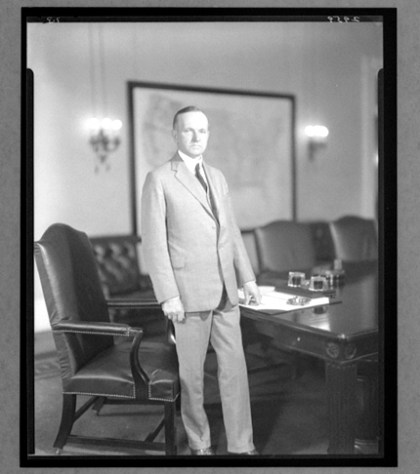
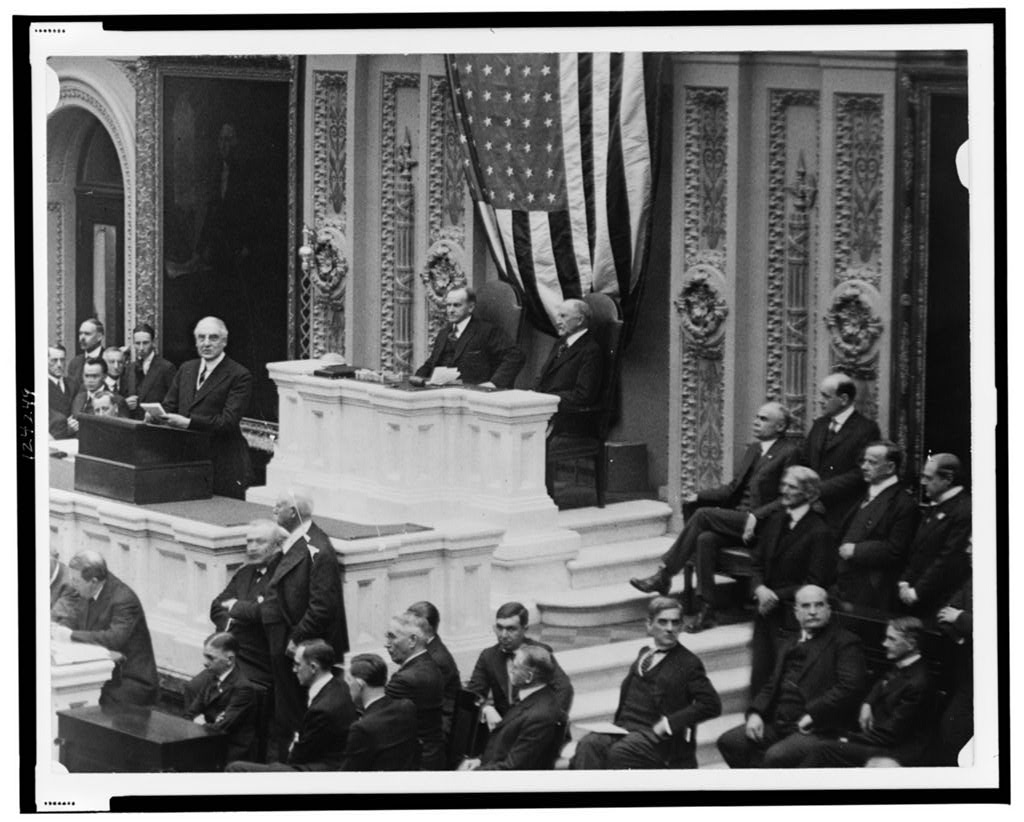 A mistaken impression can sometimes be left by historians regarding Coolidge’s attitude on civility. Some seem to think that civility is incompatible with any form of political confrontation, even employing Coolidge as the symbol of a civil discourse and non-controversial comportment. Coolidge possessed very unpopular convictions at times and made controversial stands throughout his life. His refusal to allow Boston strike leaders to return to the police force is one such example. Coolidge’s overhaul of his state’s administrative agencies, reforming 120 into 19 departments was another potential political powder keg he embraced. His adept use of the veto and appointment powers furnish more controversial examples. Instead, the “need for civility” plea, principally coming from the establishments of both parties, being the biggest violators of the rule, tend to use it in order to convince conservatives they need to sit down and quietly consent to whatever happens, for the good of the country and the Party.

 The Importance of the Obvious