On Reuniting the States

On Reuniting the States

Return of the Confederate battle flags to Virginia, North Carolina and Texas on December 16, 1927. An earlier attempt by President Cleveland in 1887 met with successful opposition by the Grand Army of the Republic (Union veterans) as “trophies” of the War that should not be returned. It would be “treasonous” according to the large body of obstinate veterans.

President Theodore Roosevelt, through a careful coordination with Congress, restored a partial collection of battle flags to the Southern states in 1905, taking them from storage by the War Department in Washington.

Like so many old wounds, however, President Coolidge did not evade the controversy for fear that it would cost political support. Coolidge upheld just dealings toward all, whether it was the full citizenship for all tribes or fair honor due Southern Americans who fought just as valiantly as the Yankees did for principled reasons. It was overdue time to lay aside hostility, heal old grievances, and reestablish peace between Americans, North and South.

He recognized his duty included leadership by example to help reunite the country around the essentials we share as Americans. It would not be right to misuse a President’s influence by keeping us divided and at war with one another. He was as much an advocate of peace at home as he was abroad.

On Deportation

Our republic was framed with power separated between distinct and equal branches of government. Defined limits to the authority of each ensured that autonomy, jealously guarded, would restrain the ambitious from consolidating all the powers from the people and the states into the control of an elite minority. To combine the power to legislate with the power to enforce or the power to interpret and judge would overturn the wisely crafted framework laid down in the Declaration and built upon by the Constitution.

The sovereignty of a self-governing people would, through elected representatives, enact laws that disclose the existence of certain rules for the healthy growth and productive advance of the nation. It was exercised by civilized countries for centuries until the right of nations to set standards for citizenship became illegitimate in recent decades. Instead of respecting law and responsible citizenship, borders are decried as “xenophobic” and naturalization “oppressive” to what the current Attorney General considers the “civil right” of illegal immigration. Emotion, too often, counters the need for careful deliberation of our laws to preempt bad policies. Immigration and basic standards of citizenship are no exception. We are experiencing now the effects of a nation in denial of itself, its laws and its institutions. A nation that renounces standards for admittance is not a nation at all, but has become an amorphous tract of territory that owes all to everyone regardless of character, conduct or intentions without anything required in return. This is a recipe for very real chaos.

President Coolidge defended the motives of immigration standards when he said, “Restricted immigration is not an offensive but purely a defensive action. It is not adopted in criticism of others in the slightest degree, but solely for the purpose of protecting ourselves. We cast no aspersions on any race or creed, but we must remember that every object of our institutions of society and government will fail unless America be kept American.” Some, succumbing to emotion, hear racism and “white supremacy” in such remarks. They completely misunderstand Coolidge.

He reminds us that by upholding certain rules, everyone is protected and those with no regard for law will be prevented from bringing harm, economic and otherwise, to those who respect the rights of others. If a person enters in disregard of the law, on what basis will he or she respect the laws that protect those already here? If laws are arbitrarily applied or selectively enforced, it tells the law-abiding there is no protection under law at all. The law has become the preferences of those in power, instead of an impartial rule fairly obligating everyone alike and observed for the good of society. When that happens, no law is strong enough to hold back the consequences. This is why Coolidge defended the wisdom of an incremental, legal immigration. He did so in order to ensure people are not forced to bear more than can be borne to care for and help assimilate those who come here to become Americans. The exercise, at times, of a nation’s right to deport becomes just as essential when individuals come here to reject assimilation, break the law and make trouble, as both Marcus Garvey and Lothar Witzke did.

As the former President heard of immigration in the news again, he wrote, “A few years ago we were discussing Americanization of our residents of foreign birth. Not being an appropriate word, it aroused considerable antagonism among those we desired to help…What we really intended was a course of helpful education to instruct new arrivals to the United States in the meaning of our laws and customs, so that they might better avoid the perils and secure the advantages of being here…The great proportion of immigrants duly become desirable citizens. But those who fail to respond to the privileges of our country, who fall into evil ways and violate our laws, should be punished for their crimes and then deported. We have all we can do to take care of deserving people without being burdened with those who demonstrate their unfitness to enjoy our liberties.”

Such is felt to be unfeeling and devoid of compassion today. What is really missing is today’s lack of concern for the costs of policies passed while haste in implementing legislation on emotion alone prevails. How many people have been hurt by the good intentions of feeling rather than thinking through our nation’s challenges? Electoral politics cannot be the impetus for crafting future immigration law. As Coolidge observed, “As a nation, our first duty must be to those who are already our inhabitants, whether native or immigrants.” Of course, Coolidge meant legal immigrants. He did not indulge in the politically correct game with which we now call illegal inhabitants, “undocumented workers.” It is a hard truth to digest but no less necessary if we are to retain freedom with responsibility.

                         Image

The Italian Republican League of New York presents President Coolidge with an original parchment of the Gettysburg Address, February 12, 1927 (Library of Congress photo).


On Humility

A quality well-known to those who knew him was Mr. Coolidge’s humility. He knew, as he wrote to his father, being “the most powerful man in the world,” meant high responsibilities not lofty privileges. It was not an opportunity to “live large,” clothing himself in the trappings of his glory. During his lifetime, he had seen certain men become President only to equate the majesty of the Office with the excellence of the person. He knew the dangers of arrogance. He was never fooled to think that it was proper, even for a President, to govern by the force of his personality. He had seen President Wilson try and disastrously fail on that score. Mr. Coolidge raised the dignity of the office during his time, that is for sure, but he distinguished between the greatness of the Presidency from the absence of greatness in him. He was simply chosen from the sovereign people to serve for a short time and then “be one of them again.”

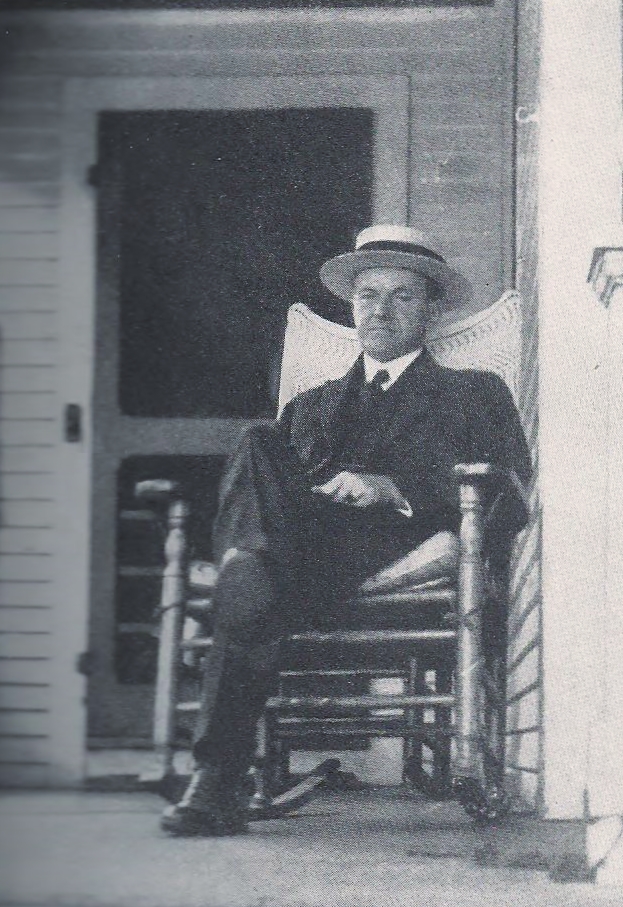
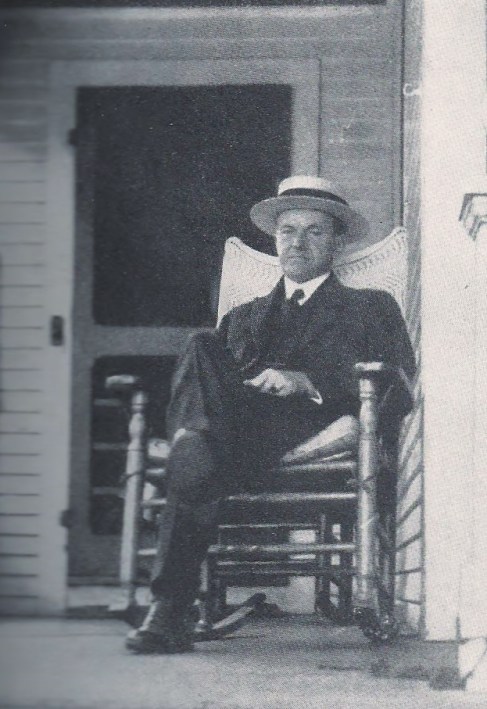
His desire to be a private citizen again was unfortunately never entirely restored. It cannot be easy to rediscover “normalcy” for anyone who has once been a President. But he earnestly tried. Prompted to speak in retirement, he accepted only under the most compelling pressure because he refused to accept it was his place to assume the mantle again as a kind of unofficial public authority or “Deputy President.” His humility was such that he could no longer do many of the things he loved to do, such as sit on his front porch. He disdained the ostentatious displays of attention showered on him because of the Presidency. He would tolerate it for the sake of the Office while he held it, but he refused to suffer it after the White House.

He disapproved of Presidential pensions and would not take a cent of public support. He would work for himself. It was writing that primarily occupied his time and even that weighed on his mind with the obligations of producing a product worth publishing, meeting deadlines, and not taking advantage of the credentials he could have claimed to accept more than a piece was worth.

His long-time law partner, Mr. Hemenway, recalled three occasions of Mr. Coolidge’s many expressions of simple unaffectedness, the first one in the midst of being President, that underscored his persistent humility. Mr. Hemenway, writing for Good Housekeeping in April 1935, recounts:

     “While he was President, I had a note in longhand from him one day, as follows:

                                                                                                Sept. 13, 1928

     ‘My Dear Mr. Hemenway:–

            ‘You have at Hampton safety deposit 2 Lib Bonds $50 each. See if any are due Sept 15

      current and if so have Tr. Co. collect them and credit my acct.

                                                                                          ‘Yours

                                                                                       ‘Calvin Coolidge’

     “That note shows his far-reaching recollection of detail. Here you witness the President of the United States, the problems of a nation on his desk, with an income of $75,000 a year and $25,000 more for traveling expenses and entertainment, plucking out of his innumerable mental pigeonholes the relatively insignificant matter of two $50 Liberty bonds on which the interest of $2.12 was due!

     “To show his kind-heartedness and his liberality I recall one occasion when I was in need of funds owing to the closing of a local bank. I was seated at my desk deeply buried in thoughts that were not particularly cheerful when he came through the connecting doorway from his office, walked over to me, and placed a slip of paper on my blotter. As he turned away and went back to his room, he said quietly,

     ‘And as much more as you want.’

     “It was a check for $5,000.”

The final memory shared by Mr. Hemenway humorously highlights the former President’s unchanged outlook after life in the White House.

     “The splendor and pomp of Washington and the Presidency never changed his early valuations of life. He was simple and unaffected to the last degree. He liked foot comfort. In the old days he would slip off his shoes and put both stockinged feet in his wastebasket where they wouldn’t be seen. Once, however, he was taken off his guard. A woman client came into his office while he feet were planted in the wastebasket. He got a good laugh out of it afterward–although he certainly did not enjoy the surprise at the moment.”
                         Image

“We draw our Presidents from the people. It is a wholesome thing for them to return to the people. I came from them. I wish to be one of them again…They have only the same title to nobility that belongs to all our citizens, which is the one based on achievement and character, so they need not assume superiority. It is becoming for them to engage in some dignified employment where they can be of service as others are” — Calvin Coolidge, The Autobiography, 1929, pp.242-3.