“Any man who has been placed in the White House can not feel that it is the result of his own exertions or his own merit. Some power outside and beyond him becomes manifest through him. As he contemplates the workings of his office, he comes to realize with an increasing sense of humility that he is but an instrument in the hands of God” — Calvin Coolidge, ‘The Autobiography’ (1929)
character
On George Washington
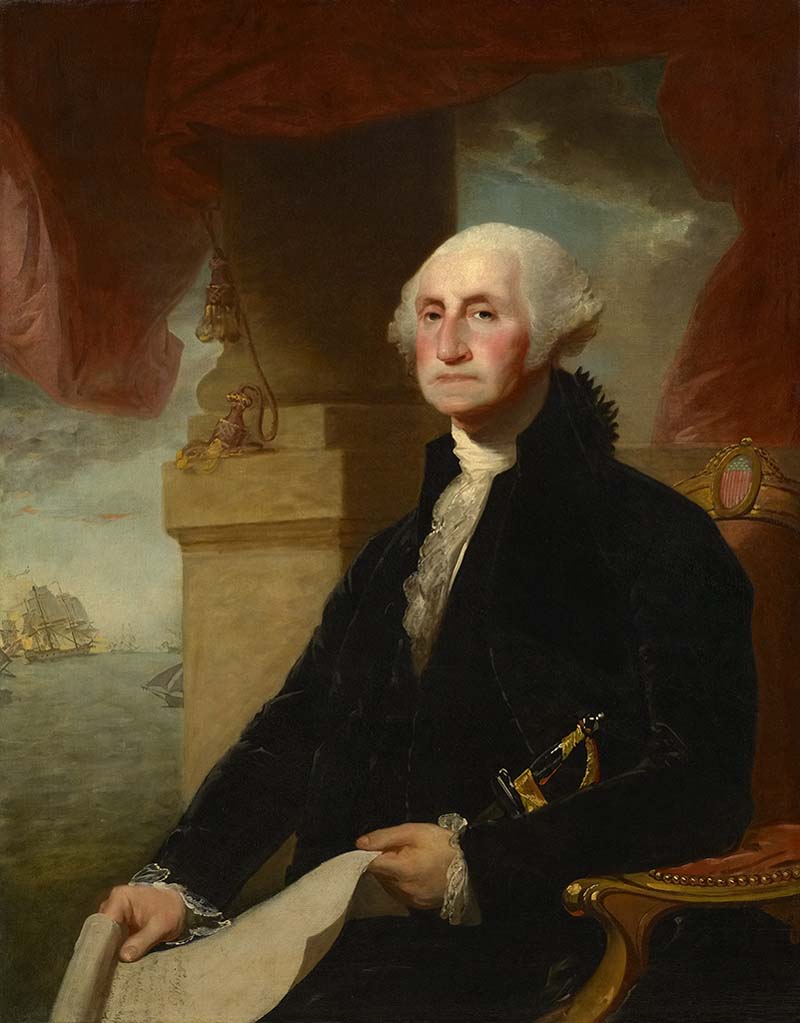
“February 22 marks the …birthday of George Washington. His stature has only increased with the years. His public life was characterized by complete unselfishness. Indifferent to his own fortunes, his only concern was for his country. He needed no pretense and no art. He was simply and naturally great.” He was, in short, “the personification of judgment and character” — Calvin Coolidge, February 20, 1931.
Tomorrow marks the two-hundred eighty-first anniversary of President Washington’s birthday. To Coolidge, the first President was not without his mistakes, as with any man, but he remains worthy of our esteem and emulation for not only his life of service but also his impeccable integrity. As the former President looked back on the example of Washington in the early months of 1931, he may have recalled the remarkable precedent his forbear set by laying down the power of his office after only two terms. Washington could have held the Presidency for life or passed it to his heirs and yet he laid it down with characteristic humility. Coolidge adhered to that same selfless demonstration in 1929. As he describes the attributes of Washington, however, he reminds the reader of not only what made the first President truly great but also of those qualities the thirtieth President prized and practiced in his own life. One instantly thinks of Coolidge when the absence of pretense is commended. There were no ostentatious displays with Coolidge. What you saw is who he was without conceit or facade. He had no patience for those who put on airs. He would even make the bejeweled “social queens” of Washington wait in the reception lines while he “took a break” from shaking hands. Humble simplicity defined him in public just as it did in private. Coolidge bequeaths a legacy not unlike Washington’s to those who sincerely honor character above politics and service above self-importance.
Inaugural Address, March 4, 1925
“The resources of this country are almost beyond computation. No mind can comprehend them. But the cost of our combined governments is likewise almost beyond definition. Not only those who are now making their tax returns, but those who meet the enhanced cost of existence in their monthly bills, know by hard experience what this great burden is and what it does. No matter what others may want, these people want a drastic economy. They are opposed to waste. They know that extravagance lengthens the hours and diminishes the rewards of their labor. I favor the policy of economy, not because I wish to save money, but because I wish to save people. The men and women of this country who toil are the ones who bear the cost of the Government. Every dollar that we carelessly waste means that their life will be so much the more meager. Every dollar that we prudently save means that their life will be so much the more abundant. Economy is idealism in its most practical form” — Calvin Coolidge (Cited from “Foundations of the Republic,” pp. 200-1).
It is worthy of note that Coolidge returned without hesitation more than $60,000 donated by private individuals for the inauguration’s expenses.
 The Importance of the Obvious