On Political Strategy

While the White House has become ensnared in its own deceptive assurances regarding “Obamacare,” the agenda has decisively been brought to a halt. The strategy was not supposed to derail, certainly never like this. Washington as well as the rest of the country, including the Republican establishment, have had time to reflect upon their actions during the “shutdown,” the debt limit increase and the response to the filibuster led by Ted Cruz. Some have come home to their districts and visited with constituents on the political condition and where to go from here.

The answer, in truth, is typically not what much of the establishment claims it to be. Rather than recognize these circumstances as an opportunity to inform constituents (now that real people are suffering all across the country because of this destructive law) and then to provide principled leadership, leadership made possible by a handful of conservatives, far too many Republicans are rushing back to the “safety” of timidity and defeatism. The effort was “doomed to fail,” they echo, being embarrassed by Ted Cruz and those who engaged in such a vain hope of success because the votes were not “there.” Yet, see what has resulted from standing firm anyway! “Party unity” coupled with “civility” are what we need, they claim. We need to pick our fights, they assert. We need to agree on the “big votes” while not alienating independents. That strategy certainly worked well for our last presidential nominee.

No one back home is advocating disunity, incivility or selective opposition. These are strategies practiced by the establishment. This is where the divide originates. Instead, the disunity and incivility comes from senior leadership in both parties calling conservatives “wacko birds,” “terrorists” and “hijackers,” blaming the Tea Party movement for the failures of Washington.

We are the ones expected to “tone down our rhetoric” with a return to “civility” — which is simply another way of silencing dissent against the “normal” dysfunction of Washington. Our “rhetoric” is nothing more than reasonable opposition to the way Washington operates, with its lawless disregard and devotion to expediency. Our public gatherings, on the other hand, are clean, wholesome and respectful. We consistently leave the places we gather better than we found them. Contrast this with the coercive conduct of Park service authorities, condescension of Congressional and Executive branch officials and the destructiveness of “Occupy Wall Street” mobs.

We are the ones expected to rally for the good of the Party — while Senate and House leaders jettison any vestige of effort to stand for something non-negotiable whether the “votes are there” or not. It is the establishment that has publicly ostracized anyone bold enough to articulate our convictions.

We, on the other hand, are trying to preserve the Party’s principles rather than see them auctioned off by our representatives who believe their role is to bridge the differences and compromise with a deliberately destructive agenda. Liberty and the people are the ones who lose each time.

We are assured that the wise course is to pick our fights. We do not have the votes to get everything we want, it is noted. True, the Senate and White House are held by Democrats. But how powerful an impact one man, Senator Cruz, has had not only on strategy but the entire political situation. None of us are under the illusion that we can win every fight. We simply expect our “side” to fight.

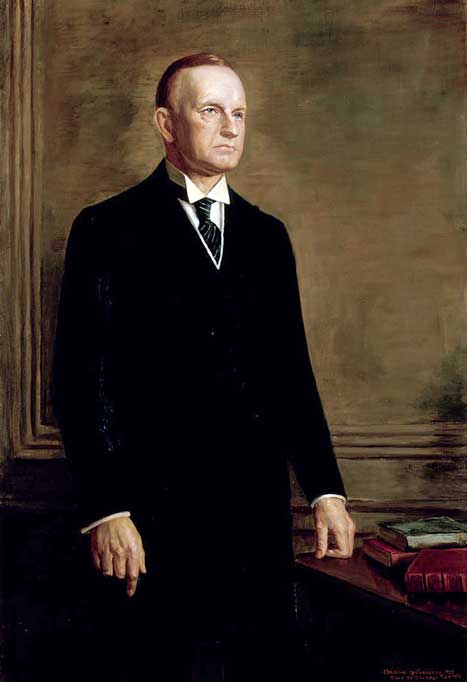
By virtue of resisting the policies and ideology of government-run health care, without any incivility or divisiveness, conservatives have stopped the seemingly unstoppable momentum of the President and his Party, setting all of Washington on its heels. Now even Democrats are seeking a delay of the individual mandate. Conservatives changed the “rules of the game” because they stood on what is right, not on what was politically calculated to succeed. Everyone considered it a foregone conclusion they would accomplish nothing, including many on their own side. They accomplished more by standing for principles than anyone could have imagined. The results are still unfolding. In a very powerful way, they exemplified a strategy cherished by none other than Calvin Coolidge.

Coolidge explains in his Autobiography how vain and self-defeating were the efforts to politically outsmart the opposing side with some intricate calculation of timing and set of perceptions. Instead, he kept a very different principle. “There is only one form of political strategy in which I have any confidence, and that is to try to do the right thing and sometimes be able to succeed.” What motivated Coolidge to act was the force of right. The pursuit of what is right, rather than any grand scheme to oppose measures only when the support is there distinguishes those who adhere to principles from those who subsist on what is convenient at the moment. We fight because the cause is moral and good. We do not hold back until overwhelming support is already behind us among our peers. Leadership, as Coolidge maintained, requires the principled judgment of the representative, living up to one’s oath, executing the office “faithfully and impartially” in agreement with the Constitution and our laws. The uninformed voter does not relieve the representative from the duty of educating and leading with sound principles, just to avoid the risk of losing the next election.

Coolidge, whether as legislator, Governor or President, acted with firm reliance on doing what was right whatever the cost to him politically. He had no respect for the strategy that raises finger to the wind and votes for what has the least resistance and most support in polling. “Any one with a little experience can tell them in advance that the effect of action based on such motives will always be bad…That is the reason why those who seek popularity so seldom find it, while those who follow an informed conscience so often are astonished by a wide public approval.” Having a majority of votes no more justifies action than does transforming the entire country for a resentful minority. It is this strategy: simply doing what is right because it is right, whatever the political ramifications, that will ultimately vindicate those with the courage of convictions, who stood when it was hardest to do so. Meanwhile, those who have lived by the rule of expediency, gauging every word or act by its popularity, will find vain irrelevance as the price of compromise.

The victory of what is good and right only comes to those who fight for it. If we wait to fight the good fight another day over the issues that “really matter,” we will soon find so much territory has been relinquished to what is wrong that our last opportunity to oppose it when we should have is forever lost. As Coolidge understood, relying on anything less than the right, the honest and the true is no wise or sound strategy at all. Defeat is sure when we never step onto the field. Our confidence can only reside in defending the rightness of our principles be it popular or unpopular, entrusting the outcome, and our consciences, to God.

Image

On “The Duties of Citizenship”

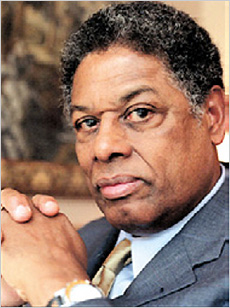
Dr. Thomas Sowell

Dr. Thomas Sowell

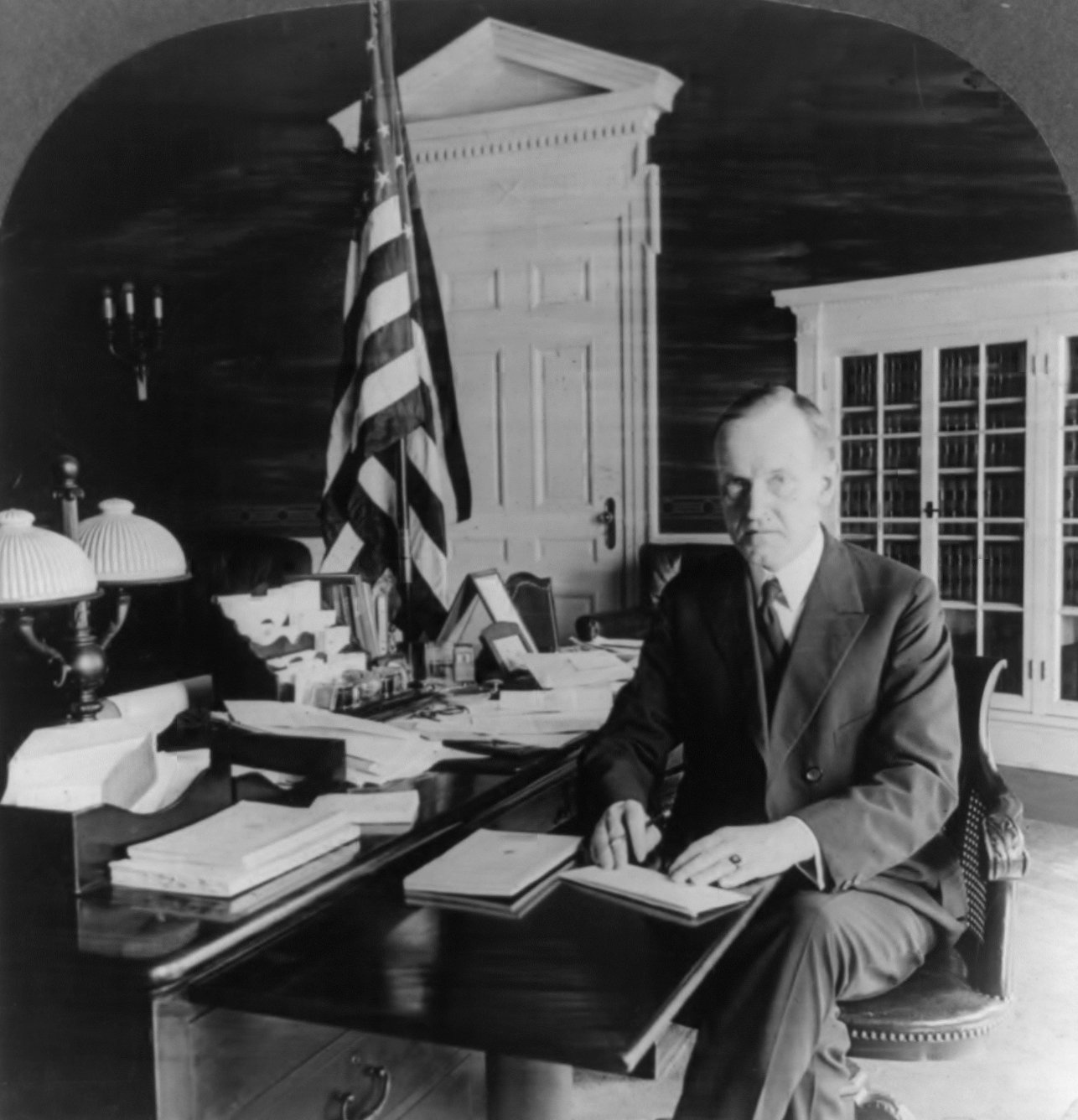
While not a November during an election year, it is fitting that Thomas Sowell, one of America’s preeminent economic minds, presented the contrasts in policy and attitude that set Calvin Coolidge far ahead of the current White House occupant. It is appropriate mainly because on this day eighty-nine years ago, the President “wired up” on radio broadcast to speak about the responsibilities every citizen possesses. He did not lecture them on the need for sacrifice in the form of higher taxes, less freedom and more supervision. He did not appeal to a prejudice against American traditions and institutions. He did not stir up resentment for the opposition party in order to keep the agenda rolling. Instead he appealed to confidence in the people, not Washington bureaucrats, to decide rightly what needs to be done.

“The institutions of our country rest upon faith in the people. No decision that the people have made in any great crisis has ever shown that faith in them has been misplaced. It is impossible to divorce that faith which we have in others from the faith which we have in ourselves.” Coolidge was not talking about a communal reliance, that subjugates the rights and blessings of the individual to that of an amorphous collective. He explains what citizenship requires, “Unless each of us is determined to meet the duty that comes to us, we can have no right to expect that others will meet the duties that come to them. Certainly we cannot expect them so to act as to save us from the consequences of having failed to act.” To Coolidge, citizenship was of always personal. It was never a requirement imposed upon others that exempted yourself. If you failed to uphold your obligations to participate — from the ballot box to the town meeting to the daily exercise of obedience to law — who were you to expect it of someone else? How can you expect the proverbial “someone else” to pay for a program you want, if you are unwilling to pay for it yourself? How can you decry the results of an election or a failed policy if you have been complacent or negligent as anything less than an energetic and active citizen?

The result of opting out of one’s citizenship obligations was plain in a country where the people are supposed to be sovereign. “If they do not vote they abdicate that sovereignty, and they may be entirely sure that if they relinquish it other forces will seize it, and if they fail to govern themselves some other power will rise up to govern them. The choice is always before them–whether they will be slaves or whether they will be free.” To retain freedom, Coolidge declared, there can be no substitute for the active and energetic exercise of citizenship’s privileges coupled with a faithful discharge of its duties. “It is not to be secured by passive resistance. It is the result of energy and action.” Bad policies do not go away on their own. They are defeated by informed and engaged citizens. Action alone would not suffice, however. The President continued, “To live up to the full measure of citizenship in this nation requires not only action, but it requires intelligent action. It is necessary to secure information and to acquire education.” The two principal places for this intelligence in the electorate are the school house and the house of worship. The moral and intellectual training in citizenship is grounded here. These are to prepared each person for the purpose of a campaign: to send an informed individual to the ballot box. All the money, advertising, organization, speeches, effort are utterly wasted if anything less than informed and engaged citizens vote when the day comes.

The decision before all of us, this year, next year and at every policy proposal, is “whether we wish to be ruled by all the people or a part of the people, by the minority or the majority; whether we wish our elections to be dominated by those who have been misled, through the presentation of half-truths, into the formation of hasty, illogical and unsound conclusions; or whether we wish those to determine the course of our Government who have through due deliberation and careful consideration of all the factors involved reached a sound and mature conclusion.” A discontented few were active then no less than now. They only changed the country’s direction not because they were right or advocated just causes against the majority of Americans but because “a sober second thought” exercised by the people for their welfare and that of future generations “sat out” from their duty to participate. Our country was never meant to be directed and its policies decided by a “minority moved in part by self-interest and prejudice.” The faith that cements our foundations was not entrusted to a part of the people, Coolidge affirmed. “It means faith in all the people. Our country is always safe when decisions are made by a majority of those who are entitled to vote. It is always in peril when decisions are made by a minority.” That minority, be it an autocratic President, a Cabinet member permitted plenary power, a presumptive Supreme Court justice or a club of incumbent Senators, was not given the power they now exercise by our system as founded. It is a corruption to behave as it did. Even more, though, we have been seriously remiss in our duties to allow this wholesale abdication of our sovereignty to take place. Those we send to our county seats, state capitals and Washington serve, not for themselves, but as our employees. They work for us. Yet, we ourselves are but stewards and, as Coolidge would say, “trustees” exercising citizenship for the “benefit of…country and…countrymen.” We are no more at leisure to sanction policies, by vote or abstention, that favor a few while hurting others than are those we send to represent us in government.

Coolidge brings his radio message to a close with a firm rebuke of complacency toward our duties of citizenship. “They have no right to say they do not care. They must care. They have no right to say that whatever the result of the election they can get along. They must remember that their country and their countrymen cannot get along, cannot remain sound, cannot preserve its institutions, cannot protect its citizens, cannot maintain its place in the world, unless those who have the right to vote do sustain and do guide the course of public affairs by the thoughtful exercise of that right…They do not hold a mere privilege to be exercised or not, as passing fancy may move them.” This great trust charged to each of us, “one of the most important and most solemn which can be given into the keeping of an American citizen,” warrants the thoughtful seriousness worthy of its importance.

Last year we witnessed the product of an uninformed and complacent citizenry and the whole country now suffers for a vast disengagement and ignorance. We dare not repeat that costly mistake by continuing to be inactive and uninformed, forsaking our duty to be citizens, in choosing the candidates and direction America is to take in the primaries and general elections coming in the months to follow.

Image

On Promises

While self-serving and deceptive politicians are not new in our time, the past year has exposed many for who they are. The hypocrite is one who campaigns with soaring ideals but when circumstances demand principled courage and competent integrity, substance must be bluffed and ability feigned. The hypocrite is flush with lofty promises but when the time comes to deliver, the facade is revealed for all its emptiness. Coolidge identified it well, when he said, “When you substitute patronage for patriotism, administration breaks down. We need more of the Office Desk and less of the Show Window in politics. Let men in office substitute the midnight oil for [in place of] the limelight.”

Let’s review some of the promises made over the past five years. Obama, during the 2008 campaign, rejected NSA wiretapping to uphold national security. Turns out President Obama has not only approved domestic wiretapping of political opponents and government officials but also 35 foreign heads of state.

Obama promised not to govern by executive orders, signing “statements to nullify or undermine duly enacted law.” Turns out that only applies to the laws he agrees with enforcing, failing to uphold Federal law regarding border enforcement, marriage and even waiving provision after provision of Obamacare, except the individual mandate, just to name a few.

Obama promised his $787 billion stimulus would ensure 5.4% unemployment if passed. Turns out it went on to unleash 43 consecutive months above 8%, not reporting total numbers.

President Obama promised “My Administration is committed to creating an unprecedented level of openness in Government. We will work together to ensure the public trust and establish a system of transparency, public participation, and collaboration. Openness will strengthen our democracy and promote efficiency and effectiveness in Government.” Turns out Obama’s administration has been one covert decision after another, from “Fast and Furious” to Benghazi to passing Obamacare to “see what is in it” then engaging in a contrived government “shutdown” to coerce full funding for its implementation.

President Obama said we could keep our current insurance plans. Turns out that will not be the case for millions of families being dropped by their providers, faced with multiplying premiums, forced to pay fees or fall into a single-payer system, as was the intention all along.

President Obama said this bill was not a tax. Turns out costs are already skyrocketing for both the insured and uninsured as the Supreme Court majority agreed last summer was a legitimate part of the law.

President Obama drew a red line August of last year on Syrian chemical weapons. Turns out the red line was not a unilateral declaration of war, as he conveyed, but was a meandering debacle of indecision and moral surrender.

Obama promised to end budget deficits and restore surpluses. Turns out, after incurring over $6 trillion in debt without a single budget passed in five years, he alone is responsible for over one third of what has taken two hundred and thirty years to accumulate.

Finally, President Obama promised leading up to October 1, the new health care website would “make shopping for health insurance as easy as ‘buying a plane ticket on Kayak or TV on Amazon.’ ” Turns out the “glitches” of a site that took three years and $93.7 million to build are not going to be worked out until the end of November and perhaps later. Yet, when they cannot even properly execute something so simple as a webpage, are the people to be trusted with providing our medical well-being?

When it came to promises, Coolidge held to a practice diametrically opposed to this repeated inconsistency between word and deed. In stark contrast, Coolidge under-promised but over-delivered. As he made clear, “The conduct of public affairs is not a game.” It is the sober execution of responsibilities humbly and competently. “Governments are not founded upon an association for public plunder,” Coolidge would continue, “but on the cooperation of men wherein each is seeking to do his duty.” That duty meant telling the truth, a practice missing altogether vacant in this current administration. Coolidge would declare his duty to truth inherent to sound government, “I am not one of those who believe votes are to be won by misrepresentations, skilful presentations of half truths, and plausible deductions from false premises. Good government cannot be found on the bargain-counter.” Coolidge knew that promises, to be of any value, were not mere words uttered in the heat of a campaign, they were actions. What was done about a problem meant something far more than what was said or felt about it.

In Roland D. Sawyer’s excellent book “Cal Coolidge, President,” the author devotes space exploring how Coolidge worked when it came to political favors and promise-making. In short, he never made promises. Yet, he stands in an exclusive few among politicians, in general, and Presidents, in particular, for his ability to produce results far beyond what others expected. Sawyer writes,

“Coolidge…had the faculty of doing, in a quiet and unostentatious way, a lot of favors for people. We representatives and senators have may appeals for this and that from constituents. Governors are always affable, they give us the glad hand and–promises. Coolidge would hear us with little comment–and if favorably impressed would merely say, ‘I will see, Representative, if I can do anything on that,’ and generally the matter would be attended to at once. It was his habit to make the next visitor wait while his secretary was called and the wheels were set in motion on the thing wanted. Such treatment was so unusual in an office-holder that Mr. Coolidge soon had a lot of smaller ‘Frank Stearnses’ rooting for him. In my own case, for instance, I entered the House the same day Mr. Coolidge was sworn in as president of the senate. The next week we rode into Boston together. I had been introduced to Mr. Coolidge the week before, and had not been favorably impressed by his cold exterior. This Monday morning I was walking down the car, and merely nodding to Mr. Coolidge, when he said, ‘Representative, I see you have a road bill in; sit in here a minute, perhaps I can help you a little on it.’ Gladly I sat in. And in a few words Mr. Coolidge explained to me, a green legislator and member of the opposition party, the methods of legislation, and the way of getting favorable consideration. The brief and well chosen sentences finished, Mr. Coolidge turned his head to look from the car window, and to smoke his stogie. My estimate of the man was at once changed,–I saw at once he was a man of kindly nature, interested in his fellow men, but unable to make trivial conversation, and not caring to try. Such was the method of the man, and such his temper.”

Such was the Coolidge way. By refusing to multiply promises, guarantees and assurances, he prevented the disappointment of failure before those to whom he was accountable. As he would say, “I don’t recall any…that ever injured himself very much by not talking.” By taking up each matter promptly, acting decisively without fanfare or empty rhetoric, Coolidge accomplished far more with fewer words than most do with mountains of promises.

3a22398u