On the Kennedy Connection

Image

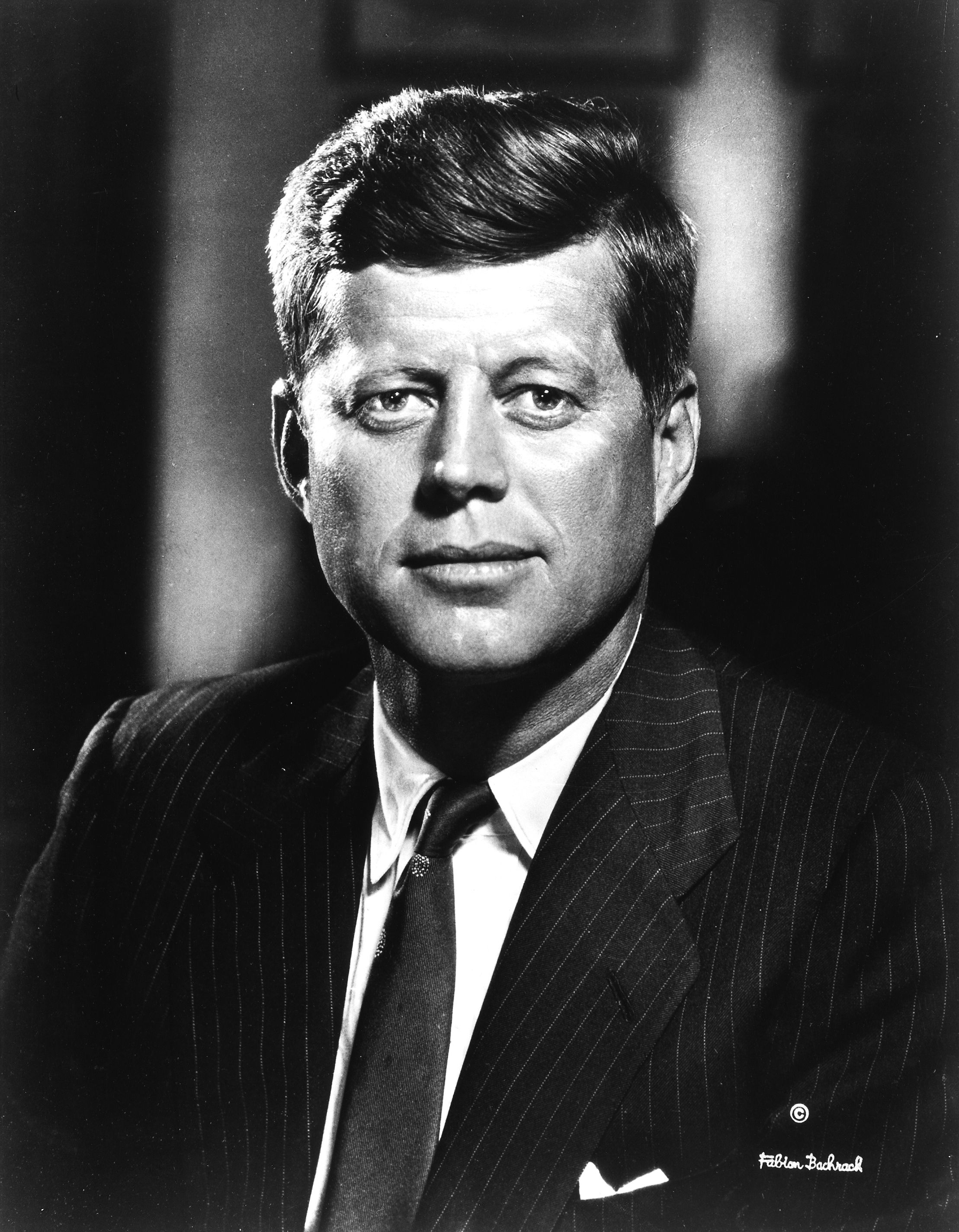
While yesterday marked the remembrance of President Kennedy’s tragic assassination by Communist Lee Harvey Oswald, it is usually not remembered what brought the President to Dallas fifty years ago. Set to address the Dallas Citizen’s Council at the Trade Mart that day, President Kennedy was not only there to bolster flagging national support for reelection — hardly certain that he would even be renominated — but he was also there to gain support for a stronger national defense and an $11 billion permanent, across-the-board tax cut. The tax cut had passed the House two months before and needed to survive the Senate. He had prepared the ground for this sharp cut since his election — taking top rates from 91% to 65% and bottom rates all the way down to 14% from 20%, also cutting corporate rates to 19.5% from 25%. It was not to be a temporary measure helping a few, it was to be permanent, helping Americans in every bracket.

Even more importantly, we need a return to the remembrance of JFK as he was instead of how modern revisionists, starting with the late Mrs. Kennedy, wish him to be. One cannot fault the widow’s grief for the loss of her husband, but, as Piereson observes, one cannot rationally join her and the chorus of voices since who have blamed America for killing the President (Camelot and the Cultural Revolution p.59, 178). They have blamed America first for every societal ill ever since.

Shortly after his death, it was she who lamented, “He didn’t even have the satisfaction of being killed for civil rights…It had to be some silly little communist. It even robs his death of any meaning.” His life had meaning but that meaning did not conform to the higher demands of an agenda already at work to recast history. In that pursuit of an alternative meaning, the modern Left could not bring itself to accept that the ideology they had courted for thirty some years had produced this heinous act. Consequently, the radical Left turned to the only conclusion consistent with their refusal to see communism for what it was — in JFK’s publicly announced conviction, a “Godless tyranny” and “evil” system (Stoll, JFK, Conservative p.64-6). America had to be the problem, they shouted. Thus began a narrative creating “Camelot,” publishing Mark Lane’s conspiratorial theories and now equating 1960s Dallas with the “angry” Tea Party movement of today. It is a fifty-year drum-beat that shrouds the truth, denying what JFK believed, in order to salvage a political worldview he never held.

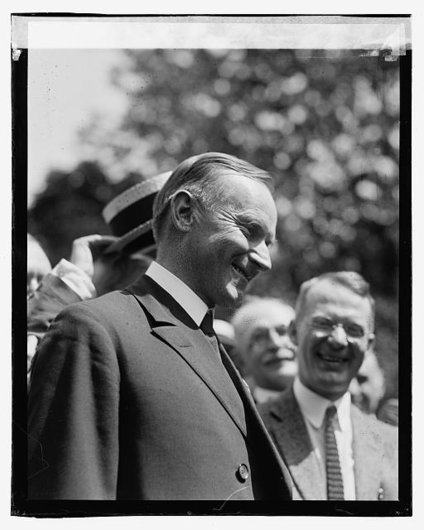
As we know, an earlier son of Massachusetts, has also been the recipient of decades of mischaracterization and politically-motivated revision: Calvin Coolidge. It is recalled that Coolidge’s only electoral loss was to a Kennedy, when John J. Kennedy narrowly won a seat on the School Board shortly after Coolidge had married. When Coolidge learned his loss was due to not having children yet, he replied, “Might give me time.” He had been married barely two months.
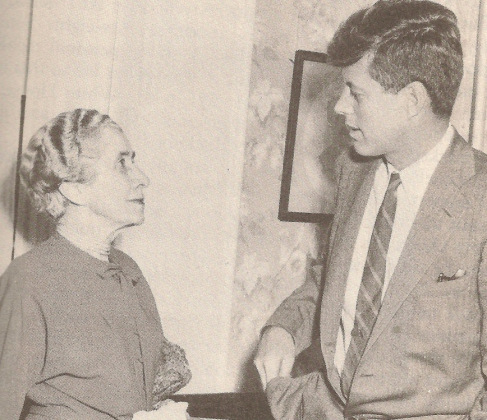
ImageThe ties to JFK, however, go deeper. True, Senator Kennedy helped raise funds and even serve on the Board of Trustees at the Clarke School for the Deaf, working beside Grace Coolidge until her passing in 1957. Upon hearing of her death, Senator Kennedy wrote:

“As a fellow trustee of Clarke School for the Deaf in Northampton I have a strong personal recollection of her untiring devotion and labors throughout her life to this most worthy cause…Since her days in the White House she continued to epitomize the qualities of graciousness, charm and modesty which marked her as an ideal First Lady of the Land” (Ishbel Ross, Grace Coolidge and Her Era, p.312).

In August 1962, President Kennedy enthusiastically sponsored the Coolidge Memorial Foundation’s efforts to promote Coolidge’s legacy nationwide. His support for both Mr. and Mrs. Coolidge speaks not only to their selfless service but also to JFK’s sincere belief that America remained exceptional and that lower taxes, economic growth, religious liberty, protection of property, the rights of the individual against the State, private enterprise, respect for law and order, moral leadership at home and abroad, opposition to unbridled government spending and the eventual defeat of socialism were principles worthy of preserving, regardless of political affiliation. To Kennedy as to Coolidge, they were principles every one of us could proudly champion because America is worth preserving. By keeping America strong, everyone is better for it. This is the Kennedy not allowed to be known by too many self-appointed gatekeepers of our history.

The speeches he gave on August 13, and December 14, 1962, and again, his State of the Union Address, January 14, 1963, embarrassed and shocked the Left of his day. According to Ted Sorenson, one of his closest advisers, Kennedy’s August 13 speech saying “no” to temporary, limited tax cuts, was “without qualification…the worst” speech he ever gave. When he laid out his argument for permanent, across-the-board cuts on December 14, attacks came from all quarters. Senator Albert Gore Sr., mystified why Kennedy was making tax cuts his top priority over health care, education and welfare programs, refused to support it. John K. Galbraith, the devoted Keynesian economist, maligned the message as “the most Republican speech since McKinley.” Galbraith’s disciple, Arthur Schlesinger Jr., excoriated any legitimate consideration of tax cuts as “full of Republican dogma” being “the worst speech the President had ever given” (Stoll p.135). Even Sorenson distanced himself from the President, comparing the substance of his message to something Hoover would say…insinuating, “…and we all know what happened when Hoover tried it.” Even former President Eisenhower decried tax reduction as “fiscal recklessness.” The suspicious distance between Kennedy and liberals of both parties came to a head on this issue in a way none other did.

This internal fight between a President, who was supposed to be of them, and an elite Left who inherited his legacy makes it all the more incredible that his plan – the fundamentals of it, anyway — became law in February 1964, three months after his death. It would validate his arguments that revenue would exceed prior levels and fixed, universal cuts would reinvigorate economic growth in a way more spending never could. Yet, his political heirs obscure that accomplishment to this day. Granted, the cuts were no where near the four Harding-Coolidge reductions in scope or intensity but it illustrated the very real power of the principle whenever championed. It would continue to fuel growth all the way until the recession of 1968. It would provide another potent demonstration for what was to be derisively called “supply-side” or “voodoo economics” when Reagan not only fought for but secured long-overdue tax cuts across-the-board in 1981.

Whether JFK was willing to expressly acknowledge his debt to Coolidge, as Reagan did, remains unsaid. It may be argued, though, that his sponsorship of the Coolidge Memorial Foundation in the midst of his 1962 battle against runaway Federal expenditures and for permanent tax cuts (in order to restore economic growth and then budget surpluses) was perhaps the best tribute he ever rendered to “Silenced” Cal.

Image

On “Government and Business”

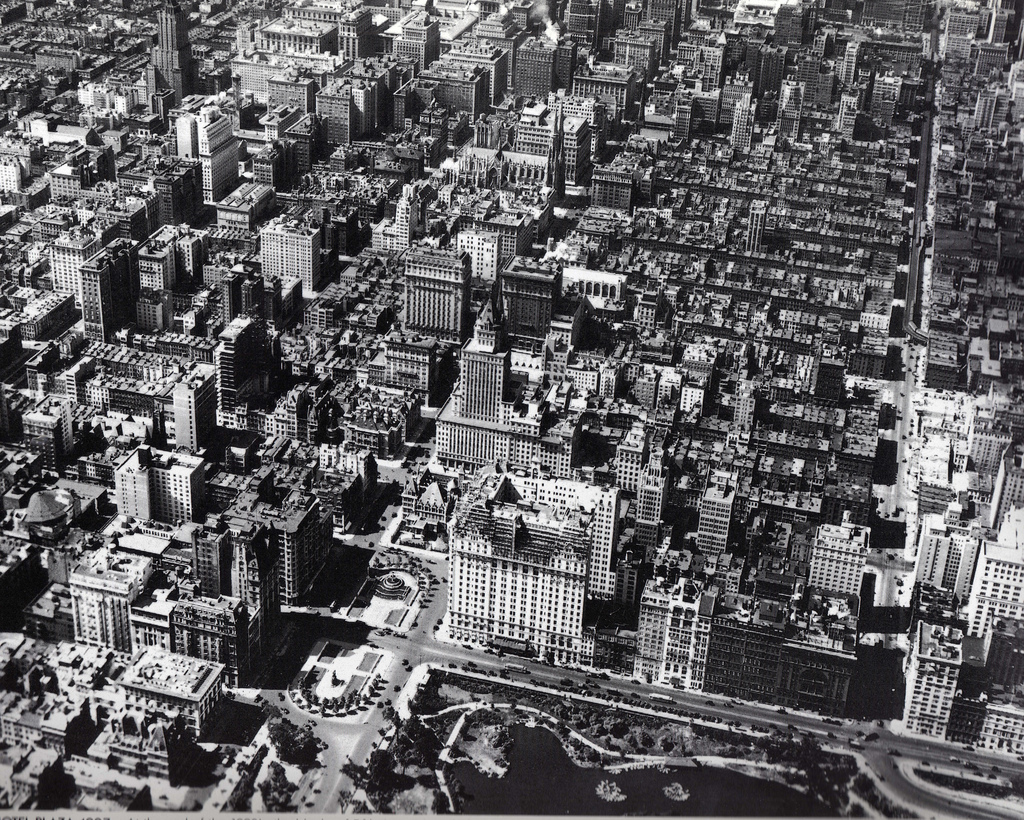
Aerial view of Midtown Manhattan, May 1925. The Plaza Hotel is in the foreground. The Empire State Building would not be constructed until 1931.

Aerial view of Midtown Manhattan, May 1925. The Plaza Hotel is in the foreground. The Empire State Building would not be constructed until 1931.

When Calvin Coolidge accepted the invitation to address the Chamber of Commerce of the State of New York on November 19, 1925, he would speak to the oldest collaboration of entrepreneurs, merchants and businessmen in America. This Chamber, after all, preceded the Declaration of Independence by eight years. Coolidge came to the bustling hub of the nation’s commerce to stand before some of the most accomplished leaders of the marketplace. Not intimidated by either their presence or reputations, Coolidge was caught by the awe and admiration he felt for what New York represented: “the genius of the American spirit.” He observed, “We are met not only in the greatest American metropolis, but in the greater center of population and business that the world has ever known. If any one wishes to gauge the power which is represented by the genius of the American spirit, let him contemplate the wonders which have been wrought in this region in the short space of 200 years. Not only does it stand unequaled by any other place on earth, but it is impossible to conceive of any other place where it could be equaled.” It was all due to the exceptionalism of America’s design, Coolidge would go on to declare. It was no accident that economic freedom could achieve such heights. Such was inherent in recognizing and protecting the opportunity of each individual.

Whereas ancient empires had consolidated political and economic controls into one central government, America was different. New York was still “an imperial city, but it is not a seat of government. The empire over which it rules is not political, but commercial.” This separation was not only deliberate but wise to maintain, Coolidge continued. It was right that, especially in New York City, the government remain merely one tenant among many, not an authoritarian landlord.

He likened Washington and New York City to free-flowing streams which run parallel to one another without ever joining. Had that clear separation never been made, however, the results would have been disastrous not only for New York but for the commerce of the entire country. “When we contemplate the enormous power, autocratic and uncontrolled, which would have been created by joining the authority of government with the influence of business, we can better appreciate the wisdom of the fathers in their wise dispensation which made Washington the political center of the country and left New York to develop into its business center. They wrought mightily for freedom.” The opposite holds equally true today. When government grows, individual opportunity shrinks in proportion to it. For Coolidge, the advantages of keeping business separate from government were easily apparent and readily justified.

What was lacking between the economic world and the political world was not greater supervision but greater understanding between them. While Coolidge could accurately assert that were any contest to take place between the knowledge of business by government and government by business, government officials would win. Considering the profound experience of administration leaders like Andrew Mellon and S. Parker Gilbert at Treasury, Charles Evans Hughes at State and Herbert Lord at the Budget Bureau, including many others with backgrounds in monetary and commercial fields, Coolidge was not exaggerating. Back then, there were highly capable businessmen in government, not to obtain favors for cronies but to serve for the good of the entire country. These were men who understand both worlds and yet even they knew their personal and constitutional limits and respected them.

Coolidge then said, the “general welfare of our country could be very much advanced through a better knowledge by both of those parties of the multifold problems with which each has to deal.” Even so, Coolidge explained, “I should put an even stronger emphasis on the desirability of the largest possible independence between government and business. Each ought to be sovereign in its own sphere.” Washington was not be lord and master subjugating commerce to each bureaucratic whim. The throne of commerce was not to be usurped and co-opted by political power. Likewise, governance for the welfare of all was not salable to the ambitions of business interests.

The outcome, when either authority is supplanted, was clearly abhorrent to Coolidge. “When government comes unduly under the influence of business, the tendency is to develop an administration which closes the door of opportunity; becomes narrow and selfish in its outlook, and results in an oligarchy.” This is what makes the charge ring hollow that Coolidge blindly served “Big Business” at the expense of the country as a whole. Individual opportunity is measured in several ways but by every standard — from unemployment rates of 3.8 per cent to 4.5 per cent annual growth to any number of consumption statistics — the door of opportunity was wider than it had ever been before thanks to an unwavering commitment to keep limited government and commercial freedom separate. Coolidge did not stop there, noting the other “side of the coin,” “When government enters the field of business with its great resources, it has a tendency to extravagance and inefficiency, but, having the power to crush all competitors, likewise closes the door of opportunity and results in monopoly.” Through a “reasonable vigilance” by the people to “preserve their freedom” the threat was not serious then and can be thwarted now.

As Coolidge stood before Chamber President Ecker and those comprising the organization, he took the occasion to define what he meant by “business.” His exposition should put an end to the long-cherished claim that he “worshiped ‘Big Business’ ” (i.e., rich corporations) at the expense of the “little guy” (the small business operator, the single entrepreneur or the blue-collar worker). On the contrary, to Coolidge, business meant everything Americans do. He did not see a series of groups in conflict: labor versus capital, industry versus agriculture, creditor versus debtor. Instead he saw a symbiotic collaboration made possible when opportunity is maximized, where all serve and are served.

He said, “I have used the word in its all-inclusive sense to denote alike the employer and employee, the production of agriculture and industry, the distribution of transportation and commerce, and the service of finance and banking. It is the work of the world.” Capitalism was not institutionalized selfishness; “it rests on a higher law. True business represents the mutual organized effort of society to minister to the economic requirements of civilization. It is an effort by which men provide for the material needs of each other. While it is not an end in itself, it is the important means for the attainment of a supreme end. It rests squarely on the law of service. It has for its main reliance truth and faith and justice.”

Those gathered in downtown Manhattan that day could have expected Coolidge to roll out grand assurances of preferential treatment by his Administration. Perhaps some of those present thought he would validate an unqualified laissez-faire policy, where government would, with a wink and nod, ignore any future abuses by corporations. They would both be disappointed. Coolidge ventured into the controversial territory of the purpose for government involvement in business. He rejected the “autocratic practice abroad of directly supporting and financing business projects.” The socialist approach where government subsidized particular entities it favored would have no place here in normal, every day America. Solyndra would have never obtained a dime under Coolidge. Stimulus appropriations, especially those benefiting winners and losers based on political alliances, would have been a betrayal of government’s proper purpose.

The emergency of the moment did not preclude the rule that America was to nurture free markets. Coolidge laid out his policy, “we have rather held to a democratic policy of cherishing the general structure of business while holding its avenues open to the widest competition, in order that its opportunities and its benefits might be given the broadest possible participation.” To Coolidge, government was not nor should it be participant in the “game.” Government was to encourage an environment of friendliness, not hostility, to the fullest involvement of everyone, letting the market decide success and failure. The government, enforcing the law to prevent monopolies and place standards of regulation on transportation and trade was not to assume powers belonging to business, it was “to have business remain business. We are politically free people and must be an economically free people.” The welfare of all the people is given to the national government, not to an independent commission or trade association. Government cannot farm out that responsibility if opportunity for everyone is to be maximized.

Coolidge was no blind believer in government power, as he made plain next, “It is notorious that where the government is bad, business is bad.” The protection of property and the enforcement of lawful order is government’s first and most essential contribution to business. Even these necessary functions have been misapplied and “run into excesses…Regulation has often become restriction, and inspection has too frequently been little less than obstruction.”

Recalling the experiences of the recent past, Coolidge noted that long after informed public opinion corrected the abuses by those taking advantage of economic freedom to abuse others, an unwarranted prejudice remained. That widespread public prejudice becoming enshrined in legislation ended up doing far more harm than good to economic opportunity. “It is this misconception and misapplication, disturbing and wasteful in their results, which the National Government is attempting to avoid.” Coolidge neither nursed a prejudice against business to conscientiously correct abuses nor did he subscribe to an unquestioned confidence in government to right all wrongs.

The lesson of history was not to grasp for greater regulatory countermeasures but to keep faith in the American people, who corrected the abuses without legislation in the past and could be trusted to do so with continued vigilance into the future. The answer was not to be found by looking to government to “fix” business. The answer is found in the public upholding common standards for just dealing.

Seeing the return of prosperity and unprecedented expansion of opportunity, Coolidge seized the occasion to enumerate the additional ways government reinforces business. First, a policy of economy provides the “only method of regeneration.” Pairing tax reduction and protective tariff rates releases pent-up capital and gives production the incentive to produce. Second, a policy pursuing the elimination of waste in the use of resources protects the “smaller units of business,” the producer, the wage earner and the consumer. The previous five years, Coolidge praised, could lay claim to many successes on the part of business allowed to find solutions, instead of government mandating actions. By offering a cooperative environment in which to work, government fostered freer business.

The regulation of corporations twenty years before had served its purpose, now this shift for government and business was no less important. The collaboration underway was producing a real and solid progress. One need only see the improvement of living standards, the increase in affluence and the free movement of capital to perceive its success. This was not all, however. Debt was liquidating while taxes were coming down. Wages were actually going up while prices were actually coming down. These were results everyone could see. “The wage earner receives more, while the dollar of the consumer will purchase more,” Coolidge told the Chamber. “It must be maintained” because more work remained to be done. Business still had much to do and government needed to keep policy consistent so progress continued.

All of these advancements were not merely the simple give and take of a market transaction. They contained great moral and spiritual implications, not only for America but for the rest of the world. America had just saved Europe from “complete collapse,” Coolidge reminded his audience. “It ought everywhere to be welcomed with rejoicing and considered as a part of the good fortune of the entire world that such an economic reservoir exists here which can be made available in case of need.” Government economy then pertains as much to foreign policy as to domestic good. It was no less imperative in the settling of foreign war debts. “Peace,” Coolidge would say, “rests to a great extent upon justice, but it is very difficult for the public mind to divorce justice from economic opportunity.” Our political affairs cannot attain righteous ends without preserving the freedom of the marketplace.

As Coolidge neared the close of his remarks, he urged his listeners of the great expectations placed on America, within man’s work in this world. “The working out of these problems of regulation, Government economy, the elimination of waste in the use of man effort and materials, conservation and the proper investment of our savings both at home and abroad, is all a part of the mighty task which was imposed upon mankind of subduing the earth. America must either perform her full share in the accomplishment of this great world destiny or fail.”

Then Coolidge pressed the point home that all of our efforts, all of our relations must rest on “a system of law.” It is upon law, the reasonable and orderly appeal to higher standards that success will continue. Reflecting on George Washington, President Coolidge derived his closing inspiration in what the future held. As Washington did, “[w]e must meet our perils; we must encounter our dangers; we must make our sacrifices, or history will recount that the works of [George] Washington have failed. I do not believe the future is to be dismayed by that record. The truth and faith and justice of the ancient days have not departed from us.”

CC White House lawn

“Calvin Coolidge: A Silver Lining”

Coolidge+smile

“Calvin Coolidge: A Silver Lining”

Brittany Baldwin of The Imaginative Conservative has produced a superb review of Dr. Thomas Silver’s enduring work, Coolidge and the Historians. While Dr. Silver is regrettably no longer with us, Ms. Baldwin has done well not only in assessing the value of recent studies on the thirtieth president (as in Coolidge by Amity Shlaes and Why Coolidge Matters by Charles Johnson), she looks back to the prime mover of restoration for Coolidge’s record and legacy.

It was Dr. Thomas Silver who returned honest standards of scholarship to the most underrated president of modern time. It was Dr. Silver’s work who laid the foundation for a renewed appreciation of Coolidge now. Ms. Baldwin has done a commendable job in reminding us of the indebtedness we all hold to this good and faithful scholar, Thomas B. Silver, the man who “started it all.” As Dr. Silver continues to exemplify the best of Claremont Institute so Ms. Baldwin is a great credit to Hillsdale College.

tomsilver