On “Negative” Liberties

For Coolidge, when the Constitution said “no” it not only meant what it said, it said so for a good reason. It said “no” in order to preserve good liberties. Much maligned these days is the importance of saying “no,” when it is much easier to say “yes.” While facing the consequences of saying “no” is undeniably unpleasant to the officeholder in the present, it yields good fruit down the road to those who remain unmoved by the intense pressures to relent on behalf of this or that interest.

Much in vogue in recent decades is the academic ridicule of saying “no” when it comes to constitutional governance. It simply is not fashionable to preserve, protect and defend a charter believed to be obsolete and pre-modern. By dubbing them as “negative liberties,” the freedoms articulated by the Bill of Rights (our first ten amendments to the Constitution), it is hoped that a stigma will attach to them without having to explain in what way they somehow lack soundness or credibility.

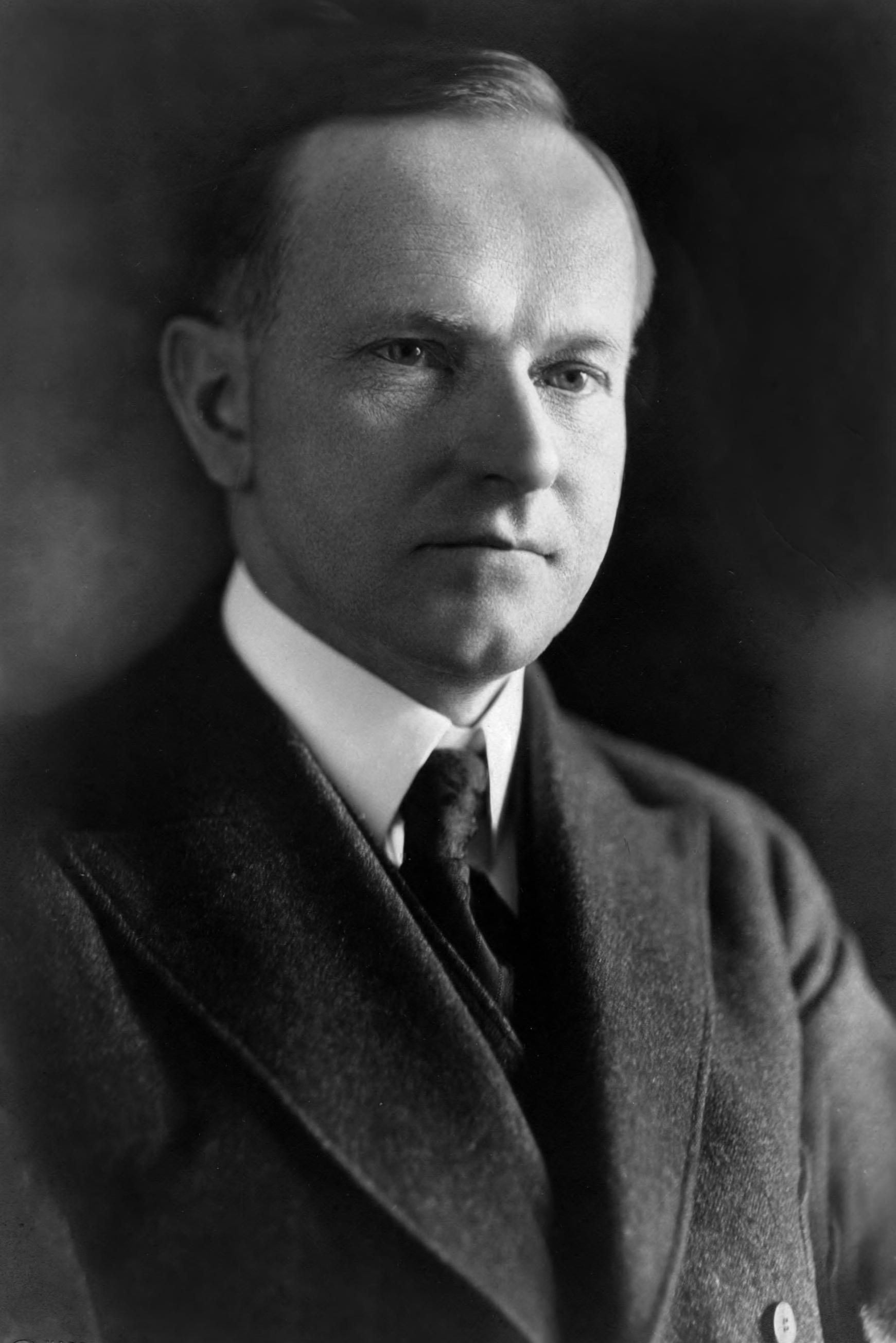
It is fascinating to consider that a man so widely proclaimed by far too many historians to be an embodiment of presidential shortsightedness was far more prescient and, especially, honest than they. Calvin Coolidge, long before Justice Brennan pined for a “living” Constitution, struck at the heart of this argument. It was not that the Constitution was so old or its provisions so inept at relating to modern Americans, the essence of the complaint went deeper than that. Seeing the essential nature of the matter, Coolidge explained what was really bothering the proponents about a constitution that said “no” rather than “yes.” He first described the grievance, “We often hear people say that our Constitution is antiquated, that it might have been suited to the conditions existing when it was adopted, but we have had so many changes in our mode of life since then that it is not now applicable to our needs.” Some today even go so far as to claim the Constitution “reflects deep flaws in American culture,” remedied not by better application of its principles or through the process of amendments (outlined within the document itself) but by transforming society through unilateral government power.

When specifics are sought, however, the complaint unravels. It unravels because the loudest proponents of replacing the Constitution do not understand the timelessness of human nature. The same reality we face today confronted the Framers two hundred years ago. They grappled with the same issues of individual responsibility versus government power. The Constitution, addresses all of human nature’s weaknesses and strengths to form a framework of principles on which to build now and into the future. Steeped in direct experience with unchecked power, those men and women of two centuries ago preserved a balance of sovereignty decisively with the people not government. Explaining how this framework is “deeply flawed” confuses the imperfections of human nature with the best means ever attained of restraining that human tendency to abuse power and destroy the liberty of others.

For Coolidge, like those men and women of colonial America, “negative” liberties were not a bad thing. They were not to be mocked, maligned or feared. They were safeguards against depriving liberties so precious to all. They kept government in check, limited to specific tasks delegated to it by the states and individuals. Coolidge knew the “beef” with the Constitution went deeper than its supposed flaws. As he would say, “When such people are pressed for particulars, it often develops that they do not want to be limited to raising taxes for public purposes, they despise due process of law, they desire to apply confiscation to other people, impair the obligation of contracts and take property for public use without just compensation.”

The root of the problem, then, was not in the Constitution but in a government hungering to live outside its limits and lawful confines. It is a decidedly positive thing that liberties are denied under such circumstances by our Constitution. When liberties are regarded not as constructive freedoms but as stifling obstructions, it is well that a constitution be zealously supported to say “no.” Granting a power unrestrained by any “no,” to what is, by nature, a hungry Leviathan (as Hobbes coined absolute government) imperils the very real and practical liberties we exercise every day. By performing our liberties dutifully the freedom which government assumes to act for us is correspondingly negated. Coolidge reminds us that such a circumstance is not a negative at all. It restrains those who need restraint and frees those best equipped to exercise liberty. Each of us is infinitely better off as a result.
Image

On those Roaring Twenties

Image

Historian Paul Johnson


It is fitting that those who helped drive the Reagan Revolution forward humbly credit their inspiration to the shy, quiet man from Vermont, Calvin Coolidge. In a very real way he bequeathed the essential recipe for the successes of the 1980s. While the ingredients were not precisely followed in every respect, especially concerning the payment of debt, the principles contained such power that even Congressional spending could not slow it down.

President Reagan’s combination of political saavy, biting wit, unassuming competence and ability to cut through the complex and see the simple essence of an issue derived not merely from his life’s experiences, they found inspiration from his study of Coolidge. Reagan, after all, like several of the men and women who comprised his team of “revolutionaries,” first came to understand the world during the Coolidge Era and in the years shortly thereafter. The lessons “Silent Cal” taught in both word and action left abiding impressions on future Secretaries of the Treasury (Donald T. Regan) and Defense (Caspar Weinberger) and future Attorney General Edwin Meese III, along with many others.

Two scholars, in particular, were returning to Coolidge’s record in order to reassess his very real achievements. In 1982, Thomas B. Silver, in Coolidge and the Historians, would lead this effort and unearth most of the shoddy and partisan reporting against the thirtieth president and the 1920s. In 1984, Paul Johnson, in the sixth chapter of his Modern Times: The World from the Twenties to the Nineties, would roll back the shroud thrown over not only the genuine triumphs of the Roaring Twenties but also the legacy of Mr. Coolidge. As Mr. Johnson would reflect on this reserved and disciplined leader, he would not only find him to be “the most internally consistent and single-minded of modern American presidents” but he, like all of history’s great men, was not an intellectual. To Mr. Johnson, that is a very good thing because “[a]n intellectual is somebody who thinks ideas are more important than people.” Wilson and Hoover approached the world this way while Coolidge, and Reagan, did not. To Coolidge and Reagan, people were the preeminent focus of their policies. The “smartest ones in the room” miss that all-too-obvious truth. People were genuinely benefited by Coolidge’s leadership.

Johnson could accurately survey the Twenties not as an aberration of gross materialism or empty gains but as an unprecedented prosperity that was both “very widespread and very solid” (p.223). “It was,” Johnson corrects, a prosperity “more widely distributed than had been possible in any community of this size before, and it involved the acquisition, by tens of millions, of the elements of economic security which had hitherto been denied them throughout the whole of history. The growth was spectacular.”

As a direct result of Coolidge prosperity, national income jumped from $59.4 to $87.2 billion in eight years, with real per capita income climbing from $522 to $716. Millions of workers purchased insurance for the first time, a phenomenon of a healthy economy Obama is deliberately ignoring. Savings quadrupled during the decade. Ownership in fifty stocks or more reveals the vast majority were not “the rich,” but housekeepers, clerks, factory workers, merchants, electricians, mechanics and foremen. Union membership plummeted from just over 4 million at the outset of the 1920s to 2.5 million by 1932. As small and large businesses succeeded, people were able to provide holidays with pay, insurance coverage and pensions as well as other benefits, giving substance to Coolidge’s dictum that “large profits mean large payrolls” thereby making “collective action superfluous,” as Johnson observes (p.225). Home ownership skyrocketed to 11 million families by 1924.

Perhaps the most obvious index of prosperity could be seen in automobile ownership. What began as a novelty for just over 1 million Americans in 1914 (with less than 570,000 produced annually) exploded into 26 million owners with over 5.6 million autos produced annually by 1929. Air travel was fast becoming the normal mode for “regular” folks and classes were rapidly dissolving from upward mobility. In 1920 a meager $10 million was spent on radios. By 1929 that figure had surpassed $411 million, which was itself small compared to the $2.4 billion spent on electronic devices as a whole in the Twenties.

These years were not, as some would claim later, removed from an appreciation of the past. The expansion of education is “[p]erhaps the most important single development of the age” (Johnson 225). Spending on education increased four times what it was in 1910, from $426 million to $2.3 billion. But unlike today’s habit of throwing money at the problem, it brought results. Illiteracy actually went down over fifty-percent. A “persistent devotion to the classics,” with David Copperfield at the head of the list, defined the decade. Culture was reaching the homes of those who had once been the least connected Americans through reading clubs, youth orchestras and “historical conservation” movements that would restore sites like Colonial Williamsburg.

“The truth is the Twenties was the most fortunate decade in American history, even more fortunate than the equally prosperous 1950s decade, because in the Twenties the national cohesion brought about by relative affluence, the sudden cultural density and the expressive originality of ‘Americanism’ were new and exciting” (p.226).

The problem, as Mr. Johnson concludes, with the expansion of the Twenties was not that it was “philistine or socially immoral. The trouble was that it was transient. Had it endured, carrying with it in its train the less robust but still (at that time) striving economies of Europe, a global political transformation must have followed which would have rolled back the new forces of totalitarian compulsion, with their ruinous belief in social engineering, and gradually replaced them with a relationship between government and enterprise closer to that which Coolidge outlined…” More of the same policies would have prevented much of what followed in the 1930s and beyond. “[M]odern times would have” indeed “been vastly different and immeasurably happier.” The purpose served by Coolidge “minding his own business,” as he put March 1, 1929, was perhaps more a forecast of his successors than an introspection. If only Hoover had been listening more carefully. The downturn in 1929 would certainly have more closely resembled the depression of 1921 and, with the Harding-Coolidge recipe of “masterful inactivity,” have spared millions of lives the terrible suffering and avoidable loss brought on by Hoover’s spending and Roosevelt’s “New Deal.”