The Coolidges in Georgia, Winter 1928-29

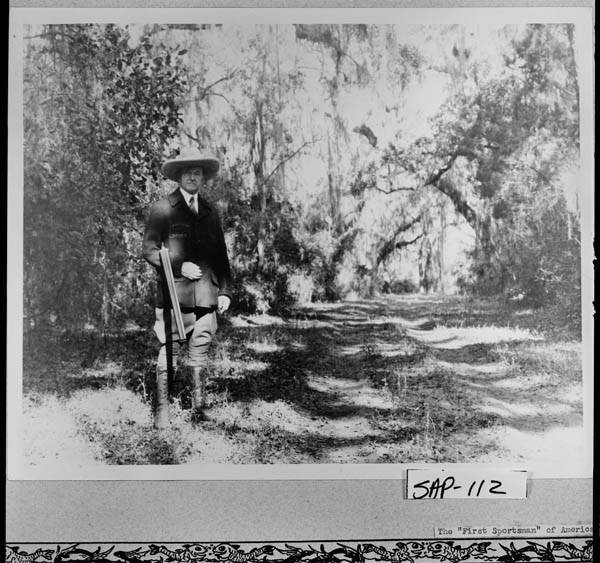
ImagePresident Coolidge, dubbed here “The ‘First Sportsman’ of America,” pausing before his quail hunt in the scrub of Sapelo Island, Georgia.

President and Mrs. Coolidge arrive at the train station in Brunswick, Georgia, before heading out to Sapelo Island.

President and Mrs. Coolidge arrive at the train station in Brunswick, Georgia, before heading out to Sapelo Island. Courtesy of the Georgia Archives.
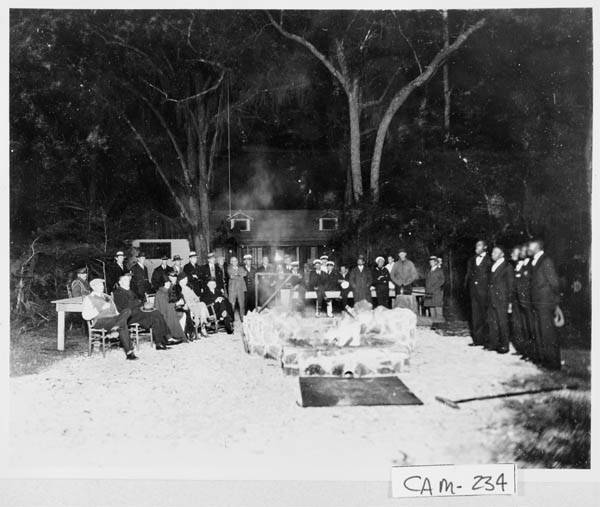
The Coolidges at Cabin Bluff enjoying an old-fashioned oyster roast around the fire. The President and Mrs. Coolidge are seated in the front row on the left (Grace is third from left, Calvin sits on the far right end).

The Coolidges at Cabin Bluff enjoying an old-fashioned oyster roast around the fire. The President and Mrs. Coolidge are seated in the front row on the left (Grace is third from left, Calvin sits on the far right end). Courtesy of the Georgia Archives.

President Coolidge at Cabin Bluff with the "spiritual" singers of Georgia Industrial College.

President Coolidge at Cabin Bluff with the “spiritual” singers of Georgia Industrial College. Courtesy of the Georgia Archives.

The Coolidges visit the Sugar House ruins belonging to John H. McIntosh. Notice the tabby oyster shells used commonly along the Virginia, Carolina, Georgia and Florida coasts as a building material. These were thought to be the old Spanish mission of Santa Maria, St Marys, Georgia.

The Coolidges visit the Sugar House ruins, St Marys, belonging to John H. McIntosh. Notice the tabby oyster shells used commonly along the Virginia, Carolina, Georgia and Florida coasts as a building material. These were thought to be the ruins of the old Spanish mission of Santa Maria. Courtesy of the Georgia Archives.

Crowds gathered to see the First Lady at a reception in her honor, St Marys dock.

Crowds gathered to see the First Lady at a reception in her honor, St Marys dock. Courtesy of the Georgia Archives.

President and Mrs. Coolidge welcomed by their hosts, Mr. and Mrs. Howard E. Coffin, at the Sea Island Yacht Club.

President and Mrs. Coolidge welcomed by their hosts, Mr. and Mrs. Howard E. Coffin, at the Sea Island Yacht Club. Courtesy of the Georgia Archives.

At Sea Island, December 1928, Coolidge planted "The Constitution Oak" on the grounds of The Cloister, the hotel established by the Coffins (pictured here beside the Coolidges).

At Sea Island, December 1928, Coolidge planted “The Constitution Oak” on the grounds of newly constructed Spanish Revival style hotel, The Cloister, designed by Addison Mizner and owned by Howard E. Coffin and his wife (pictured here beside Grace Coolidge). Courtesy of the Georgia Archives.

The Coolidges visiting the Monument to the Battle of Bloody Marsh, July 7, 1742, when the Spanish attacked Georgia held by the British, under General James Oglethorpe, whose Scottish Highlanders soundly defeated the Spaniards in what proved to be the first decisive engagement in the Western Hemisphere. General Oglethorpe redeemed his reputation after the defeat at St. Augustine two years before. It would set America further down the road on her course to independence.

The Coolidges visiting the Monument to the Battle of Bloody Marsh, July 7, 1742, when the Spanish attacked Georgia held by the British, under General James Oglethorpe, whose Scottish Highlanders soundly defeated the Spaniards in what proved to be the first decisive engagement in the Western Hemisphere. General Oglethorpe redeemed his reputation after the defeat at St. Augustine two years before. It would set America further down the road on her course to independence. Courtesy of the Georgia Archives.

President Coolidge watches the steer riding along the beaches of Sapelo Island, December 1928.

President Coolidge watches the steer riding along the beaches of Sapelo Island, December 1928. Courtesy of the Georgia Archives.

Coolidge and Mr. Coffin happen upon some sea turtles on the beach, Sapelo Island.

Coolidge and Mr. Coffin happen upon some sea turtles on the beach, Sapelo Island. Courtesy of the Georgia Archives.
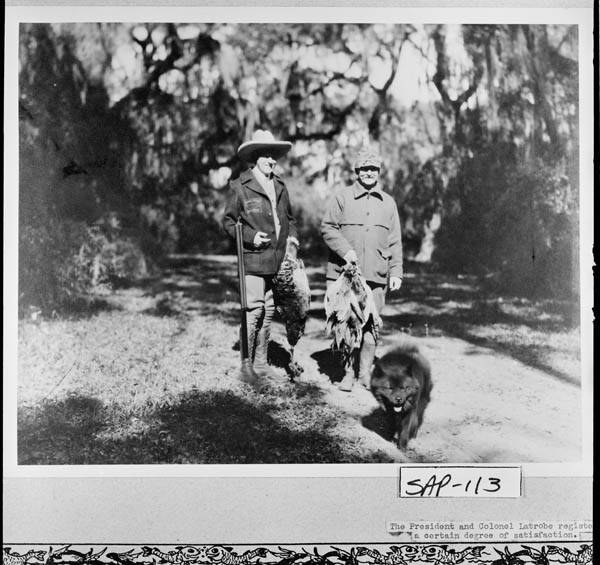
President Coolidge and Colonel Latrobe, unsuccessful at quail, do shoot a few pheasants during the hunt, Sapelo Island.

President Coolidge, unsuccessful at quail, and military aide Colonel Latrobe, proudly display the pheasants shot during their hunt, Sapelo Island. Courtesy of the Georgia Archives.
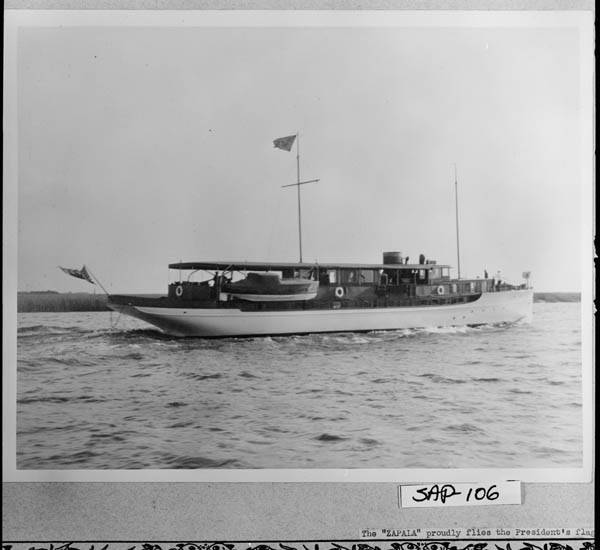
The motor yacht Zapala sails with the Presidential party aboard. Note the President's flag is raised.

The motor yacht Zapala sails with the Presidential party aboard. Note the President’s flag is raised. Courtesy of the Georgia Archives.

President Coolidge and another man, perhaps Secret Service, standing on the afterdeck of the Zapala.

President Coolidge and another man, perhaps Secret Service, standing on the afterdeck of the Zapala. Courtesy of Mystic Seaport and Connecticut History Online.

The Coolidges on the afterdeck of the Zapala, designed by A. E. Luders and built in Stamford, CT, in 1927.

The Coolidges on the afterdeck of the Zapala, the yacht designed by A. E. Luders and built in Stamford, CT, in 1927. Courtesy of Mystic Seaport and Connecticut History Online.

The Presidential hunting party disembarks from the Zapala, which would consider Georgia its home base for fourteen years, 1927-1941.

The Presidential hunting party disembarks from the Zapala, which would consider Georgia its home base for fourteen years, 1927-1941. Courtesy of the Georgia Archives.
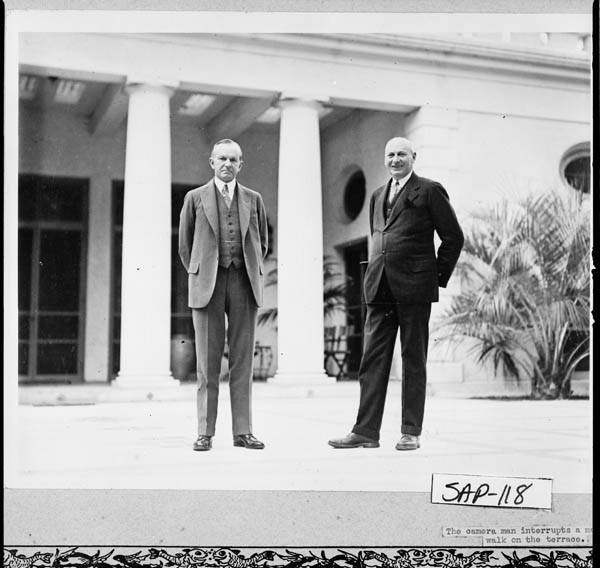
Calvin Coolidge and his friend and host, entrepreneur Howard E. Coffin, as they walk the terrace of "The Big House" built by Thomas Spalding, 1810, Sapelo Island.

Calvin Coolidge and his friend and host, entrepreneur Howard E. Coffin, as they walk the terrace of “The Big House” built by Thomas Spalding, 1810, Sapelo Island. Courtesy of the Georgia Archives.
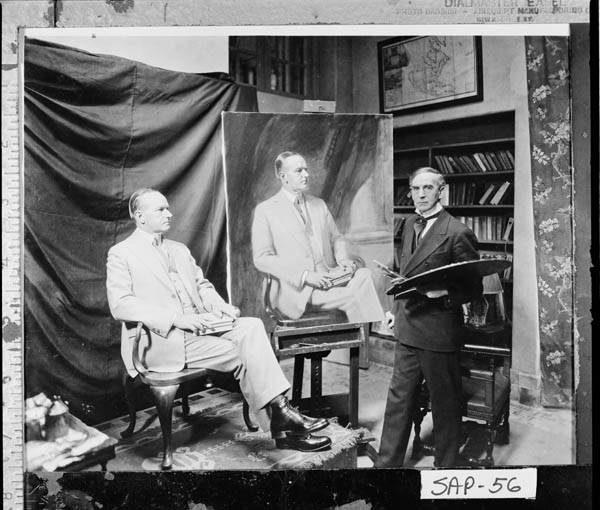
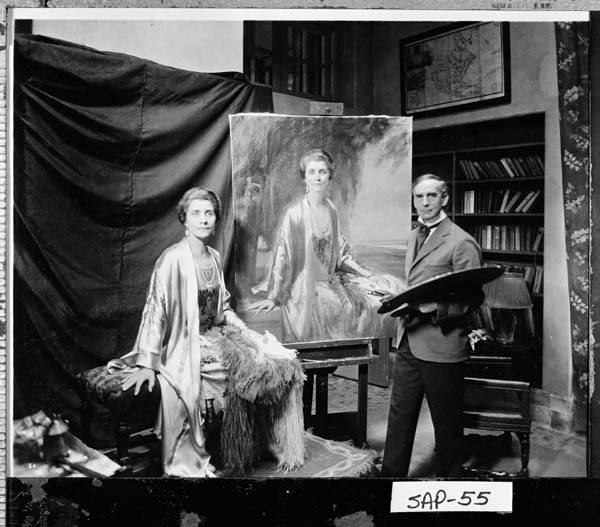
cc-with-painter-salisbury-and-portrait-on-sapelomrs-coolidge-with-painter-salisbury-and-portraitIt was also during their stay, as we have mentioned before, that the Coolidges both sat for British painter Frank O. Salisbury at “The Big House” on Sapelo Island. Salisbury would be commissioned again in 1934, following Mr. Coolidge’s death, to produce another portrait for the American Antiquarian Society. Mr. Salisbury, at that time, painted Coolidge in a dark suit with strikingly similar pose to the original work seen above six years earlier.
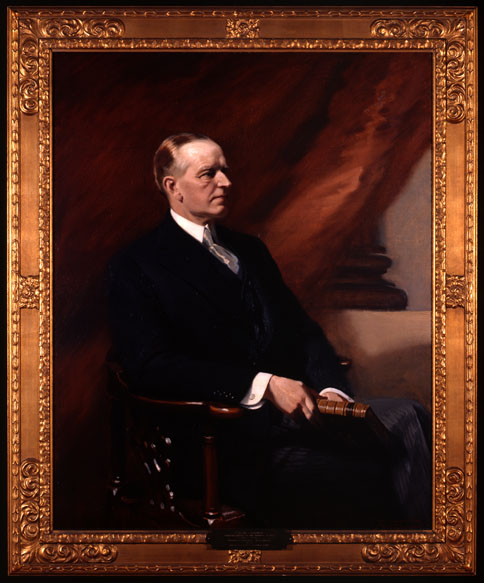
Calvin Coolidge, posthumous portrait by Frank O. Salisbury, 1934.
Calvin Coolidge, posthumous portrait by Frank O. Salisbury, 1934.

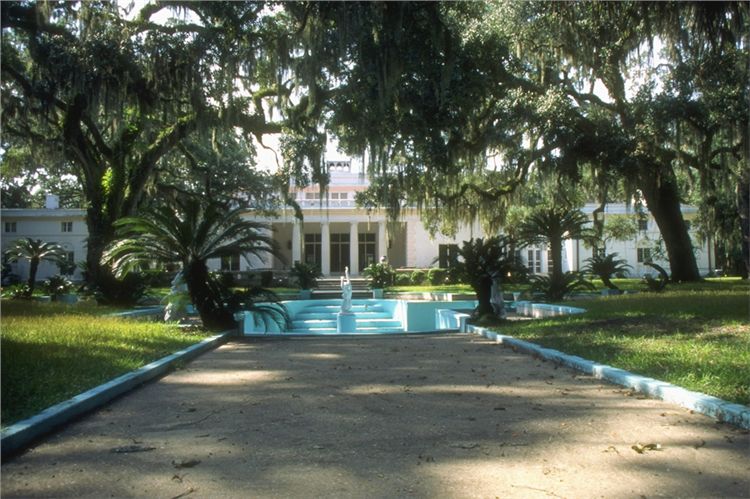
View to the front Terrace of "The Big House" (what is now called The Reynolds Mansion), where Coolidge and Coffin stood.

View to the front Terrace of “The Big House” (what is now called The Reynolds Mansion), where the Coolidges stayed eighty-five years ago.
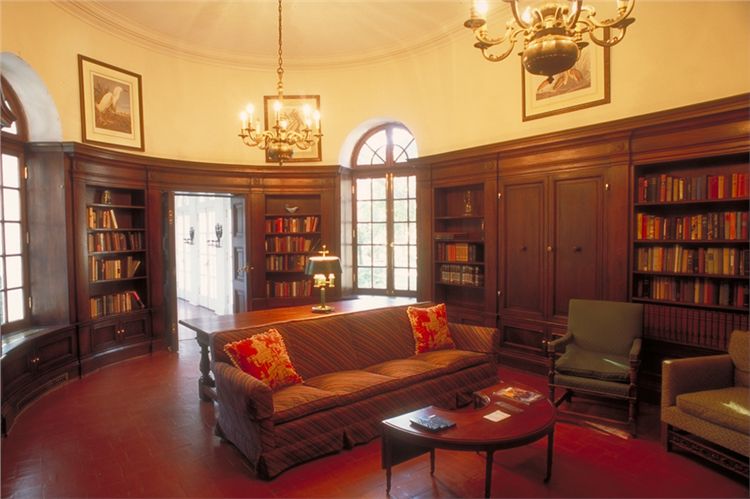
The library where President and Mrs. Coolidge had their portraits painted. The background for the First Lady's portrait is the picturesque Spanish moss and green lawns of this, as with so many, Southern mansions.
This is the library where President and Mrs. Coolidge had their portraits painted. The background for the First Lady’s portrait is the picturesque Spanish moss and green lawns of this, as with so many, Southern mansions.

“A President and a Rug: Hidden History” by Kate E. Bradley

“A President and a Rug: Hidden History” by Kate E. Bradley

Here is a fascinating portion of the back story behind Dr. Deranian’s research that has become the recently published book, “President Calvin Coolidge and the Armenian Orphan Rug.” The suffering and loss endured by over one hundred and thirty-five thousand orphans and more than one million others through Turkish genocide brought the best out of Americans, who contributed millions of dollars, supplies and, for some, even their own lives to rescue as many of the Armenian people as possible. It is a long overlooked detail of President Coolidge’s foreign policy that he encouraged the relief effort, even meeting two of the orphans in 1926 who would eventually call America their home. An enormous rug gifted to President Coolidge in gratitude for America’s actions through the rescue effort headed by Near East Relief, speaks not only to the good will between two peoples but to the timeless reminder that America responds with open hearts and ready service, without a single government mandate, to help defend life and freedom for the most unfortunate anywhere in the world.

Now that the Smithsonian has been inexplicably denied permission by the White House to display the rug, it is shamefully not too far-fetched to conclude that this particular Administration has little concern for the gift’s meaning and even a deliberate interest in suppressing a celebration of the force for good Americans have been not only to Armenians but multitudes of others throughout our history.

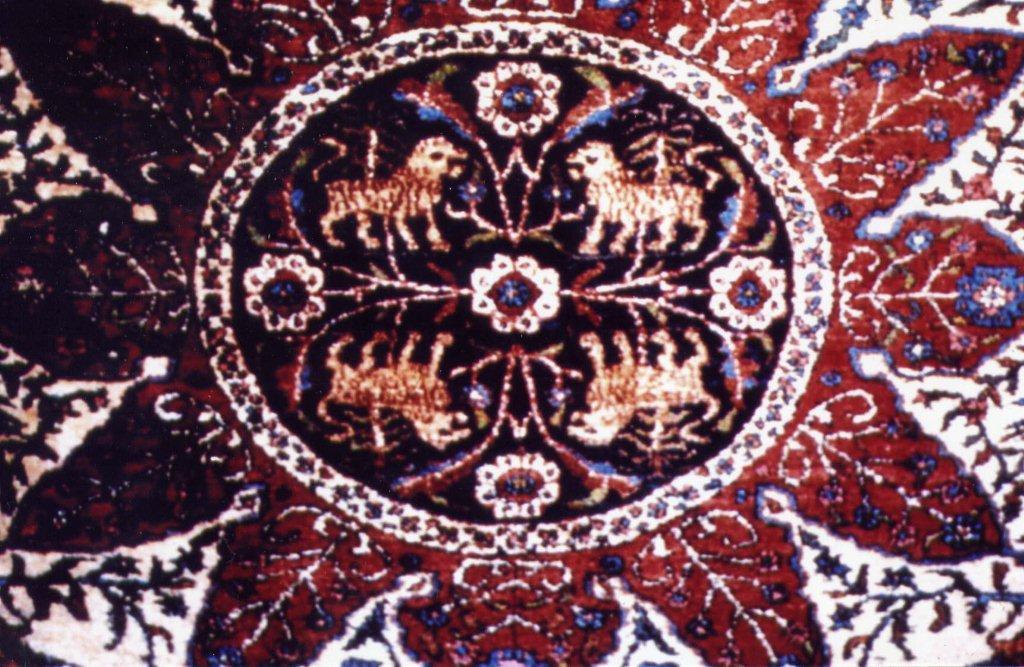
A few of the more than 4.5 million knots lovingly forming this 11' 7" x 18' 5" rug. 400 orphan girls spent 10 months preparing this gift to America.

A few of the more than 4.5 million knots lovingly forming this 11′ 7″ x 18′ 5″ rug. 400 orphan girls spent 10 months preparing this gift to America.

On Modern Art

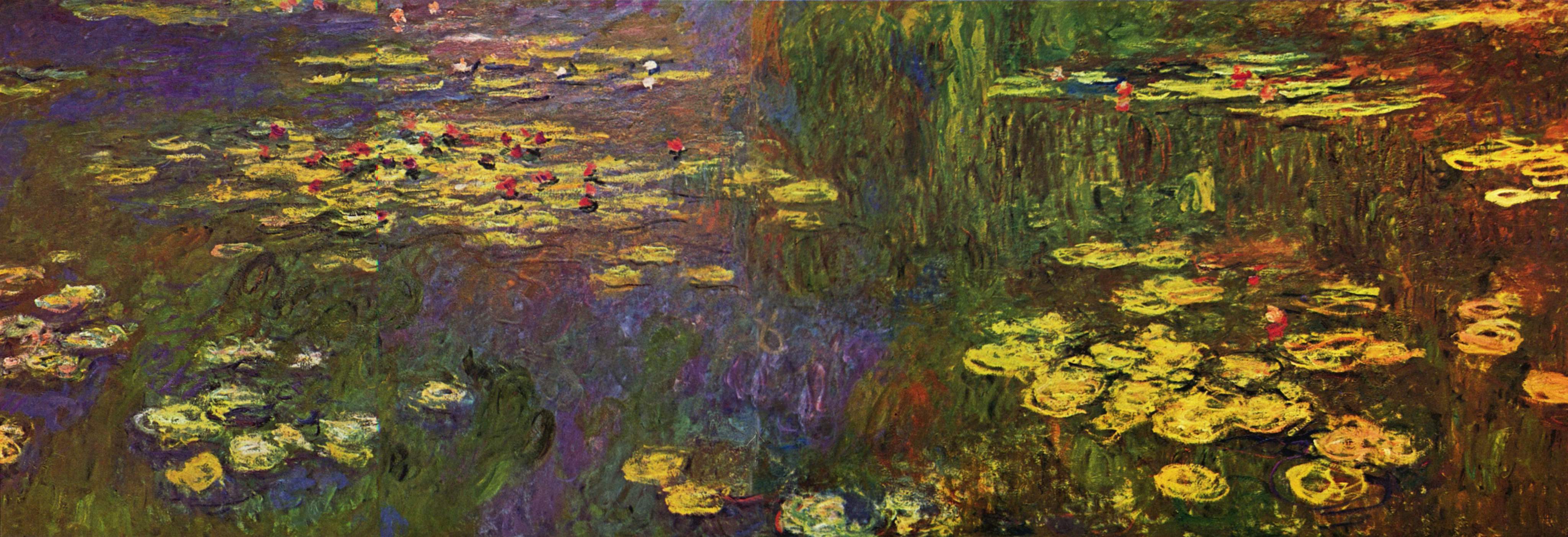
Painting of water lilies by Claude Monet, completed in 1926.

Les Nympheas – Painting of water lilies by Claude Monet, completed in 1926.

When British critic and socialite Beverly Nichols interviewed Calvin Coolidge in 1927 for Nichols’ book, “The Star Spangled Manner,” the subject turned to modern art. When it came to the frequently random images hailed as great work, “Silent Cal” was anything but taciturn. As he peered into the canvases of those paintings, he saw something far more profound than haphazard brush strokes. He told Mr. Nichols,

“Not long ago, I happened to visit an exhibition of modern pictures. it was held in Pittsburgh, and almost every European nation was represented–[the United Kingdom], France, Germany, Italy–the whole lot of them. And as I looked at those pictures, I felt that I could see through them, into the minds of the nations which had created them. I could see the torment out of which they had been born. If that nation’s psychology was still diseased, so was its art. The traces of neurosis were unmistakable. If, on the other hand, the nation was on the road to recovery, if its people were rediscovering the happiness which they had lost, the story was told in the picture, too.”

Art reflects a nation’s health and well-being. Artists are usually the earliest prophets of a nation’s direction. A nation’s art reflects its grasp, or refusal to face, reality. Coolidge’s understanding of this simple yet profound truth illustrates how deep a thinker he actually was.