
For too many history disintegrates into a quest for perfection. It becomes virtually an act of salvation to either canonize or demonize, foisting expectations on others we would miserably fail to approximate ourselves were the tables turned. In what has achieved new heights of absurdity in recent years, we effortlessly damn or redeem others for the splinter we perceive in them all the while blindly oblivious to the beam in our own eyes. Such an indictment has been unleashed on Christopher Columbus, the man who may not been the first to arrive from other continents to the Americas but whose actions and motivations opened doors for unprecedented good fruits, many of which we now enjoy in truly historic measure. His coming can hardly be chalked up to an event with no redeeming results at all, can it? Would we give everything we are away to return to 1491? After all, we don’t really live that way on other fronts: Grease spot in the driveway? Bulldoze the concrete. Muddy shoes? Throw them away. Smudged phone? Trash it. Dirty clothes? Burn them. Pet with a non-debilitating physical defect? Terminate it. Dinner burnt? Kill the cook. Of course not! We forbear, tolerate, cherish, understand. We are too often astonished at the supposedly novel realization that humanity, as individuals and as peoples, lack perfection. This is something we have not possessed for quite a long time now. This used to be thoroughly understood but that was also when history was not taught as a set of disconnected sub-sub disciplines unrelated to any other knowledge, especially philosophy, theology, and any of the sciences.
Perspective & Proportion
Perspective and sense of proportion are measures of maturity. The lack thereof are likewise indicators of immaturity, the childishness of inexperience and a gauge of the untaught. History classrooms, as James W. Loewen (in Lies My Teacher Told Me) points out, instead of imparting the wisdom of ages usually leaves the student less informed than when he or she entered. Literature has gone much the same direction. We comprehend less now than many generations could extemporaneously recount and yet we are more certain in our rigidly vengeful ignorance than they in their far broader insight. We are ready to cast every conceivable negative consequence (whether or not connected directly or logically) upon the historical targets of our discontent. Ultimately, this is born of a discontent with ourselves. Our childish rage, fueled as is often the case by Marx’s view of the world (himself one of history’s most inept prophets), incinerates everything to build a new world. It turns out the measure of that new world is a continually sliding and amorphous scale of values, the very product of minds devoid of perspective and proportion. Those do not come from humanity because, as history once taught, humanity is imperfect and sinful.

Tares & Wheat
The quest to find perfection in human ideals, to either canonize those we deem worthy or demonize those we lack the maturity to understand, will always fail. It will fail in no small part because the real world is not so neatly divisible as so many marbles can be sorted by color and size according to our tastes and preferences. The real world, as He once said, is both tares and wheat. One cannot be uprooted without also destroying the good we intend to keep. That task is left to the only perfect Judge capable of measuring both justly and graciously. Our feeble and immature attempts to assume that responsibility end only in torment not only for those who indulge in it but for their intended targets. It will destroy whatever good can be gleaned from the opportunities that routinely come our way, the people we meet who are different from ourselves, with motivations we may not instantly understand but with a little extra effort, we could. Under such a regime, there is no room for growth and improvement. One mistake earns eternal infamy. It does take effort to gain some perspective we have not seen and discernment to place what is new and different to us into its proper perspective, its wholesome degree of importance. If we would do that, instead of finding ourselves increasingly ossified by our discontent, we might discover the abundant possibilities for the best global improvement project there can be: ourselves. We would pursue what is good…and find it in the unlikeliest of places and people, even in those we first dismissed. Give it a try and then when each of us has exhausted the limits of our potential, we might have cause to find fault with someone else.
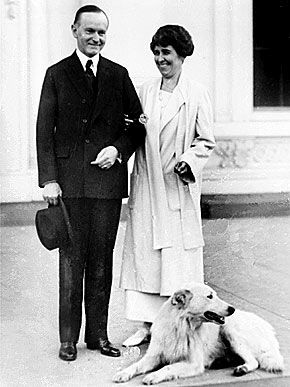
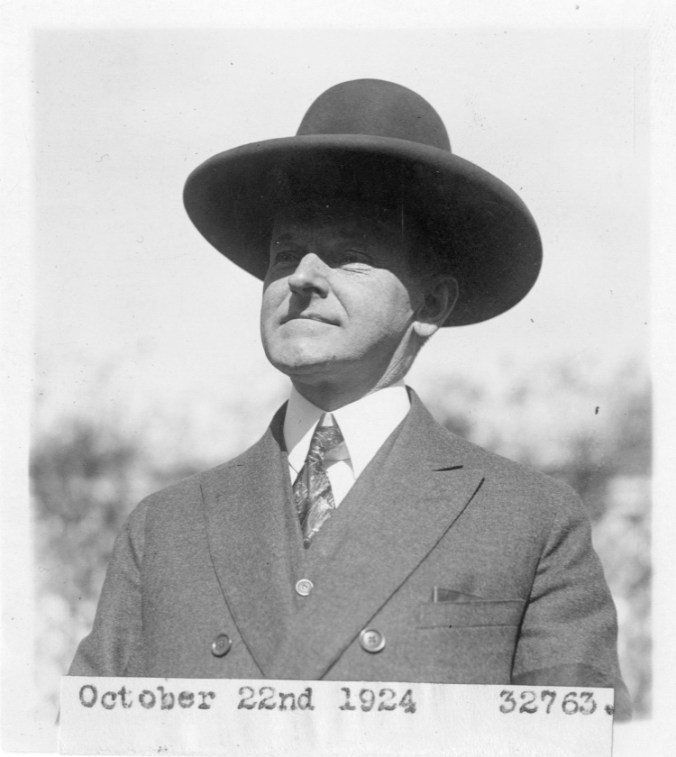
It was Calvin Coolidge who once said, “We shall be much more effective for good if we treat men not as they are but as they ought to be. If we judge ourselves only by our aspirations and every one else only by their conduct we shall reach a very false conclusion. When we have exhausted the possibilities of criticism on ourselves it will be time enough to apply it to others. The world needs high social standards and we should do our best to maintain them, but they should rest on the broad base of Christian charity.”
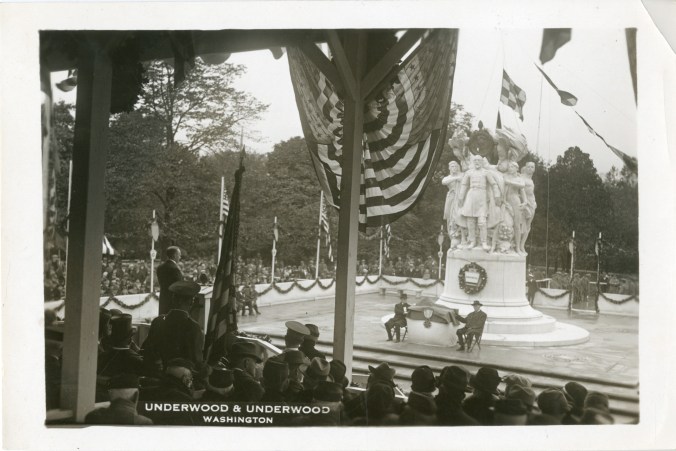
President Coolidge dedicating the Meade Memorial, 1927.
 The Importance of the Obvious