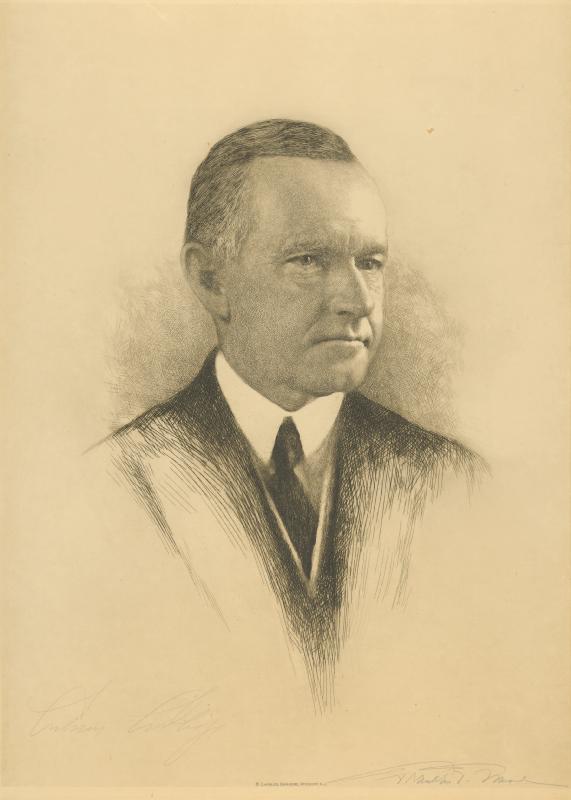
On the Courts and Judging

Taft Court LOC

Taft Court, 1925

Courts are established, not to determine the popularity of a cause, but to adjudicate and enforce rights. 

No litigant should be required to submit his case to the hazard and expense of a political campaign. 

No judge should be required to seek or receive political rewards…

The electorate and judiciary cannot combine. 

A hearing means a hearing. 

When the trial of causes goes outside the court-room…constitutional government ends. 

If I appoint..a judge, can he see the issues of the case over the heads of the parties? 

I do not intend to appoint any man…to any court, who cannot do that.

It is well known that when the House of Representatives sits as a judicial body, to determine contested elections, it has a strong tendency to decide in a partisan way. It is to be remembered also that under recent political practice there is a strong tendency for legislatures to be very much influenced by the Executive. Whether we like this practice or not, there is no use denying that it exists. 

With a dominant Executive and a subservient legislature, the opportunity would be very inviting to aggrandizement and very dangerous to liberty. That way leads toward imperialism. 

Some people do not seem to understand fully the purpose of our constitutional restraints. They are not for protecting the majority, either in or out of the Congress. They can protect themselves with their votes. We have adopted a written constitution in order that the minority even down to the most insignificant individual, might have their rights protected. 

If the authority now vested in the Supreme Court were transferred to the Congress, any majority no matter what their motive could vote away any of these most precious rights. Majorities are notoriously irresponsible. Every minority body that may be weak in resources or unpopular in the public estimation, also nearly every race and religious belief, would find themselves practically without protection, if the authority of the Supreme Court should be broken down and its powers lodged with the Congress. 

The same reasoning that applies to the individual person applies to the individual state. A very broad twilight zone exists in which it is difficult to distinguish where state right ends and federal right begins. Deprived of the privilege of its day in court, each state would be compelled to submit to the exactions of the Congress or resort to resistance by force. 

On the other hand, the legislatures of states, and sometimes the people, through the initiative and referendum, may pass laws which are very injurious to the minority residents of that state, by attempting to take away the privilege which they hold under the Federal Constitution. Except for the courts, such a minority would have no remedy for wrong done to them…

A deliberate and determined effort is being made to break down the guarantees of our fundamental law. It has for its purpose the confiscation of property and the destruction of liberty…This is not the struggle of the rich and powerful. They will be able to survive. It is the struggle of the common run of the people. Unless we can maintain our institutions of liberty unimpaired they will see their savings swept away, their homes devastated, and their children perish from want and hunger. 

The time to stop those who would loosen and weaken the fabric of our government is before they begin…

Those who want to continue to enjoy the high estate of American citizenship will resist all attempts to encroach upon their liberties by encroachment upon the power of the courts. 

We must combat every attempt to break down or to make it easy, under the pretended guise of legal procedure, to throw open the way to reaction or revolution. 

— Calvin Coolidge 
4364

In “Just Folks”

edgar-guest-photo

Guest (1881-1959), born in Great Britain, would make his way to the United States while still very young and work his way up from copy boy for the Detroit Free Press to one of the most beloved poets of the early 20th century.

Edgar Guest, long known as the “People’s Poet,” often received the snide dismissal and sarcastic derision of the Algonquin Round Table and other erudite critics and intellectuals for his sunshiny platitudes and, at least to them, sickeningly sweet optimism. He is still occasionally the subject of parody. Yet, as his sobriquet suggests, regular folks loved and admired his work. They found it tapped into principles that, however bleak it got, still mattered and still outlasted the troubles around them. They found it a welcome light in dark challenges, a haven for timeless things not an escape from reality as was (and is) too often attributed to his poetry. He thought no less deeply about hard issues and, like Frank Capra in film, did not flinch from the existence of life’s difficulties.

It is not surprising then that Guest would turn to President Coolidge for some of his inspiration. While the 7-line rhyme scheme below (AB AAB CC) does not conform to the limerick, these lines from Guest’s “President Coolidge,” published in a collection entitled “Just Folks” shortly after Cal’s succession to office in late 1923, deserves a new reading, even on National Limerick Day.


Calvin Coolidge, President!

Was it written in the stars?

Did God whisper His intent

To the dreamy lad who leant

On the weathered pasture bars?

Did the little boy in school

Know that some day he should rule?


Did the gentle mother know

Something others never knew

In that happy long ago,

Him she loved and cherished so

Had a mighty work to do?

Did God ever let her see

Little Calvin’s destiny?


Did God whisper: “Train him well,

Teach him to be strong and true,

For some day a tolling bell

To a sorrowing land shall tell

Why this son was sent to you?”

Did God tell her ere she went

She had borne a President?


Calvin Coolidge, President!

Once a lad behind a plough,

Whistling gayly as he went,

With his humble place content,

And a mighty ruler now.

Surely ’tis God’s hand we see

In a great man’s destiny.


Of course, Cal answers these questions six years later in his Autobiography, hinting in both biblical allusion and language that very possibly indicates his awareness of Guest’s poetic references to him back in 1923:

“So far as I know, neither he [grandfather Coolidge] nor any other members of my family ever entertained any ambitions in my behalf. He evidently wished me to stay on the land. My own wish was to keep store, as my father had done. 

“They all taught me to be faithful over a few things. If they had any idea that such a training might some day make me a ruler over many things, it was not disclosed to me. It was my father in later years who wished me to enter the law, but when I finally left home for that purpose the parting was very hard for him to bear…

“…[M]y father  and I went to the dedication of the Bennington Battle Monument…I heard President Harrison, who was the first President I had ever seen, make an address. As I looked on him and realized that he personally represented the glory and dignity of the United States I wondered how it felt to bear so much responsibility and little thought I should ever know.” 

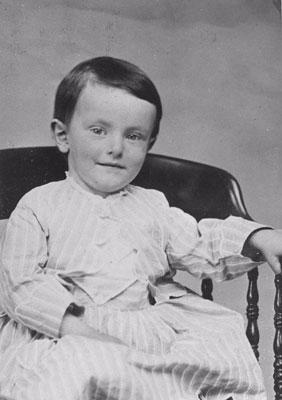
CC-young

Calvin Coolidge at age 3 (1875)


On Maternity

“By common consent Sunday will be observed as Mother’s Day. Because we are so constituted that we have to think and act serially, it becomes necessary to dedicate special occasions for the emphasis of many important subjects which nevertheless influence us all the life. So we set apart a day for the contemplation of motherhood on which we can give some appropriate expression to the debt we all owe to the greatest sacrifice and devotion in human experience.

“There is always danger that we shall not look at values in their proper proportions. What is common and obvious is often none the less precious. Among all the earthly blessings which have been bestowed upon us, it is difficult to find one that compares with motherhood. It is hard to imagine a greater ambition than to be what our mothers would wish us to be.

“These sentiments which we all entertain are of little value unless they are translated into action. The day can be well observed by making some contribution to maternity centers, or for the general relief of mothers, to some of the various associations engaged in these charities. None of us can give as much as our mothers gave to us.”

— Calvin Coolidge, May 8, 1931