“Does cutting taxes really shrink government?”

“Does cutting taxes really shrink government?”

Three weeks before the passage of the Revenue Act of 1928, the President was analyzing the results of his administration’s formula: cut taxes, enforce constructive economy and retire debt with surplus. The President was not pleased, however. The reason was not in making the case for cuts and shrinking expenditures. The reason was not in retiring the national debt, which would be reduced $5.4 billion over the course of five and a half years, a feat not replicated since. Had the rate of reduction been constant, the debt would have been eliminated in just over fifteen years. The reason was in the incessant temptation by those around him to spend the “surplus revenue.”

The administration’s plan had worked beyond everyone’s expectations. It had worked so well that Congress was eager to start spending all that extra money. The President wanted it returned in cuts and put toward the debt. It was becoming increasingly clear that tax cuts were going to be tougher and tougher to sell as surpluses grew larger and larger. Ironically, thanks to Coolidge being “too successful,” spending would be even harder to restrain in the future than it was in the present.

The fiscal year would yield a surplus of $398,000,000, well beyond even the President’s initial figures. But as Coolidge lists all the projects Congress wanted, it not only made future tax reductions impossible but would have overturned them with increases to cover government profligacy: the flood bill, $500 million, the farm bill, $400 million, the Boulder Dam bill, $125 million, the pension bill, $15 million, the salary bill, $18 million, the Muscle Shoals bill, $75 million, the Post Office pay bill, $20 million, a reduction of post payments costing another $38 million, the corn borer, $7 million, and $6 million for “vocational training,” just to name a few. Meanwhile, the President observed, tax reduction between $203 and $289 million remained before Congress as he spoke. “If all these bills went through and became law I should think it would not only endanger tax reduction at the present time, but would make necessary the laying of additional taxes.” This was an impermissible step backward, not forward. As the President reminded reporters early the following month, “the surplus was secured, of course, by very careful management of expenditures…” not by spending it all away. 

The size of the surplus and the urge to spend it, however strong, did not make indulging the desire any more responsible with the people’s money than in lean years. Government, not unlike children, has to learn self-control. The existence of “more somewhere” does not free government to find it and spend it with impunity.

“We must have no carelessness in our dealings with public property or the expenditure of public money. Such a condition is characteristic either of an undeveloped people, or of a decadent civilization…We must have an administration which is marked, not by the inexperience of youth, or the futility of age, but by the character and ability of maturity. We have had the self-control to put into effect the Budget system, to live under it and in accordance with it. It is an accomplishment in the art of self-government of the very highest importance. It means that the American Government is not a spendthrift, and that it is not lacking in the force or disposition to organize and administer its finances in a scientific way. To maintain this condition puts us constantly on trial. It requires us to demonstrate whether we are weaklings, or whether we have strength of character” — President Coolidge, June 30, 1924.

Amity Shlaes’ thought-provoking piece recalls that even good policies can carry unintended side effects that have the potential to destroy the gains made. Tax cuts are but one part of the whole. President Coolidge knew this firsthand and if trends back toward expansive government are to be checked, it will demand from us, informed and engaged citizens, the same unwavering self-restraint and courage he demonstrated. The times also require statesmen, mature men and women, who take the whole task seriously of restoring limited government, not merely one element of tax policy. Tax cutting without the people’s determination for making government shrink can be cast aside when expediency calls it time to spend. Such was the bitter pill of the Reagan years. When what is easy is allowed to prevail over what is right, self-government suffers and liberty loses.
On Good Business

Mr. Coolidge recognized the essence of good business was in strengthening ties of service and collaboration with others. He never saw the validity of an adversarial system, such as Bentham and the socialist economists espoused. Profit was important, of course, but not the supreme purpose of good business relations. He understood that business was about more than “crushing the competition.” It was about building bridges, not burning them. That is why he demanded a meeting with an apprehensive editor one afternoon. The editor had not published the entire number of articles agreed upon and written by the former President. Still, Mr. Coolidge had been paid for the entire set. The editor, bracing for confrontation, was shocked to find the former president wanted to meet in order to return the balance of the money due for the articles not published. To Coolidge, if they were not “good enough” to warrant publication, it would not be right to take money for them. In this way, good business is preserved.

The former President, writing another article on June 17, 1931, observed the necessity for “good business” to continue, especially as folks struggled to keep commerce going,

“It is a very sound business principle to let the other fellow make a profit. That was the essence of the slogan we heard a few years ago about passing prosperity around. The same thought is involved in paying good wages and fair prices. Cutting prices calls for cutting wages in the end.

“This is often the basis of the complaint against large concerns. When they control a large percentage of production they control the prices of the raw and unfinished materials used in that trade. They become almost the sole market for them. Under this condition there is a strong tendency in the name of efficiency and good management to squeeze out the small concerns furnishing these materials. But it is not usually good business.

“We are all so much a part of a common system of life that the business world is not healthy unless we all have a chance. A profit made by squeezing some one else out of a livelihood will almost surely turn up later as a loss. The great asset in trade is good will. The best producer of good will is the profit which others make” (emphasis added).

On Humility

A quality well-known to those who knew him was Mr. Coolidge’s humility. He knew, as he wrote to his father, being “the most powerful man in the world,” meant high responsibilities not lofty privileges. It was not an opportunity to “live large,” clothing himself in the trappings of his glory. During his lifetime, he had seen certain men become President only to equate the majesty of the Office with the excellence of the person. He knew the dangers of arrogance. He was never fooled to think that it was proper, even for a President, to govern by the force of his personality. He had seen President Wilson try and disastrously fail on that score. Mr. Coolidge raised the dignity of the office during his time, that is for sure, but he distinguished between the greatness of the Presidency from the absence of greatness in him. He was simply chosen from the sovereign people to serve for a short time and then “be one of them again.”

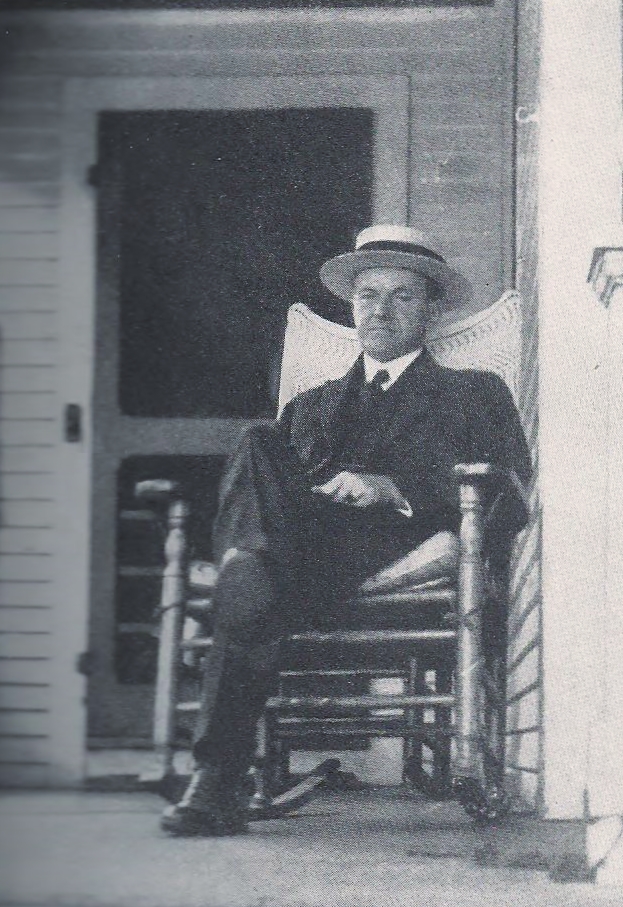
His desire to be a private citizen again was unfortunately never entirely restored. It cannot be easy to rediscover “normalcy” for anyone who has once been a President. But he earnestly tried. Prompted to speak in retirement, he accepted only under the most compelling pressure because he refused to accept it was his place to assume the mantle again as a kind of unofficial public authority or “Deputy President.” His humility was such that he could no longer do many of the things he loved to do, such as sit on his front porch. He disdained the ostentatious displays of attention showered on him because of the Presidency. He would tolerate it for the sake of the Office while he held it, but he refused to suffer it after the White House.

He disapproved of Presidential pensions and would not take a cent of public support. He would work for himself. It was writing that primarily occupied his time and even that weighed on his mind with the obligations of producing a product worth publishing, meeting deadlines, and not taking advantage of the credentials he could have claimed to accept more than a piece was worth.

His long-time law partner, Mr. Hemenway, recalled three occasions of Mr. Coolidge’s many expressions of simple unaffectedness, the first one in the midst of being President, that underscored his persistent humility. Mr. Hemenway, writing for Good Housekeeping in April 1935, recounts:

     “While he was President, I had a note in longhand from him one day, as follows:

                                                                                                Sept. 13, 1928

     ‘My Dear Mr. Hemenway:–

            ‘You have at Hampton safety deposit 2 Lib Bonds $50 each. See if any are due Sept 15

      current and if so have Tr. Co. collect them and credit my acct.

                                                                                          ‘Yours

                                                                                       ‘Calvin Coolidge’

     “That note shows his far-reaching recollection of detail. Here you witness the President of the United States, the problems of a nation on his desk, with an income of $75,000 a year and $25,000 more for traveling expenses and entertainment, plucking out of his innumerable mental pigeonholes the relatively insignificant matter of two $50 Liberty bonds on which the interest of $2.12 was due!

     “To show his kind-heartedness and his liberality I recall one occasion when I was in need of funds owing to the closing of a local bank. I was seated at my desk deeply buried in thoughts that were not particularly cheerful when he came through the connecting doorway from his office, walked over to me, and placed a slip of paper on my blotter. As he turned away and went back to his room, he said quietly,

     ‘And as much more as you want.’

     “It was a check for $5,000.”

The final memory shared by Mr. Hemenway humorously highlights the former President’s unchanged outlook after life in the White House.

     “The splendor and pomp of Washington and the Presidency never changed his early valuations of life. He was simple and unaffected to the last degree. He liked foot comfort. In the old days he would slip off his shoes and put both stockinged feet in his wastebasket where they wouldn’t be seen. Once, however, he was taken off his guard. A woman client came into his office while he feet were planted in the wastebasket. He got a good laugh out of it afterward–although he certainly did not enjoy the surprise at the moment.”

                         Image

“We draw our Presidents from the people. It is a wholesome thing for them to return to the people. I came from them. I wish to be one of them again…They have only the same title to nobility that belongs to all our citizens, which is the one based on achievement and character, so they need not assume superiority. It is becoming for them to engage in some dignified employment where they can be of service as others are” — Calvin Coolidge, The Autobiography, 1929, pp.242-3.