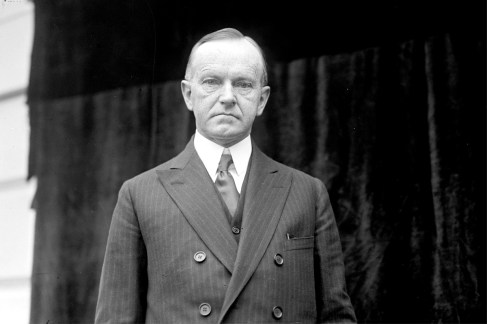
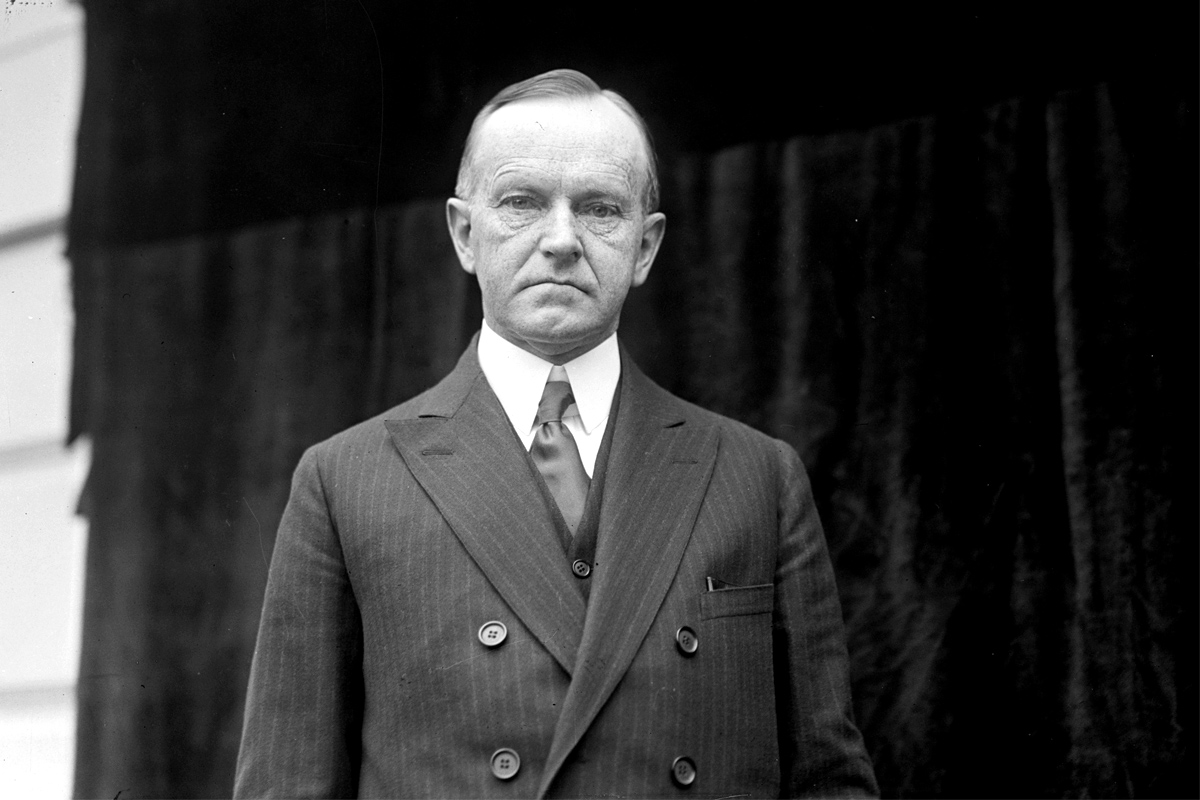
Coolidge knew how to exercise the energy of executive power in calculated doses for maximum effect. Despite the stereotypical impression that he slept through the White House years, a false impression attributed to a later Chief Executive by the name of Ronald Reagan, he understood the use of authority better than most, especially of the executive variety. The independence of Congress, a co-equal in the division of power, was no less imperative to Coolidge.
As a freshman state legislator, Coolidge was not exactly a greenhorn to politics. He had already served as a town councilman, bank legal counsel, city solicitor, clerk of courts and chairman for the Northampton Republican Committee, all by age 34. He had crafted municipal policy before, represented the interests of others both in his practice and in his duties as legal council and city solicitor, learning the law well. Always an active listener and continual thinker, he said little because he truly believed, “He who gives license to his tongue only discloses the content of his own mind. By the excess of words he proclaims his lack of discipline.” Even as he would come to build a record that included direct election of Senators, minimum wage laws, women’s suffrage, transportation regulation, restriction of child labor and other matters, he was not simply running with the “legislative herd” in order to keep pace with a clamor to legislate. While some were running headlong into heavy regulation of rails and Morgan steel, Coolidge refrained. He was not suckered into the movement, quite popular at the time, of breaking up “big business” simply because it was “too big.” He represented the folks back home, to be sure, but was doing so with an informed and conscientious judgment of matters. Even then the full price of what was done would not be understood for years. He knew destroying the mobility of capital and people’s ability to adapt to market conditions, even when it meant unpopular rate increases, hurts not helps everyone, especially the poorest. Legislatures were poor stand-ins for people free to make their own decisions in the marketplace. They may act with good intentions but would leave a trail of havoc that could have been avoided.
Coolidge would later summarize the impact of this period,
The power of legislation has been to a large extent recast, for the old order looked on these increased activities with much concern. This has proceeded on the theory that it would be for the public benefit to have government to a greater degree the direct action of the people. The outcome of this doctrine has been the adoption of the direct primary, the direct election of the United States senators, the curtailment of the power of the speaker of the House, and a constant agitation for breaking down the authority of decisions of the courts. This is not the government which was put into form by Washington and Hamilton, and popularized by Jefferson. Some of the stabilizing safeguards which they had provided have been weakened. The representative element has been diminished and the democratic element has been increased; but it is still constitutional government; it still requires time, due deliberation, and the consent of the States to change or modify the fundamental law of the nation.
It is that slow, deliberate consideration that keeps legislative power independent and people’s liberty preserved. When the Congress abandons that exercise of deliberation and attempt to speed the process without full consideration of the bill, the independence of legislative power is lost. The distinct functions of government are tipped in favor of only one aspect: an energetic executive. Without legislative deliberation, Congress surrenders its central check upon executive abuses. It places decisions that deserve time and thought into the “fast track,” disregarding what harm may come. Coolidge recognized the peril of this transformation to sound lawmaking and people’s freedoms. He differentiated productive collaboration — Congress passing and the President enforcing measures only after thorough consideration –from legislative subservience to executive power.
Speaking in Northampton on Memorial Day, May 30, 1923, Vice President Coolidge articulated the essential distinction this way,
The chief repository of power is in the legislature, chosen directly by the people at frequent elections. Is it this body, which is particularly responsive to the public will, and yet, as in the Congress, is representative of the whole nation. It does not perform an executive function. It is not, therefore, charged with the necessity of expedition. It is a legislative body, and is, therefore, charged with the necessity for deliberation. Sometimes this privilege may be abused, for this great power has been given as the main safeguard of liberty, and wherever power is bestowed it may be used unwisely. But whenever a legislative body ceases to deliberate, then it ceases to act without due consideration. That fact in itself is conclusive that it has ceased to be independent, has become subservient to a single directing influence or a small group, either without or within itself, and is no longer representative of the people. Such a condition would not be a rule of the people, but a rule of some unconstitutional power…An independent legislature never deprived the people of their liberty.
In the haste to “pass the bill to see what is in it” and “prevent deadlock,” the point of properly applied legislative power is being missed on a grand scale. In such an environment, no one can be assured of their freedoms. As Coolidge would say, “A good measure can stand discussion. A bad bill ought to be delayed…Open debate is the only shield against the irretrievable action of a rash majority.”
 The Importance of the Obvious