Calvin Coolidge zealously guarded the prerogatives of Executive authority from intrusion by Congress, the press, and individuals who were either meddling idly or with an attempt to influence the President on behalf of their preferred choice. Plenty tried and failed. It is why Coolidge stubbornly renominated Charles Warren for Attorney General and then chose John G. Sargent, as much a retort to the “elites” as were his first two nominees in that office. It is also why he intervened in the grab of investigatory power by the Senate in regard to Secretary Mellon, safeguarding the proper energy of the Executive Branch, free of subservience to the Congress. But he also personally objected to efforts at influence-peddling, as his nature abhorred ostentatious displays of social superiority (i.e., putting on airs), claiming influence over others that none had right to assert.
Some presumptuously claim they suggested such and such an appointee to Coolidge, as Butler of Columbia and Chief Justice Taft did regarding the nomination of Harlan Fiske Stone. They were not reading the man accurately, mistaking his silence as an absence of his own thoughts on the matter. He did not volunteer what he knew to his closest friends, let alone acquaintances and visitors. This was just as true of removals as for appointments, as we find with Attorney General Daugherty and Secretary Denby. He held to his own solid judgment even when it appeared he was indecisive and tolerant of wrongdoing, eventually proving all wrong in the end. We find his keen sense of fairness prevailed above the emotions of the moment. From the earliest days of his political career, Coolidge was simply immune to these tactics. No one moved him to guide or direct his appointments. He truly kept his own counsel, observing the dictum that appointments were exclusively the power of the Chief Executive. It was a task given to him alone. Equally, if the results of his selection ended disastrously, the fault would rest with him alone. It was a power the Constitution granted to his Office, his oath bound him to embrace the responsibility, not shirk it.
While Kenneth Roberts, in his book on Coolidge entitled “Concentrated New England,” tends to approach his subject with zest at times, he is better at relating the Coolidge character than some have been. He summarizes Coolidge’s approach to making appointments quite well, writing, “Many presidents have been what is known as ‘reachable’ in many matters; that is to say, they have had intimates and trusted assistants whose recommendations were frequently asked and frequently taken. Coolidge is wholly unreachable; and one of the few things that irritate him is the attempt on any one’s part to use the influence of some one who has access to him in order to get him to do some particular thing…One of his most important acts while he was governor of Massachusetts was the reorganization of the departments of the state, their reduction in number from…one hundred eighteen to twenty, and the appointment of seventy new state officials.”
It is important to note that the law did not mandate Coolidge handle this immediately, he took it upon himself to act instead of deferring it to his successor.
Roberts goes on, “In this reorganization the Coolidge ax knew no friend; and he had said that it took more courage than the settling of the police strike. He had seventy appointments to make; and after conferring and consulting day and night as to whom the seventy should be, he locked himself in his office alone for about ten days in order to think the matter out. His nearest friend had done some fluent guessing as to whom the seventy would be, and he was successful in guessing only three of them. None of the three was appointed to the position that the friend had guessed. Nobody ‘reached’ him on any of the seventy. The only man who had a hand in the selecting of them was Calvin Coolidge; and his selections were of such quality that the governor who succeeded him reappointed every man.”
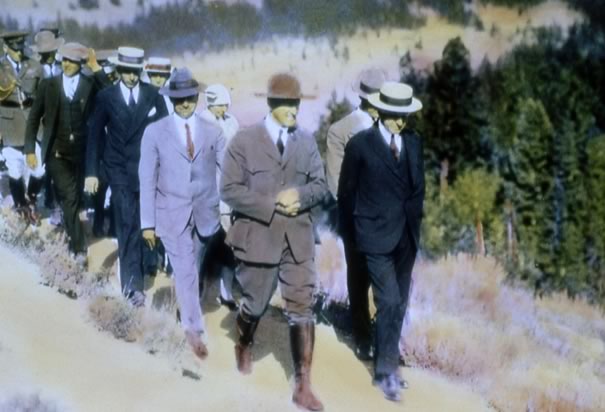
This effort to “access” Coolidge only worsened with his rise, as to be expected. As President, Roberts recounts another failed effort to finally get Coolidge to abandon his refusal to play the political game and not bargain influence, “For a time a certain senator affected athletic tastes and joined him in his morning walks [with Colonel Starling]. Unfortunately this senator, having failed to walk his candidates into a judgeship, went back to his morning slumbers. There is no such thing as walking into a job with Coolidge” (emphasis added).
“What we need in appointive positions is men of knowledge and experience who have sufficient character to resist temptations. If that standard is maintained, we need not be concerned about their former activities. If it is not maintained, all the restrictions on their past employment that can be conceived will be of no avail” (The Autobiography, p.227).

 The Importance of the Obvious