Address to the Annual Convention of the American Red Cross

Address to the Annual Convention of the American Red Cross

This excellent piece by Mr. Jerry Wallace recounts the many years of support for this preeminent volunteer organization Coolidge gave. Especially what the Americana Annual for 1927 recounts about the Red Cross from the previous year,

     The year 1926 was one of the worst for disasters in the history of the American Red Cross. Fires, winds, and floods concentrated their fury in a way that set new records. Approximately 700 persons were killed in the United States and hundreds injured. Two months–September and October–witnessed unparalleled outbursts of nature’s wrath. During this period occurred the Florida hurricane, the worst disaster in Red Cross annals since the San Francisco fire and earthquake [1906, twenty years before]; the Illinois River Valley flood; the Kansas flood; the Iowa flood; two fires in Alaska which destroyed whole villages; floods in Oklahoma; tornado in Sandusky, Ohio; the Cuban hurricane, as destructive as the Florida storm; a flood in Mexico and hurricanes in the West Indies.

As we recall, 1927 brought the historic Mississippi and Vermont floods, to which the Red Cross responded ably. As summer progresses, with its accompanying cycles of intense heat and severe rains, it offers opportunity to reflect on a great organization’s work, the sacrifice its volunteers render every year and its worthy demonstration of America’s sense of service at home and around the world.

“The year 1926 was one of the worst for disasters in the history of the American Red Cross.  Fires, winds, and floods concentrated their fury in a way that set new records.  Approximately 700 person were killed in the United States and hundreds injured.  Two months—September and October—witnessed unparalleled outbursts of nature’s wrath.  During this period occurred the Florida hurricane, the worst disaster in Red Cross annals since the San Francisco fire and earthquake; the Illinois River Valley flood; the Kansas flood; the Iowa flood; two fires in Alaska which destroyed whole villages; floods in Oklahoma; a tornado in Sandusky, Ohio; the Cuban hurricane, as destructive as the Florida storm; a flood in Mexico and hurricanes in the West Indies.” – See more at: http://www.calvin-coolidge.org/address-to-the-american-red-cross.html#sthash.dS7FDHTo.dpuf

On True Justice

                                     Image

“Our country has many elements in its population, many different modes of thinking and living, all of which are striving in their own way to be loyal to the high ideals worthy of the crown of American citizenship. It is fundamental of our institutions that they seek to guarantee to all our inhabitants the right to live their own lives under the protection of the public law. This does not include any license to injure others materially, physically, morally, to Incite revolution, or to violate the established customs which have long bad the sanction of enlightened society.

But it does mean the full right to liberty and equality before the law without distinction of race or creed. This condition can not be granted to others, or enjoyed by ourselves, except by the application of the principle of broadest tolerance. Bigotry is only another name for slavery. It reduces to serfdom not only those against whom it is directed, but also those who seek to apply it. An enlarged freedom can only be secured by the application of the golden rule. No other utterance ever presented such a practical rule of life” — Calvin Coolidge, Third Annual Message to Congress, December 8, 1925

On Prejudice and Public Discord

Prejudice and bigotry are part of the human condition. They have been a recurring source of problems in the hearts of people everywhere throughout time. Americans of any particular race have neither a monopoly on or immunity to such feelings. Certainly there is no justification for a racism of retaliation over perceived wrongs perpetrated by others. To imply certain groups of society are racist while others are not, especially by applying a double standard of acceptable conduct, is insulting and immoral. Calvin Coolidge had no use for such irrational behavior toward others in word or deed. He had no tolerance for the breaking of law in the name of racial inequity. It was itself injustice.

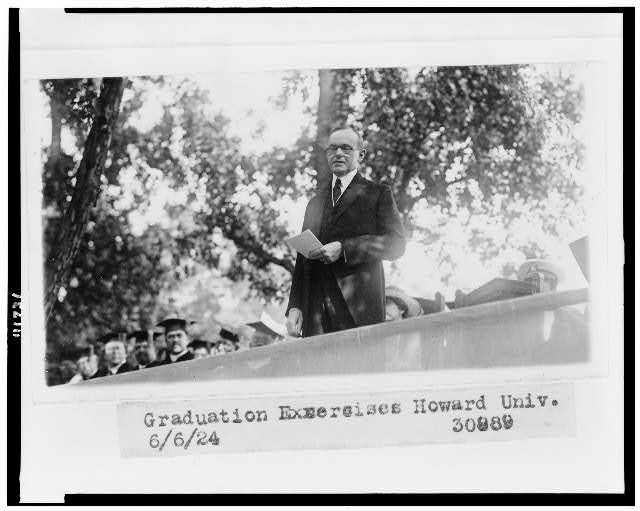
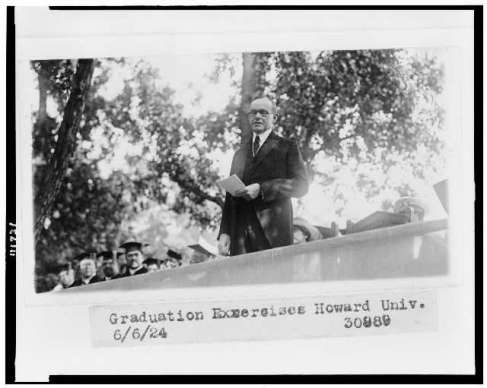
Back when actual lynching occurred, it was President Coolidge who not only spoke out against it in every annual message before Congress but he set policy that ended the segregated practices of the Wilson White House. He pushed for lynching to be fairly prosecuted as a federal crime, not merely a state offense. He advanced a commission that would build understanding and collaboration between the races. He set the example for good relationships by regular communication with Americans of all backgrounds. He was no respecter of persons in private either. Remarkably, this moral leadership had real impact. Lynching, a practice committed against whites as well, plummeted during his administration. Once averaging over 150 a year, the seven years encompassing the Coolidge Presidency recorded a national average of 19 annually (between 1923 and 1929), a drastic decrease in so short a time. That number would continue to diminish in subsequent decades.

As Coolidge understood, no benefit is rendered by keeping the animosity stirred and anger festering. The healing that is needed comes through a mutual respect for each other as well as the law. In Tuskegee, Alabama, part of the “Deep South,” he would say it this way,

It takes time and patience and perseverance to put into practice our theory of human rights. Lincoln knew that. If there was one virtue that he seemed to possess more than another, it was that of forbearance. It is well for us, who must live together as Americans, whatever our race or creed may be, constantly to remember his words: “We are not enemies, but friends. We must not be enemies.” Those who stir up animosities, those who create any kind of hatred and enmity are not ministering to the public welfare…Out of a common suffering and a common sacrifice there came a new meaning to our common citizenship. Our greatest need is to live in harmony, in friendship, and in good-will, not seeking an advantage over each other but all trying to serve each other.

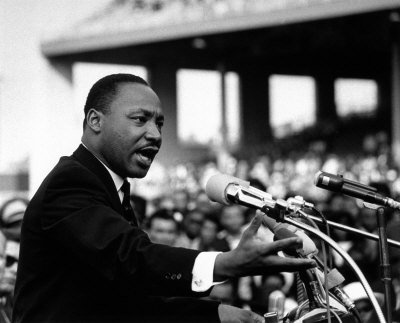
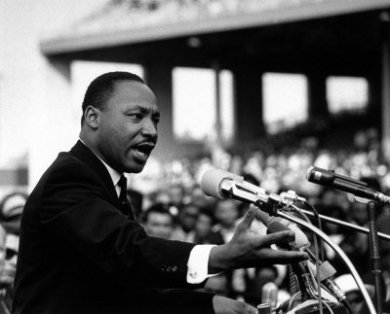
Such words could be easily dismissed if not for the fact that, though spoken in 1923, spell out essentially the same message declared thirty years later by another eloquent leader, in his march to Washington, D.C.,

In the process of gaining our rightful place we must not be guilty of wrongful deeds. Let us not seek to satisfy our thirst for freedom by drinking from the cup of bitterness and hatred.

     We must forever conduct our struggle on the high plane of dignity and discipline. We must not allow our creative protests to degenerate into physical violence. Again and again we must rise to the majestic heights of meeting physical force with soul force…

Circumstances of injustice were not to persuade people around the country to “lead us to distrust all white people, for many of our white brothers, as evidenced by their presence here today, have to realize that their destiny is tied up with our destiny. They have come to realize that their freedom is inextricably bound to our freedom. We cannot walk alone.”

This common obligation to each other, sharing in the American ideals of liberty with responsibility and equality under law, demands more than the perpetual animosity we have seen out of some through the entire Zimmerman case. Presuming guilt or innocence on the basis of color, some in this country have kept the discord alive to serve their own interests, spitefully disregarding the respect and fairness due others. Rather than serving as peacemakers they are the racist ones, whose violence and hatred for law-abiding civilization everywhere has no justification. As Coolidge would say in another context, regardless of how we came to this country, we are all in the same boat now. Dr. King would agree. We cannot walk alone. The debt we owe each other as Americans is not through rekindling wrath over the past but through renewed forbearance and humble respect as fellow citizens striving for common ideals.
Image

Image