On National Defense

Image

The Reagan Doctrine, summarized as “Peace through Strength,” is rightly praised for its sensible protection of our interests and the conscientious pursuit of peace in our dealings with the world. However, it did not start with Reagan. Among the many debts the “Great Communicator” derives from his predecessors, his pursuit of peace through preparedness owes some credit to President Coolidge. While Coolidge certainly preceded the prospect of nuclear proliferation in our time, the struggle for world power was no less prevalent then. The principles remain unchanged because they stem from human nature.

In the first of his three-part series on “Promoting Peace” published after leaving the White House, Calvin Coolidge outlines the immense task of preventing war through adequate defense. Coolidge certainly understood the complexity of the problem and this enabled him to distill it down to its essence: a question of human nature. He writes,

When the test comes the people will give up almost any other human right to secure safety and protection. Whenever anarchy imperils a state a military dictator always appears, because they prefer him to the lawlessness of the mob…In protecting its citizens abroad as well as at home the government, in reality, is only protecting itself. To refuse and neglect to do this is nothing short of national suicide.

     This principle is so well understood and so long established that nations accord to a foreign country, whenever the rights of its citizens are threatened or violated, the privilege of sending its naval and marine forces to protect them without considering such intervention an act of war.

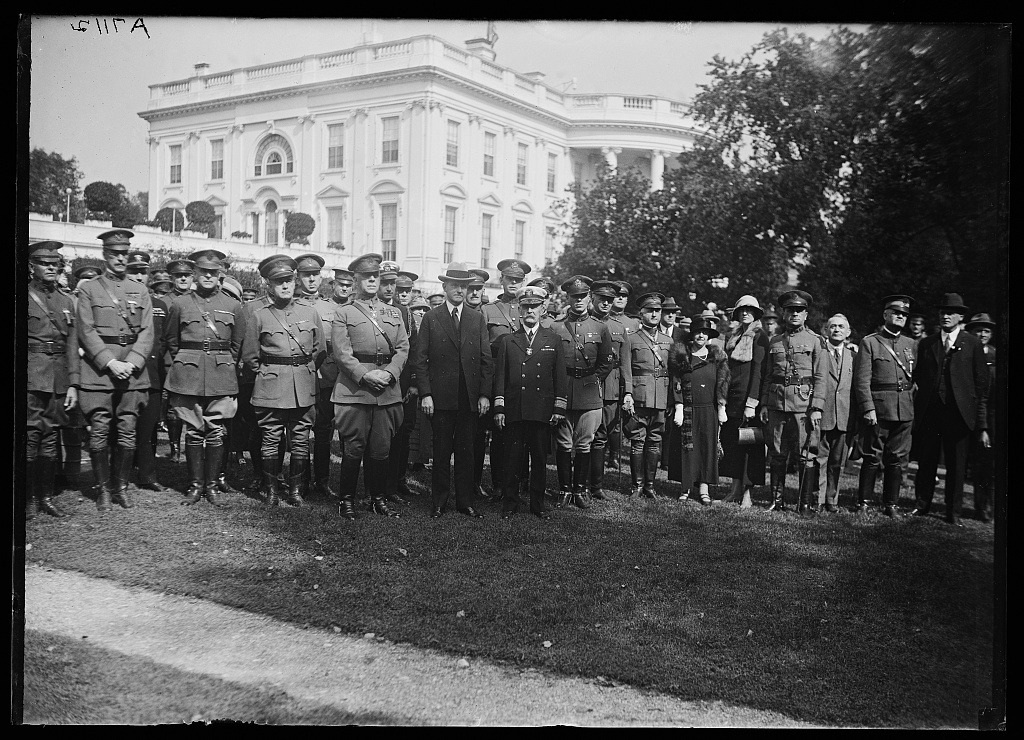
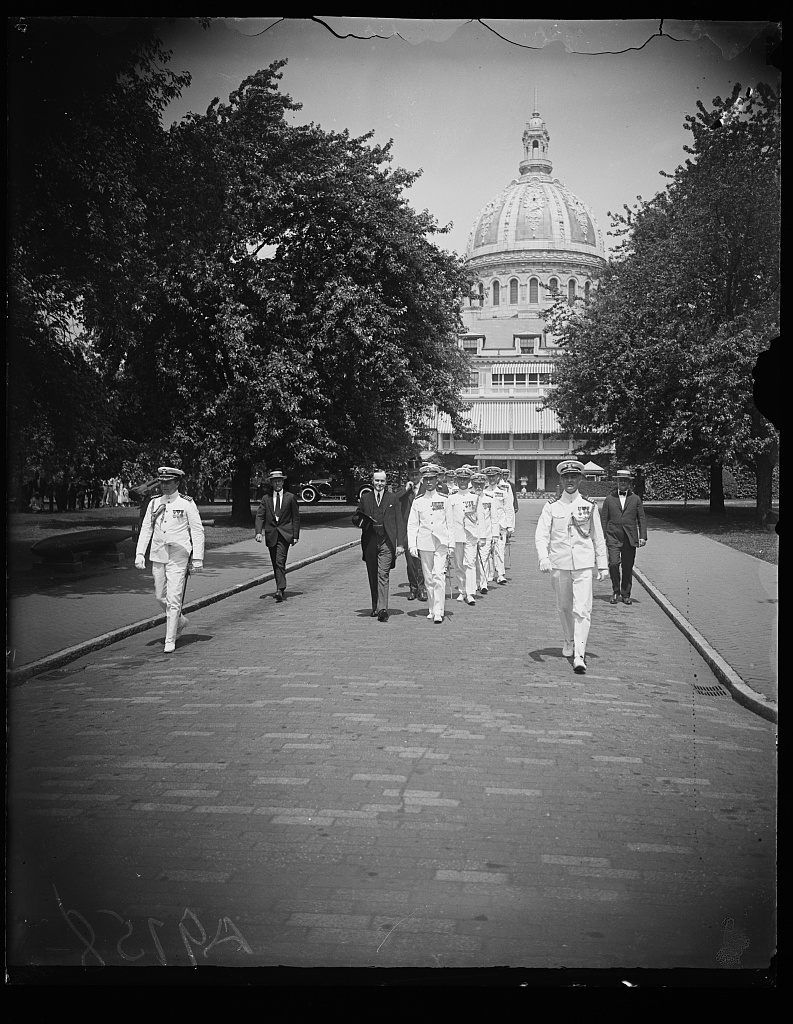
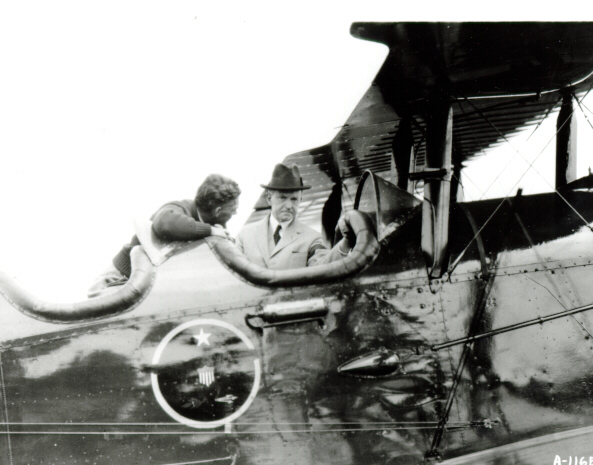
     One of the methods by which each government undertakes to preserve order so that it may protect its people from domestic violence and foreign hostilities is known as preparation for national defense. The great object that it all seeks to accomplish is peace…We do not have these [police, Army and Navy] for the purpose of making war, but for the purpose of preserving peace. The ability to protect the people within its borders and to insure to them the security which can only come from the orderly administration of law is so much and so peculiarly the first requisite of every government that under international usage civilized nations do not recognize a government which can not or does not meet these obligations. 45060v CC at Naval Academy 1925
As the inordinate power of the current regime grows, it becomes ever more apparent how far removed it is from this essential purpose of lawful order and national defense.

While Coolidge ensured the ratification of Kellogg’s Pact against war, he understood good government protects its citizens from lawless violence. At the same time, he knew that no measure could ever eradicate conflict completely. What he worked to maintain was an adequate force to meet evil, understanding that the unjust and violent are enabled when national defense is neglected. The former President continues,

No sure way has ever been found to prevent war. We all realize that it is one of the most hideous afflictions to which mankind is subject. Opinions may differ as to whether nations with adequate military forces are more likely to enjoy peace than those which neglect their defenses. In the last analysis, this is a question of dealing with human nature. Every one knows that if there were no police our cities would be ransacked within twenty-four hours. I very strongly suspect that if there were but one nation in the world supplied with an army and a navy, and, to make the supposition as strong as possible, if that nation were our own, it would not be long before the other nations had been overrun. It seems to me that it is almost a moral certainty that we should find some excuse for taking that action. But when we know that other countries have a considerable ability to defend themselves, it is human nature for us to regard them with a more wholesome respect and be more careful about violating their rights. If we reverse this picture we can likewise conclude that if others know we are prepared to defend ourselves they will be less likely to commit offenses against us. coolidge bolling field 9-9-24
We perform no favors by taking up the burden of each nation’s duty to self-defense. The lessons of the Great War taught him that. Europe would again defer to America for its rescue in World War II and, it seems, in every conflict since. Coolidge saw danger in the policy of making the world “safe for democracy.” Likewise, we only enable our rights to be ransacked and our lives taken if we indulge our enemies through a lack of preparedness. An absence of resolve and an absolute refusal to use force only encourage injustice to continue with impunity against our citizens and their rights. What constitutes an adequate defense, then?

The President answers,

They should be large enough so that others would see there would be a great deal of peril involved in attacking us. They should not be so large that our country would feel we would undergo no peril in attacking others…I have ventured the opinion that war would have broken out in Europe much earlier than 1914 if those countries had not been prepared to resist attack. I also believe that some of them were overprepared…Adequate defense does not require a return to the conditions which then existed, but rather requires their avoidance.

The question of defense, like a coin, has another side. Military might has natural limitations. It can grow too large and thereby undermine its goal to preserve peace. Defenses, however lethal or expansive, will never permanently override human nature’s “determination to be free.” What about individuals who have ideological, instead of national, loyalties? What of those who freely embrace death for their radical dream, like islamofascists?

Coolidge summarizes,

That the wrongdoer, whether it be the individual or the nation, can be checked by force is apparent, but no force will be found adequate for an extended period to impose upon any considerable body of people a system which is recognized by the general standards of humanity as injustice and servitude. Such an attempt would create a revolt in which it would be found that the victims would rather die than yield. While an army and navy can be very useful to protect a nation from wrongful attack and unjust aggression, they cannot afford an absolute guarantee against war. Preparation for defense seems to me to be necessary in the world as we find it at the present time, and is useful, but it is well to recognize that there are limits beyond which it does not and cannot go in preserving peace…

Both sides of our obligation need equal care. This means understanding clearly that the use of national defense is not the evil here. Lawless and abusive destroyers of our citizen’s lives and liberties are the evil here, as Coolidge concludes,

…[W]e should take every precaution to prevent war, of which adequate defense is one. But we should also take every precaution to protect ourselves to the fullest possible extent from its ravages, if it does come. The Army and Navy serve the double purpose of prevention and defense. The individual and the race have not progressed beyond the point where they need the teaching and effect of discipline. We require not only the existence, but the outward manifestation, of authority.

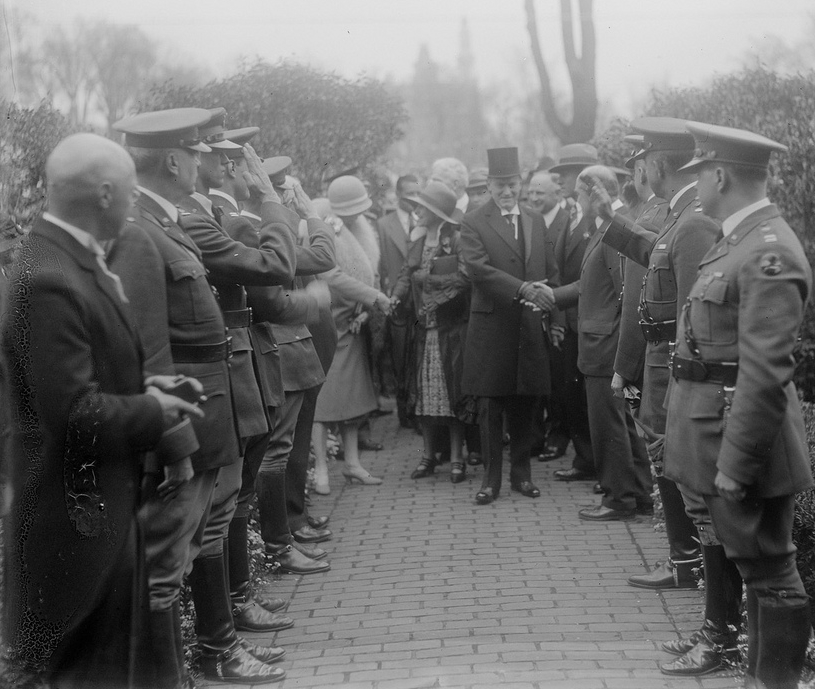
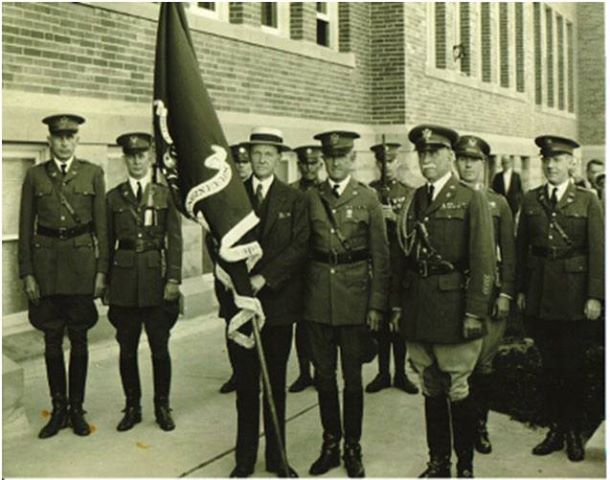
Without the policeman impartially enforcing the law, and the members of our military and National Guard prepared to do their duty, peace is impossible. Without a national defense ready to use strength to confront the individual or nation who takes American lives, exacting life for life, the murderous and lawless continue emboldened. Reagan and Coolidge both understood that the problem was embedded in human nature. The bully, the criminal, and the despot best understand the language of force. Reason and law mean little to them without physical demonstration. It is by exercising our duties of adequate national defense that law and peace are reestablished, evil men and women are deterred and a balance of righteous force restored.
Image

998243_10151699964766321_1262093981_n SD National Guard

On Disappointment with Democracy

Criticism of America’s institutions and the results they yield precede America herself. The fact that someone has found disappointment in her political and economic system does not preclude the success or very real progress which that system has shown possible to the world in less than three centuries. The “fast food” workers’ strike underway in a handful of cities during peak service times, instigated by the Service Employees International Union, demanding a $15 minimum wage, makes this clear. Unreasonable expectations are also reiterated by another Hollywood rehashing of the “haves” versus “have-nots” paraded by Matt Damon. The problem, as with most criticism, is that such disappointments are not grounded in knowledge or reason but as Coolidge would say on an August day ninety-one years ago, “a considerable part of discontent is the result of their not thinking their problems through.” Unrealistic expectations of either our political or economic structures do not move us any closer to a logical understanding of the problem’s roots or how to fix them, if they need fixing. Usually, the problem lies not with the institutions but with expecting more out of someone or something else than can be provided. Material things will never remove the difficulties of life, as Coolidge also noted on that same August day. Obtaining more will never free anyone from responsibilities. The efforts demanded by greater rewards only grow. Ultimately, we will forever be disappointed if we expect more of others than we require of ourselves.

“The word democracy is used very inaccurately. It is often taken to signify freedom and equality. Many have thought it represented an absence of all restraints. Others have considered it as providing a relief from all duties. The people of America have long been committed to democracy…The easy way to understand what may be expected of it is first to understand what it is. There has never been any organized society without rulers…The important factor to remember is that it has always required obedience. Democracy is obedience to the rule of the people.” That rule is not a utopian dream of complete equality of outcomes but stems from a code of laws comprising both political and economic constants. They are established by rules of human nature and apply to all alike. One will not defy such rules with any success for long.

“One of the great tragedies of American institutions is the experience of those who come here expecting to be able to rule without rendering obedience. They have entirely misconceived the meaning of democracy. But they need not disturb its defenders. To cast it aside could only mean the acceptance of a type of rule which had already been discarded.” It could only result in a return to despotism, in other words. Those who insist on having without giving first completely miss the point. Those who demand the power to rule without fulfilling the duty to obey the laws are likewise blind. When the emphasis is entirely upon what is entitled at the expense of what is required one will not retain freedom for long. As Coolidge understood, “the criminal,” the one who breaks these laws with impunity, “loses all his freedom.” Put another way, the rendering of better service is what truly liberates and lifts.

Our institutions are only as strong as our people. We cannot find fault with them and hope for improvement without raising the standards of our own efforts. “It depends on their ability both to rule and to obey. It is what they are. The government is what they make it.” If we expect our neighbors to pay us more, increase our earning power, it means we take on more obligations in our work. We will not get what we do not put in. If we merely assert the “right to rule,” and forget the “obligation to obey,” we will be disappointed in our lot. America has not let us down. We have, if we forget responsibility accompanies reward.

Healthy economies are cooperative and collaborative ones. Contrary to Bentham and those who laid the ground for socialistic discontent, markets function properly when we work together to build something better and give a higher quality of service. After describing the series of efforts at all levels that go into making a successful product or service, Coolidge reminds us, “Unto each who contributes in accordance with his ability there is due equal consideration and equal honor. There is no degradation in industry; it is a worthy enterprise, ennobling all who contribute to it. It will be successful in accordance with the opportunity given for the development of all the powers of mankind and the acceptance of the obligation alike to rule and to obey” (emphasis added).

The discontent then tries to eradicate what cannot be discarded: “[t]he law of life, the law of progress,” which is simply another name for “the law of obedience, the law of service.” Coolidge, addressing the Babson Institute (now Babson College), a newly opened business school, in Wellesley Hills, Massachusetts, left his audience that August day with a simple parting word from the Gospels, “Whosoever will be great among you, let him be your minister [or, as Bruce Barton might say, manager]; And whosoever will be chief among you, let him be your servant” (Matthew 20:26-27; Mark 10:43-44). Embracing greater responsibilities will present far more improvement to one’s lot than airing discontent over entry-level wages and our system.

            Image

On the Dogs

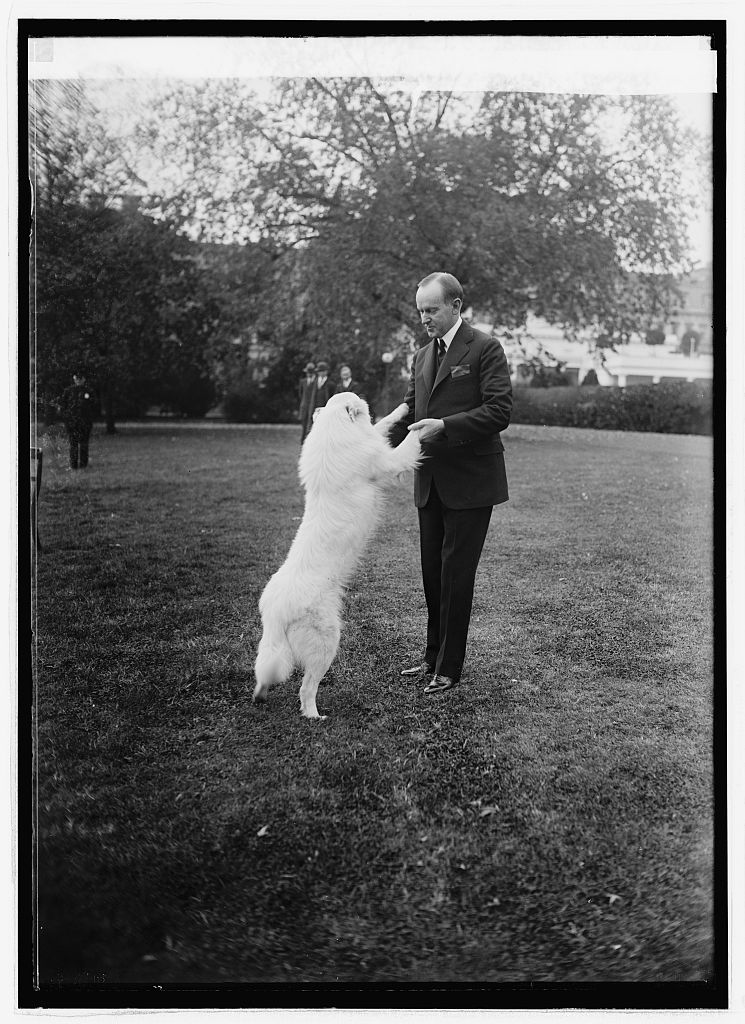
Presidential pets have long enjoyed enthusiastic followings throughout the years. When it came to the Coolidge collies, however, so much affection and fascination came to them that kennel master Harry Waters once remarked, “Sightseers were sometimes more interested in the dogs than they were in the White House.” Ishbel Ross, in her book Grace Coolidge and Her Era, makes it plain, “Rob Roy and Prudence Prim…were king and queen of the kennels” (183). It is Rob Roy who was featured not only in Christy’s famous portrait of Grace but also the official family picture and in the President’s bookplate. The White House staff knew, despite Coolidge’s jokes to the contrary, how much he loved his dogs.

Neither collie had sea legs, however, and when it came to boarding the The Mayflower, not even an executive order could move them. They would sit firmly on their haunches until time to depart would necessitate their return to the White House. While Rob Roy was clearly the king, he still had a princely rival in Paul Pry, the half-brother of Harding’s Airedale, Laddie Boy. When he somehow “escaped” from upstairs and raided one of Mrs. Coolidge’s teas, she speculated how the dog got away. The President explained, without cracking a smile, “I don’t think that little dogs like to be shut upstairs when there is a party going on.” Unruly in temperament, Paul Pry was first conscripted to stay on The Mayflower and eventually found a new home with a Navy family.

Image

The White House was an intimidating place for Rob Roy, at first, after leaving the wide and open spaces of Wisconsin. The elevator was especially daunting for him. Beans, the Coolidge’s female Boston terrier, would bark if Rob Roy tried to leave prematurely, keeping all she considered in her charge safely inside until it was time to leave. Beans went home to Northampton, keeping Grace’s mother, Mrs. Goodhue, company. Rob Roy quickly acclimated and boldly strode the White House grounds, accompanying the President to press conferences, staying at his feet in the Oval Office, and introducing himself to guests at all occasions. On one such occasion, during a breakfast with members of Congress, Senator James Watson recalled that the President let his collies freely roam even after the food was served. Rob Roy came up, received a healthy dose of attention and as soon as the man’s back was turned, “lapped” up all of his sausages and stood, tail wagging, for anything more. It remained almost a running joke that Coolidge often paid far more attention to his dogs than the people in the room. Humor always contains a measure of truth.

            Image

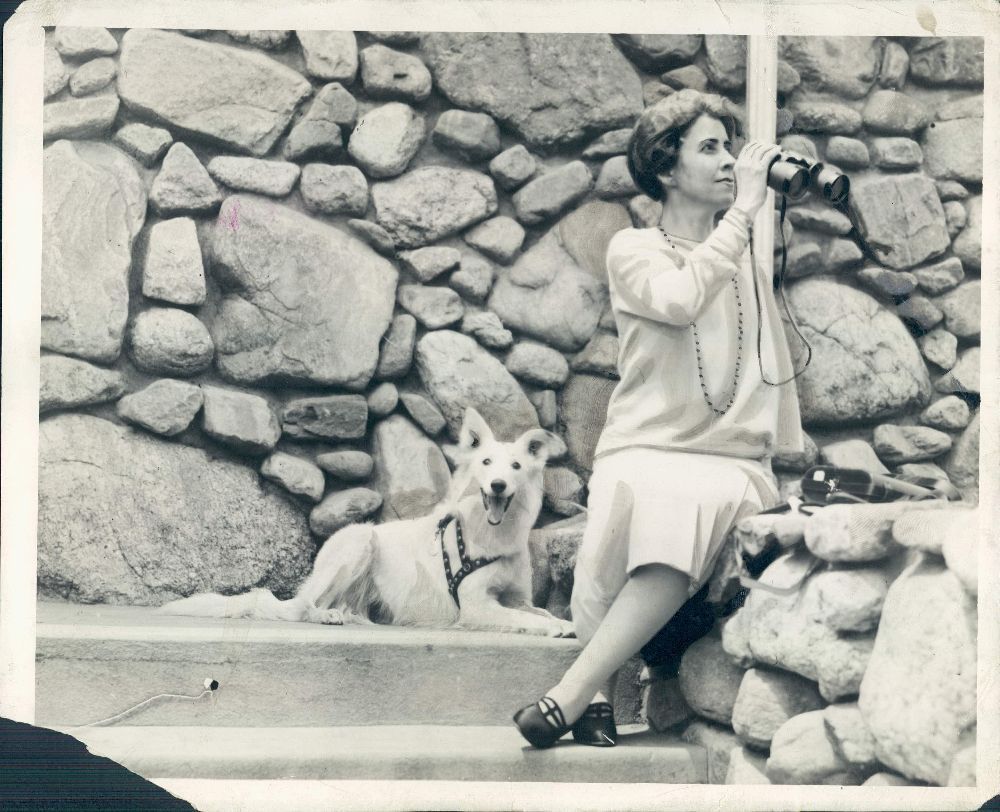
Prudence Prim was Grace’s companion. Mrs. Coolidge loved to leave calling cards claiming to be from the sweet-tempered collie during her visits around Washington. The morning routine for the Coolidges included Prudence bounding in the room, finding her chair and sharing the President’s cereal while most of a roll and bacon strip went to Rob Roy. Both Mr. and Mrs. Coolidge regularly smuggled food off the table for their furry children.

For one of the White House garden parties, Grace dressed Prudence in straw bonnet with ferns and green ribbons; a hat Prudence patiently wore to the delight of everyone. The Coolidges regarded their dogs as persons with whom they conversed and frequently saw human qualities in their behaviors, as many a dog owner can attest. They unwittingly teach lessons of human nature, a fact not lost on the Coolidges. Coolidge would enjoy watching movies with Rob Roy beside him, jabbing the dog in the ribs whenever a funny line came across the screen. He only regretted that the dog could not hear thereby depriving him of the full satisfaction that the President’s conversations were heard.

         Image

Prudence began to wear down in 1927 and she died in South Dakota that summer. “Rob and I shared a common sorrow,” Mrs. Coolidge noted later. Rob, the President’s constant companion, would join her the following year. Dogs would continue to follow wherever the Coolidges went, from Tiny Tim, Diana of Wildwood/Calamity Jane to Beauty and Blackberry. But the favorites were Rob Roy and Prudence Prim.

Image

Grace in South Dakota with Prudence Prim, 1927

In 1929, Coolidge wrote,

We always had more dogs than we could take care of. My favorites were the white collies, which became so much associated with me that they are enshrined in my bookplate, where they will live as long as our country endures. One of them, Prudence Prim, was especially attached to Mrs. Coolidge. We lost her in the Black Hills. She lies out there in the shadow of Bear Butte where the Indians told me the Great Spirit came to commune with his children. One was my companion, Rob Roy. He was a stately gentleman of great courage and fidelity. He loved to bark from the second-story windows and around the South Grounds. Nights he remained in my room and afternoons went with me to the office. His especial delight was to ride with me in the boats when I went fishing. So although I know he would bark for joy as the grim boatman ferried him across the dark waters of the Styx, yet his going left me lonely on the hither shore…”

Image

President Coolidge and Rob Roy at the temporary White House on Dupont Circle in 1927.