“What America needs is to hold to its ancient and well-charted course. Our country was conceived in the theory of local self-government. It has been dedicated by long practice to that wise and beneficent policy. It is the foundation principle of our system of liberty. It makes the largest promise to the freedom and development of the individual. Its preservation is worth all the effort and all the sacrifice that it may cost.
“It can not be denied that the present tendency is not in harmony with this spirit. The individual, instead of working out his own salvation and securing his own freedom by establishing his own economic and moral independence by his own industry and his own self-mastery, tends to throw himself on some vague influence which he denominates society and to hold that is some way responsible for the sufficiency of his support and the morality of his actions.
“The local political units likewise look to the states, the states look to the nation, and nations are beginning to look to some vague organization, some nebulous concourse of humanity, to pay their bills and tell them what to do. This is not local self-government. It is not American. It is not the method which has made this country what it is. We can not maintain the western standard of civilization on that theory. If it is supported at all, it will have to be supported on the principle of individual responsibility. If that principle be maintained, the result which I believe America wishes to see produced inevitably will follow.
“There is no other foundation on which freedom has ever found a permanent abiding place. We shall have to make our decisions whether we wish to maintain our present institutions, or whether we wish to exchange them for something else. If we permit some one to come to support us, we can not prevent some one coming to govern us. If we are too weak to take charge of our own morality, we shall not be strong enough to take charge of our own liberty. If we can not govern ourselves, if we can not observe the law, nothing remains but to have some one else govern us, to have the law enforced against us, and to step down from the honorable abiding place of freedom to the ignominious abode of servitude.
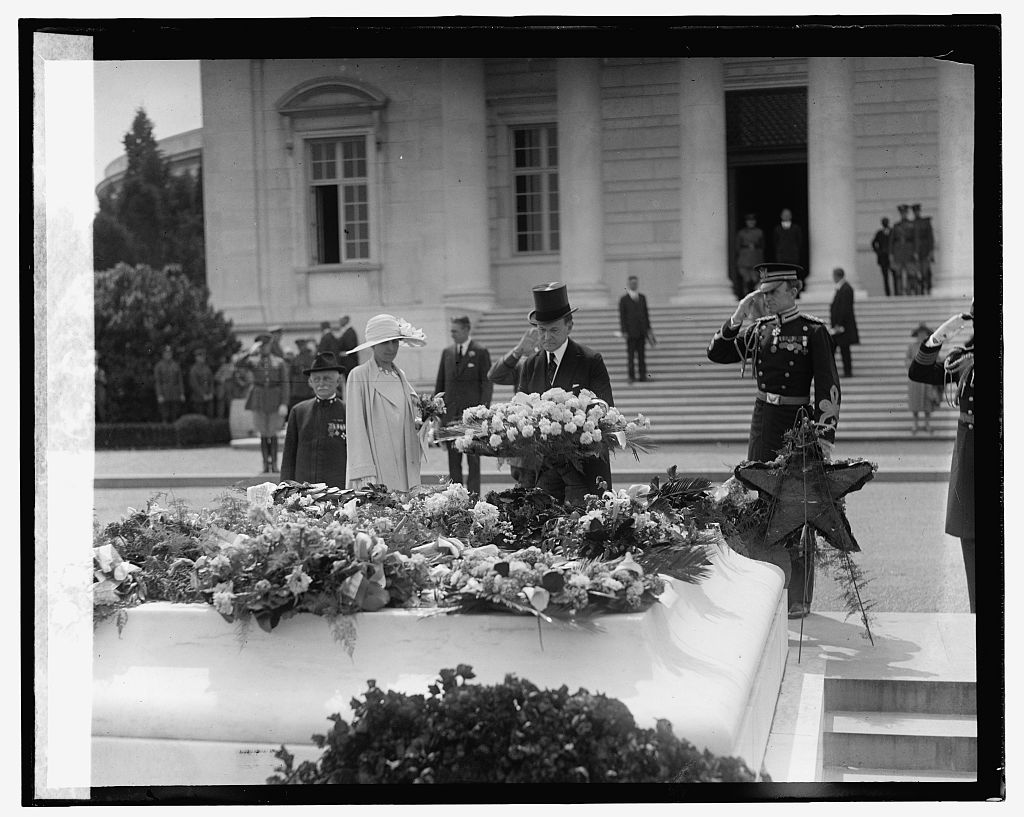
“If these principles are sound, two conclusions follow. The individual and the local, state, and national political units ought to be permitted to assume their own responsibilities. Any other course in the end will be subversive both of character and liberty. But it is equally clear that they in their turn must meet their obligations. If there is to be a continuation of individual and local self-government and of state sovereignty, the individual and locality must government themselves and the state must assert its sovereignty. Otherwise these rights and privileges will be confiscated under the all-compelling pressure of public necessity for a better maintenance of order and morality. The whole world has reached a stage in which, if we do not set ourselves right, we may be perfectly sure that an authority will be asserted by others for the purpose of setting us right.” — Calvin Coolidge, Arlington Amphitheater, May 30, 1925


 The Importance of the Obvious