On Judicial Activism

Chief Justice Taft and several Circuit Court judges, gathering for their annual conference, call upon President Coolidge at the White House.

Chief Justice Taft and several Circuit Court judges, gathering for their annual conference, call upon President Coolidge at the White House.

“Courts are established, not to determine the popularity of a cause, but to adjudicate and enforce rights. No litigant should be required to submit his case to the hazard and expense of a political campaign. No judge should be required to seek or receive political rewards.”

Courts do not decide issues, as much as we would like them to or actually take upon themselves to do at times. Courts are political institutions and yet they are not to serve as official polls to endorse or set aside popular opinion on the latest “hot button” topic or current news item. The Courts do not exist to decide “trial balloon” cases floated through the system merely for the purpose of registering approval or disapproval on x, y, or z, influencing how people are to think, using the sanctity of law to amend whatever someone, somewhere does not like about our political and economic structure. Used as a short-cut to change culture, transform institutions we do not like and amend laws without resort to Congress, amendments or even elections, the Courts are allowed to stray far and wide from their original purpose. They do not exist to determine the rightness or wrongness of our every decision, every act, or every thought, relieving us of those terrible burdens known as conscience and self-government. Coolidge understood that the courts were there to hear the facts brought to them so that justice is done to both parties, rights are enforced and the party infringing those rights is held liable as the law requires. Cases are not to subjected to judicial grandstanding carrying political or philosophical arguments out into the public sphere to pressure different outcomes or enhance social standing. A fundamental grasp of true justice to all concerned demands something far better than that. That is equally as true whether your name is Scalia or Breyer.

“If I appoint him as a judge, can he see the issues of the case over the heads of the parties? I do not intend to appoint any man to the Superior Court, or to any court, who cannot do that.”

It is not the role of a judge to empathize, to be able to emotionally identify with or personally relate to the situation faced by either party in a case. This is irrelevant to the work a judge is to do. By appointing judges on the basis of their subjective quantity of “compassion,” specific skin color, proximity to poverty, gender or, as Coolidge would say, things that are non-essential to qualification for this important work, it debases justice itself and thereby deprives either party of a righteous and fair result. It expects courts to no longer look past the particulars of the persons involved with even an attempt at objectivity and impartiality — the blindfold — of real justice. Instead, the facts of the case and the proper application of the law to the question at issue are secondary to how difficult it is to be a poor single mother, a juvenile with prior offenses or a convicted murderer awaiting the death penalty. In short, the legal and factual questions of the particular case under review are barely considered, if at all. The decision, instead, devolves upon how badly do the men and women of the Court feel for either party on a given day. By adhering to what the court is supposed to do – apply the provisions of the law to the facts of the case — compassion and justice retain their proper balance and proportions, victims find remedy and guilt is held accountable. That is the profound and indispensable purpose of judging. While Coolidge appointed the best jurists he could find by this standard, their failure at times to uphold it hardly invalidates the rule he applied or makes Cal inconsistent, it confirms the supreme importance of judging our judges well before we bestow them greater responsibilities.

On the Question: “Is College for Everyone?”

CC solo

Leaving aside the absurd claim that each young person is somehow socially remiss without the full “college experience,” a more useful and infinitely more important line of thought asks, “Is college for everyone?” Since the generation that fought and won the Second World War returned home, the expectation has continued to the current day that college is essential and ought to be secured by everyone, whatever the costs. However, there are more than monetary debts incurred by the cultural standardization of education, a virtual assembly-line that, rather than encouraging the pursuit of truth and development of character, suppresses thoughts, beliefs and views contrary to the accepted norm, a constantly expanding code of conduct defined by the ever-shifting sands of political correctness. This process of dehumanizing education, subordinating the individuality of learning to the one-size-must-fit-all methods we now witness is hardly new. Coolidge saw its incremental influence on the culture in his time, as he warned, “Progress depends very largely on the encouragement of variety. Whatever tends to standardize the community, to establish fixed and rigid modes of thought, tends to fossilize society. If we all believed the same thing and thought the same thoughts and applied the same valuations to all the occurrences about us, we should reach a state of equilibrium closely akin to an intellectual and spiritual paralysis. It is the ferment of ideas, the clash of disagreeing judgments, the privilege of the individual to develop his own thoughts and shape his own character, that makes progress possible.”

Coolidge also thought through whether college should be forced on everyone alike. Is it the essential stepping-stone to success that it was once thought to be? Is such a cultural coercion really necessary or right? What if there is a more fundamental purpose to higher education than expecting everyone to find equal success through the same system? Merely pursuing advanced degrees in technical fields, the most important training is denied, mocked and neglected: a cultivation of the moral virtues, the very building blocks for life, whatever one chooses to be and do. The alternative is hardly an abandonment of continued education. It simply and reasonably asks whether the returns on what has been invested are yielding better people and good works. To answer that question, however, the reason for college must be defined. Is it, first, as Coolidge enumerates, “merely to train sufficient leaders in thought for the professions and statecraft”? Then education is only for an elite few, a class born to leadership, an assembly carefully selected for their value to government and large concerns around the world.

Coolidge presents an alternative, a second reason for college. It is “a general preparation for life, a method by which individual existence is broadened and sweetened.” It was more than maximizing the “college experience,” taking full advantage of the opportunity to “sow wild oats.” Rather it required the sober-minded application not only of the intellect but of the whole person — including the spiritual nature within each individual — to the preparation of life well-lived. This theory “sees no reason for confining the colleges to the professions or to those of exceptional capacity. Certainly the world now rewards the trades to an even higher degree than it does some professions. If we would stop thinking that a bachelor of arts must be a white-collar man and let him be any kind of man he is adapted to be, the danger of spoiling a good craftsman to make a poor professional man would vanish.” It would do no good to predetermine or plan where someone belongs based on their educational credentials. That road leads backward to caste and serfdom not forward to freedom and opportunity. Coolidge would have no part in an “aristocracy of learning.” If colleges accomplished their true mission, ministering to the mind, body — and the soul — there would be no hierarchy of higher learning, no pressuring young men and women to conform to a preset future or status to secure whatever constitutes success in society. “Every life needs more light,” Coolidge believed. Classical education furnishes that light.

Suppressing individual interests and aptitudes to whatever those with authority deem necessary to global competition (as “workers of the world,” after all) is merely another way of grooming a fixed class of mendicants looking to government for placement in all of life. Whereas career skills have limited power, the development of character is unlimited and something we all, however humble our vocation, would be bettered thereby.

College graduates after all “will not be judged by their diplomas but by what they produce. As the years pass some of them will discover that they put too much emphasis in their student days on how to get a living and not enough on how to live. Even if they do not appear so successful in the competition for gain, those who have a background of liberal culture have a satisfaction that wealth cannot buy. One great benefit of a college education is a better appreciation of the real values of life.” If that is what college accomplishes, then who can say it is not for you? If you ignore the failure of colleges in this essential, no amount of professional expertise will compensate for what it will cost your soul.

On How Education Fails without the Classics

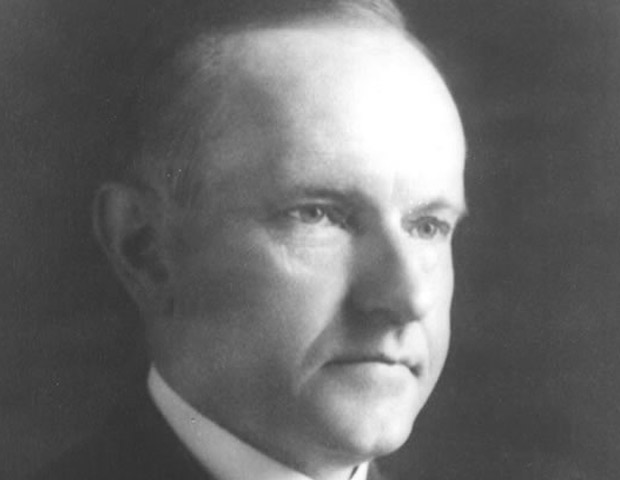
Calvin-Coolidge-620x480

“Civilization depends not only upon the knowledge of the people, but upon the use they make of it. If knowledge be wrongfully used, civilization commits suicide. Broadly speaking, the college is not to educate the individual, but to educate society. The individual may be ignorant and vicious. if society have learning and virtue, that will sustain him. If society lacks learning and virtue, it perishes. Education must give not only power but direction. It must minister to the whole man or it fails.

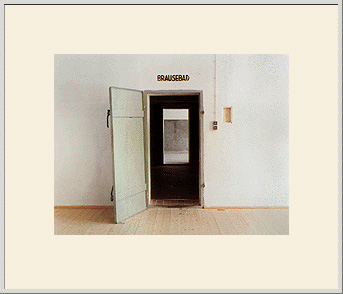
"Doorway to Gaschamber" by Andrea Robbins and Max Becher (1994) at the death camp at Dachau illustrate in a powerful way the horrors of reason without morality, a civilization wedded to science but severed from virtue. The word above the door reads, Brausebad ("Shower"). Its actual use as a gas chamber has been disputed but evidence has confirmed its use as such.

“Doorway to Gaschamber” also by Andrea Robbins and Max Becher (1994) at the death camp at Dachau illustrates in a powerful way the horrors of reason without morality, bureaucratic efficiency without basic humanity, a civilization wedded to science but severed from virtue. The word above the door reads, Brausebad (“Shower”). Its function  as a gas chamber has been disputed but evidence has confirmed its use as such.

"Lightswitch" also by Andrea Robbins and Ma Becher emphasizes the inescapable fact that reason, behind every appropriation of science, performed these terrible acts. It underscores again that modern science alone is inadequate to make a sound civilization.

“Lightswitch” by Andrea Robbins and Ma Becher emphasizes the inescapable fact that reason, design and deliberation, appropriating scientific rationality at every step, performed these terrible acts. It underscores again that modern science alone is inadequate to make a sound civilization. This series can be seen at the Harn Museum of Art in Gainesville, Florida.

“Such an education considered from the position of society does not come from science. That provides power alone, but not direction. Give a savage tribe firearms and a distillery, and their members will exterminate each other. They have science all right, but misuse it. They lack ideals. These young men that we welcome back with so much pride did not go forth to demonstrate their faith in science. They did not offer their lives because of their belief in any rule of mathematics or any principle of physics or chemistry. The laws of the natural world would be unaffected by their defeat or victory. No; they were defending their ideals, and those ideals came from the classics.

“This is preeminently true of the culture of Greece and Rome. Patriotism with them was preeminent. Their heroes were those who sacrificed themselves for their country, from the three hundred at Thermopylae to Horatius at the bridge. Their poets sang of the glory of dying for one’s native land. The orations of Demosthenes and Cicero are pitched in the same high strain. The philosophy of Plato and Aristotle and the Greek and Latin classics were the foundation of the Renaissance. The revival of learning was the revival of Athens and Sparta and of the Imperial City. Modern science is their product. To be included with the classics are modern history and literature, the philosophers, the orators, the statesmen, and poets, — Milton and Shakespeare, Lowell and Whittier, — the Farewell Address, the Reply to Hayne, the Speech at Gettysburg,–it is all these and more that I mean by the classics. They give not only power to the intellect, but direct its course of action.

“The classic of all classics is the Bible.

The Bible used in the Presidential oath of office, Plymouth Notch, during the early morning hours of August 3, 1923.

The Bible, once belonging to Coolidge’s mother, used in the Presidential oath of office at Plymouth Notch, during the early morning hours of August 3, 1923.

“I do not underestimate schools of science and technical arts. They have a high and noble calling in ministering to mankind. They are important and necessary. I am pointing out that in my opinion they do not provide a civilization that can stand without the support of the ideals that come from the classics.

“The conclusion to be derived from this position is that a vocational or technical education is not enough. We must have every American citizen well grounded in the classical ideals. Such an education will not unfit him for the work of the world. Did those men in the trenches fight any less valiantly, did they shrink any more from the hardships of war, when a liberal culture had given a broader vision of what the great conflict meant? The discontent in modern industry is the result of a too narrow outlook. A more liberal culture will reveal the importance and nobility of the work of the world, whether in war or peace. It is far from enough to teach our citizens a vocation. Our industrial system will break down unless it is humanized. There is greater need for a liberal culture that will develop the whole man in the whole body of our citizenship” — Calvin Coolidge, delivering the commencement address at Amherst College, June 18, 1919.

The Coolidges at the Massachusetts Institute of Technology (MIT), Cambridge.

The Coolidges at the Massachusetts Institute of Technology (MIT), Cambridge.