Addendum: Calvin Coolidge’s Advice for Voting, Campaigning and Governing

As a postscript to the wealth of good sense and political saavy of Calvin Coolidge presented yesterday, these four “honorable mentions” deserve further consideration, especially as this year has brought to the forefront things more important than the party affiliation of those seeking office. Character and qualifications are imperatives that can no longer be ranked as distant secondaries to appearances and external polish. This campaign has brought to front and center questions of where a candidate or officeholder lives or should live, how competent he or she is in representing our interests and how committed one remains to the day’s work, not merely the next election or the next political promotion. Coolidge, more timely now than ever, weighs in on all of these issues. After all, Coolidge reminds us that where a person lives is where the heart lives also and being faithful in small things makes one fit for greater things.

“They all taught me to be faithful over a few things. If they had any idea that such a training might some day make me a ruler over many things, it was not disclosed to me” — Coolidge from The Autobiography, 1929, p.19

Here Coolidge is alluding to the scene of final judgment described by the Lord in Matthew 25, verses 21 and 23; cf. Luke 16:10-12. The question Christ asks in Luke should be honestly answered by every candidate on the ballot this year: “If you have not been faithful in what is another man’s who will give you what is your own?” Coolidge unassumingly kept his focus on the work at hand, even when the lure of national prestige and popularity rose with the campaign of 1920, as he recounts, “I was Governor of Massachusetts, and my first duty was to that office. It would not be possible for me, with the legislature in session, to be going about the country actively participating in an effort to secure delegates, and I was totally unwilling to have a large sum of money raised and spent in my behalf.” Too many are concerning themselves with 2016, when there is work to be done today. How much better would office holders be if they adopted Coolidge’s attitude? Do the day’s work, make it your first duty and tomorrow will take care of itself.

“We liked the house where our children came to us and the neighbors who were so kind. When we could have had a more pretentious home we still clung to it. So long as I lived there, I could be independent and serve the public without ever thinking that I could not maintain my position if I lost my office. I always made my living practicing law up the time I became Governor, without being dependent on any official salary. This left me free to make my own decisions in accordance with what I thought was the public good. We lived where we did that I might better serve the people” — The Autobiography p.96

Whether the candidate actually lives in the same jurisdiction or district one is seeking to represent matters. It matters because voters need to know that the candidate is fully invested in what they are being elected to accomplish, that we are getting the best a candidate is and will do. It means living by the same rules you expect of others. If the candidate remains insulated from the consequences of his or her decisions, the responsibilities entrusted will neither be borne nor respected. Voters are seeking to learn whether the candidate is going to uphold integrity, serving self or for the genuine good of all those one is oath-bound to represent.

“I made progress because I studied subjects sufficiently to know a little more about them than any one else on the floor” — The Autobiography p.103

Some seek to distinguish themselves through grandstanding, boisterousness or the condescension of promoting big appearances with little substance. Coolidge demonstrated the quiet diligence of learning what the issues are, understanding the subjects under consideration not voting to learn what was in them. This measure of informed leadership is not to silence questions or win arguments but to understand the best course for responsible self-government. He advanced not by clever showmanship but by his grasp of public questions and human nature he proved qualified to speak and fit to lead.

Finally, “The requirements of the situation as it developed seem clear and plain now, and easy to decide, but as they arose they were very complicated and involved in many immaterial issues. The right thing to do never requires any subterfuges, it is always simple and direct. That is the reason that intrigue usually falls of its own weight” — The Autobiography p.133

Speaking of his part as Governor in the Boston Police Strike of 1919, Coolidge presents a maxim that applies to every time and place. Politics is so easily distracted from the essentials and as events unfold, peripherals crowd in to obscure what is fundamental. Coolidge reminds us to separate the extraneous from the essential, truth from falsehood, the constructive from the harmful, the eternal from the temporal. When that is done, the right course shines free of all pretense, sham and artificiality.

Calvin Coolidge: Advice for Voting, Campaigning and Governing

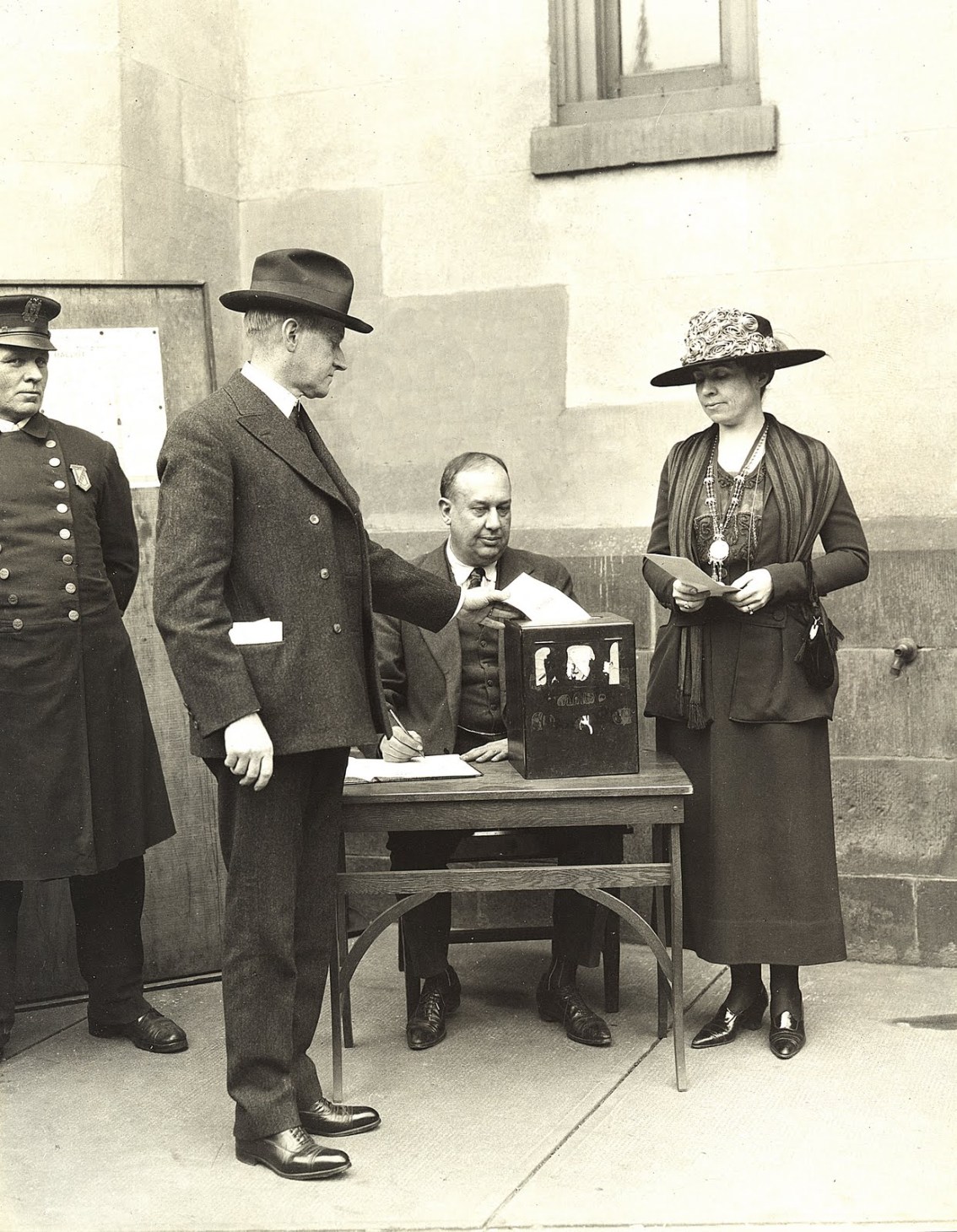
The Coolidges vote together, November 2, 1920. The Nineteenth Amendment, ratified in August of 1920, recognized suffrage for women nationwide and enabled Grace to join her husband and to cast her ballot for the first time.

The Coolidges vote together, November 2, 1920. The Nineteenth Amendment, ratified in August of that year, recognized suffrage for women nationwide and enabled Grace to join her husband and to cast a Presidential ballot for the first time. Massachusetts provided for woman suffrage on school, bond and tax issues. Before the Nineteenth Amendment, most states already had either full, Presidential or local suffrage for women. Only 10 states had little or no formally recognized voting rights: PA, MD, VA, WV, OH, NC, SC, GA, AL, and FL.

Being as it is an election year, with some primaries already behind us and more soon to come, thousands of campaigns, large and small, are underway. Whether you are a candidate, a voter or currently serving your town, your county, your district or your state, take a few moments to stop, listen and take to heart what Calvin Coolidge had to say about voting, campaigning and governing.

When he rose to Presidential responsibility in August 1923, he had already served as a local precinct Committeeman, City Councilman, City Solicitor, State Representative, Mayor, State Senator, President of the State Senate, Lieutenant Governor, Governor and Vice President all before age 52. He has much to tell us. If we returned to the principles he exemplified we would find a higher caliber of candidates, a more faithful public service, and a stronger citizenship. As we head into election time, think on these 30 bits of political wisdom from our thirtieth President.

“You need not hesitate to give the other members your views on any subject that arises. It is much more important to kill bad bills than to pass good ones, and better to spend your time on your own committee work than by bothering with any bills of your own except in some measure that your own County or some other persons may want you to introduce for them…See that bills you recommend from your committee are so worded that they will do just what they intend and not a great deal more that is undesirable. Most bills can’t stand that test” – letter to his father, September 6, 1910

“Men do not make laws. They do but discover them. Laws must be justified by something more than the will of the majority. They must rest on the eternal foundation of righteousness…The people cannot look to legislation generally for success. Industry, thrift, character, are not conferred by act or resolve. Government cannot relieve from toil…The normal must care for themselves. Self-government means self-support…Do the day’s work. If it be to protect the rights of the weak, whoever objects, do it. If it be to help a powerful corporation better to serve the people, whatever the opposition, do that. Expect to be called a standpatter, but don’t be a standpatter. Expect to be called a demagogue, but don’t be a demagogue. Don’t hesitate to be a revolutionary as science. Don’t hesitate to be as reactionary as the multiplication table. Don’t expect to build up the weak by pulling down the strong. Don’t hurry to legislate. Give administration a chance to catch up with legislation…Statutes must appeal to more than material welfare. Wages won’t satisfy, be they never so large. Nor houses; nor lands; no coupons, though they fall thick as the leaves of autumn. Man has a spiritual nature. Touch it, and it must respond as the magnet responds to the pole. To that, not to selfishness, let the laws of the Commonwealth appeal. Recognize the immortal worth and dignity of man” – Address to the State Senate on being elected its President, Boston, January 7, 1914

“The law, changed and changeable on slight provocation, loses its sanctity and authority” – Adequate Brevity p.54

“I am not one of those who believe votes are to be won by misrepresentations, skillful presentations of half truths, and plausible deductions from false premises. Good government cannot be found on the bargain-counter” – Address at Riverside, MA, August 28, 1916

“We have had many attempts at regulation of industrial activity by law. Some of it has proceeded on the theory that if those who enjoyed material prosperity used it for wrong purposes, such prosperity should be limited or abolished. That is as sound as it would be to abolish writing to prevent forgery. We need to keep forever in mind that guilt is personal; if there is to be punishment let it fall on the evil-doer, let us not condemn the instrument” – Address at Associated Industries Dinner, Boston, December 15, 1916
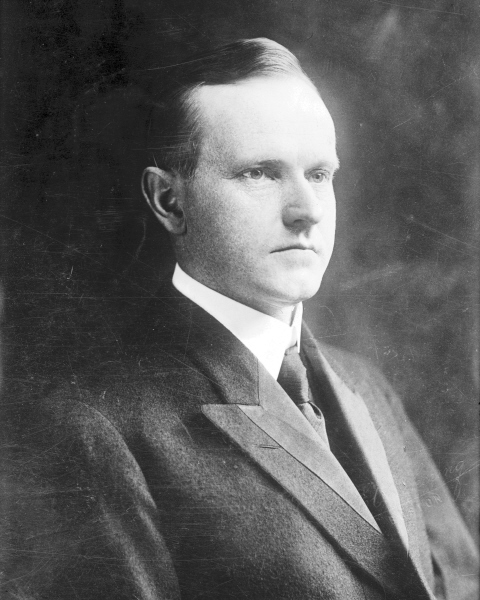
Young C

“So much emphasis has been put upon the false that the significance of the true has been obscured and politics has come to convey the meaning of crafty and cunning selfishness, instead of candid and sincere service” – Essay “On the Nature of Politics”

“Public men must expect criticism and be prepared to endure false charges from their opponents. It is a matter of no great concern to them. But public confidence in government is a matter of great concern…It is necessary to differentiate between partisan assertions and actual conditions” – “On the Nature of Politics”

“The people who start to elect a man to get what he can for his district will probably find they have elected a man who will get what he can for himself” — “On the Nature of Politics”

“It seemed to me that the towns in this commonwealth correspond in part to what we might call the water-tight compartments of the ship of state, and while sometimes our state government has wavered…whenever that has arisen, the towns of the commonwealth have come to the rescue” – Dedication of Town-House, Weston, MA, November 27, 1917

“Under our National Government the States are the sheet-anchors of our institutions. On them falls the task of administering local affairs and of supporting the National Government in peace and war”—Address at Tremont Temple, November 2, 1918

One of several vintage pins from the campaign of 1924 that resulted in a landslide for Coolidge.

One of several vintage pins from the campaign of 1924. Coolidge won in a landslide that year over both his Democrat and third-party challengers.

“Those in whom is placed the solemn duty of caring for others ought to think of themselves last or their decisions will lack authority. There is apparent a disposition to deny the disinterestedness and impartiality of government. Such charges are the result of ignorance and an evil desire to destroy our institutions for personal profit. It is of infinite importance to demonstrate that legislation is used not for the benefit of the legislator, but of the public” – Veto of Salary Increase, 1919

“Naturally the question arises, what shall we do to defend our birthright? In the first place everybody must take a more active part in public affairs. It will not do for men to send, they must go. It is not enough to draw a check. Good government cannot be bought, it has to be given…Unless good citizens hold office bad citizens will” – Speech at Tremont Temple, November 1, 1919

“We have had too much legislating by clamor, by tumult, by pressure. Representative government ceases when outside influence of any kind is substituted for the judgment of the representative. This does not mean that the opinion of constituents is to be ignored. It is to be weighed most carefully, for the representative must represent, but his oath provides that it must be ‘faithfully and impartially according to the best of his abilities and understanding, agreeably to the rules and regulations of the Constitution and laws’” – Message to the Massachusetts Legislature accompanying the Governor’s Veto, May 6, 1920

“Real reform does not begin with a law; it ends with a law. The attempt to dragoon the body when the need is to convince the soul will end only in revolt” – Address before the American Bar Association, San Francisco, CA, August 10, 1922

“Error lies in supposing that great fundamental reforms can be at once accomplished by the mere passage of a law. By law is meant a rule of action. Action depends upon intelligence and motive. If either of these be lacking, the action fails and the law fails” – Address before the NY State Convention of the YMCA, Albany, NY, April 13, 1923
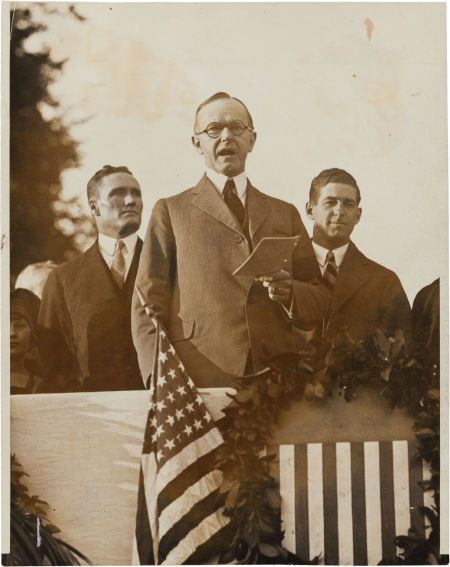
CC

“The problem of preventing vice and crime and of restraining personal and organized selfishness is as old as human experience. We shall not find for it an immediate and complete solution in an amendment to the Federal Constitution, an act of Congress, or in the findings of a new board or commission” – Adequate Brevity p.112

“We must have no carelessness in our dealings with public property or the expenditure of public money. Such a condition is characteristic either of an undeveloped people, or of a decadent civilization. America is neither…We must have an administration which is marked, not by the inexperience of youth, or the futility of age, but by the character and ability of maturity” – Address at the Seventh Meeting of the Business Organization of the Government, Memorial Continental Hall, June 30, 1924

“I want the people of American to be able to work less for the Government and more for themselves. I want them to have the rewards of their own industry. This is the chief meaning of freedom” – Acceptance Address of Presidential Nomination, August 14, 1924

“A political campaign can be justified only on the grounds that it enables the citizens to become informed as to what policies are best for themselves and for their country, in order that they may vote to elect those who from their past record and present professions they know will put such policies into effect. The purpose of a campaign is to send an intelligent and informed voter to the ballot box. All the speeches, all the literature, all the organization, all the effort, all the time and all the money, which are not finally registered on election day, are wasted” – Radio address from the White House, November 3, 1924

“Propaganda seeks to present a part of the facts, to distort their relations, and to force conclusions which could not be drawn from a complete and candid survey of all the facts. It has been observed that propaganda seeks to close the mind, while education seeks to open it. This has become of the dangers of the present day…Unfortunately, not all experts are completely disinterested. Not all specialists are completely without guile. In our increasing dependence on specialized authority, we tend to become easier victims for the propagandists, and need to cultivate sedulously the habit of the open mind…We need to keep our minds free of prejudice and bias. Of education and real information we cannot get too much. But of propaganda, which is tainted or perverted information, we cannot have too little” – Address before the American Society of Newspaper Editors, Washington, D. C., January 17, 1925
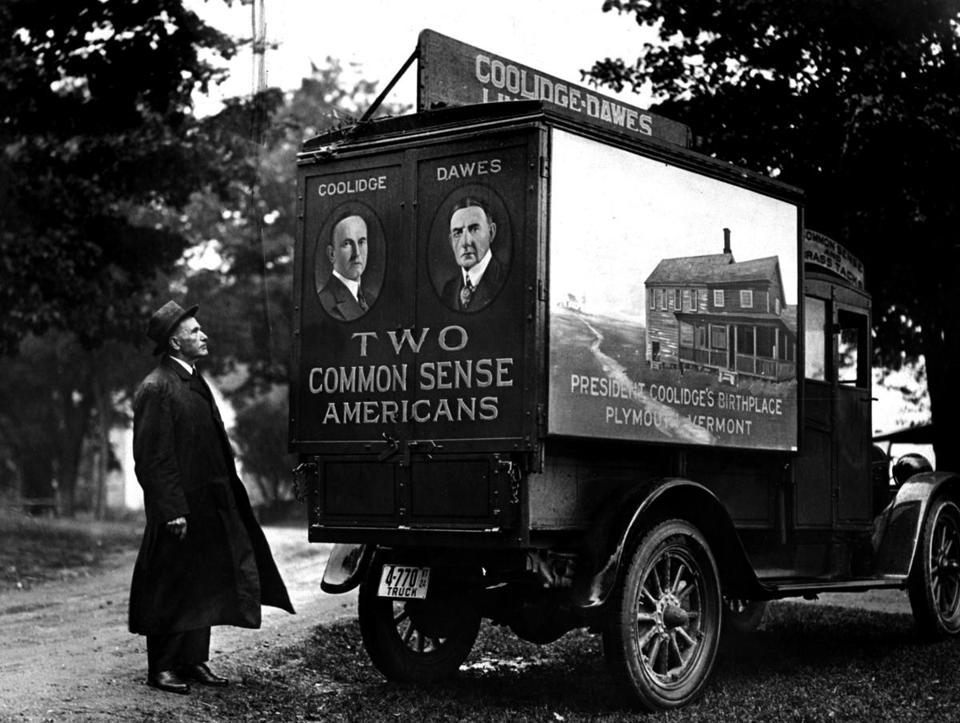
Colonel Coolidge inspects the lead vehicle of the Coolidge-Dawes Lincoln Tour about to depart from Plymouth, September 1924. The driver, John P. Cowan of Pittsburgh, would use this unique means of bringing Coolidge to the country. A thoroughly grassroots movement, the Coolidge-Dawes Lincoln Tour would see 5 million participants in 100,000 automobiles before reaching their final stop on the Pacific. It must have worked since on November 4, Calvin Coolidge decisively beat the combined political support of both his challengers with 15.7 million votes, carrying 35 of 48 states and securing 382 electoral votes out of 266 needed to clinch victory). His 25.2 point margin victory is one of the largest popular votes garnered to this day.

Colonel Coolidge inspects the lead vehicle of the Coolidge-Dawes Lincoln Tour about to depart from Plymouth, September 1924. The driver, John P. Cowan of Pittsburgh, would use this unique means of bringing Coolidge to the country. A thoroughly grassroots movement, the Coolidge-Dawes Lincoln Tour would see 5 million participants in 100,000 automobiles before reaching their final stop on the Pacific. It must have contributed mightily to the result since on November 4, Calvin Coolidge decisively beat the combined political support of both his challengers with 15.7 million votes, carrying 35 of 48 states and securing 382 electoral votes out of 266 needed to win. His 25.2 point margin victory is one of the largest popular votes garnered to this day.
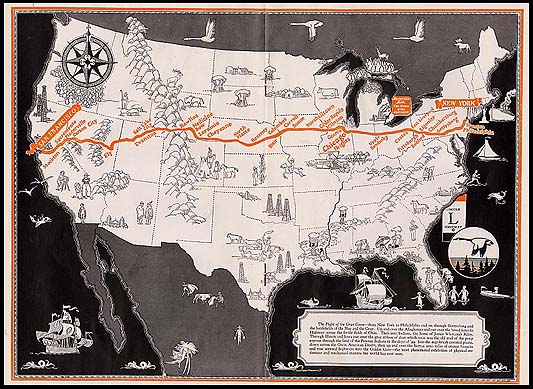
Here is a map following the route the Coolidge-Dawes Lincoln Tour traveled September 9-November 3, 1924. The first of its kind, a cross-country, political road rally spanned some 56 days in duration and crossed 17 states, 6500 miles in total.

Here is a map following the route the Coolidge-Dawes Lincoln Tour, using the Lincoln Highway, traveled from September 9 to November 3, 1924. Being the first of its kind, the Lincoln Tour was a cross-country political road-rally that started with six automobiles driven by Coolidge’s Plymouth friends and neighbors and ended 56 days, 400 stops, 17 states and 6500 miles later on the Pacific coast in Washington state.

“What we need is not more Federal government, but better local government…When the local government unit evades its responsibility in one direction, it is started in the vicious way of disregard of law and laxity of living…If we are too weak to take charge of our own morality, we shall not be strong enough to take charge of our own liberty. If we can not govern ourselves, if we can not observe the law, nothing remains but to have some one else govern us, to have the law enforced against us, and to step down from the honorable abiding place of freedom to the ignominious abode of servitude” – Address at Arlington National Cemetery, May 30, 1925

“The doctrine of State rights is not a privilege to continue in wrong-doing but a privilege to be free from interference in well-doing” – Address at the College of William and Mary, Williamsburg, VA, May 15, 1926

“We have built our institutions around the rights of the individual. We believe he will be better off if he looks after himself. We believe that the municipality, the State, and the National will each be better off if they look after themselves. We do not know of any other theory that harmonizes with our conception of true manhood and true womanhood” – Address before the Society of the Daughters of the American Revolution, Washington, D.C., April 16, 1928

“For important political service the three qualifications necessary are character, ability and experience. Some of our voters are not giving sufficient consideration to these requirements. They are often supporting candidates whose greatest appeal is that they are good fellows. An agreeable personality is a fine quality, but it is not enough to administer a great office. It is vain to support office seekers who smile, if it results in electing officeholders who are not competent. The government cannot be run successfully by substituting the power of entertainment for the power of accomplishment” – Calvin Coolidge Says (daily column), October 8, 1930

“This general principle of passing one piece of legislation at a time is most salutary. It prevents crowding through measures that the majority does not favor and forces all bills to stand on their merits” — Calvin Coolidge Says, January 16, 1931
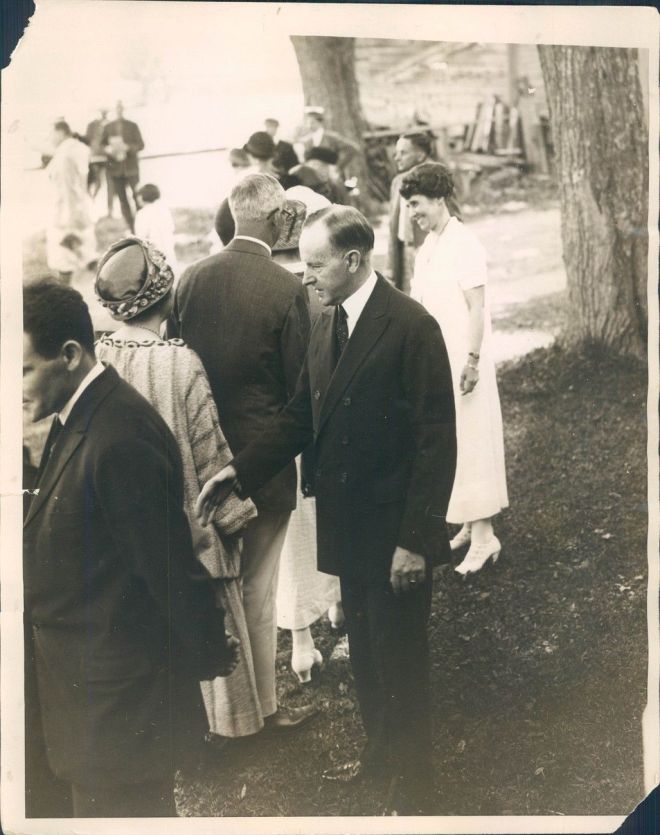
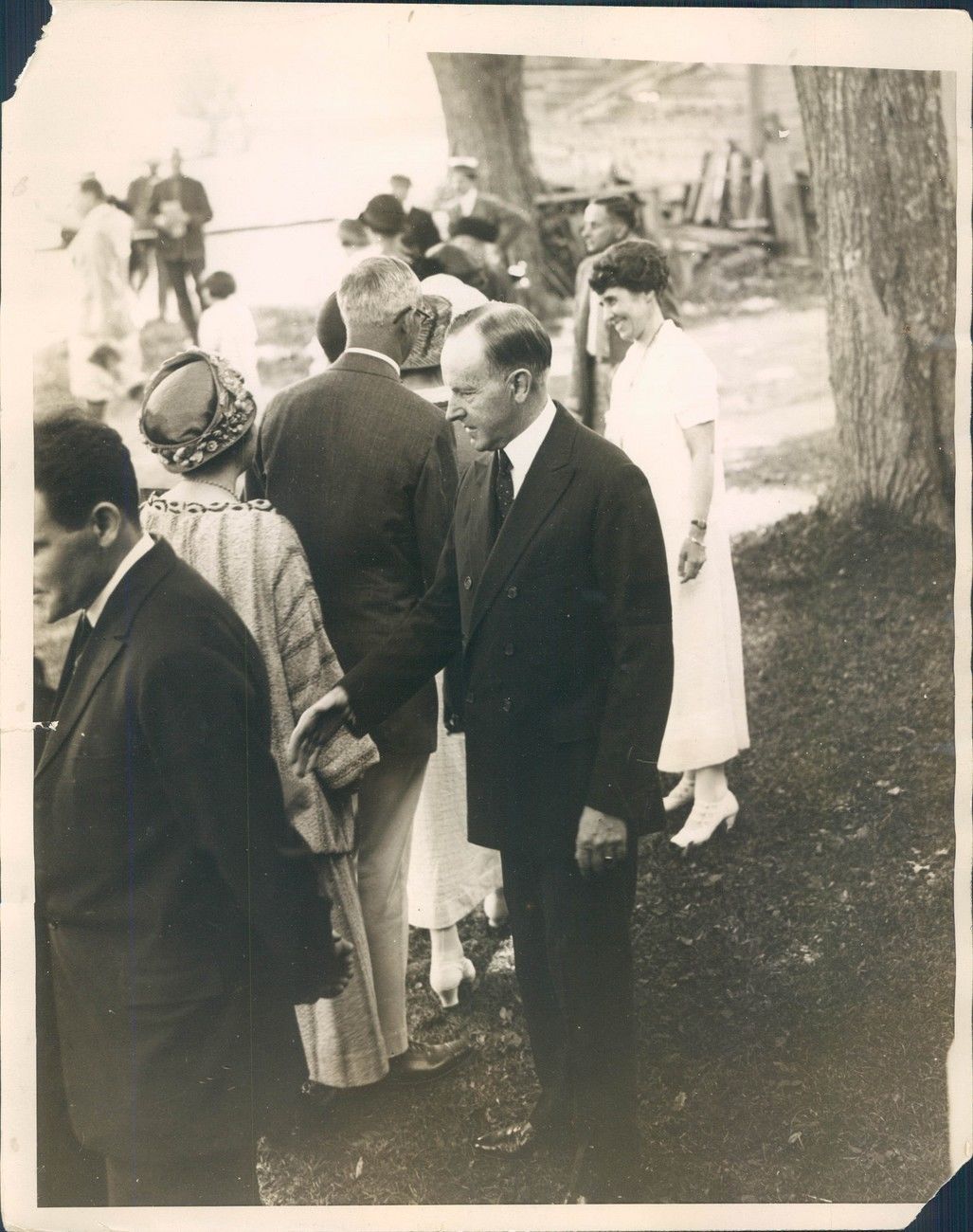
Calvin and Grace greeting Americans on the White House lawn

Calvin and Grace greeting fellow citizens visiting the farm

“A good measure can stand discussion. A bad bill ought to be delayed…Open debate is the only shield against the irretrievable action of a rash majority” – Calvin Coolidge Says, March 10, 1931

“There is only form of political strategy in which I have any confidence, and that is to try to do the right thing and sometimes to succeed” – The Autobiography, p.189

“The political mind is the product of men in public life who have been twice spoiled. They have been spoiled with praise and they have been spoiled with abuse. With them nothing is natural, everything is artificial. A few rare souls escape these influences and maintain a vision and a judgment that are unimpaired. They are a great comfort to every President and a great service to their country” – The Autobiography, 1929, p.229

“Talking is all right, but the side that organizes and gets the vote to the polls is the side that wins” – Coolidge to Everett Sanders, September 21, 1932

Bruce Barton: “Governor, how it is that you have been able to stay in public life all these years and hold office when you have no money?”
Calvin Coolidge: “I’m solvent.”
Bruce Barton: “He took care to keep solvent. He never lost his head. He never let anything change him“ – radio eulogy by author and long-time Coolidge advocate, Bruce Barton, broadcast on NBC radio the night of Coolidge’s death, January 5, 1933 (Coolidge Wit and Wisdom p.x)
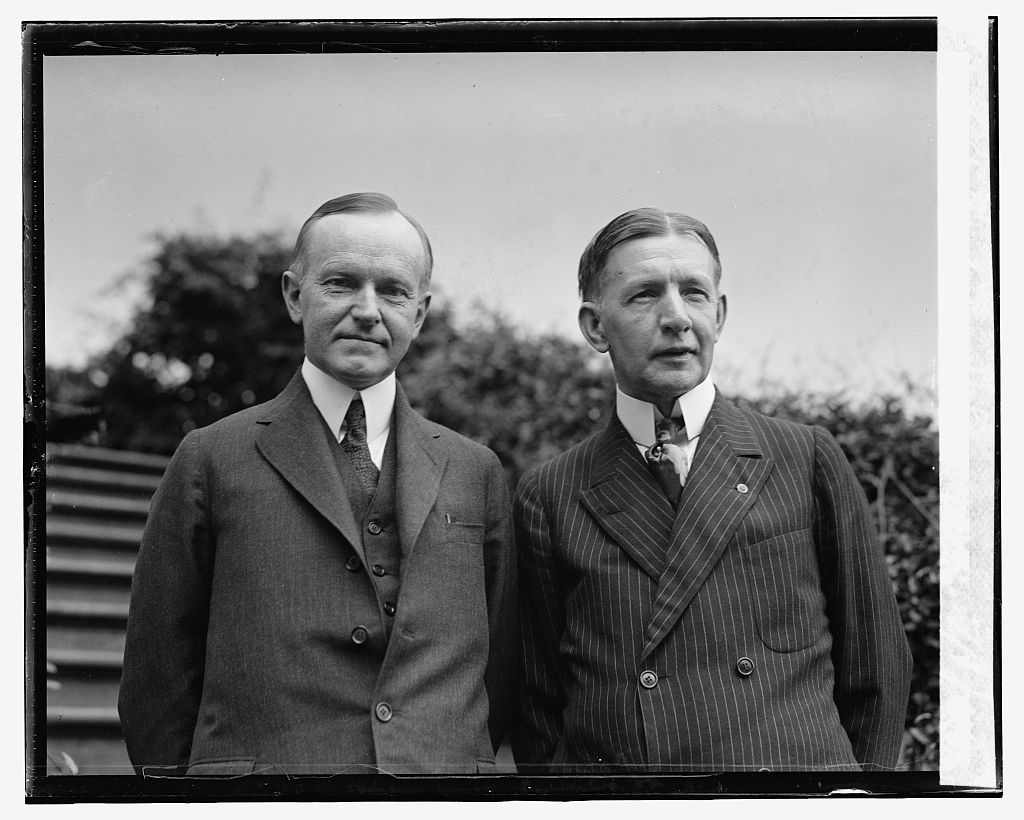
President Coolidge and Vice Presidential running-mate Charles Dawes, July 1924

President Coolidge and Vice Presidential running-mate, Charles Dawes, July 1924

On Continuing Constructive Economy

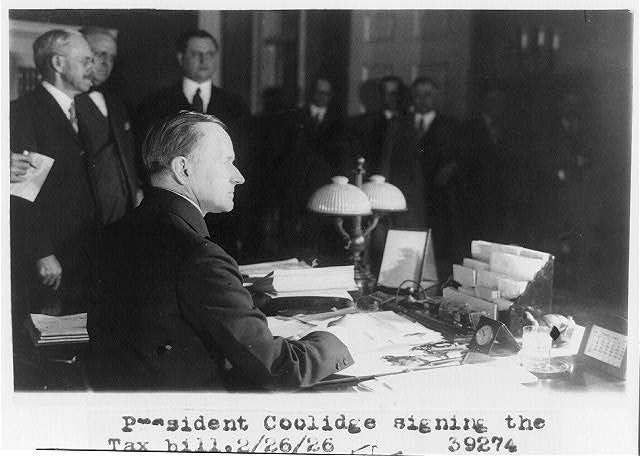
President Coolidge signs the Revenue Act of 1926, February 26, 1926

President Coolidge signs the Revenue Act of 1926, February 26, 1926. Courtesy of the Library of Congress.

Instituted to measure the success or shortfall of the Budget system year by year, the Business Organization of the Government met twice annually, once in January and at the end of the fiscal year each June. Led by the President and his Budget Bureau Director, it would be left to Coolidge and Director Lord to lift these meetings out of the realm of a burdensome and tedious anomaly from the status quo. Instead of “business as usual” the Coolidge administration walked what it talked, bringing a focused and even entertainingly competitive application of private sector principles to what had been a wasteful and inefficient government norm. As everyone knew, however, when the department heads, bureau chiefs and agency leads met with the President and the Budget Bureau Director for the tenth time on January 30, 1926, the progress of four and a half years could come stall, abruptly halt or unravel before their eyes if any one of them succumbed to the pressures continually upon them to revert to the old habits of Washington as usual. Now elected in his own right, there was no code of honor binding Coolidge to adhere to Harding’s budget program. He continued it because it was morally right and necessary for the country, whoever occupied the White House. Each month was making it more and more difficult, however, for those who made his budgets reality every year. Prosperity was abounding. The economy was roaring and revenue had only increased with the expectations of a new tax bill, which would be passed less than a month after their meeting on February 26th, drastically improving conditions from what had already been beneficial relief under the Revenue Act two years before.

A student of government and especially of tax policy, President Coolidge, began to see a pattern of both good prospects and detrimental concerns for the future. The meeting later that year, on June 21, would make it even clearer: government expenses were reaching a natural plateau, that made future possibilities for drastic cutting genuinely no longer possible. By that summer, Coolidge reminded his audience again that the past five years under a Budget system had removed $2 billion of waste from the Federal budget not once or twice, but five times. However, the Federal Budget, chopped from $5.5 billion in 1921, now stood at some $3 billion but was very close to reaching an impasse. Progress would begin undoing itself to the harm of every American household. The standards of living would begin to fall under disrepair and the cost of government would have to return to extracting the earnings of the people who would again work less for themselves and more for government. To Coolidge this was an intolerable regression. Coolidge made emphatically clear that this program was not about saving a dollar if it meant destroying an individual. Each partner in this great enterprise was saving to serve people, not money. Closing schools, abolishing courts, disbanding the police forces and discontinuing fire departments was not moving in the direction of civilization but back toward anarchy and the law of might triumphs over all.

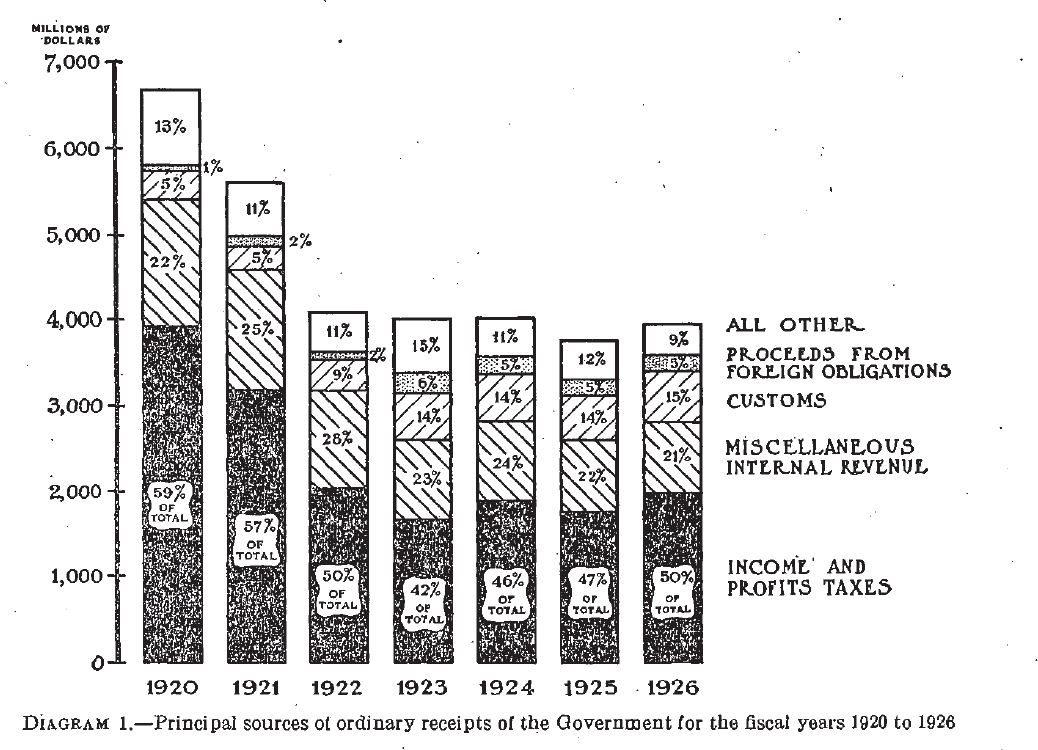
Annual Report of the Secretary of the Treasury on the State of the Finances, 1926. Courtesy of Fraser, http://fraser.stlouisfed.org/.

Annual Report of the Secretary of the Treasury on the State of the Finances, 1926. Courtesy of Fraser, http://fraser.stlouisfed.org/.

Courtesy of Fraser, http://fraser.stlouisfed.org/.

Courtesy of Fraser, http://fraser.stlouisfed.org/.

This did not mean that the Budget system had completed its work or that constructive economy was done. Far from it. Now came the most difficult juncture: Would constructive economy, what Coolidge termed the securing of more results for less cost — the people getting the most possible out of every tax dollar, continue? After all, he approached the question not with a concern for where government was going to find reliable streams of revenue but how every cent of revenue could be saved and only expended to maximum benefit of those who worked to earn it, American taxpayers. As Coolidge declared in the June meeting of 1926, “The real purpose for which we are assembled is to discuss plans and adopt policies which will affect in their actual daily life the welfare, progress, and prosperity of 117,000,000 people. What we do here reaches into every home in the land. It determines whether the taxgatherer is going to require more money from the head of the household to meet the cost of maintaining the Government, or whether the taxgatherer is going to leave more money with the head of the household to meet the cost of maintaining the family. Our efforts here are translated into benefits for the head of the household and his family.”

These bi-annual meetings were anything but irrelevant abstractions, they directly impacted the lives of every person in the country. There were faces tied to every decision made in Washington. A choice to stop now and abandon constructive economy — however insignificant it seemed to each little office in government meant priceless blessings to the future good of families all across the country. Coolidge wanted to remind those who had partnered with his effort to budget that millions of real people waited at the end of their determination to uphold their obligation.

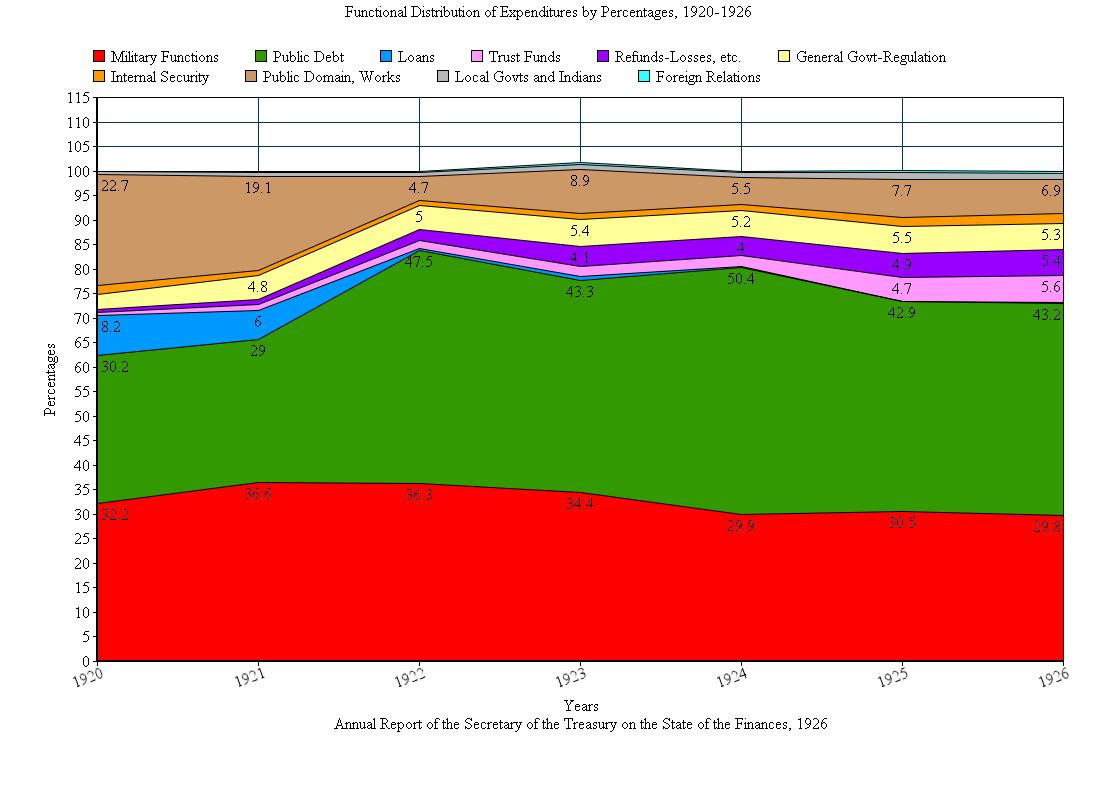
Functional Distribution of Expenditures FY 1926. Courtesy of Fraser, http://fraser.stlouisfed.org/.

Functional Distribution of Expenditures FY 1920-1926. Courtesy of Fraser, http://fraser.stlouisfed.org/.

It was just as important to recognize that constructive economy was not simply an incessant negative, it sometimes called for reallocations of spending on new endeavors in order to secure even greater efficiency with the people’s money. The construction of public buildings, vacating the expensive rental of private property, would ensure that more was gained for less as property taxes would decrease and rental costs could be eliminated. Personnel, what everyone knew to be the biggest expenditure in the budget, had seen 5,000 names (roughly 1% of the total Federal workforce) at a cost of $8 million reduced from the payroll. These numbers were people to Coolidge who, he knew, would find the real value of their labor in the burgeoning marketplace without weighing down the American people at exaggerated prices from the public Treasury. Of course, when possible, efficiency meant moving one person unneeded in one department to where they were in need. Or, as Coolidge said in June, “I am encouraged in the thought that we can have further reduction of personnel without discharging a single person by the simple device of not filling all the vacancies that occur.”

The call of constructive economy summoned everyone to serve the taxpayer, from the newest clerk to the most senior administrator. Government work was not “good enough” to do less than any private business must do to meet the constant challenge of efficiency and solvency. This included travel costs and per diem rates. Government employees were not free to spend because it was there. The surplus of 1926 was no excuse to waste the money of the American people. “We are not striving to save the dollar simply to save it,” Coolidge declared. “We are not striving to save the dollar at the expense of the public service. Rather do we approach it from the other side and save the dollar for the good that it will bring to the people whom we serve. We can make the dollar purchase more by purchasing more wisely. We can eventually save money by a justified expenditure to-day which will reduce future annual unproductive expenditures. This is constructive economy.”

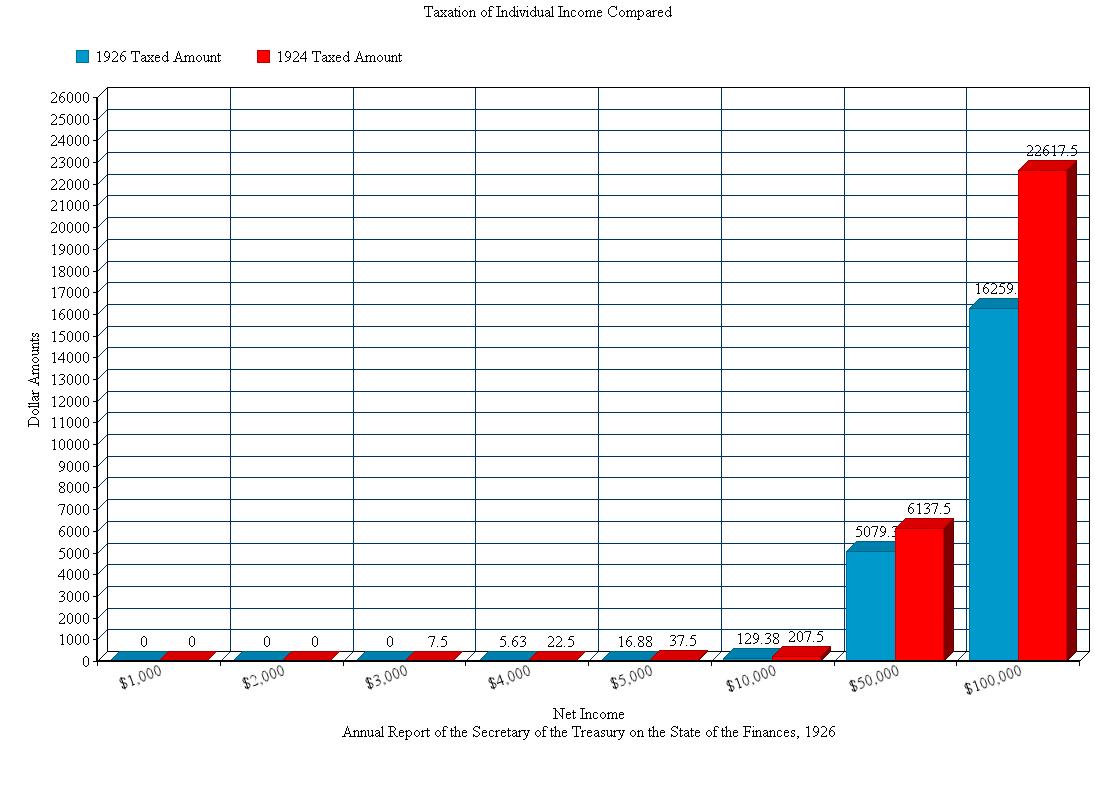
Annual Report of the Secretary of the Treasury on the State of the Finances, 1926.  This chart especially illustrates the progressive rate of taxation in the Twenties, giving the lie to those who still claim taxation spared "the rich" while punishing "the common man."

Annual Report of the Secretary of the Treasury on the State of the Finances, 1926. This chart especially illustrates the progressive rate of taxation in the Twenties, giving the lie to those who still claim taxation spared “the rich” while punishing “the common man.” The exact opposite was the case under Coolidge-Mellon tax policy.

The Revenue Act that would be passed in February 1926 finally achieved a number of the objections Coolidge had wanted done in 1924. Top marginal income rates were sliced to 25%, a 21% decrease from 1924. The new Act “relieved some 2,000,000 people from paying any direct tax and reduced the burden of all other taxpayers. General prosperity is the aggregate of the individual prosperity of our citizens. To permit the people to retain more of their own earnings is to increase their savings and purchasing capacity, which assures prosperity.” In 1926, married couples with no dependents, making the typical middle class bracket of $3,000 net, paid nothing. Single persons making $3,000 paid only $16.88. The laundry list of taxes invented during the war had governed some 50 categories of goods, now there were only 5. This meant a loss of $275 million in revenue and under the law “no compensating increases” were levied to replace them. Under the previous tax law, upwards of 40% of America’s businesses “with not one dollar of profit were obliged to pay a large tax.” In 1926, this ended so that businesses could make payroll, cover costs and barely break even without having to face a tax penalty for profits they did not make. Another provision withdrew individual income tax records from public disclosure requirements thereby helping to protect taxpayers from being targeted by those who deemed income or what someone else paid to be “unfair.” The rewards of this Act would continue to come to light in the coming year but it already confirmed the “theory that reduction of tax rates economically applied will stimulate business, and thereby increase taxable revenue.” Holding to the Budget system would ensure that the people obtained a maximum return on their investment.

"Who said they didn't believe in Santa Claus?" by "Ding" Darling, The Des Moines Register, November 8, 1926.

“Who said they didn’t believe in Santa Claus?” by “Ding” Darling, The Des Moines Register, November 8, 1926.

Another cause of concern for Coolidge came from the budget estimates of the next two years, which held razor thin surpluses that could very easily evaporate should even the slightest unforeseen expense arise. It was evident that while revenue was increasing, several factors were going to begin undermining the success of future tax cuts if relied upon recklessly. First, President Coolidge was concerned that a reliance on the current sources of revenue to increase steadily was a misleading and faulty hope. The back taxes that had accrued so much of the increase in 1925 and 1926 were going away. There would not be another year of so ample a contribution to the surplus. The departments could not depend on this revenue in their appropriation requests to the President like they had in previous years. Constructive economy meant “preparation for the future.” If costs were wisely planned out, retrenchment would continue as it had the previous year, saving $24 million in reserve when all was said and done. This conscientious discipline of spending less than one had would only reap greater dividends for the future.

Second, President Coolidge was concerned that loose spending would foreclose any possibility of further tax reduction in the coming years. Tax rates had been cut three times by the summer of 1926, and the latest Revenue Act had secured much for the country that would only increase as the new year dawned. Yet, the President knew that government was even then taking too much from people’s earnings so that Americans were all the poorer for it. If those gathered to effect constructive economy deviated from that mission, surplus would soon melt into deficit, the budget would be overwhelmed with demands from every side and prosperity would be inundated with financial distress resulting in “want, misery, disorder, and the dissolution of society.” As he would repeat again in June, “The limit is close at hand when further expansion in the costs of government will bring the danger of stagnation and financial depression.” Little could anyone know how prescient this statement would be when, by 1930, market downturn would become depression through that very cause. Coolidge’s warnings were not political hyperbole either, the men and women gathered for the Business Organization of the Government had seen these dangers manifest firsthand from 1919 through the turmoil of 1921. While part of the increase in revenue from the Revenue Act of 1926 would come from business expecting reductions, it would not help anyone to infer more tax cuts were to be expected in the future. Doing so too soon would have the reverse effect of precluding cuts as government would become lackadaisical about responsible budgeting.

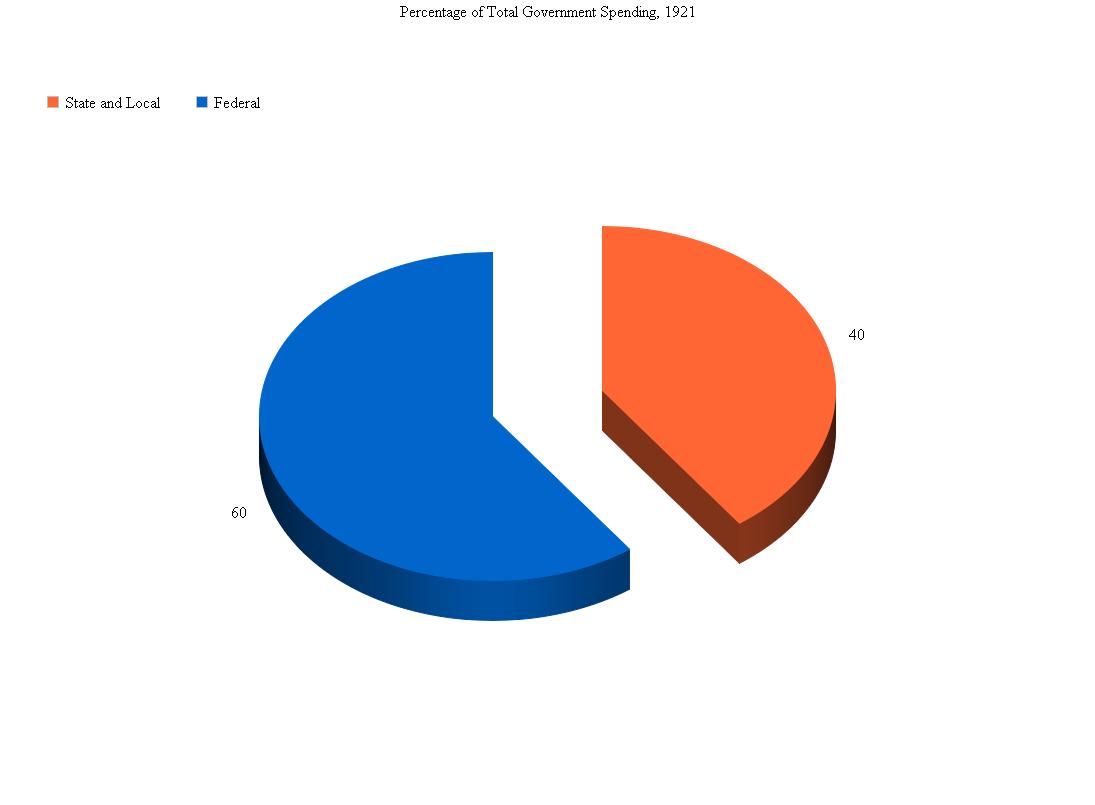
State-Fed Spending 1921State-Fed Spending 1925

Third, President Coolidge was concerned with state and local spending trends. While the Federal Government had faithfully maintained the cutting of expenditures with an accompanying reduction in debts and taxes, States and municipalities around the country embraced a “mounting tide of expenditure and indebtedness.” During the same five years that the Federal Government had brought expenses down more than $2 billion, $4 billion in increases were being expended by State, county and municipal authorities. When the cost of all government nationwide approached $9.5 billion in 1921, 60% of that total was Federal. In 1925, when the cost of all government stood at $11.5 billion, only 27% of the total fell to the Federal level. Coolidge explained the basis for this dramatic turn-around. “The answer to this reduction of 33 per cent in the Federal share of all government costs is not that we are performing less service for the people or neglecting our physical plant. The real answer is that we have so far put our house in order as to decrease our demands upon the people and to give them more efficient government at less cost…There is cause for concern in this situation. It is fraught with grave consequences to the public welfare. The Federal Government has decreased its cost by practicing the homely virtue of thrift. This has not been an easy task. It has required cooperative effort and sacrifice in every direction. If the interests of the people demanded this action on the part of the Federal Government, surely they would seem to demand similar action with regard to the increase in these other local governmental costs. This suggestion is not meant as a criticism of the officers of our local governments. It is rather a statement of fact. It shows how hard it is in these times to reduce the costs, taxes, and debts of governments. But it can be done if the people will cooperate.”

The President signs the Revenue Act, 1926. To the left of the legislators stands Secretary Mellon, Director Herbert M. Lord and Everett Sanders, all the right of the photo. Courtesy of the Library of Congress.

The President signs the Revenue Act, 1926. Legislative leaders of both parties bask in the light of the Coolidge team, L to R: Democrat Furnifold M. Simmons of North Carolina (concealed by the flag hanging in the foreground); Democrat John N. Garner of Texas (directly behind Coolidge), who vehemently opposed tax cuts; President Coolidge (seated), flanked by Republicans Senator Reed Smoot of Utah, House Majority Leader John Q. Tilson of Connecticut and Representative William R. Green of Iowa; followed by Treasury Secretary Mellon, Budget Bureau Director Herbert M. Lord and the President’s secretary, Everett Sanders. Courtesy of the Library of Congress.

Legislators stand in the midst of the Coolidge tax policy team, with Democrat Senator Simmons directly in front of Mellon beside his fellow Democrat from the House, "Texas Jack" Garner.

Legislators stand in the midst of the Coolidge tax policy team, with Democrat Senator Simmons standing in front of Mellon to flank the President’s chair with fellow Democrat from the House, “Texas Jack” Garner.

The people of the country had to remain behind these efforts of constructive economy just as much as the Congress, the President and his Executive Department. It was larger than any one person, one department or even one administration. Yet every individual, doing one’s part, was indispensable to the overall result. The President had relentlessly made the case for this effort every year for five years but without the experienced logic of Treasury Secretary Andrew W. Mellon, the creative leadership of Budget Director Lord, the tenacious legislative skill of Appropriations Chairmen, Representative Martin B. Madden in the House and Senator Francis E. Warren in the Senate, the intense accounting discipline of Comptroller General John R. McCarl, or the rugged perseverance of thousands of Federal employees, who made all these ideals reality, the Budget System would have failed and the country probably would never have experienced the historic prosperity of the 1920s. It was a test throughout the country of the “success of self-government.” By using money, not as the end result, but as any other “utility — to advance the welfare of the human race” through “a wise expenditure, well balanced and within the means of the people,” America would pass that test worthy of freedom.

Senator Francis E. Warren of Wyoming, Chairman of the Senate Appropriations Committee, was instrumental with Representative Madden in the fight for tax reduction.

Senator Francis E. Warren of Wyoming, Chairman of the Senate Appropriations Committee, was instrumental with Representative Madden in the fight for tax reduction.

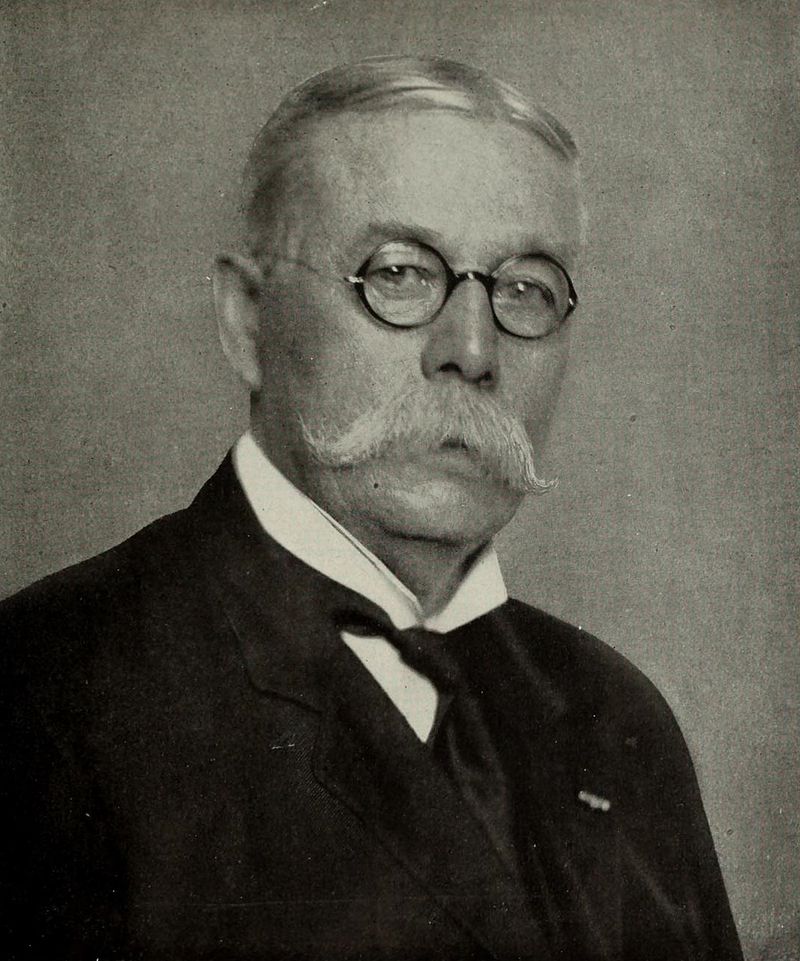
Comptroller General John R. McCarl, head of the General Accounting Office for fifteen years, 1921-1936. As his term of office came to a close, the St. Louis Post-Dispatch wrote of him, "Among the welter of Washington's yes-men, he was a forthright, solitary and heartening no-man." At the same time, the Hartford Courant observed, "McCarl was neither negligent, careless nor open to 'suggestion.' He made his rulings without fear or favor."

Comptroller General John R. McCarl served as head of the General Accounting Office for fifteen years, 1921-1936. As his term of office came to a close, the St. Louis Post-Dispatch wrote of him, “Among the welter of Washington’s yes-men, he was a forthright, solitary and heartening no-man.” At the same time, the Hartford Courant observed, “McCarl was neither negligent, careless nor open to ‘suggestion.’ He made his rulings without fear or favor.” We can understand why Coolidge found him to be a steadfast ally and faithful public servant.

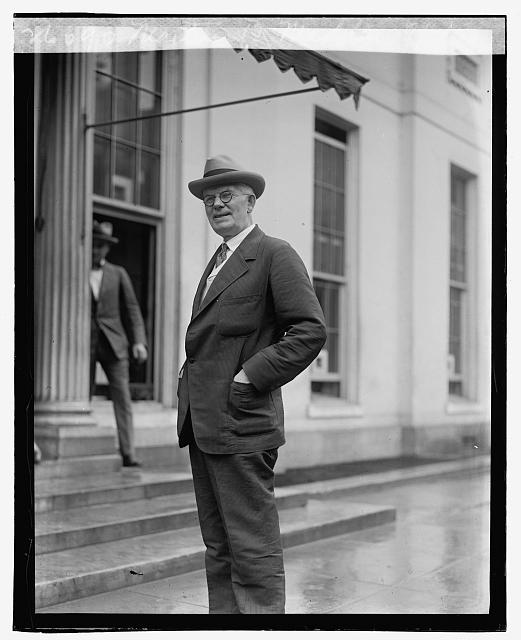
Representative Martin B. Madden (R-IL), chaired the powerful House Appropriations Committee, visiting Coolidge at the White House, September 6, 1923.

Representative Martin B. Madden (R-IL), who chaired the powerful House Appropriations Committee, is seen about to visit Coolidge at the White House, September 6, 1923.

“That is constructive economy,” Coolidge affirmed. “It does not partake of a mean and sordid nature; it is not narrow and selfish, but rather broad, generous, and ennobling, undertaking to deal justly with the whole situation by raising such revenues as the people can fairly bear to meet such expenditures are are fairly required…The result is America. Into the making of that result and its continued success your patriotic service and devotion is a contributing factor of enormous importance.” When all had been tallied, it meant something far more than “the saving of money.” It was a justification of our “wonderful American experiment for the advancement of human welfare.” After all, it “is not the only method by which we have built railroads, developed agriculture, created commerce, and established industry, not only the method by which we have made nearly 18 million automobiles and put a telephone and a radio into so large a proportion of our homes, but it is also the method by which we have founded schools, endowed hospitals, and erected places of religious worship. It is the material groundwork on which the whole fabric of society rests.” This meant so much more than material goods. “It has given to the average American a breadth of outlook, a variety of experience, and a richness of life that in former generations was entirely beyond the reach of even the most powerful princes.”

All the energy expended would be in vain were it not for “the keeping of our faith.” Our framework of popular government would implode at its very core if it throws “away self-restraint and self-control,” adopting economically unsound laws that squander this moral inheritance America is exemplifying to the world. “America has demonstrated that self-government can be administered as fairly to protect each individual in all his rights, whether they affect his person or his property. Under constitutional authority we tax everything, but we confiscate nothing. It is not through selfishness or wastefulness or arrogance, but through self-denial, conservation, and service that we shall build up the American spirit. This is the true constructive economy, the true faith on which our institutions rest.”