Hate him or love him, Charles C. Johnson is author of one of the best books on Coolidge and participates here in an excellent exchange on current politics, Cal’s foreign policy, big government Republicans and how it should inform our understanding… Well worth the listen.
“I do not choose to run for President in nineteen twenty-eight”
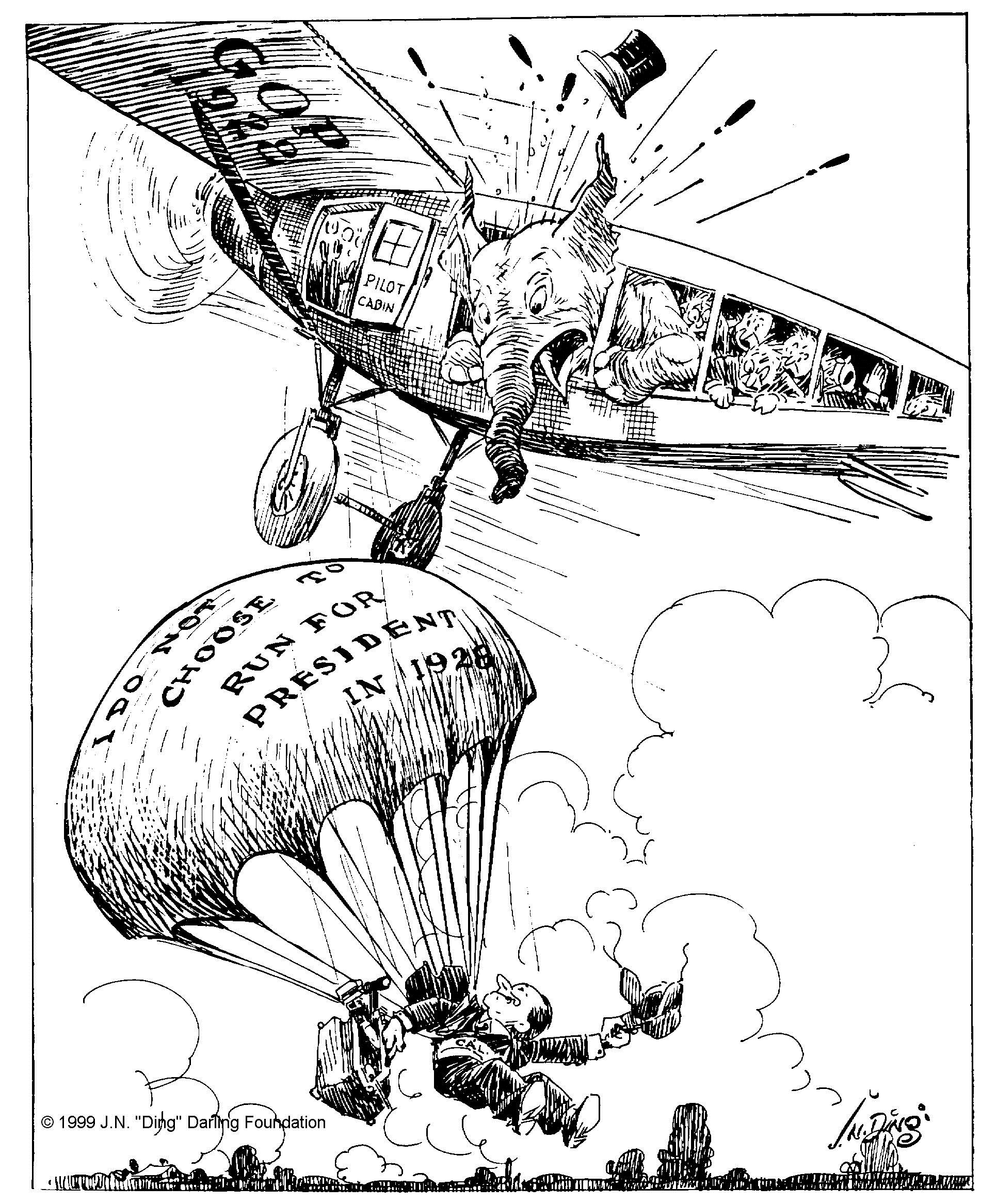
“Out of a clear sky,” cartoon by “Ding” Darling, appearing on August 3, 1927 in The Des Moines Register.
These words were silently presented on slips of paper to the small coterie of correspondents who had come back to hear what the President had announced that morning would be “a statement” at noon. It was to be given, like any average official transaction, from the Executive offices in the High School at Rapid City, South Dakota. Nothing seemed unusual or suspect. It was already shaping up to be another slow news week, another opportunity to write something of even marginal interest would be appreciated. It had been four years to the day since the Presidency had fallen to Coolidge. Since that time, he had proven his worth, been resoundingly reelected in his own right and was a foregone conclusion for the 1928 nomination, barely ten months away. None suspected the bombshell that was about to drop. With no small measure of delight in the timing of something so unexpected, Coolidge watched as the press members filed in, preparing to take down some matter-of-fact statement that could not be quoted but, being after the Stock Markets would be closed, would make it into tomorrow’s news. All reporters accounted for, the President asked whether, “We’re all here?” and then stated, “The line forms at the left.” Without another word, each journalist was handed folded slips of paper. For a moment silence fell across the room but as the substance of what each paper said was realized, a low rumble turned into a mad scramble for the door and the nearest telephone line in order to be the first with this shattering development. Coolidge, betraying only a mirth-filled twinkle in his eye, watched straight-faced as this drama of his creation unfolded. As we know, Mrs. Coolidge would only find out secondhand what had happened later that afternoon. This weekend then marks not only the sober simplicity of the only Presidential inauguration to be done at the family farm by one’s own father but also this day, four years later, when a President declared he would not run again.
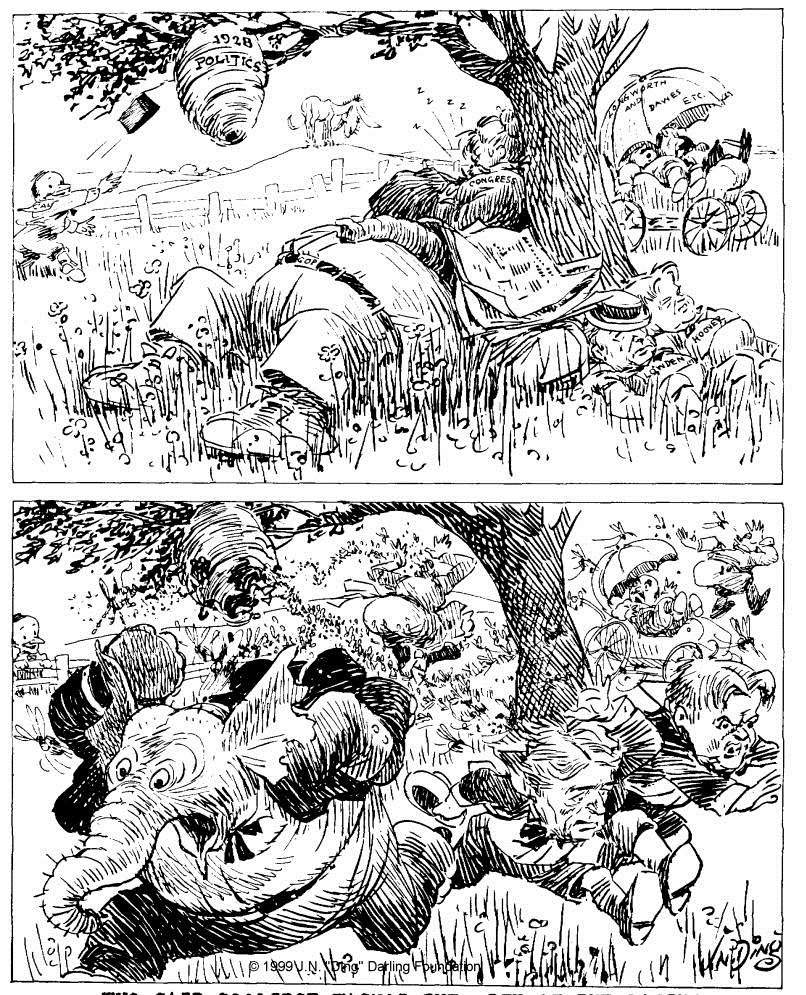
“Who said Coolidge wasn’t the life of the party?” The Des Moines Register, August 8, 1927.
Some “get out” long after their effectiveness and abilities have run full course, overstaying the very natural human limits of good any one person can deliver. The country was anything but tired of Calvin Coolidge, however. He would leave office a year and seven months later with a measure of popularity few outgoing leaders ever experience. Four more years were his for the “taking.” Yet, he walked away at the very height of it all, giving the country just enough time to find someone else of their choosing. They would have to move forward without him. There is no quantifying this degree of humility, personal discipline and self-effacing love for one’s country. He saw the best interests of America not in holding and accumulating power but in denying and diffusing it, a principle which guided him throughout public life. He was not like some who reach high office and discover they are suddenly “indispensable” to the country, Coolidge genuinely believed he would be finished with what was his to accomplish by March 1929. The country was better served selecting new leadership. This lesson, not always pleasant medicine to take, remains nonetheless needful for America to retain a wholesome liberty and healthy self-government. Thank you, Mr. Coolidge.
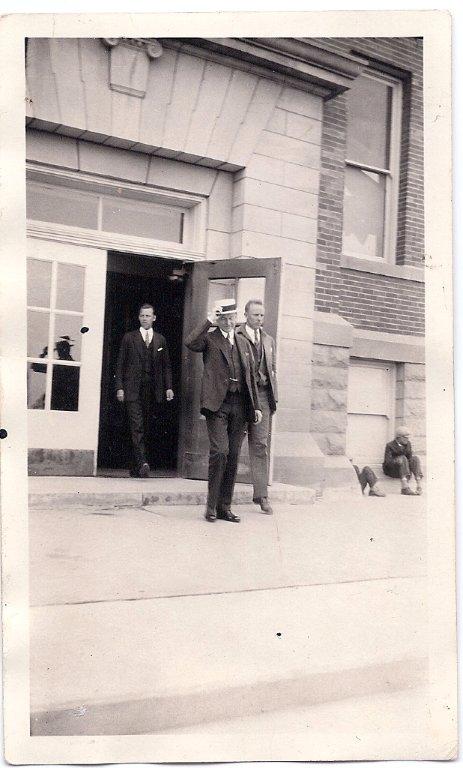
President Coolidge departing the Summer White House, the High School at Rapid City, 1927. Photo taken by John Storm. Courtesy of Wes Storm.
“He only asked for the band”
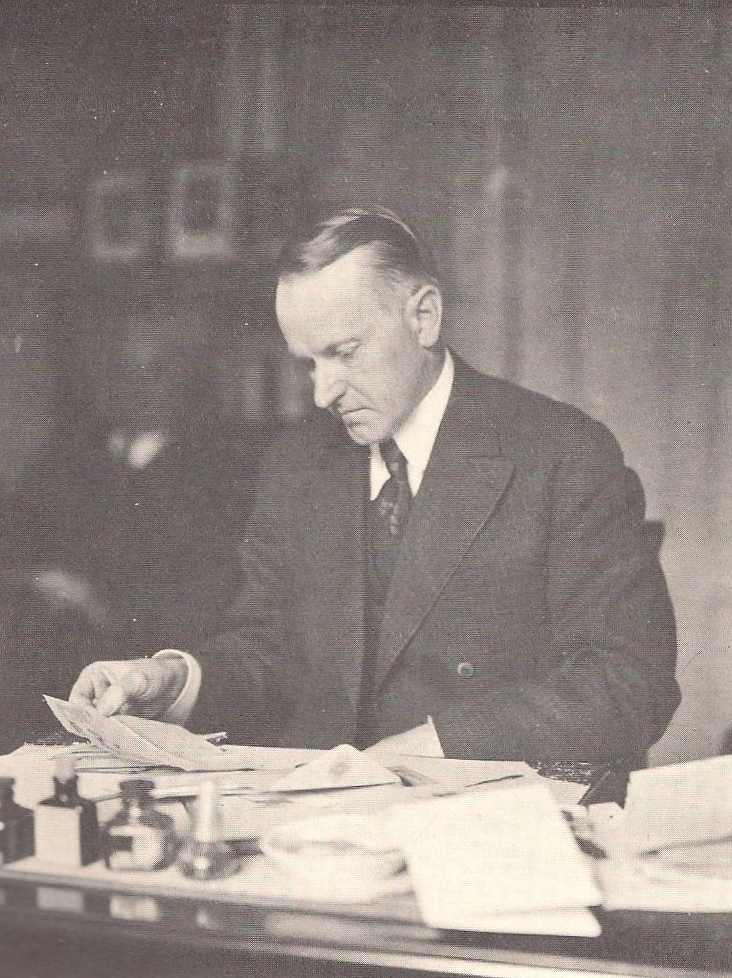
Vrest Orton in his short book recounting the August 1923 Homestead inaugural, that will see commemoration this weekend up in Plymouth, recounts this delightful story of the time a new Congressman came to call on President Coolidge. His visit coming to a close, the Representative rose to leave. Before he left, however, he had one small request for Coolidge. “Mr. President, I wonder if you could give me something I could take home to show the folks just to prove I was talking to the President of the United States. I don’t care what it is… just so long as it is something of yours. If I could have a band off one of your cigars, that would be fine.”
“President Coolidge reached into his desk, took a box of cigars and drew out one. Holding it between his forefinger and thumb, he deftly removed and handed to the Congressman one cigar band. The Congressman thanked him and left.
“Later the story got around. One day Mr. Stearns, one of the few men on really intimate terms with Calvin Coolidge, asked the President about this.
‘Is it true,’ Mr. Stearns demanded in a bantering tone, ‘that you actually removed the band and handed that to the man?’
‘Yes, it is,’ Mr. Coolidge replied.
‘Well, I don’t understand why you didn’t give him the whole cigar.’
“The President, with a grin replied, ‘He only asked for the band'”
Orton explains how this authentically illustrates Coolidge’s Vermont brand of wit. “Calvin Coolidge knew very well the Congressman really wanted the cigar. But since he didn’t say so, it tickled the President to give him literally what he did ask for…Mr. Coolidge liked this kind of mild joke. Many of his jokes followed the pattern of turning the tables on someone by doing what the other person least suspected.” (Orton, Calvin Coolidge’s Unique Vermont Inauguration, pp.9-10).
As Cal would say on another occasion, “It is good for people to laugh.”
 The Importance of the Obvious