On Waging War

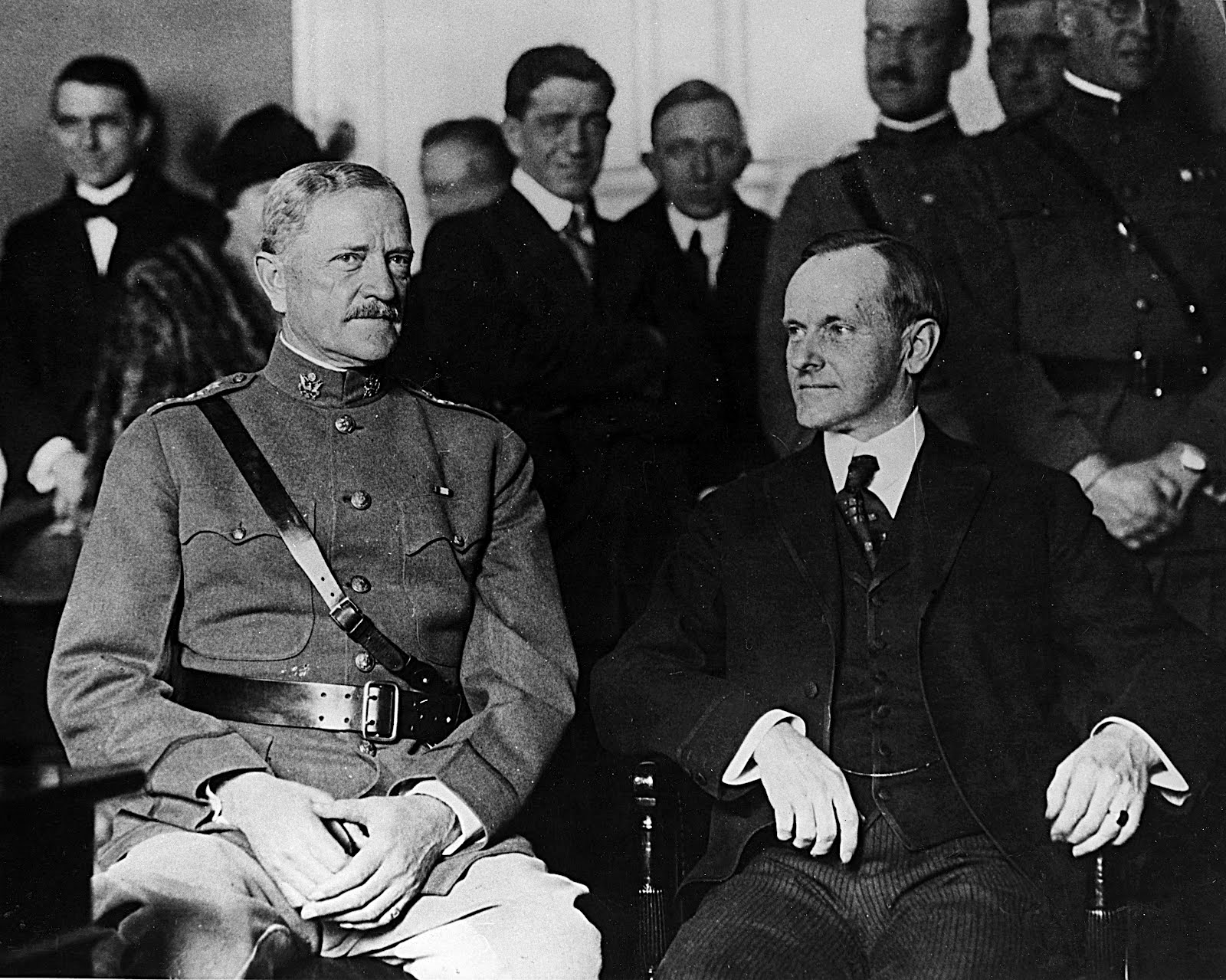
General Pershing and Governor Coolidge, Boston

General “Black Jack” Pershing and Governor Coolidge, Boston

“Coming into your presence in ordinary times, gentlemen of the committee, I should be inclined to direct your attention to the long and patriotic services of our party, to the great benefits its policies have conferred upon this Nation, to the illustrious names of our leaders, to our present activities, and to our future party policy. But these are not ordinary times. Our country is at war. There is no way to save our party if our country be lost…

“We seek no party advantage from the distress of our country. Among Republicans there will be no political profiteering…

“We have fought before for the rights of all men irrespective of color. We are proud to fight now with colored men…

“The only hope of a short war is to prepare for a long one. In this work the States play a most important part…

“But America must furnish more than armies and navies for the future. If armies and navies were to be supreme, Germany would be right. There are other and greater forces in the world than march to the roll of the drum. As we are turning the scale with our sword now, so hereafter we must turn the scale with the moral power of America. It must be our disinterested plans that are to restore Europe to a place through justice when we have secured victory through the sword. And into a new world we are to take not only the people of oppressed Europe but the people of America. Out of our sacrifices and suffering, out of our blood and tears, America shall have a new awakening, a rededication to the cause of Washington and Lincoln, a firmer conviction for the right” — excerpts from Governor Calvin Coolidge’s speech before the Somerville Republican City Committee, August 7, 1918.
On the Redskins

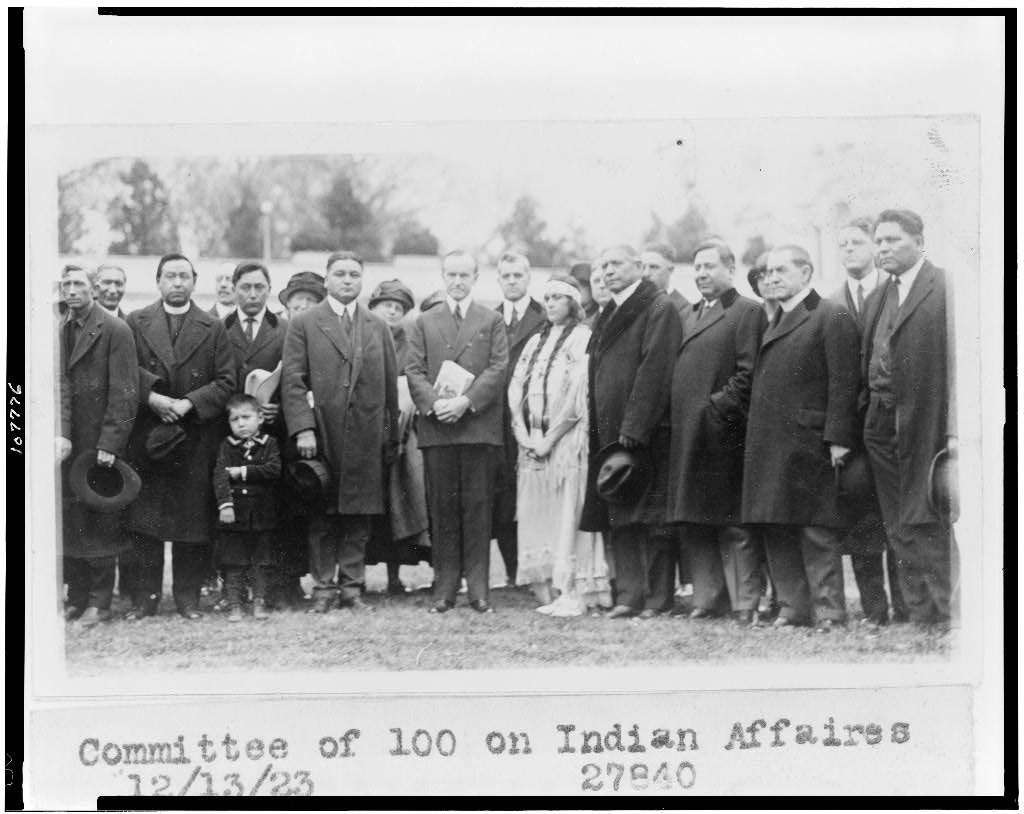
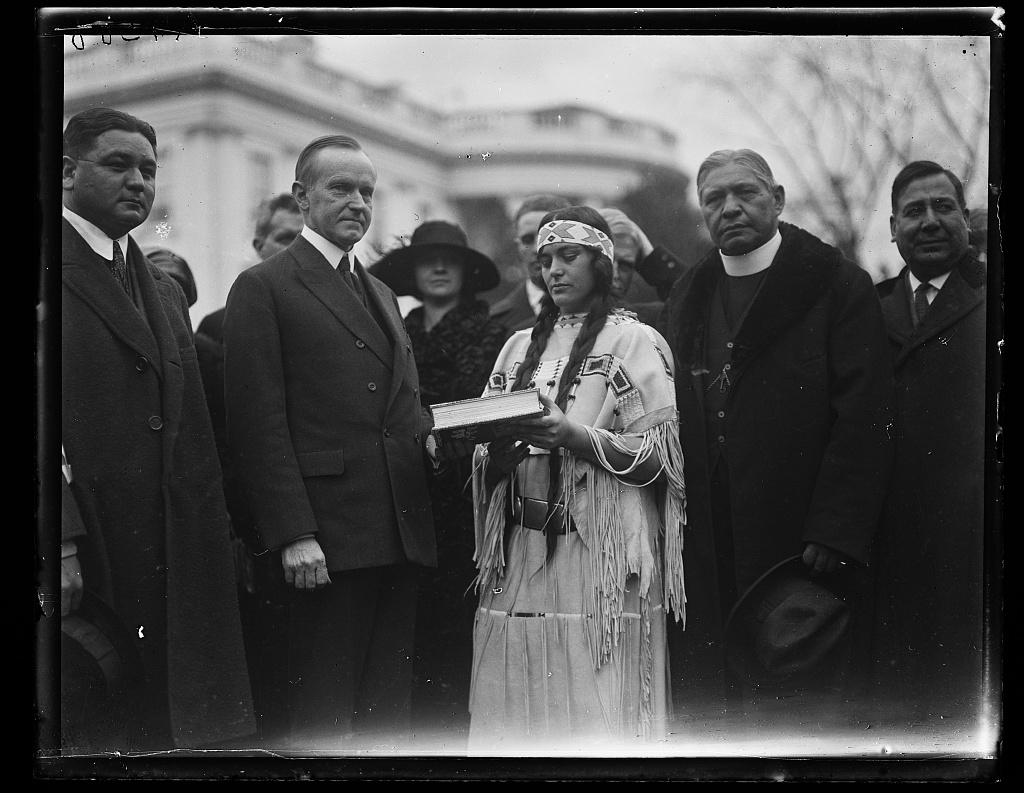
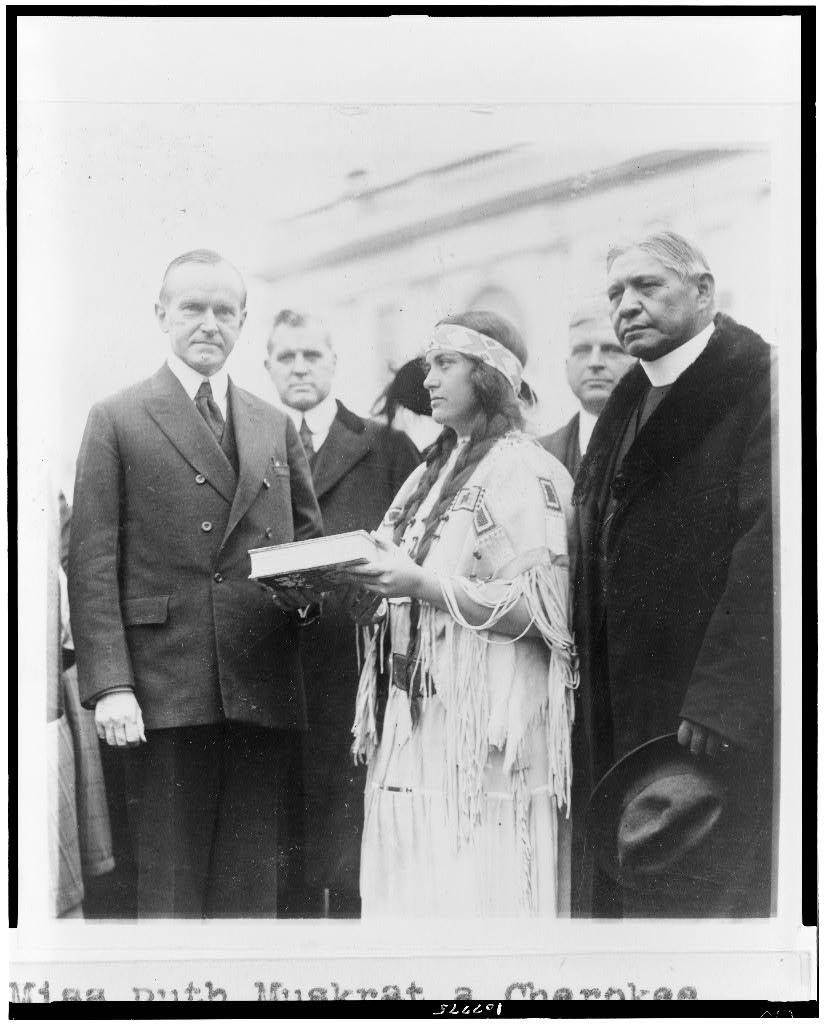
43687v CC with Ruth Muskrat Cherokee 1923Miss Ruth Muskrat, a Cherokee Indian, presents Mr. Coolidge with a copy of The Red Man in the United States, a survey of the present day American Indian 12-13-1923Committee of 100 on Indian Affaires 12-13-1923

Note the book being presented to President Coolidge in these photos by Miss Ruth Muskrat and her Cherokee delegation on December 13, 1923. The book was a study of conditions on the reservations and around the country for him to address. The book they were proud to give him was entitled, The Red Man in the United States, a Survey of the Present-Day American Indian. The problem is not that we, as a people, are failing to be sensitive enough but that we are overly sensitive about the inconsequential and non-essential things. We wring our hands about potentially giving offense with words while we overlook and disassociate any responsibility that a century and a half of the reservation system has done in destroying lives, killing the spirit as well as the body and leaving generations of people stripped of dignity and beholden to government. Under Coolidge, they secured a long awaited and full citizenship. Moreover, he ensured the Meriam Report investigated independently of Washington’s bureaucracy what needed to be done. Commissioned in 1926, completed in 1928 and funded entirely through the Rockefeller Foundation, without any taxpayer money, the Meriam Report shook the status quo, overturning the old land allotment system and exposing the inherent failures of a Federal paternalism over education, health, social life, economics, and political consent. Partnered citizens not continued segregation as subordinates became the standard under Cal. While the Report would see early implementation by able administrators, the gains made would be undermined after Coolidge left public life.

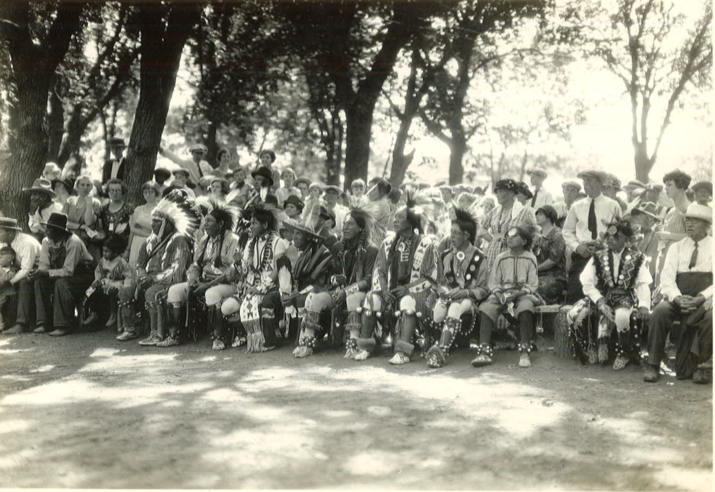
A group of those who contributed to the meticulous study of conditions at 95 locations in 23 states done by the Institute for Government Research (Brookings Institute).

A group of those who contributed to the meticulous study of conditions at 95 locations in 23 states done by the Institute for Government Research (Brookings Institute).

“I always did like animal acts”

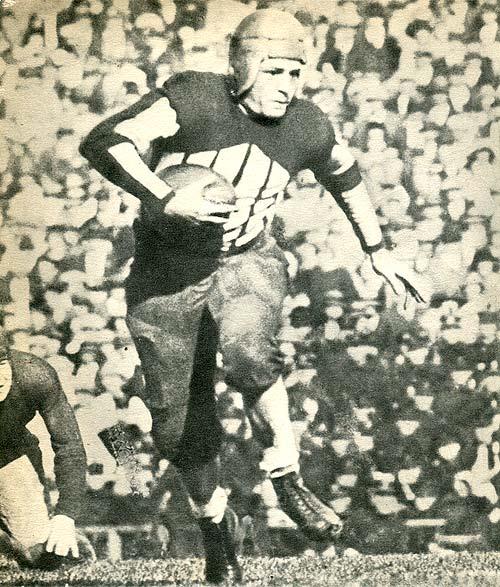
"Red" Grange, the "Galloping Ghost" on the field, 1925.

Grange, the “Galloping Ghost,” on the field, 1925.

In Washington between games on a nationwide tour, the great University of Illinois running back, Harold “Red” Grange, then playing with George Halas’ Chicago Bears, stopped in to meet the President at the White House.

Coolidge, as was his way, met the introduction with dry New England humor. It was one of those moments Colonel Starling and Will Rogers would later evoke when they said Coolidge expended more wit than most people realized at the time. Either one “got the joke” or did not. The President would not waste time and thereby destroy the humor in circumstances with an elaborate set up for his punchlines.

Accompanied by Illinois Senator William B. McKinley and Representative William P. Holaday, the auburn-haired “Red” was presented to the redheaded Chief Executive. “Mr. President, Red Grange, who plays with the Bears.” Capitalizing on that direct introduction, Cal replied with a handshake, “Glad to meet you, young man. I always did like animal acts.” Asking from where in Illinois the “Galloping Ghost” lived, he wished him well on the rest of his tour. Mr. Grange, interviewed many years later, still recalled that day. “I didn’t think it was funny at the time,” but the football legend came to appreciate the humor in Coolidge’s remarks. Despite having a pivotal role in the national appeal of football, Grange, not unlike the man he met that early December day, went on to leave his sport at the height of renown, including charter membership in the Pro Football Hall of Fame, and experienced what he considered his proudest accomplishments in the business of selling insurance. Like Mrs. Coolidge, he became a lifelong fan…of baseball. He never quite caught the football-watching bug, though he attend various games through the years.

"Red" Grange just after meeting the President, accompanied by Senator McKinley and Representative Holaday, December 8, 1925.

“Red” Grange (in the middle, with scarf) just after meeting the President, accompanied by Senator McKinley and Representative Holaday, December 8, 1925. Courtesy of the Library of Congress.