
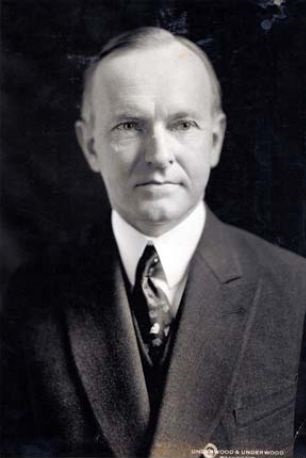
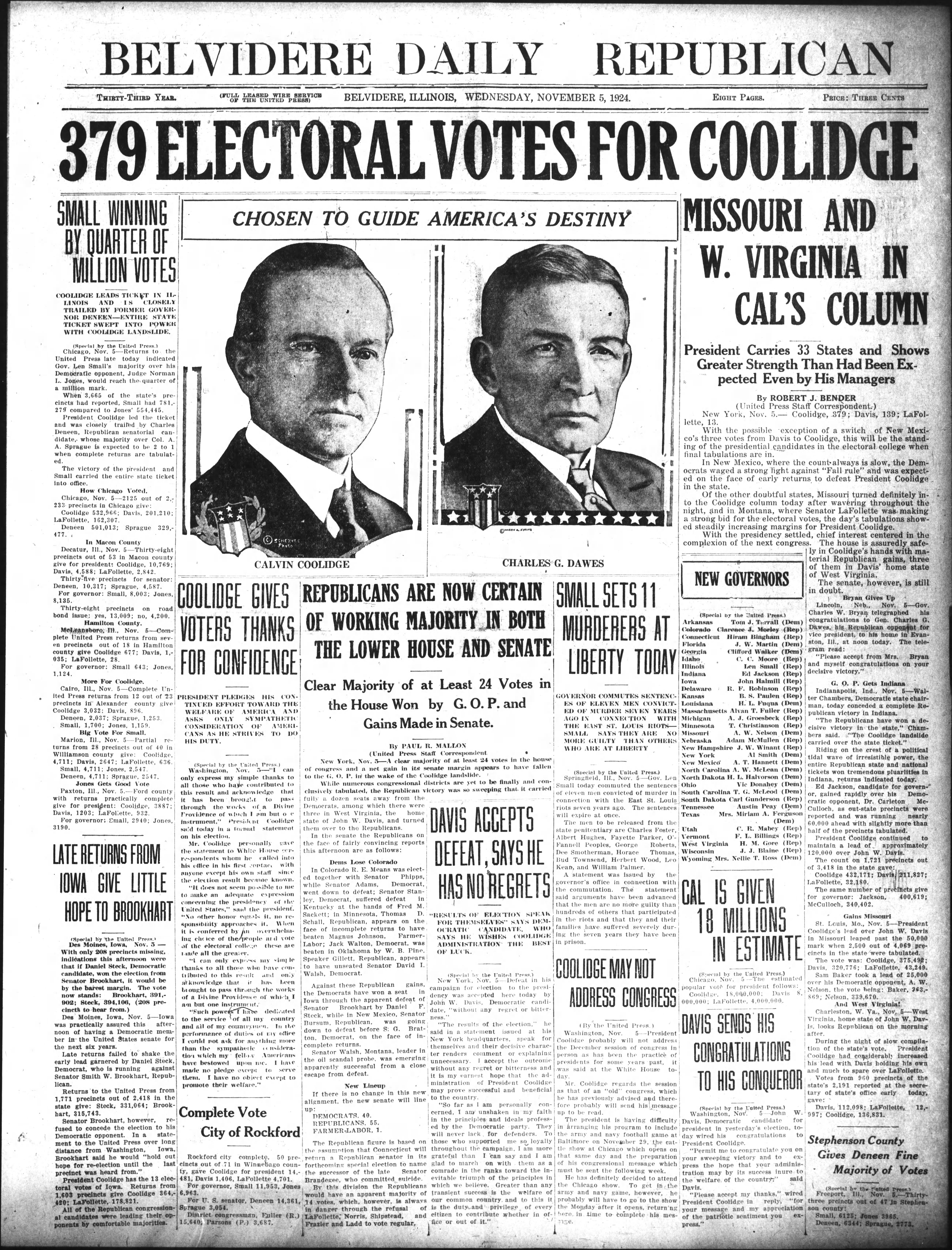
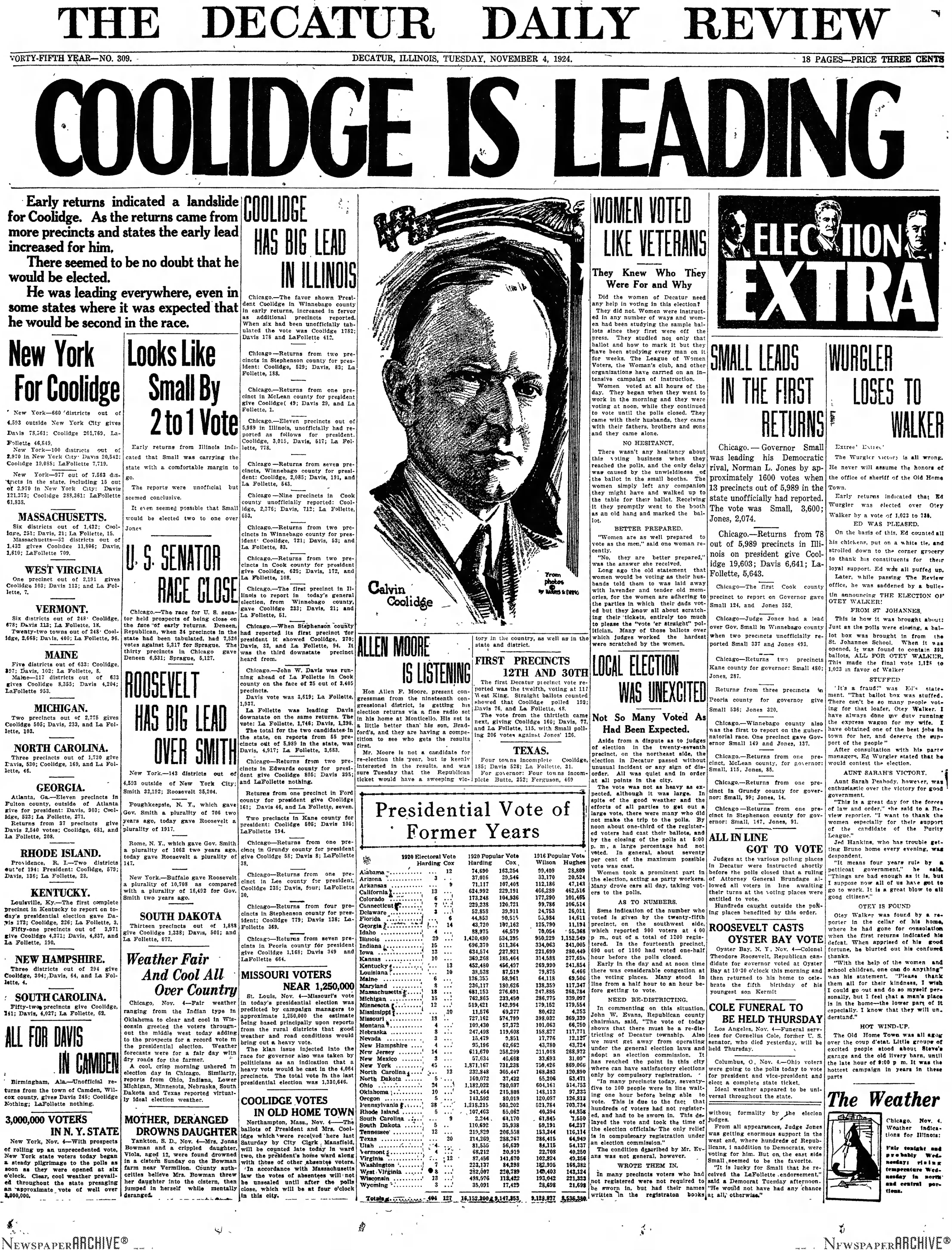
They can start by returning to Coolidge. This is especially important when it comes to his thoughts on winning. For Coolidge, it was not enough to prevail at the ballot box, the person had to possess a victor’s mindset.
“When a political party has been decisively defeated at the polls, the question naturally arises whether it will ever regain the support of a majority of the voters. The answer to this question depends upon the party itself. Defeat does not destroy a party, nor does success at any particular election insure a long life. If the principles which it represents and the policies which it advocates are sound and timely a party will survive indefinitely” — Calvin Coolidge, “Political Parties,” Saturday Evening Post, published posthumously
Before the new Congress hastens to pass a flurry of new laws, presenting a package of agenda items that are going to “fix” the mess, rather than repeal and stop it, they should consider what Coolidge encouraged his father to do, after being newly elected to the Vermont Senate, “It is much more important to kill bad bills than to pass good ones…See that the bills you recommend from your committee are so worded that they will do just what they intend and not a great deal more that is undesirable. Most bills can’t stand that test.” First, Republicans, do no harm. Stop the bleeding and then we can treat the wounds. The best course of action right now is saying “no,” being a force of negation, a resistance, an opposition, a confrontational stand against the destructive agenda being implemented these last six years. That is more than enough. America doesn’t need new construction before the wrecking ball has first been decommissioned and the debris cleared away. Don’t be afraid to say “no,” whatever others say about you. This, above all else, is what the people of this country both want and need. Take Coolidge’s advice and put first things first.
“Parties do not maintain themselves. They are maintained by effort. The government is not self-existent. it is maintained by the effort of those who believe in it. The people of America believe in American institutions, the American form of government and the American method of transacting business” — Address to the Republican Commercial ‘Travelers’ Club in Boston, April 10, 1920. The real challenge is just beginning with no small work demanded of us, an engaged citizenry, to make sure our employees in Washington do what we sent them to accomplish. We invite disaster if we walk away, tune out and trust someone else to manage our government responsibly for us. Such an attitude is why the country stands at the brink.
“Unless those who are elected under the same party designation are willing to assume sufficient responsibility and exhibit sufficient loyalty and coherence, so that they can cooperate with each other in the support of the broad general principles, of the party platform, the election is merely a mockery, no decision is made at the polls, and there is no representation of the popular will” — Inaugural Address, March 4, 1925
The Republican landslide yesterday must translate into more than magnanimously sharing authority with the losing side, as fired Majority Leader Harry Reid intones. If the electorate wanted these losers to help govern, they would not have lost their elections. Republicans then better act like the principled victors they are. The decisive win witnessed this week is not some plea from voters for more “bipartisan reaching across the aisle,” ending “deadlock,” avoiding “government shutdown” at all costs, and, in short, reverting to business as usual. Elections mean something. Elections must result in clear direction and disciplined implementation of the principles and policies for which the people send their chosen representatives. Coolidge understood that partisanship had a vital function in our system. Sharp contrast of party principles was just as essential after the election as beforehand. The people had to see practiced what they voted to obtain or else the entire system would be a mockery. To dilute, suppress or ignore the principles to which they pledged is both a betrayal of the election process and a gag imposed on the decisions made by the sovereign people. The popular will has given the GOP a very coherent mandate to repeal Obamacare, defund the President’s agenda, stop amnesty, secure the border and stand unshakable on limited government, economic not bureaucratic growth, religious freedom, individual opportunity, and the integrity of our institutions and traditions.
Coolidge makes it plain: “There are many who are accustomed to consider partisanship and practical politics as something considerably at variance with the public welfare. This may sometimes be true. Parties represent political power, and power is always subject to abuse. But it is a mistake to blame the instrument because it is wrongfully used. If there is blame, it should be attached to those who have been guilty of the wrong and not to the innocent instruments which have been used for such purposes. The organization of parties in the United States has been the means by which the people have preserved their liberties, restrained the arbitrary powers of their governments and made effective the popular will. There is no substitute for their action under a system by which the people rule.”
The same oath which constrains the Executive, also obligates the Legislative Branch. When there is wrongdoing, the duty of all rests squarely on where Coolidge knew it to be: on the support and defense of the Constitution. These are not mere words. When the Constitution is under assault, defending all its provisions is just as necessary when the offender is the President himself. The power of impeachment is the legal and Constitutional remedy sanctioned by our system. It is hardly some recent device conceived in racism, animated by bigotry. It is a lawful check upon anyone who would claim arbitrary or dictatorial powers over the consent of the governed and the other co-equal branches of the government we have established. As Coolidge said when the scandals of his predecessor came to light, “I do not propose to sacrifice any innocent man for my own welfare, nor do I propose to retain in office any unfit man for my own welfare. I shall try to maintain the functions of the government unimpaired, to act upon the evidence and the law as I find it, and to deal thoroughly and summarily with every kind of wrongdoing.” The incoming Congress should likewise adopt that Coolidgean resolve.
No American election can ever be a real victory for the whole people of this country — the only demographic which counts — if it fails, as Coolidge warned, to implement the agenda for which the victors, not the losers, were sent. This may mean excluding the other side from committee chairmanships and other spoils of victory, it may mean principled criticism of administration policy, and it may even mean a resolute prosecution of genuine wrongdoing in very high places, at great personal cost. Yet, it would mean a victory for law and liberty — perhaps, even for the future of the country — and that is no greater a price paid already by generations living and dead who fought to be worthy of the name “American.”



 The Importance of the Obvious