On Tax Cuts vs. Tax Reform: Looking at Tax Receipts and Total Share

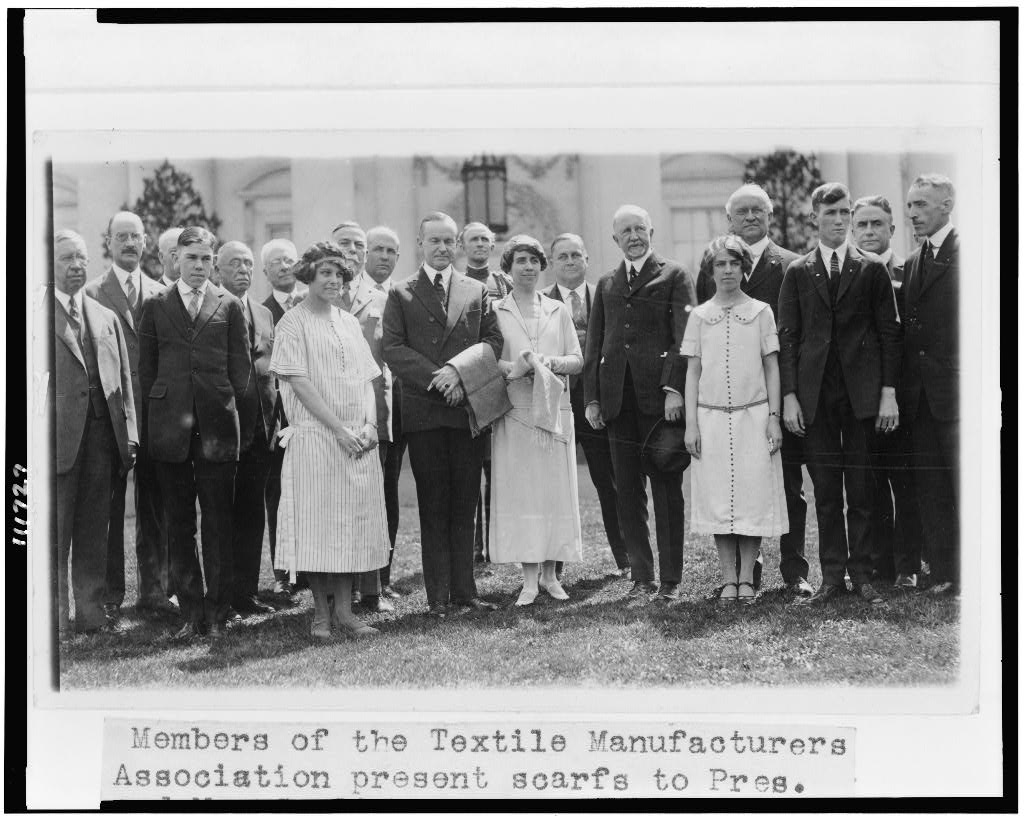
Members of the Textile Manufacturers Association presenting scarfs to the Coolidges on the White House lawn, 1925. Courtesy of the Library of Congress.

Members of the Textile Manufacturers Association presenting scarves to the Coolidges on the White House lawn, 1925. Courtesy of the Library of Congress.

Reflecting upon the previous six years of tax policy, including the recent passage of tax cuts, rather than proper tax reform, under the Revenue Act of 1924, President Coolidge observed, “High taxes were adopted as a war measure in 1918. We have had but six years’ experience under them, and their detrimental effect upon our fiscal structure is not yet fully appreciated. To the intelligent observer tendencies are already apparent which indicate the stress to which this structure is being put. I mention as an instance the increased cost of capital for new industrial enterprises. These influences are being felt even in our present prosperity. During the after-the-war period of adjustment, the other great nations of the world have been disturbed more than this country. They are not yet restored. As a consequence, we have been relieved of much of the world competition. When other countries return to productivity and become again the serious commercial rivals of our people, and when we experience those periods of depression which normally follow periods of prosperity, we should have our house in order by so establishing our tax system that its economic effects will be beneficial and not harmful. The bill [Revenue Act of 1924] represents tax reduction, not tax reform…A correction of its defects may be left to the next session of the Congress. I trust a bill less political and more truly economic may be passed at that time. To that end I shall bend all my energies.” (The Mind of the President, p.124).
53bf08bb3b81c.preview-620

More “Best of Coolidge” Readings

Governor CC at home

Here are the next two in our series of twenty featuring the “Best of Coolidge” readings from his addresses, letters, and messages: “Law and Order,” the Governor’s second inaugural address delivered on January 8, 1920, and Coolidge’s Acceptance Speech of the Republican Vice Presidential nomination, delivered at Smith College in his adopted hometown of Northampton, July 27, 1920.

Stay tuned for more soon.

“Best of Calvin Coolidge” Readings

CC Boston Strike

Here is the first of twenty “Best of Calvin Coolidge” readings, drawn from his addresses, letters, and messages given over the course of more than two decades in public service. Taken together these twenty speeches form an excellent introduction to the power and originality of Coolidge’s political thought and brand of statesmanship.

Moving chronologically, we start with Senator Coolidge’s inaugural message as presiding officer of the Massachusetts state senate, delivered on January 7, 1914.

Featured next in our “Best of Coolidge” reading series is the telegram, wired September 14, 1919, of Governor Coolidge to Samuel Gompers, the head of the American Federation of Labor, who requested the reinstatement of the nineteen officers dismissed from Boston’s police department for leaving their posts in order to strike, September 1919. It was this crisp message to Gompers that brought his name into national renown, cultivating a spontaneous and widespread respect as a courageous and principled leader among grassroots Americans heading into the 1920 Election.

The readings are done by Daniel L. Wright, copyright 2014.

Stay tuned for more readings to come.