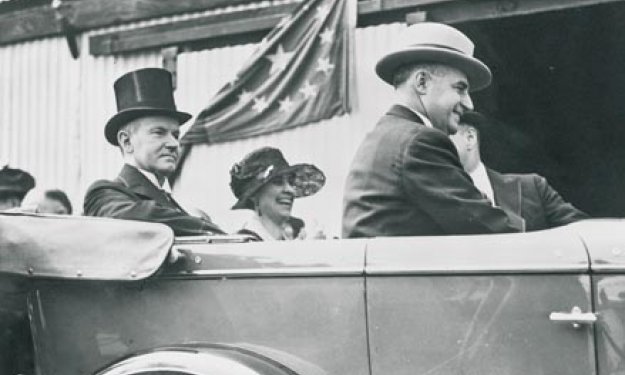
“[A] President cannot, with success, constantly appeal to the country. After a time he will get no response. The people have their own affairs to look after and can not give much attention to what the Congress is doing. If he takes a position, and stands by it, ultimately it will be adopted. Most of the policies set out in my first Annual Message have become law, but it took several years to get action on some of them” — Calvin Coolidge, The Autobiography, pp.224-5.
Yesterday marked the ninety-first anniversary of Coolidge’s initial Annual Message, December 6, 1923, which broke a four month silence of sorts on what kind of man and policies the country had following the death of President Harding. Coolidge spent these months not only meeting with everyone he could but also on crafting this all-important speech that would set the tone for the next six years. Both the breadth of its subject matter and the depth of its author’s grasp on each topic were recognized at the time as a welcome confirmation that the new President had a sound head on his shoulders, could handle the job, and reassured America that things were in good hands with him at the helm.
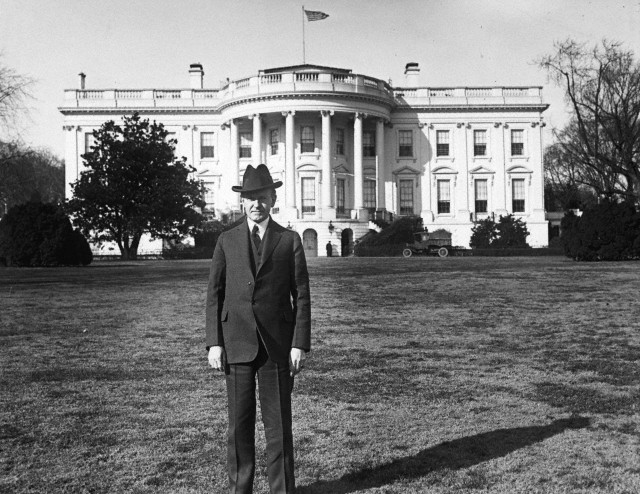
President Coolidge on the White House lawn, 1925.
In the weeks ahead, we are going to investigate the particulars behind the statement he wrote in 1929. We will see that most of what he proposed did, in fact, become law by the time he left the White House and some of those proposals would see implementation long after he was gone. Also, we will note that much of Coolidge’s reputation as a “do-nothing” Chief Executive is swept aside by investigating the substance of his assertion. He did a great deal, more than even some of his firmest admirers realize and certainly more than his bitterest adversaries admit into the record. His talents rest in not only delegating authority to those best informed and equipped to accomplish the task but also in masterfully appearing not to be involved at all, not unlike another student of Cal and later popular President, “Ike” Eisenhower. Coolidge left a stronger Presidency through his superb use of communication, as much as by what he did not say as by what he said, and a brand of leadership that, though possessing little fanfare, did achieve several important results thanks in large measure to this powerful speech. These charts help illustrate his prolific output. This is remarkable when recognized that so much was done without recourse to public activity generated from the White House or by overtly legislative crusades. Still, he saw the laws be passed, most of his policy initiatives put into practice and left the nation better off than he found it. How many Presidents can survive such a test?

The President delivering his first Annual Message before the Congress, December 6, 1923. This continued the tradition established by President Washington and revived by Wilson and Harding to appear in person. However, this is the only occasion he did so. The rest of his tenure saw a written Message sent to Congress. This first time, however, was used to great effect, making possible a number of the proposals he saw come to fruition during his administration.
 The Importance of the Obvious