On What It Means to Be Civilized

us-presidential-portrait-calvin-coolidge-30th-president-of-the-united-states-of-america

“A large part of the history of free institutions is the history of the people struggling to emancipate themselves from unrestricted legislation” — Calvin Coolidge

Each generation bears an inescapable debt inherited from those who came before it but also owed to those who come afterward. As Coolidge said, “Civilization is always on trial. Sometimes it seems to succeed. Sometimes it seems to fail.” But, we may ask in our time, what is civilization? Its opposite, of whatever time and place, is barbarism. What, though, does it mean to be civilized? For Coolidge, it meant something far more important than knowing which fork goes with each course at dinner. It referred to something deeply embedded within human history, something spiritual not material, yet it is apparent for all to see when neglected or absent altogether. America may yet be the greatest country on earth, but is it meeting the burdens of civilization? Is it bequeathing to the future what it means to be civilized?

Is it civilized, for instance, when a serial rapist finds you and a friend in Central Park at dusk and, knowing you’re unarmed, takes advantage of the situation while your companion does nothing to stop it? Is it civilized when the neighborhood turns out to watch your house catch fire and burn, holding back while you, an outsider to them, succumb to the smoke and heat? Is it civilized when hundreds of doctor millions of times every year reach into the womb of a pregnant woman to suck out what moments before has been a living person, discarding mere tissue into the biohazard bin? Is it civilized when nation after nation, cowed by fear of offending someone, sit silently by while true animals, not fit to be classified as human, broadcast their decapitations, burnings, kidnappings, stonings, and countless other crimes with impunity? Do we merely chalk all this up to unfair distributions of wealth, the unfortunate discontent of the impoverished and unemployed? “Boys will be boys,” after all. They’re not evil, it is claimed, they’re simply unrehabilitated and misunderstood. In fact, our own President, if not actively complicit in their actions, endorses (with all the power of Executive rhetoric) their agenda all through the Levant, calling them “ISIL,” while denying their self-professed identity as having anything to do with the world’s most violent religion, Islam.

Coolidge, who lived through the devastation of World War I, that most infamous of destructive years here in America — 1919 — as well as the violent revolutions in Russia, Italy, Mexico, Nicaragua, Turkey, and elsewhere around the globe along with the rise of Hitler in Germany, helps define the meaning of “civilized” when he says,

“Civilization is to be condemned, anyway, unless it possesses the ability to perpetuate itself.” Or again, when he says, “The process of civilization consists of the discovery by men of the laws of the universe, and of living in harmony with those laws.” Or how about when he observes, “Civilization is the bearer of great gifts, the source of ever-enlarging opportunity. It is not the result of a self-existing plenty, but rather the product of a high endeavor”? Coolidge elaborates, “The law of progress and civilization is not the law of the jungle. It is not an earthly law, it is a divine law. It does not mean the survival of the fittest, it means the sacrifice of the fittest. Any mother will give her life for her child. Men put the women and children in the lifeboats before they themselves will leave the sinking ship.” For a man and his generation who lived at the time the Titanic and Lusitania went down, this was no idle or theoretical allusion. For Coolidge, it also envisioned the danger posed to any ship of state, America especially.

Knowing that “free” people everywhere are hamstrung by their own slavery to political correctness, the same attitude which appeared at Fort Hood struts unchallenged across Europe, the Middle East, Africa and Asia. Nursed in our inner cities and welcomed across our borders, it dares us to speak up and do anything about its audacious hatred for civilization, whether it be Ferguson or Washington, D. C. Will we? Who is courageous enough to stand for law, liberty and basic civilization, knowing that so fundamental an exercise of our First Amendment may literally cost us everything, our freedom, our income, our social status, our lives? The question comes to each of us: Is it worth it? What price are we ready to pay to retain freedom, even civilization itself, not just for our own sacred honor but for posterity’s sake? To keep civilization going forward rather than falling backwards?

“Civilization is always on trial,” Coolidge declared, “testing out, not the power of material resources, but whether there be, in the heart of the people, that virtue and character which come from charity sufficient to maintain progress.” Will we pass or fail the test we now undergo? Put another way, can we afford to fail?
On Explaining Coolidge’s Success

Since the beginning, humanity has not only been in search of success but also the keys that unlock it for others. Coolidge’s political success is all the more impressive when it is remembered that he had few of the traits that conventionally propel the office seeker forward. To the contrary, he seemed to shun these “essentials” and thereby redefined the ground-rules for public service. Coolidge illustrated that the typical terms of getting ahead are deficient by neglecting a very simple, unobtrusive fact:  It was actually his silence that became the key of his success. Rather than wasting time – as he saw it – promoting himself, he could unassumingly work and prove his worth through being discreet. It was turning what for many would be a severe handicap into a brilliant asset.

Bruce Barton, in one of his American Review of Reviews articles explaining “Silent Cal” to those unfamiliar with him, said it this way, “Office associates of Calvin Coolidge and acquaintances wondered how a young man so utterly lacking in self-advertisement could hope to succeed in the law. But there was no question about Coolidge’s knowledge, or his capacity for work; and gradually men conceived the notion that one who was so silent about his own affairs would probably exercise discretion in theirs. So his practice grew, and his neighbors began electing him to offices which nobody wanted especially, and continued to elect him to better offices, since he invariably made good…To do the job and to let the credit take care of itself, this was the rule of Coolidge. As more and more men began to understand it, the confidence of the common folk of Massachusetts grew; so that thousands who had never seen him began to feel a friendliness toward this unassuming man. His majorities were the envy of the professional politicians. He made few speeches, but those were extraordinary in substance and form…Elevated no powerful individuals, made no exaggerated claims or promises, kissed no babies, and spent no money. Every election found him more strongly entrenched.

‘Tell me the secret,’ a friend demanded. ‘You are always on the job at the Statehouse. How do you find time to keep in touch with your constituents? What do you do to assure your re-election?’

‘Well, I sort of let nature take her course,’ Coolidge drawled.

‘Oh, come now,’ his friend laughed, ‘that may do for popular consumption, but I know that nature doesn’t look after the re-election of politicians.’

Coolidge sat silent, puffing away on a stogie. ‘Maybe I have nudged nature now and then,’ he said.”

Cal’s rise serves as a reminder that it is the small things done well that line the road to success. Greatness lies in the little things in no less a proportion than large, loud personalities grappling with those same conditions. Above all, Coolidge succeeded by proving trustworthy, something that is nearly altogether discounted, marginalized and neglected in public affairs these days. He proved so not through devious calculation but through a sincere motive to serve those to whom he was accountable, the people who chose him for each office. It is no accident that success or failure goes hand-in-hand with earning and keeping that trust strong and unshaken.

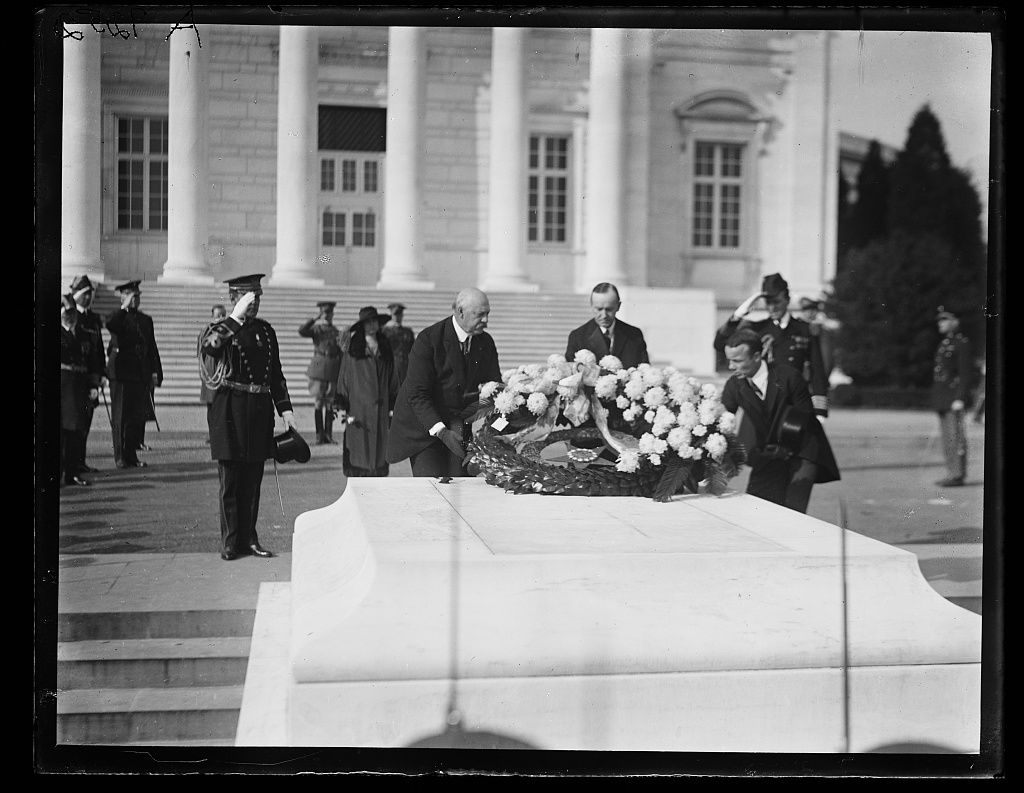
President Coolidge flanked by Secretary Weeks and Assistant Secretary Theodore Roosevelt, Jr., at the Tomb of the Unknown Soldier, 1923.

President Coolidge flanked by War Secretary Weeks and Navy Assistant Secretary Theodore Roosevelt, Jr., at the Tomb of the Unknown Soldier, 1923.

On Keeping Perspective

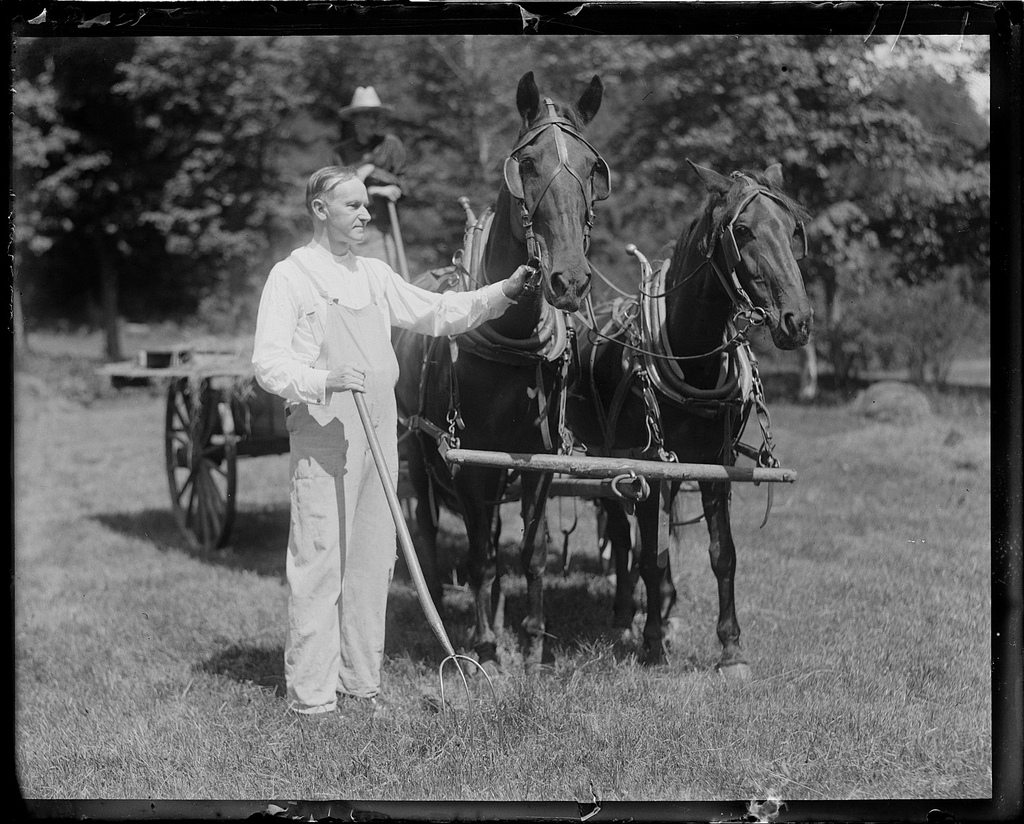
6193346898_78dbff35d4_b working in Plymouth

“I hope you all enjoyed your stay over in Vermont. I find it is helpful to me to go back once in a while to see that I am not forgetting how people earn their living, how they are required to live, and what happens when those who have harness breaks, or one of their shoes need some repairing, sit down and mend it. You can go out and do work on fences, do such odd jobs as are necessary to keep the house in repair, and in general do such things as are necessary for the ordinary American citizen to do. There is always a little danger that those who are entrusted with the great responsibilities of business and Government may come to forget about those things and disregard them and lose the point of view of the great bulk of citizens of the country who have to earn their living and are mainly responsible for keeping their houses, farms and shops in repair and maintaining them as a going concern. I find it very helpful to go back and revive my information about those things, lest I should be forgetful about it and get out of sympathy with those who have to carry on the work of the nation” — President Calvin Coolidge to the press, August 10, 1926 (The Talkative President, Eds. Quint and Ferrell, Amherst: University of Massachusetts Press, 1964, pp.46-7).

Happy Presidents Day!

6193348020_ca6a2a22b3_b Gov CC aint afraid of work on Arbor Day