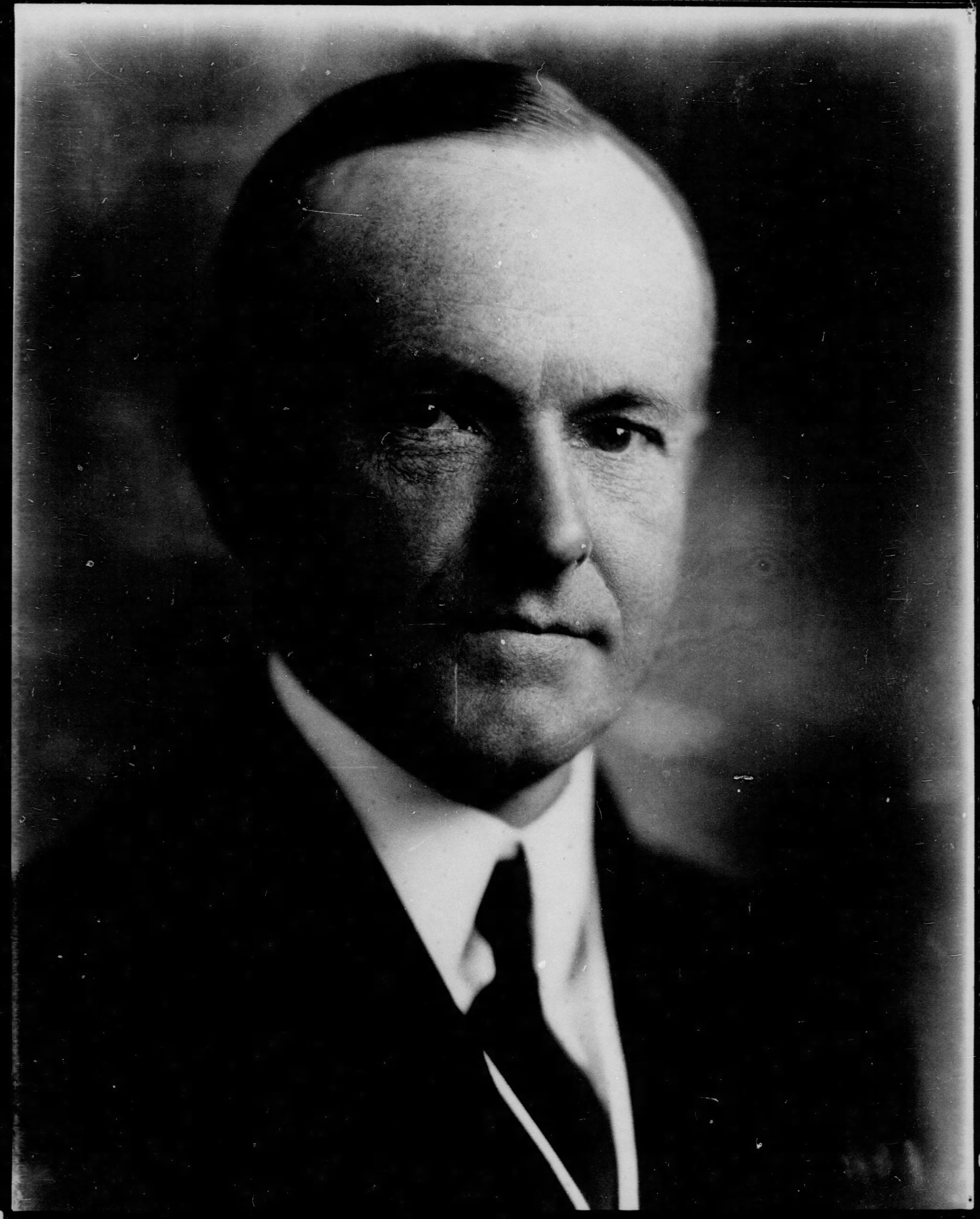
Thoughts on Tax Day

As the last of us complete our tax forms and mail off still more of our earnings, the portion of which we spent working for government, Calvin Coolidge is featured over at International Business Times today with one of his statements on tax policy. Of course, he said much more on this same occasion, declaring:

“Not only those who are now making their tax returns, but those who meet the enhanced cost of existence in their monthly bills, know by hard experience what this great burden is and what it does. No matter what others may want, these people want a drastic economy. They are opposed to waste. They know that extravagance lengthens the hours and diminishes the rewards of their labor. I favor the policy of economy, not because I wish to save money, but because I wish to save people. The men and women of this country who toil are the ones who bear the cost of the Government. Every dollar that we carelessly waste means that their life will be so much the more meager. Every dollar that we prudently save means that their life will be so much the more abundant. Economy is idealism in its most practical form.

“If extravagance were not reflected in taxation, and through taxation both directly and indirectly injuriously affecting the people, it would not be of so much consequence. The wisest and soundest method of solving our tax problem is through economy. Fortunately, of all the great nations this country is best in a position to adopt that simple remedy. We do not any longer need wartime revenues. The collection of any taxes which are not absolutely required, which do not beyond reasonable doubt contribute to the public welfare, is only a species of legalized larceny. Under this republic the rewards of industry belong to those who earn them. The only constitutional tax is the tax which ministers to public necessity. The property of the country belongs to the people of the country. Their title is absolute. They do not support any privileged class; they do not need to maintain great military forces; they ought not to be burdened with a great array of public employees. They are not required to make any contribution to Government expenditures except that which they voluntarily assess upon themselves through the action of their own representatives. Whenever taxes become burdensome a remedy can be applied by the people; but if they do not act for themselves, no one can be very successful in acting for them.

“The time is arriving when we can have further tax reduction, when, unless we wish to hamper the people in their right to earn a living, we must have tax reform. The method of raising revenue ought not to impede the transaction of business; it ought to encourage it. I am opposed to extremely high rates, because they produce little or no revenue, because they are bad for the country, and, finally, because they are wrong. We can not finance the country, we can not improve social conditions, through any system of injustice, even if we attempt to inflict it upon the rich. Those who suffer the most harm will be the poor. This country believes in prosperity. It is absurd to suppose that it is envious of those who are already prosperous. The wise and correct course to follow in taxation and all other economic legislation is not to destroy those who have already secured success but to create conditions under which every one will have a better chance to be successful. The verdict of the country has been given on this question. That verdict stands. We shall do well to heed it.

These questions involve moral issues. We need not concern ourselves much about the rights of property if we will faithfully observe the rights of persons. Under our institutions their rights are supreme. It is not property but the right to hold property, both great and small, which our Constitution guarantees. All owners of property are charged with a service. These rights and duties have been revealed, through the conscience of society, to have a divine sanction. The very stability of our society rests upon production and conservation. For individuals or for governments to waste and squander their resources is to deny these rights and disregard these obligations. The result of economic dissipation to a nation is always moral decay” — March 4, 1925, emphasis added.
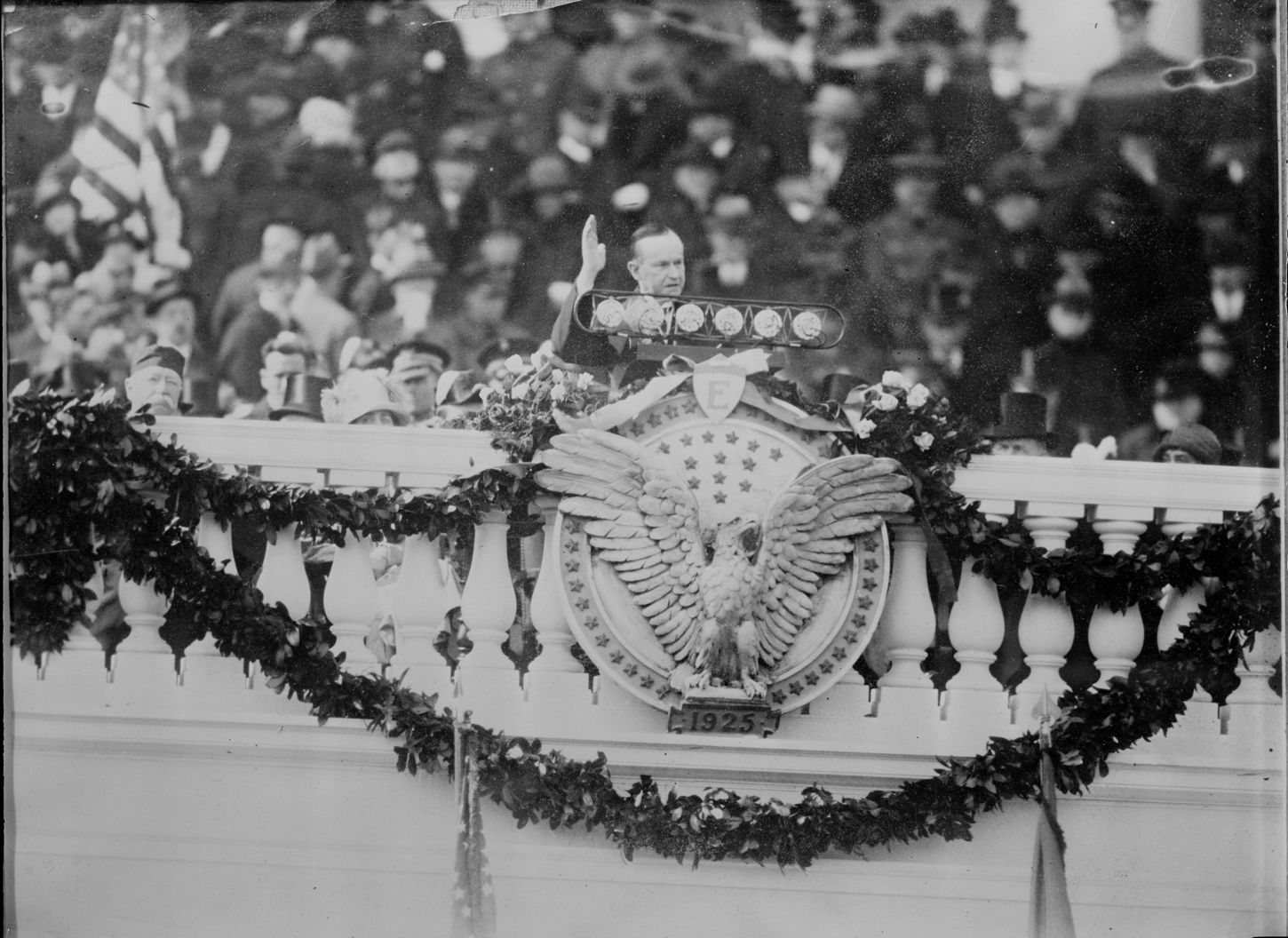
CC inauguration speech 1925

Remembering Abbie

gouverneurmorris's avatarThe Importance of the Obvious

“In March of my senior year my sister Abbie died. She was three years my junior but so proficient in her studies that she was but two classes below me in school. She was ill scarcely a week. Several doctors were in attendance but could not save her. Thirty years later one of them told me he was convinced she had appendicitis, which was a disease not well understood in 1890. I went home when her condition became critical and stayed beside her until she passed to join our mother. The memory of the charm of her presence and her dignified devotion to the right will always abide with me” — Calvin Coolidge, remembering March 6, 1890 in ‘The Autobiography’ (1929)

Abigail Gratia Coolidge

As we remember Abbie today, it is clear from this revealing statement that her brother’s outlook was enriched by her influence. May we exemplify the same qualities as brothers…

View original post 2 more words

On the Criticism of Character in Commerce

Courtesy of the National Archives.

Courtesy of the National Archives.

As Lieutenant Governor of Massachusetts, Calvin Coolidge addressed the Brockton Chamber of Commerce on this day ninety-nine years ago. In this message he articulates that the harsh criticism of our system and our institutions has always been the easy, simplistic course but when the “commercial age,” in which we now live these past hundred years, is properly assessed for value we discover it is all in pursuit of something far more important than material gain or physical possessions. It is in search for something more that develops character, the quality of the soul not merely the quantity of goods produced. Humanity is more than material. Inside there resides a spirit, an intellect, a yearning to dream, aspirations that cannot be quantified or satisfied by furnishing every physical need we could ever have. This is why centralized government always fails, by reducing mankind to only so many properties of matter that can be bestowed contentment and security in exchange for choice and independence, the spiritual craves for something more, a value intangible. Centralization dehumanizes man. Coolidge saw this and resisted it. He still speaks even now.

Coolidge said, “Man’s nature drives him ever onward. He is forever seeking development…Destructive criticism is always easy because, despite some campaign oratory, some of us are not yet perfect. But constructive criticism is not so easy. The faults of commercialism, like many other faults, lie in the use we make of it. Before we decide upon a wholesale condemnation of the most noteworthy spirit of modern times it would be well to examine carefully what that spirit has done to advance the welfare of mankind. Wherever we can read human history, the answer is always the same. Where commerce has flourished there civilization has increased. It has not sufficed that men should tend their flocks, and maintain themselves in comfort on their industry alone, however great. It is only when the exchange of products begins that development follows…

“It is only a figure of poetry that ‘wealth accumulates and men decay.’ Where wealth has accumulated, there the arts and sciences have flourished, there education has been diffused, and of contemplation liberty has been born. The progress of man has been measured by his commercial prosperity. I believe that these considerations are sufficient to justify our business enterprise and activity, but there are still deeper reasons…What then, of the prevalent criticism? Men have mistaken the means for the end. It is not enough for the individual or the nation to acquire riches. Money will not purchase character or good government. We are under the injunction to ‘replenish the earth and subdue it,’ not so much because of the help a new earth will be to us, as because by that process man is to find himself and thereby realize his highest destiny. Men must work for more than wages, factories must turn out more than merchandise, or there is naught but black despair ahead.

“If material rewards be the only measure of success, there is no hope of a peaceful solution of our social questions, for they will never be large enough to satisfy. But such is not the case. Men struggle for material success because that is the path, the process, to the development of character. We ought to demand economic justice, but most of all because it is justice. We must forever realize that material rewards are limited and in a sense they are only incidental, but the development of character is unlimited and the only essential. The measure of success is not the quantity of merchandise, but the quality of manhood which is produced.

“These, then, are the justifying conceptions of the spirit of our age; that commerce is the foundation of human progress and prosperity and the great artisan of human character. Let us dismiss the general indictment that has all too long hung over business enterprise. While we continue to condemn, unsparingly, selfishness and greed and all trafficking in the natural rights of man, let us not forget to respect thrift and industry and enterprise. Let us look to the service rather than to the reward. Then shall we see in our industrial army, from the most exalted captain to the humblest soldier in the ranks, a purpose worthy to minister to the highest needs of man and to fulfill the hope of a fairer day” (excerpts from “Have Faith in Massachusetts,” 1919, pp.15-20).