On the Night of August 2-3, 1923

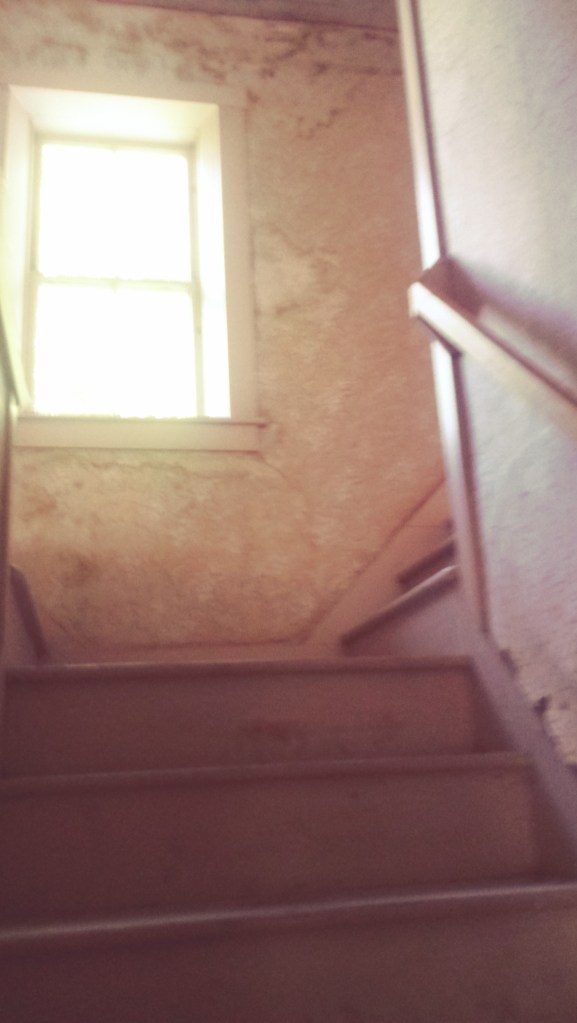
Looking up the stairs at the Homestead in Plymouth Notch, Vermont

“On the night of August 2, 1923, I was awakened by my father coming up the stairs calling my name. I noticed that his voice trembled. As the only times I had ever observed that were when death had visited our family, I knew that something of the gravest nature had occurred.

“His emotion was partly due to the knowledge that a man whom he had met and liked was gone, partly to the feeling that must possess all our citizens when the life of their President is taken from them.

“But he must have been moved also by the thought of the many sacrifices he had made to place me where I was, the twenty-five mile drives in storms and in zero weather over our mountain roads to carry me to the academy and all the tenderness and care he had lavished upon me in the thirty-eight years since the death of my mother in the hope that I might sometime rise to a position of importance, which he now saw realized.

“He had been the first to address me as President of the United States. It was the culmination of the lifelong desire of a father for the success of his son.

“He placed in my hands an official report and told me that President Harding had just passed away. My wife and I at once dressed.
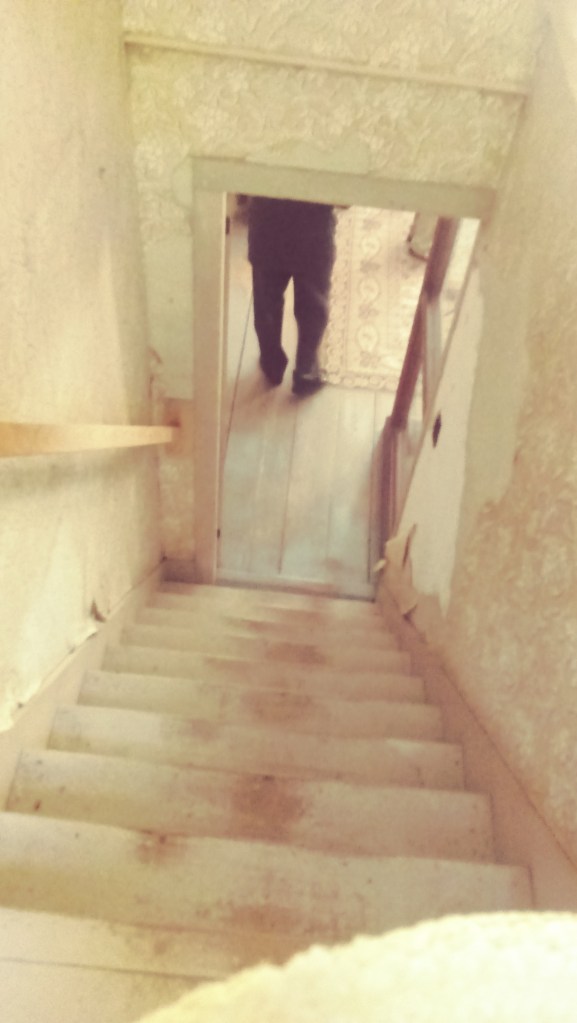
Looking down the stairs at the Homestead in Plymouth Notch, Vermont

“Before leaving the room I knelt down and, with the same prayer with which I have since approached the altar of the church, asked God to bless the American people and give me power to serve them.

“My first thought was to express my sympathy for those who had been bereaved and after that was done to attempt to reassure the country with the knowledge that I proposed no sweeping displacement of the men then in office and that there were to be no violent changes in the administration of affairs. As soon as I had dispatched a telegram to Mrs. Harding, I therefore issued a short public statement declaratory of that purpose.

“Meantime, I had been examining the Constitution to determine what might be necessary for qualifying by taking the oath of office. It is not clear that any additional oath is required beyond what is taken by the Vice-President when he is sworn into office. It is the same form as that taken by the President.

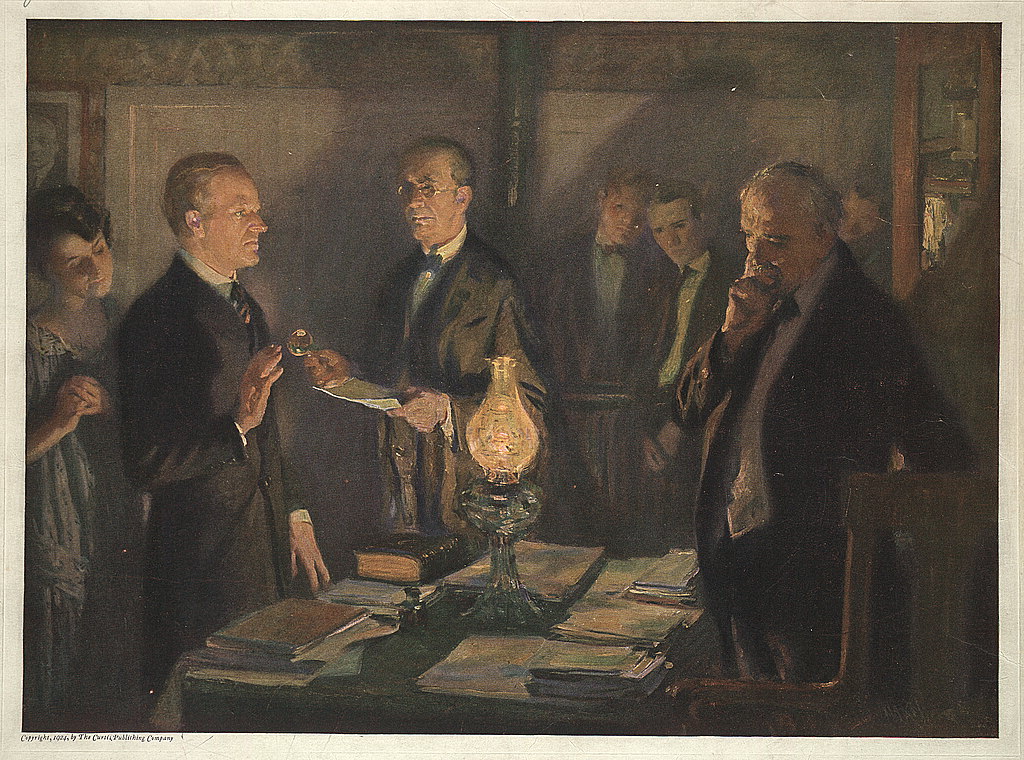
“Having found this form in the Constitution I had it set up on the typewriter and the oath was administered by my father in his capacity as a notary public, an office he had held for a great many years.
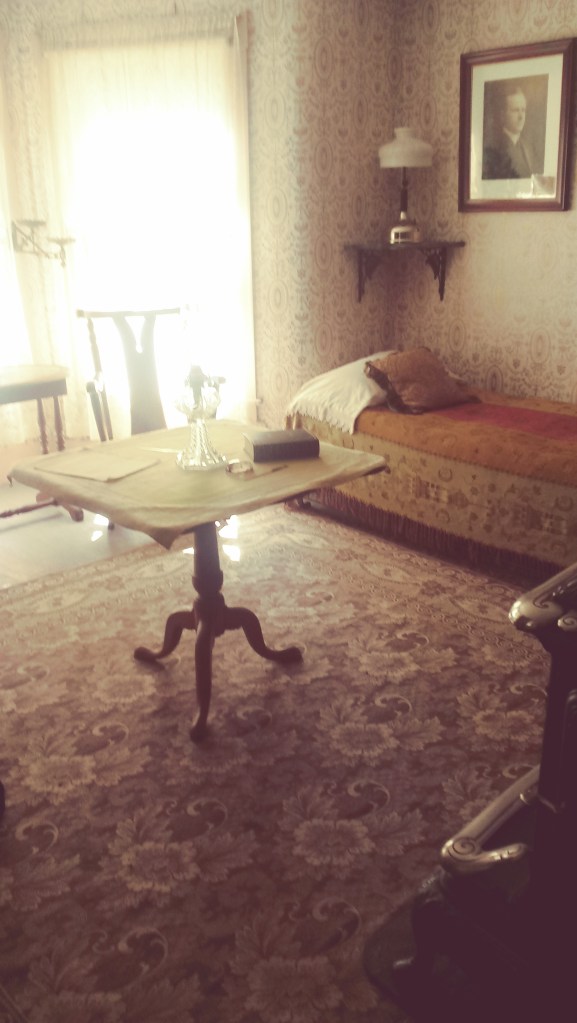
The sitting room in the sitting room of the Homestead, where the oath was administered at 2:47am on August 3, 1923.

“The oath was taken in what we always called the sitting room by the light of the kerosene lamp, which was the most modern form of lighting that had then reached the neighborhood. The Bible which had belonged to my mother lay on the table at my hand. It was not officially used, as it is not the practice in Vermont or Massachusetts to use a Bible in connection with the administration of an oath.

“Besides my father and myself, there were present my wife, Senator Dale, who happened to be stopping a few miles away, my stenographer [Erwin C. Geisser], and my chauffeur [Joseph M. McInerney].

“The picture of this scene has been painted with historical accuracy by an artist named [Arthur J.] Keller, who went to Plymouth for that purpose. Although the likenesses are not good, everything in relation to the painting is correct.” (Calvin Coolidge, Autobiography)
On Ourselves

“One of the chief errors of the present day is that of relying too much on the government and too little on our own efforts and on the people themselves. This comes to pass by supposing that, when there is something which ought to be done, we can avoid all personal responsibility by a simple ordinance requiring that hereafter it shall be done by the government. We cannot divest ourselves of our burdens and responsibilities by any such easy method. Where the people themselves are the government, it needs no argument to demonstrate that what the people cannot do their government cannot do.

“Another error lies in supposing that great fundamental reforms can be at once accomplished by the mere passage of a law. By law is meant a rule of action. Action depends upon intelligence and motive. If either of these is lacking, the action fails and the law fails. These may be stimulated by rewards or penalties, but whatever else may be their effect, they do not remove the source of evil. It is the mind behind the law that makes it truly effective. Laws are insufficient to endow a nation with righteousness.” (Vice President Calvin Coolidge addressing the New York State Convention of the YMCA at the Ten Eyck Hotel, Albany, April 13, 1923)

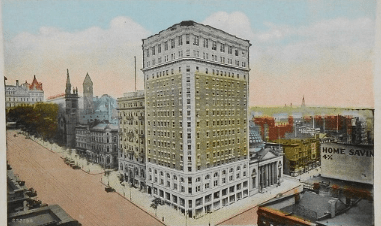
The 17-story addition of the Ten Eyck Hotel, Albany, where Vice President Coolidge spoke in April 1923.

On Teachers and the ‘Needs of Education’

“It is the teacher that makes the school, that sets its standard and determines its success or failure. Every one is familiar with the assertion of President Garfield that Mark Hopkins, sitting on one end of a log with a student on the other, would constitute a university. He did not particularize about the student, but he was careful to provide that the head of the institution was to be Doctor Hopkins. Only a trained and tried educator could fill the requirements for the head of a seat of learning that was to be dignified by the name of a university…

“There no doubt often arises a feeling on the part of the teaching force of the nation that they are lacking in public appreciation. They do not occupy positions which bring them into general prominence. Their compensation is not large in any event and, considering the length of time and the necessary expense required in preparation, is often very meagre. But if their rewards are not large, they are seldom exposed to that species of criticism, often turning into positive abuse, which is the lot of many elective public servants. If they will but consider the estimation in which they hold those who formerly stood in the relationship of teachers to them, they will, at once, be forced to conclude that, in the opinion of those whose opinion they value, they are not without appreciation and honor. And they must know that whoever can pause for a moment to estimate the value of their work, the importance of their calling, its high requirements in learning and in character, will be moved to admiration for their devotion and their sacrifice.

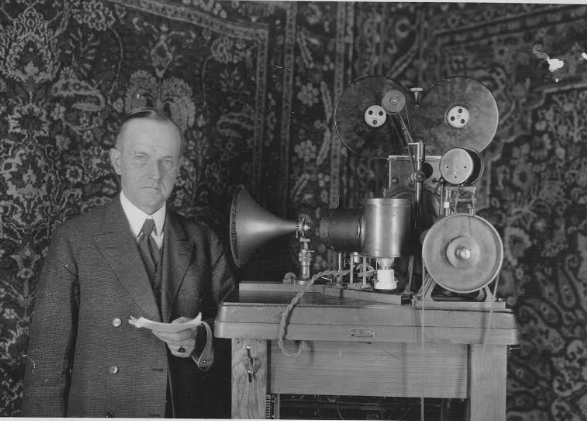
Vice President Coolidge recording on the pallophotophone (13 December 1922), the week before his address given in Reynoldsville, Pennsylvania.

“In addition to this, the opportunity to teach the youth of America, with all the boundless possibilities that lie before each one of them, is a positive guarantee that this calling, continued for any length of time, will bring the teacher into contact with some who are marked with genius and will be known to fame. The opportunity in such a vocation to inspire reverence for the truth and a determination to master it, and live by it, is a compensation of satisfaction beyond what wealth can buy. To lead and infuse the youth of the country in that capacity is to be a minister to the republic.” (Calvin Coolidge, at the Thursday evening session of the 64th annual Jefferson County Teachers’ Institute and School Directors’ Convention, First Methodist Episcopalian Church, Reynoldsville, Pennsylvania, December 21, 1922)

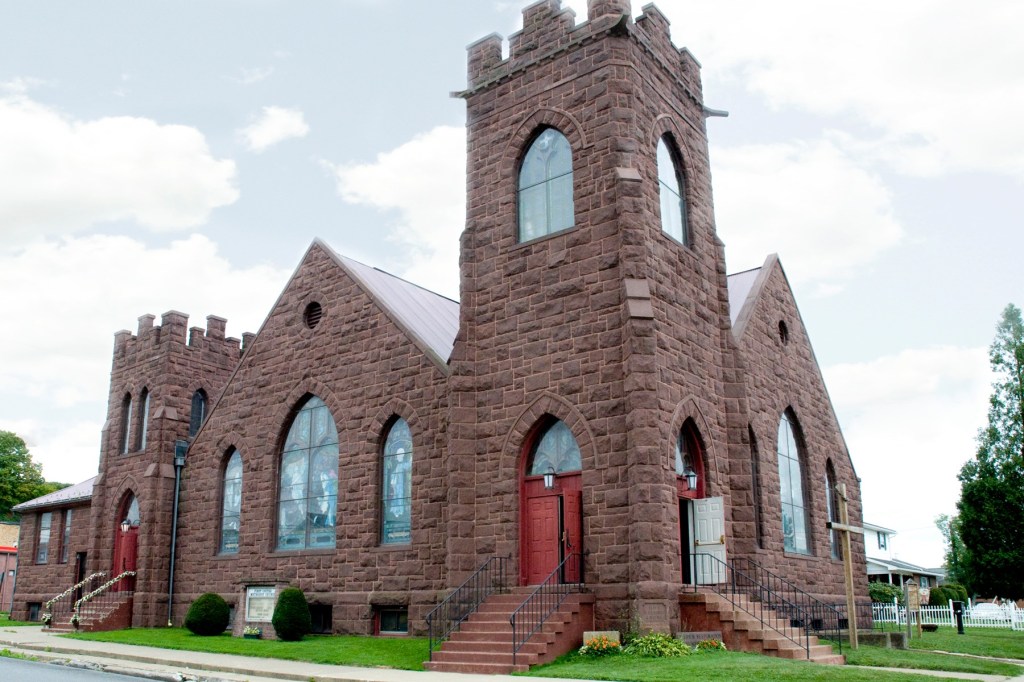
First Methodist Episcopalian Church, Reynoldsville, Pennsylvania, where Coolidge spoke before the Jefferson County Teachers and School Directors’ Conference, 1922