On Father’s Day 2015

In an interview published six months after the death of Colonel John Coolidge, his son, President Calvin Coolidge, spoke of him in words that could very well describe many of our fathers:

“My father had qualities that were greater than any I possess. He was a man of untiring industry and great tenacity of purpose…He always stuck to the truth. It always seemed possible for him to form an unerring judgment of men and things. I can not recall that I ever knew of his doing a wrong thing. He would be classed as decidedly a man of character. I have no doubt he is representative of a great mass of Americans who are known only to their local neighbors; nevertheless, they are really great. It would be difficult to say that he had a happy life. He never seemed to be seeking happiness. He was a firm believer in hard work. Death visited the family often. But I have no doubt he took a satisfaction in accomplishment and always stood ready to meet any duty that came to him. He did not gear the end of life, but looked forward to it as a reunion with all he had loved and lost” (Your Son, Calvin Coolidge: A Selection of Letters from Calvin Coolidge to His Father. Montpelier: Vermont Historical Society, 1968, vii).

To all such good, kind, and faithful men we wish “Happy Father’s Day!”
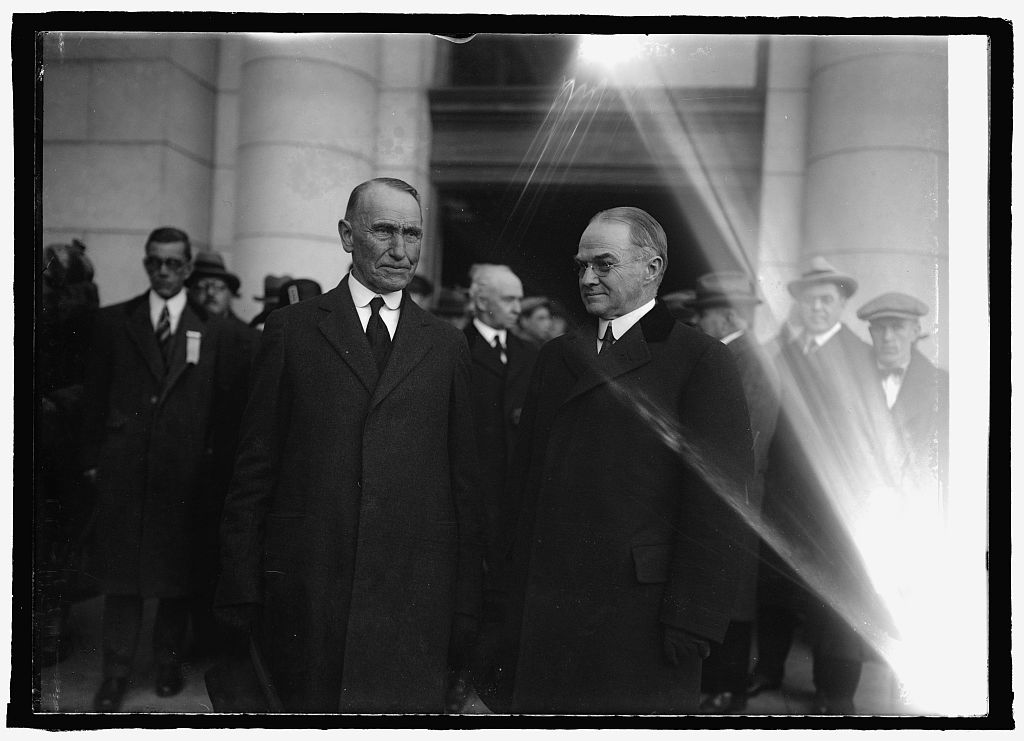
Colonel John Coolidge and Governor Billings of Vermont, March 3, 1925. Courtesy of the Library of Congress.

Colonel John Coolidge (left) and Governor Billings of Vermont, March 3, 1925. Courtesy of the Library of Congress.
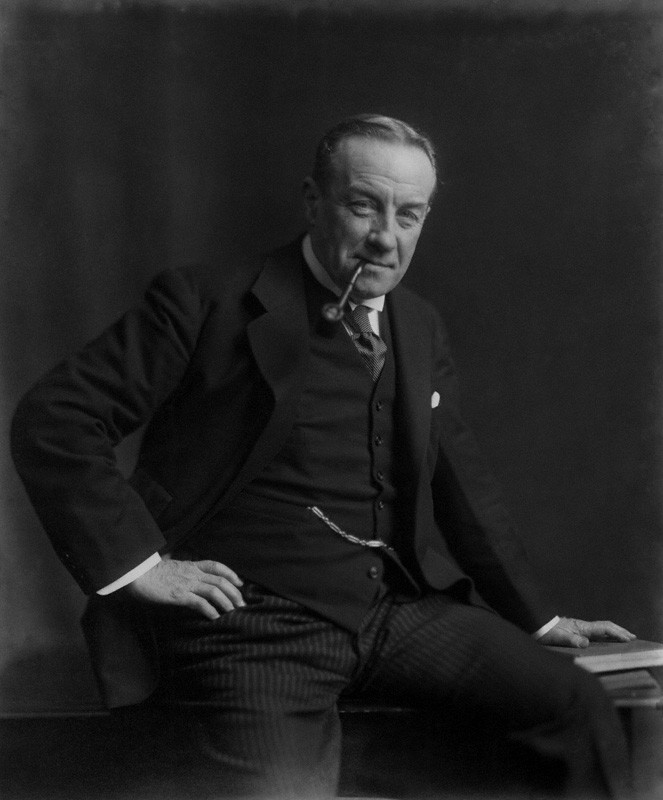
The British Calvin Coolidge

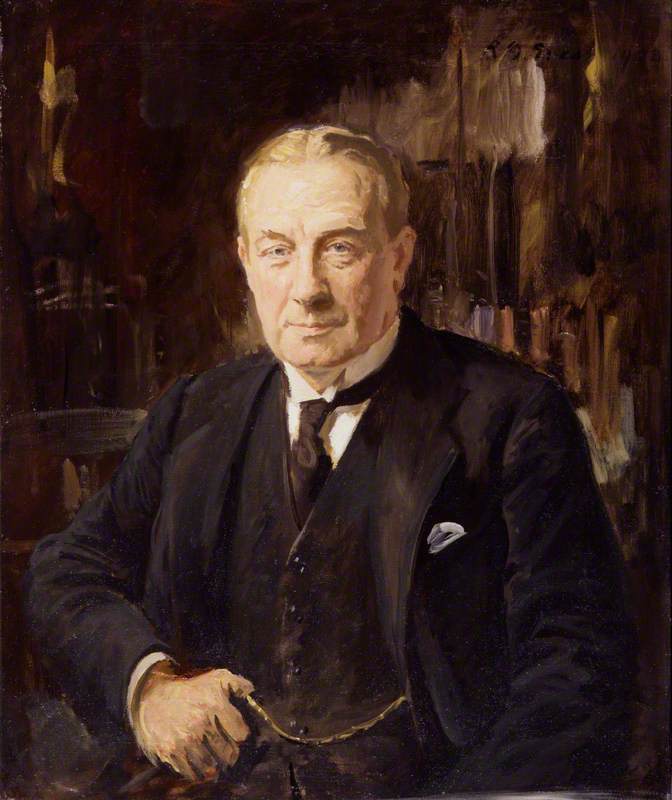
Stanley Baldwin (1927)

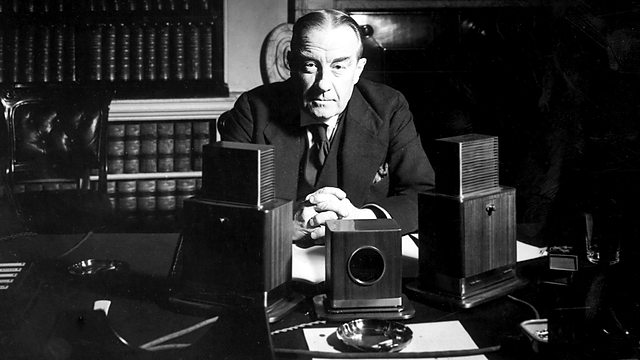
Stanley Baldwin (1927)

One of the greatest statesmen Britain can claim, Prime Minister Stanley Baldwin, presided over one of the most difficult periods of his nation’s life. He was in an incredible number of ways the “British Calvin Coolidge.” He served as Britain’s Prime Minister not only at the same time as President Coolidge here in America but he forged ever larger electoral victories stemming the tide toward socialism with an often underestimated ability to translate what regular people felt and knew to be true into concrete policies. He had an uncanny ability to distill details into their essential components. His invaluable training as Financial Secretary prepared him in the economical administration of the public Treasury. He had his own brand of Coolidgesque “luck,” rising steadily as a dependable “work horse” to command much of public affairs. He outsmarted the best politicians of his day, including the legendary Lloyd George, Ramsay MacDonald, Neville Chamberlain, and even Winston Churchill. He held no special regard for those who proclaimed themselves “disinterested experts” or “intellectuals,” seeing through their lack of substance and flimsy attempts to be the smartest people in the room. Yet, he is blamed for just about everything that went wrong after his retirement, a department (by the way) at a time of his own choosing, just as Cal did and was subsequently criticized for all that followed. Perhaps because both men possessed a kind of strength lacking in most of those who came after them in office is why the weight of other men’s deficiencies were thrown upon them as well. Baldwin had led the nation through the rebuilding after world war, the upheaval of a general strike, an abdication, and economic turmoil. Here he is: a master of radio, exceptionally successful at both electoral victory and governance, the defender of constitutional administration, and a man of genuine integrity.

p01gf542
I enthusiastically recommend Philip Williamson’s book on Stanley Baldwin, the British Coolidge. While it might be unfair to the late Earl Baldwin to oversimplify his character and accomplishments – which stand on their own merits – to analogize him to Cal, but it serves the purpose of reminding us that conservative principles have champions of courage and strength throughout time and place. This speaks to the power and resilience of those principles. It is nonetheless interesting how like-minded individuals rise to leadership contemporary with each other, from Reagan and Thatcher to Coolidge and Baldwin.

npg_npg_3551_large

VTC223

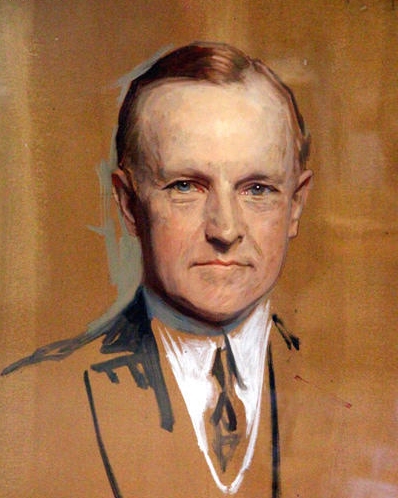
“Conservatism 101: Who is Really a Conservative?”

Bethany Blankley over at Townhall.com gives us a very helpful working definition of conservatism, explained by none other than Mr. Calvin Coolidge. Blankley shows how Merriam-Webster gets it wrong as a belief merely opposed to any and all change. She counters that it is conservatives who oppose the status quo, the default setting that continually attempts to curtail rights and deny responsibilities, stifle freedom and disregard higher laws than those passed by legislative majorities or executive fiat.

Blankley goes on to examine, with the perspective of that most deliberate and methodical of thinkers, Cal Coolidge, what conservatism really is, upon what grounds it, and how it translates into a governing philosophy in the real world. She illustrates how Coolidge – “perhaps the most conservative president of the last century” – achieved his administration’s goals not merely for the economy or some false separation of social vs. fiscal policy but by keeping “life-giving policies” in their primary place as the Founders did.

As Blankley puts it, “Conservatism guided Coolidge to relieve a country crippled by debt and severe economic depression, institutionalized segregation, and class warfare to eliminate the progressive policies Woodrow Wilson and Congress created. Progressives devalued life by institutionalizing oligarchy in America through the 1913 Federal Reserve Act, segregating federal employees, and making illegal interracial marriage. Coolidge evidenced fiscal responsibility by significantly reducing tax rates and the national debt by nearly one third. Debt, he argued, stifled freedom, limited entrepreneurship and economic growth. He advocated for personal responsibility and accountability through the rule of law, attempting to make illegal lynching and racial segregation, and hate crimes. He also sought to create national commissions to help bridge racial divides—yet progressives fought him at every step.” This was more than an economic battle Coolidge waged, it was a moral battle, illustrating that the nature of conservatism is not merely reactive – opposing “progress” for its sake – but rather advances the genuine progress of human life and ordered liberty.

“The root of conservatism is not laissez-faire economic policies that create personal financial profit and power, but principles that value life-giving activities that improve societal welfare.”

Blankley furnishes a perspective on Coolidge and conservatism too few understand or appreciate these days. It is long overdue that Coolidge and conservatism not only find coherent expositers among those running for office in this next election but, just as important, that conservatism is restored to American government after so many years in exile.

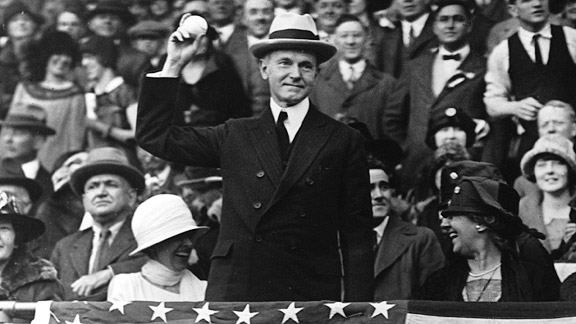
life_coolidge_576