On Armistice Day

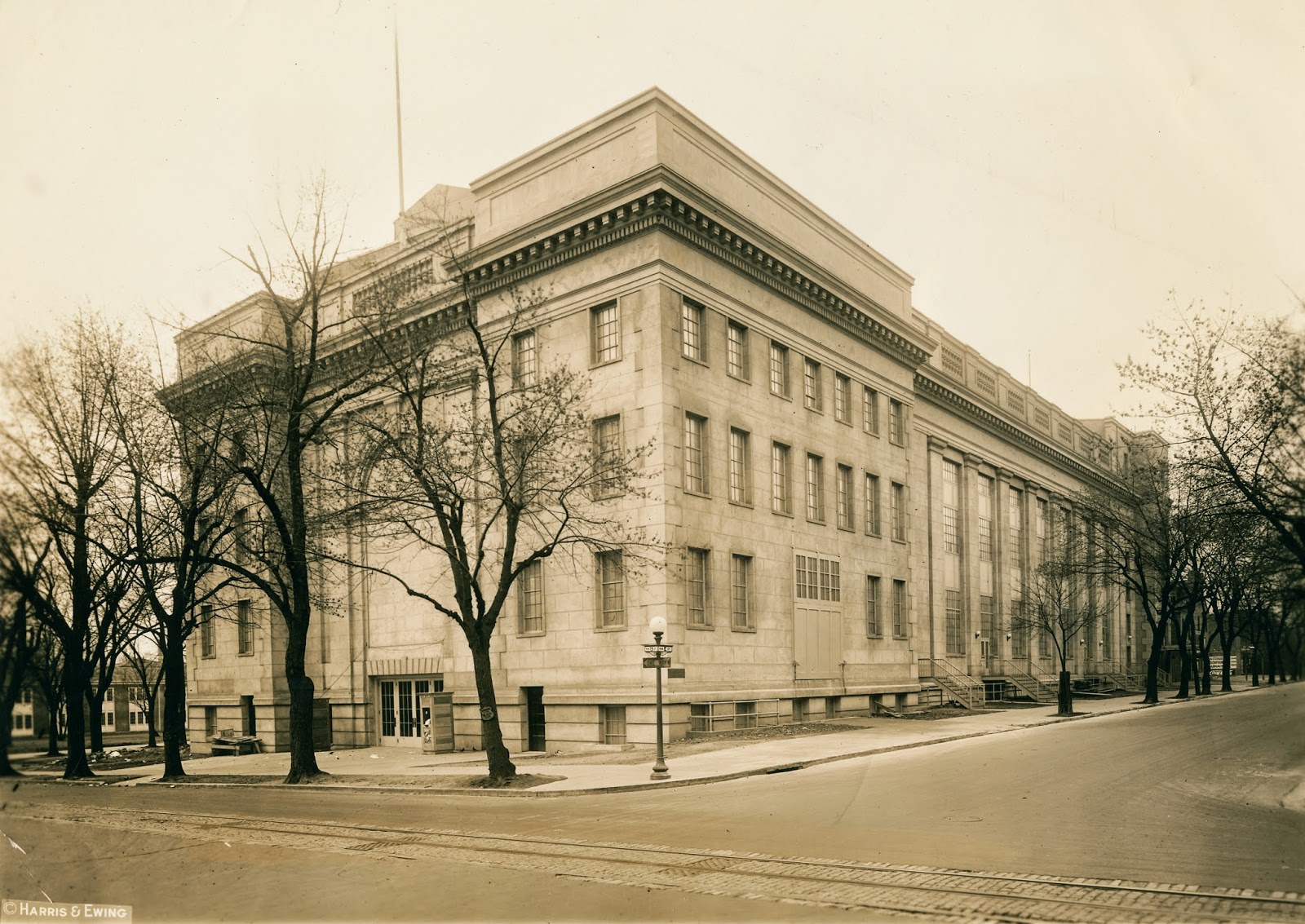
Washington Auditorium, 1926, two years before Coolidge's speech marking the tenth anniversary of the Armistice.

Washington Auditorium, 1926, two years before Coolidge’s speech marking the tenth anniversary of the Armistice.

“Every dictate of humanity constantly cries aloud that we do not want any more war. We ought to take every precaution and make every honorable sacrifice, however great, to prevent it. Still, the first law of progress requires the world to face facts, and it is equally plain that reason and conscience are as yet by no means supreme in human affairs. The inherited instinct of selfishness is very far from being eliminated; the forces of evil are exceedingly powerful.

“The eternal questions before the nations are how to prevent war and how to defend themselves if it comes. There are those who see no answer, except military preparation. But this remedy has never proved sufficient. We do not know of any nation which has ever been able to provide arms enough so as always to be at peace. Fifteen years ago the most thoroughly equipped people of Europe were Germany and France. We saw what happened. While Rome maintained a general peace for many generations, it was not without a running conflict on the borders which finally engulfed the empire. But there is a wide distinction between absolute prevention and frequent recurrence, and peace is of little value if it is constantly accompanied by the threatened or the actual violation of national rights.

“If the European countries had neglected their defenses, it is probable that war would have come much sooner. All human experience seems to demonstrate that a country which makes reasonable preparation for defense is less likely to be subject to a hostile attack and less likely to suffer a violation of its rights which might lead to war. This is the prevailing attitude of the United States and one which I believe should constantly determine its actions. To be ready for defense is not to be guilty of aggression. We can have military preparation without assuming a military spirit. It is our duty to ourselves and to the cause of civilization, to the preservation of domestic tranquility, to our orderly and lawful relations with foreign people, to maintain an adequate Army and Navy…

“So long as promises can be broken and treaties can be violated we can have no positive assurances, yet every one knows they are additional safeguards. We can only say that this is the best that mortal man can do. It is beside the mark to argue that we should not put faith in it. The whole scheme of human society, the whole progress of civilization, requires that we should have faith in men and in nations. There is no other positive power on which we could rely. All the values that have ever been created, all the progress that has ever been made, declared that our faith is justified.

“For the cause of peace the United States is adopting the only practical principles that have even been proposed, of preparation, limitation, and renunciation. The progress that the world has made in this direction in the last 10 years surpasses all the progress ever before made…

“We have heard an impressive amount of discussion concerning our duty to Europe. Our own people have supplied considerable quantities of it. Europe itself has expressed very definite ideas on this subject. We do have such duties. We have acknowledged them and tried to meet them. They are not all on one side, however. They are mutual. We have sometimes been reproached for lecturing Europe, but probably ours are not the only people who sometimes engage in gratuitous criticism and advice. We have also been charge with pursuing a policy of isolation. We are not the only people, either, who desire to give their attention to their own affairs. It is quite evident that both of these claims can not be true. I think no informed person at home or abroad would blame us for not intervening in affairs which are peculiarly the concern of others to adjust, or when we are asked for help for stating clearly the terms on which we are willing to respond..

“For the United States not to wish Europe to prosper would be not only a selfish, but an entirely unenlightened view. We want the investment of life and money which we have made there to be to their benefit. We should like to have our Government debts all settled, although it is probable that we could better afford to lose them than our debtors could afford not to pay them. Divergent standards of living among nations involve many difficult problems. We intend to preserve our high standards of living and we should like to see all other countries on the same level. With a whole-hearted acceptance of republican institutions, with the opening of opportunity to individual initiative, they are certain to make much progress in that direction.

“It is always plain that Europe and the United States are lacking in mutual understanding. We are prone to think they can do as we can do. We are not interested in their age-old animosities, we have not suffered from centuries of violent hostilities. We do not see how difficult it is for them to displace distrust in each other with faith in each other. On the other hand, they appear to think that we are going to do exactly what they would do if they had our chance. If they would give a little more attention to our history and judge us a little more closely by our own record, and especially find out in what directions we believe our real interests to lie, much which they now appear to find obscure would be quite apparent.

“We want peace not only for the same reason that every other nation wants it, because we believe it to be right, but because war would interfere with our progress. Our interests all over the earth are such that a conflict anywhere would be enormously to our disadvantage. If we had not been in the World War, in spite of some profit we made in exports, whichever side had won, in the end our losses would have been great. We are against aggression and imperialism not only because we believe in local self-government, but because we do not want more territory inhabited by foreign people. Our exclusion of immigration should make that plain. Our outlying possessions, with the exception of the Panama Canal Zone, are not a help to us, but a hindrance. We hold them, not as a profit, but as a duty. We want limitation of armaments for the welfare of humanity. We are not merely seeking our own advantage in this, as we do not need it, or attempting to avoid expense, as we can bear it better than anyone else.

“If we could secure a more complete reciprocity in good will, the final liquidation of the balance of our foreign debts, and such further limitation of armaments as would be commensurate with the treaty renouncing war, our confidence in the effectiveness of any additional efforts on our part to assist in further progress of Europe would be greatly increased.

“As we contemplate the past ten years, there is every reason to be encouraged. It has been a period in which human freedom has been greatly extended, in which the right of self-government has come to be more widely recognized. Strong foundations have been laid for the support of these principles. We should by no means be discouraged because practice lags behind principle. We make progress slowly and over a course which can tolerate no open spaces. It is a long distance from a world that walks by force to a world that walks by faith. The United States has been so placed that it could advance with little interruption along the road of freedom and faith.

“It is befitting that we should pursue our course without exultation, with due humility, and with due gratitude for the important contributions of the more ancient nations which have helped to make possible our present progress and our future hope. The gravest responsibilities that can come to a people in this world have come to us. We must not fail to meet them in accordance with the requirements of conscience and righteousness” — Calvin Coolidge, Excerpt of Address at the Observance of Tenth Anniversary of the Armistice, hosted by the American Legion at the Washington Auditorium in Washington, D. C., 9PM, November 11, 1928.

Thank you to all who have worn the uniform and borne sacrifices in America’s defense of peace!
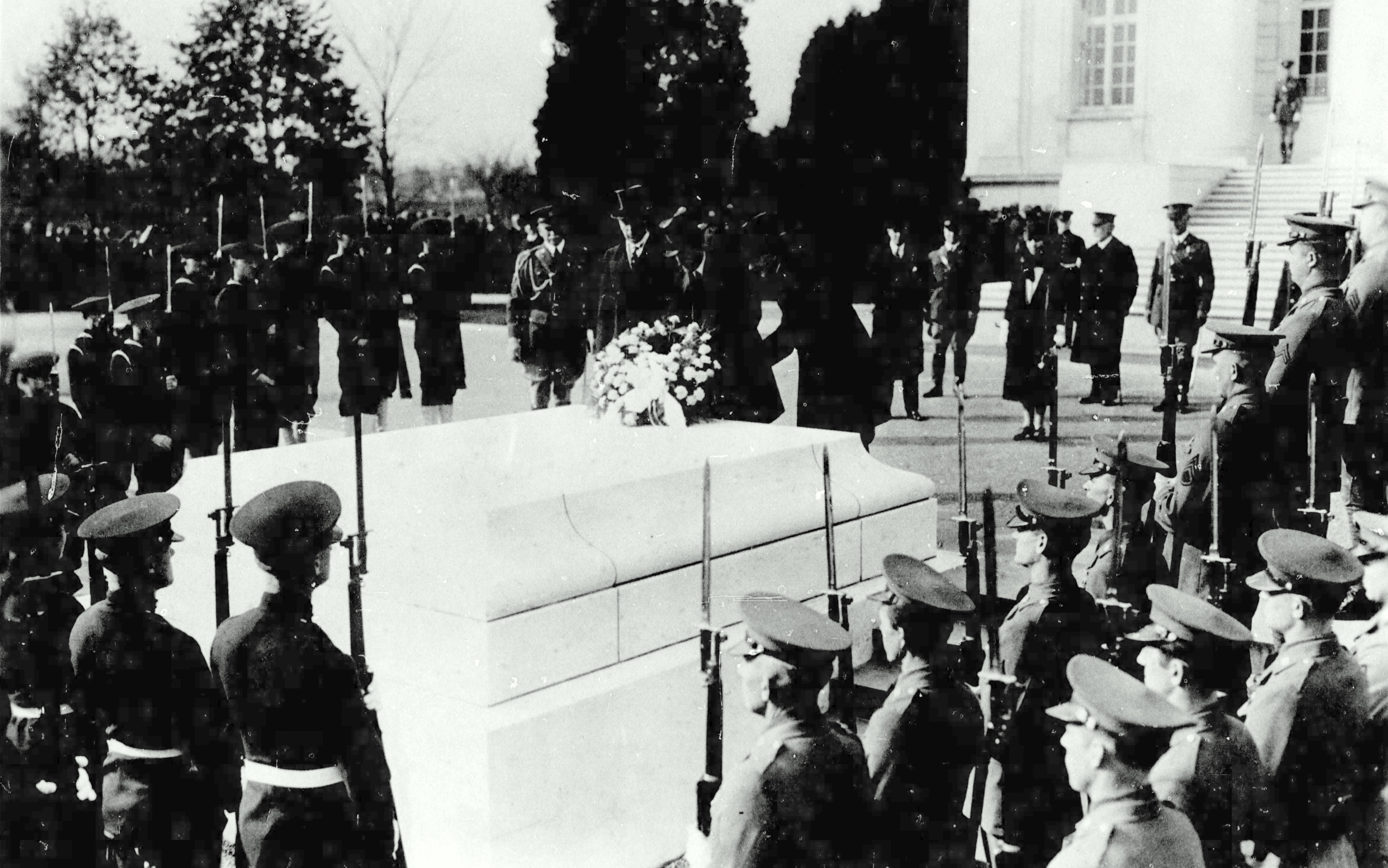
President Coolidge placing the wreath at the Tomb of the Unknown Soldier, November 11, 1927.
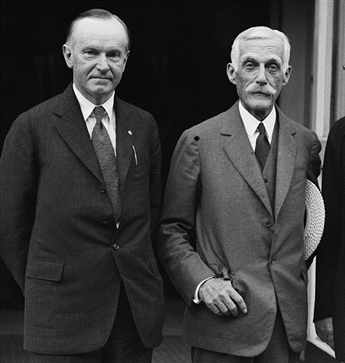
President Coolidge placing the wreath at the Tomb of the Unknown Soldier, November 11, 1927.

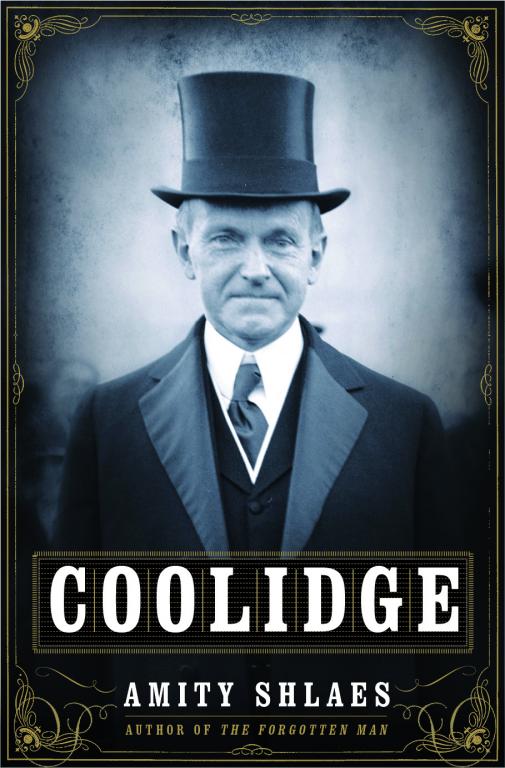
A Review of Amity Shlaes’ “Coolidge”

Coolidge cover copy

Our friend over at Best Presidential Biographies has finally arrived at Calvin Coolidge and he offers his first review, having read Amity Shlaes’ Coolidge published just short of three years ago. The reviewer offers some helpful points about the author and her approach to Cal, noting the strengths of her investigative talents which disappointingly fall short of a three-dimensional biography. The research leaves one with the impression of a policy paper not a comprehensive or full assessment of Coolidge as the title might suggest. Even in that, renaming public offices, like “City Solicitor General” (among other factual oversights) leave the reader with the impression that the author may not be quite as acquainted with her subject as should be expected (pp.75-76).

Nevertheless, the book has been pivotal in the most recent renewal of interest in what Coolidge did – or more properly termed – refrained from doing that is important now and deserves new appraisal and appreciation. This is especially so as our national debt soars and spending accelerates with no serious attempt at slowing not to mention halting altogether. Coolidge’s tenacious concentration on the payment of debt, the discipline to keep expenditures down, the meticulous effort to hold budgets in surplus, and the conscientious conviction that since all people, to remain free, deserve to keep the maximum reward of their own effort, working less for government and more for themselves and their families. This is to be done without compromising the essential functions of our American system and institutions. Coolidge as the Budgetary General, the Commander of fiscal discipline, is the driving persona in Shlaes’ narrative.

Of course, it functions as a prequel to Amity Shlaes’ The Forgotten Man, her book on the Great Depression. Please go over and read the review while also taking some time to delve into the wealth of historiography to be found there on all the Presidents.

On How the “Great” Got In the Depression

CC Mellon

Coolidge would write about this very subject in retirement leading up to the 1932 campaign, making clear even then that the causes of the Depression following the Stock Market crash were far more complex than many simplistically and ignorantly tout today. The Crash did not occur in a vacuum, he would note, it was the result of many bad investments in Europe and the United States. No government could have prevented the law of cause and effect enacted by thousands of individuals investing on credit, “get-rich-quick” schemes, and dubious returns. It would have to assume total control of its population and that would be neither moral nor in accord with the principles of America, Coolidge knew.

It should be obvious that Wikipedia outline points do not compensate for the lack of an argument over at the intellectually lazy Slate. They regard FDR to be his own standard of right and wrong. WWFDRD (What would FDR do?) is hardly a reliable guide when one actually studies the 1930s. After seven years of constant attempts to rescue the economy with progressivism, it was no coincidence that FDR’s Treasury secretary, Morgenthau, would admit the New Deal had been an unmistakable failure. Conditions were worse than they had been in 1932. The fact that FDR abandoned Coolidge’s approach – which had first been jettisoned by Hoover – no more condemns Cal and Mellon than it rationally follows that Senator Cruz’s opposition is to blame for the results already underway from the endless stream of stimulus spending, paper printing, debt raising, tax-inflicting collaboration between “Big Government Republicans” and socialist-collectivist Democrats.

Studies like James Grant’s The Forgotten Depression, Burt Folsom’s New Deal or Raw Deal? and Amity Shlaes’ Forgotten Man as well as Thomas Sowell’s essay here and Robert P. Kirby’s essay on Coolidge and the Great Depression as well as other studies here, here and here demonstrate:

1. The depression of 1920-1 was far worse yet it was allowed to liquidate wasteful uses of capital (no “too-big-to-fail” stimuli by Harding-Coolidge), spending was actually cut, and reduction in taxes fueled recovery, curing itself;

2. The handful of minor downturns during the 1920s are mere footnotes in history because Coolidge’s normalization policy equipped the economy to bounce back quickly each time;

3. His adherence to the gold standard – keeping money closest to its intrinsic value, thus defeating inflation with all its attendant misery;

4. His use of a progressive tax policy, which actually took more from the wealthiest and enabled most people to pay no income tax at all (directly opposite of what is claimed by many today), enabled the boom. The stock speculation that heated up as the decade wound down was perpetrated by thousands of new investors – many of whom were regular people – choosing high risk over sound judgment to obtain dubious rates of return that, in the end, never materialized. Coolidge knew rescuing people from the consequences of poorly used freedom does not keep people free. Government cannot rescue us from the burden of being careful and wise with what is our own. It would be akin to trusting the traffic lights will compensate for a driver’s watchfulness and judgment on the roads. Responsible citizenship is simply the price of freedom.

5. His wise use of the appointive power at the Federal Reserve while leaving Mellon fully in charge at Treasury, gave the country the tools and the blueprint to survive the Stock crash.

These did not cause the Depression, the Hoover-FDR response did. The policies of Harding-Coolidge had been the response to downturns for years without any of the long-term, enduring impact that occurred in the entire decade of the 1930s. The market crash was seven months into the term of Cal’s successor, Herbert Hoover, who not only came into office with sweeping economic changes but who built the foundations of the “Big Government Republican” response to market downturns: spend more, raise the debt, assume Presidential micromanagement, bail out those too important to fail, and create more regulatory layers and overseeing agencies.

Hoover failed to learn what Coolidge and Mellon understood about market recovery from 1921 (and before, from as far as back as the 1870s), that the worst thing government can do in a downturn is to loose the strings of the public Treasury and attempt to spend toward recovery, rescuing the unsound and rewarding the wasteful. Coolidge and Mellon knew this was like bleeding a patient with a cold, robbing the individual of the means to withstand and get over the illness rapidly. It only prolonged sickness and delayed health. It was out of the 1921 Depression, which had been the “Great” one in the lives of Coolidge’s generation, that the recipe for recovery would be demonstrated throughout the rest of Cal’s tenure. It is incredible that Hoover missed so important a lesson.

FDR would only accentuate Hoover’s feverish activity and together put the “Great” in the Depression. FDR took spending, stimulus, and intervention to an art form. He took us off the gold standard of money with intrinsic value and unleashed the suffering of inflation and stagnation. It is no more Coolidge’s fault for what happened in the 30s than blaming Cruz for what the current policies of the administration (with the help it receives from — you guessed it — “Big Government” Republicans) are doing to the country now.

Senator Cruz is right about what made the twenties roar. It is telling that while the Senator mentioned Reagan and Kennedy also, it is Coolidge’s name that provoked Slate’s parade of desperate fear-mongering and deep-seated prejudices. If what they are claiming is true – that Coolidge caused the Great Depression of the 1930s – how could we dare ever go back and learn anything worthwhile from the Coolidge Era, let alone replicate its successes? It is hoped that you’ll focus your hostility against Coolidge in their simplistic and partial retelling of what is supposed to be known and understood about the Twenties. Many have bought into it over the years and reflect how little they know in their voting choices. This is changing because more and more are beginning to peel back the layers of misinformation that have been heaped upon Cal Coolidge for decades. They are recognizing how Coolidge’s successors repudiated the policies that worked so well. It was this repudiation that both poured the foundation for Depression in 1929 and built a tower of needless misery and suffering upon it in the decade that followed. They now see his example and ideals, his integrity and principled courage, his fiscal discipline and constitutional leadership. They see what the Presidency is supposed to be and they expect it of our candidates again. Coolidge is once more serving as the teacher and guide he was as Chief Executive. Credit to Senator Cruz for reminding us of Coolidge’s central importance in our future.