On Democrat Party Promises

c-coolidge

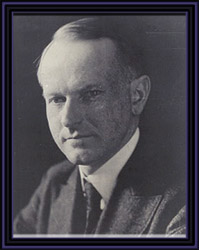
A Massachusetts newspaperman, a Republican, once recounted this boyhood memory for then-Governor Coolidge, during one of their conversations on Beacon Hill:

“When I was a boy in Springfield, another youngster met me on the street one day and asked me whether I was a Republican or a Democrat. I said I didn’t know and asked what difference it made. ‘Well,’ said the other boy, ‘if you are a Democrat you can march in our torchlight parade and come up to my father’s flag-raising and have some ice cream.’ I replied, ‘All right, I’m a Democrat.’ So you see,” the chagrined newspaper told Governor Coolidge, “I sold my first vote to the Democratic Party for a dish of ice cream.”

“Well,” Coolidge shrewdly replied, “you got more than some of the Democrats get” (Whiting, President Coolidge: A Contemporary Estimate, p.60).

Democrats making grand promises, benefiting a select few at the top, is not new; neither is buying support with those promises. Aptly did Joseph P. Kennedy, Sr., JFK’s father, warn against what he coined “Santa Claus” government where the individual is held in “slavish dependence” to the state (Stoll, JFK, Conservative, p.10). The glue of that dependence is, as Coolidge underscores, the long history of unquestioned yet unfulfillable assurances made by Democrats. The problem this time is not that another Democrat has been caught making impossible guarantees to buy or keep votes. The problem now is that a President knowingly repeated a criminally fraudulent claim on which millions relied — a promise essential to the passage of a law that has destroyed the economy, taken over the health care industry, led directly to the cancellations of millions of people’s plans, driven up costs for everyone, forced competent doctors from the field, obligated not just 5% of the population but the entire country with trillions of dollars in generational debt, and secured his re-election thereby so that the controls assumed because of his promise can be cemented permanently into American life. After all, no government program ever goes away, regardless of the depth of its failure.

It illustrates that some habits never change. Democrats appealed to the lowest desires even then. We all want ice cream but are we prepared to pay what it is already costing each of us in the freedom to choose, the say over our own government, our morality, human dignity, and the realization of each person’s fullest potential, when left unshackled by government “help”?
“A President and a Rug: Hidden History” by Kate E. Bradley

“A President and a Rug: Hidden History” by Kate E. Bradley

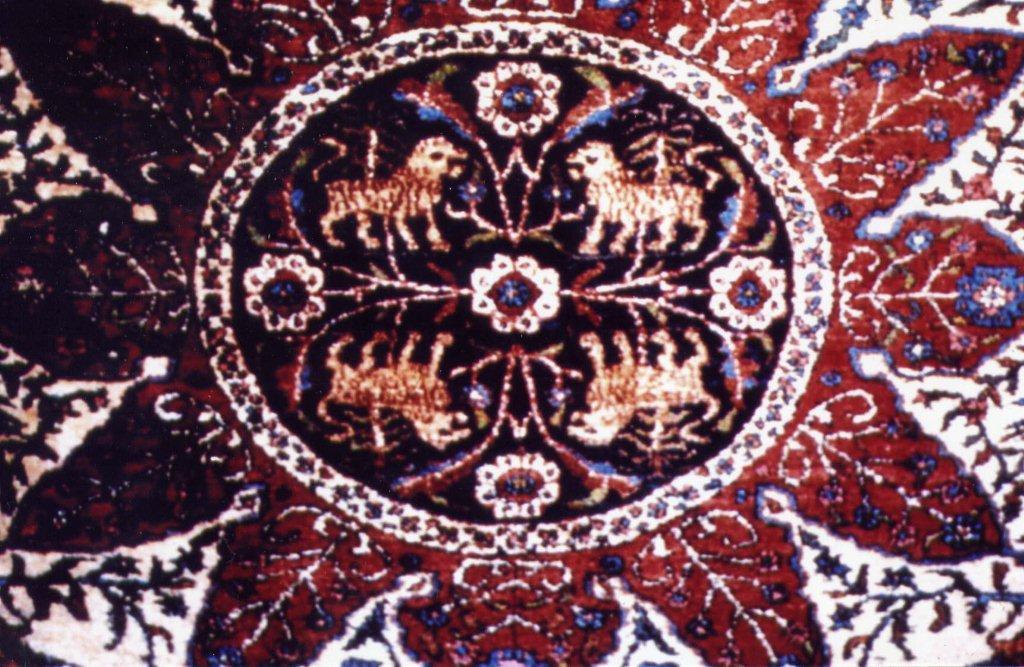
Here is a fascinating portion of the back story behind Dr. Deranian’s research that has become the recently published book, “President Calvin Coolidge and the Armenian Orphan Rug.” The suffering and loss endured by over one hundred and thirty-five thousand orphans and more than one million others through Turkish genocide brought the best out of Americans, who contributed millions of dollars, supplies and, for some, even their own lives to rescue as many of the Armenian people as possible. It is a long overlooked detail of President Coolidge’s foreign policy that he encouraged the relief effort, even meeting two of the orphans in 1926 who would eventually call America their home. An enormous rug gifted to President Coolidge in gratitude for America’s actions through the rescue effort headed by Near East Relief, speaks not only to the good will between two peoples but to the timeless reminder that America responds with open hearts and ready service, without a single government mandate, to help defend life and freedom for the most unfortunate anywhere in the world.

Now that the Smithsonian has been inexplicably denied permission by the White House to display the rug, it is shamefully not too far-fetched to conclude that this particular Administration has little concern for the gift’s meaning and even a deliberate interest in suppressing a celebration of the force for good Americans have been not only to Armenians but multitudes of others throughout our history.

A few of the more than 4.5 million knots lovingly forming this 11' 7" x 18' 5" rug. 400 orphan girls spent 10 months preparing this gift to America.

A few of the more than 4.5 million knots lovingly forming this 11′ 7″ x 18′ 5″ rug. 400 orphan girls spent 10 months preparing this gift to America.

Madison Project: Coolidge on Immigration

Madison Project: Coolidge on Immigration

This past May, the policy director of the Madison Project, Daniel Horowitz, took an important look at what Calvin Coolidge thought about immigration. As the pressure is on to overhaul current law on the matter, historical perspective from the man who took time to explain the purpose of restriction and its very real benefits to both Americans and those who want to come here, this short piece merits attention.

The President signing the Johnson-Reed Act, on the south lawn of the White House, May 26, 1924.

The President signing the Johnson-Reed Act, on the south lawn of the White House, May 26, 1924.

Included in Japanese Immigration by Raymond Leslie Buell. Boston: World Peace Foundation, 1924. Digitized at http://pds.lib.harvard.edu/pds/view/4009420?n=95&s=4&printThumbnails=no.

Included in Japanese Immigration by Raymond Leslie Buell. Boston: World Peace Foundation, 1924. Digitized at http://pds.lib.harvard.edu/pds/view/4009420?n=95&s=4&printThumbnails=no.