On Morrow and Coolidge

     Dwight Morrow, Amherst classmate and one of Coolidge’s earliest supporters, was mistakenly assumed to be among a small, select group of close advisers to the President. He, like Stearns (and nearly everyone else considered “close”) was kept at a distance because Coolidge respected their abilities but knew that the final decision rested with him alone. Coolidge would not entertain favoritism nor allow the perception that he was appointing “friends” to positions over considerations of merit. That is why he refrained from using Morrow’s great abilities for years. When he did appoint Morrow, it was to seemingly insignificant and temporal tasks, such as an Aeronautics Defense Commission or as Ambassador to Mexico. In each case, Morrow acquitted himself better than before. In the process, he established a reputation of sound judgment, unimpeachable character and preparedness for the next task. He was loyal all of his life to Coolidge. In one of the few conversations he had with “Calvin” in college, the future president told him something he never forgot and to which he aspired the rest of his life,

“One should never trouble about getting a better job. But one should do one’s present job in such a manner as to qualify for a better job when it comes along (Nicholson, ‘Dwight Morrow: A Biography,’ p. 87).”

Morrow would keep that perspective with him, even seeing it manifested in Coolidge’s incredible rise. When a friend expressed his amazement at what has been called “the Coolidge luck,” Coolidge’s rising to top positions by sheer “good fortune,” Morrow retorted, “but, he always reaches the second place by sheer merit.” Writing to the new President immediately upon hearing of Harding’s death, he said,

“Three years ago in Worcester I told you in all sincerity that I was convinced that you were better equipped in character and in training to serve this nation as its President than any of the other possible candidates that were being discussed. That conviction was based upon your character as I knew it and your long training in public affairs. I have never changed that belief. The greatest responsibility that rests upon any man in the world has now come to you. No former Vice President who succeeded to the Presidency by the death of the President was confronted with responsibilities as great. Your whole life’s training fits you for your mighty task; and the faith that you expressed in the closing line of your short statement made in Vermont is the faith that all your real friends will share…”

Similar to Coolidge, Morrow was inspired to public service by Professor Garman at Amherst. Morrow would be a competent observer of people all of his life. He was not far behind Frank W. Stearns in seeing more to Coolidge than most did. Coolidge, as he prepared to leave the Presidency, would give his finest tribute of Morrow’s abilities by recommending to Herbert Hoover that Morrow become the next Secretary of State. Coolidge would never interject his preferences on Hoover, save this one time. The fact that it was for Morrow speaks volumes. It underscored the sharp differences between Coolidge and Hoover that the latter imprudently refused.

Years before, however, Morrow would try to explain himself to Stearns before giving some advice he knew Stearns could relay to Coolidge, “You may look upon me, because of my associations, as a conservative, but I really think I have been all my life something of a radical. I have tried, of course, to be radical along lines that would help instead of along lines that would simply throw the existing machinery out of gear.” A reminder to many a modern “activist” that one does not need to “scrap the foundations” to best improve current conditions. Morrow continued, explaining to the businessman, that there are two basic types of people, in a way far more fundamental than Party allegiance or even political alignment,

“For the last year I have been abroad dealing with all sorts of government officials. Some of them have been Socialists like [Albert] Thomas, the great Socialist leader in France. Some of them have come from old conservative families, like Lord Robert Cecil, son of the Marquis of Salisbury. I have about come to the conclusion that the division of the people of the world is not really between conservative and radical, but between people that are real people and people that are not. Calvin is one of the fellows who is real. He really wants to make things better, not to pretend to make them better…” (Nicholson 231).
Image

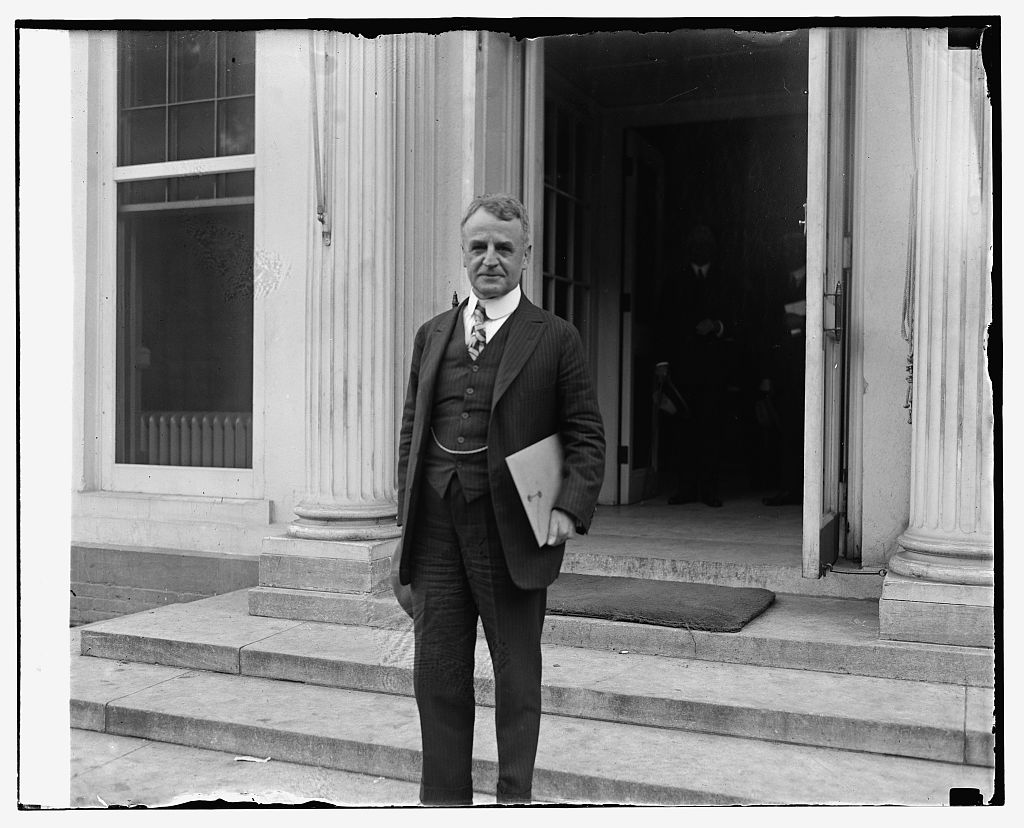
Dwight W. Morrow in 1925. His sudden death in the fall of 1931 would be a profound loss to the country, and lay an even heavier grief upon one of his oldest friends, Calvin Coolidge.
On Good Business

Mr. Coolidge recognized the essence of good business was in strengthening ties of service and collaboration with others. He never saw the validity of an adversarial system, such as Bentham and the socialist economists espoused. Profit was important, of course, but not the supreme purpose of good business relations. He understood that business was about more than “crushing the competition.” It was about building bridges, not burning them. That is why he demanded a meeting with an apprehensive editor one afternoon. The editor had not published the entire number of articles agreed upon and written by the former President. Still, Mr. Coolidge had been paid for the entire set. The editor, bracing for confrontation, was shocked to find the former president wanted to meet in order to return the balance of the money due for the articles not published. To Coolidge, if they were not “good enough” to warrant publication, it would not be right to take money for them. In this way, good business is preserved.

The former President, writing another article on June 17, 1931, observed the necessity for “good business” to continue, especially as folks struggled to keep commerce going,

“It is a very sound business principle to let the other fellow make a profit. That was the essence of the slogan we heard a few years ago about passing prosperity around. The same thought is involved in paying good wages and fair prices. Cutting prices calls for cutting wages in the end.

“This is often the basis of the complaint against large concerns. When they control a large percentage of production they control the prices of the raw and unfinished materials used in that trade. They become almost the sole market for them. Under this condition there is a strong tendency in the name of efficiency and good management to squeeze out the small concerns furnishing these materials. But it is not usually good business.

“We are all so much a part of a common system of life that the business world is not healthy unless we all have a chance. A profit made by squeezing some one else out of a livelihood will almost surely turn up later as a loss. The great asset in trade is good will. The best producer of good will is the profit which others make” (emphasis added).

On Humility

A quality well-known to those who knew him was Mr. Coolidge’s humility. He knew, as he wrote to his father, being “the most powerful man in the world,” meant high responsibilities not lofty privileges. It was not an opportunity to “live large,” clothing himself in the trappings of his glory. During his lifetime, he had seen certain men become President only to equate the majesty of the Office with the excellence of the person. He knew the dangers of arrogance. He was never fooled to think that it was proper, even for a President, to govern by the force of his personality. He had seen President Wilson try and disastrously fail on that score. Mr. Coolidge raised the dignity of the office during his time, that is for sure, but he distinguished between the greatness of the Presidency from the absence of greatness in him. He was simply chosen from the sovereign people to serve for a short time and then “be one of them again.”

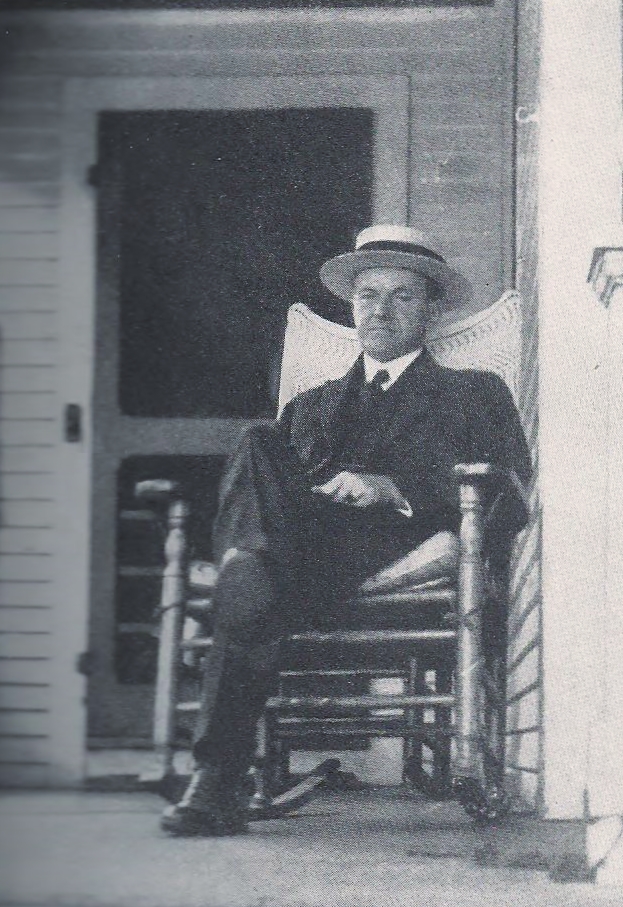
His desire to be a private citizen again was unfortunately never entirely restored. It cannot be easy to rediscover “normalcy” for anyone who has once been a President. But he earnestly tried. Prompted to speak in retirement, he accepted only under the most compelling pressure because he refused to accept it was his place to assume the mantle again as a kind of unofficial public authority or “Deputy President.” His humility was such that he could no longer do many of the things he loved to do, such as sit on his front porch. He disdained the ostentatious displays of attention showered on him because of the Presidency. He would tolerate it for the sake of the Office while he held it, but he refused to suffer it after the White House.

He disapproved of Presidential pensions and would not take a cent of public support. He would work for himself. It was writing that primarily occupied his time and even that weighed on his mind with the obligations of producing a product worth publishing, meeting deadlines, and not taking advantage of the credentials he could have claimed to accept more than a piece was worth.

His long-time law partner, Mr. Hemenway, recalled three occasions of Mr. Coolidge’s many expressions of simple unaffectedness, the first one in the midst of being President, that underscored his persistent humility. Mr. Hemenway, writing for Good Housekeeping in April 1935, recounts:

     “While he was President, I had a note in longhand from him one day, as follows:

                                                                                                Sept. 13, 1928

     ‘My Dear Mr. Hemenway:–

            ‘You have at Hampton safety deposit 2 Lib Bonds $50 each. See if any are due Sept 15

      current and if so have Tr. Co. collect them and credit my acct.

                                                                                          ‘Yours

                                                                                       ‘Calvin Coolidge’

     “That note shows his far-reaching recollection of detail. Here you witness the President of the United States, the problems of a nation on his desk, with an income of $75,000 a year and $25,000 more for traveling expenses and entertainment, plucking out of his innumerable mental pigeonholes the relatively insignificant matter of two $50 Liberty bonds on which the interest of $2.12 was due!

     “To show his kind-heartedness and his liberality I recall one occasion when I was in need of funds owing to the closing of a local bank. I was seated at my desk deeply buried in thoughts that were not particularly cheerful when he came through the connecting doorway from his office, walked over to me, and placed a slip of paper on my blotter. As he turned away and went back to his room, he said quietly,

     ‘And as much more as you want.’

     “It was a check for $5,000.”

The final memory shared by Mr. Hemenway humorously highlights the former President’s unchanged outlook after life in the White House.

     “The splendor and pomp of Washington and the Presidency never changed his early valuations of life. He was simple and unaffected to the last degree. He liked foot comfort. In the old days he would slip off his shoes and put both stockinged feet in his wastebasket where they wouldn’t be seen. Once, however, he was taken off his guard. A woman client came into his office while he feet were planted in the wastebasket. He got a good laugh out of it afterward–although he certainly did not enjoy the surprise at the moment.”

                         Image

“We draw our Presidents from the people. It is a wholesome thing for them to return to the people. I came from them. I wish to be one of them again…They have only the same title to nobility that belongs to all our citizens, which is the one based on achievement and character, so they need not assume superiority. It is becoming for them to engage in some dignified employment where they can be of service as others are” — Calvin Coolidge, The Autobiography, 1929, pp.242-3.