On those Roaring Twenties

Image

Historian Paul Johnson


It is fitting that those who helped drive the Reagan Revolution forward humbly credit their inspiration to the shy, quiet man from Vermont, Calvin Coolidge. In a very real way he bequeathed the essential recipe for the successes of the 1980s. While the ingredients were not precisely followed in every respect, especially concerning the payment of debt, the principles contained such power that even Congressional spending could not slow it down.

President Reagan’s combination of political saavy, biting wit, unassuming competence and ability to cut through the complex and see the simple essence of an issue derived not merely from his life’s experiences, they found inspiration from his study of Coolidge. Reagan, after all, like several of the men and women who comprised his team of “revolutionaries,” first came to understand the world during the Coolidge Era and in the years shortly thereafter. The lessons “Silent Cal” taught in both word and action left abiding impressions on future Secretaries of the Treasury (Donald T. Regan) and Defense (Caspar Weinberger) and future Attorney General Edwin Meese III, along with many others.

Two scholars, in particular, were returning to Coolidge’s record in order to reassess his very real achievements. In 1982, Thomas B. Silver, in Coolidge and the Historians, would lead this effort and unearth most of the shoddy and partisan reporting against the thirtieth president and the 1920s. In 1984, Paul Johnson, in the sixth chapter of his Modern Times: The World from the Twenties to the Nineties, would roll back the shroud thrown over not only the genuine triumphs of the Roaring Twenties but also the legacy of Mr. Coolidge. As Mr. Johnson would reflect on this reserved and disciplined leader, he would not only find him to be “the most internally consistent and single-minded of modern American presidents” but he, like all of history’s great men, was not an intellectual. To Mr. Johnson, that is a very good thing because “[a]n intellectual is somebody who thinks ideas are more important than people.” Wilson and Hoover approached the world this way while Coolidge, and Reagan, did not. To Coolidge and Reagan, people were the preeminent focus of their policies. The “smartest ones in the room” miss that all-too-obvious truth. People were genuinely benefited by Coolidge’s leadership.

Johnson could accurately survey the Twenties not as an aberration of gross materialism or empty gains but as an unprecedented prosperity that was both “very widespread and very solid” (p.223). “It was,” Johnson corrects, a prosperity “more widely distributed than had been possible in any community of this size before, and it involved the acquisition, by tens of millions, of the elements of economic security which had hitherto been denied them throughout the whole of history. The growth was spectacular.”

As a direct result of Coolidge prosperity, national income jumped from $59.4 to $87.2 billion in eight years, with real per capita income climbing from $522 to $716. Millions of workers purchased insurance for the first time, a phenomenon of a healthy economy Obama is deliberately ignoring. Savings quadrupled during the decade. Ownership in fifty stocks or more reveals the vast majority were not “the rich,” but housekeepers, clerks, factory workers, merchants, electricians, mechanics and foremen. Union membership plummeted from just over 4 million at the outset of the 1920s to 2.5 million by 1932. As small and large businesses succeeded, people were able to provide holidays with pay, insurance coverage and pensions as well as other benefits, giving substance to Coolidge’s dictum that “large profits mean large payrolls” thereby making “collective action superfluous,” as Johnson observes (p.225). Home ownership skyrocketed to 11 million families by 1924.

Perhaps the most obvious index of prosperity could be seen in automobile ownership. What began as a novelty for just over 1 million Americans in 1914 (with less than 570,000 produced annually) exploded into 26 million owners with over 5.6 million autos produced annually by 1929. Air travel was fast becoming the normal mode for “regular” folks and classes were rapidly dissolving from upward mobility. In 1920 a meager $10 million was spent on radios. By 1929 that figure had surpassed $411 million, which was itself small compared to the $2.4 billion spent on electronic devices as a whole in the Twenties.

These years were not, as some would claim later, removed from an appreciation of the past. The expansion of education is “[p]erhaps the most important single development of the age” (Johnson 225). Spending on education increased four times what it was in 1910, from $426 million to $2.3 billion. But unlike today’s habit of throwing money at the problem, it brought results. Illiteracy actually went down over fifty-percent. A “persistent devotion to the classics,” with David Copperfield at the head of the list, defined the decade. Culture was reaching the homes of those who had once been the least connected Americans through reading clubs, youth orchestras and “historical conservation” movements that would restore sites like Colonial Williamsburg.

“The truth is the Twenties was the most fortunate decade in American history, even more fortunate than the equally prosperous 1950s decade, because in the Twenties the national cohesion brought about by relative affluence, the sudden cultural density and the expressive originality of ‘Americanism’ were new and exciting” (p.226).

The problem, as Mr. Johnson concludes, with the expansion of the Twenties was not that it was “philistine or socially immoral. The trouble was that it was transient. Had it endured, carrying with it in its train the less robust but still (at that time) striving economies of Europe, a global political transformation must have followed which would have rolled back the new forces of totalitarian compulsion, with their ruinous belief in social engineering, and gradually replaced them with a relationship between government and enterprise closer to that which Coolidge outlined…” More of the same policies would have prevented much of what followed in the 1930s and beyond. “[M]odern times would have” indeed “been vastly different and immeasurably happier.” The purpose served by Coolidge “minding his own business,” as he put March 1, 1929, was perhaps more a forecast of his successors than an introspection. If only Hoover had been listening more carefully. The downturn in 1929 would certainly have more closely resembled the depression of 1921 and, with the Harding-Coolidge recipe of “masterful inactivity,” have spared millions of lives the terrible suffering and avoidable loss brought on by Hoover’s spending and Roosevelt’s “New Deal.”
On Mother’s Day

Writing in his daily column on May 8, 1931, the former President remembers,

“There is always danger that we shall not look at values in their proper proportions. What is common and obvious is often none the less precious. Among all the earthly blessings which have been bestowed upon us, it is difficult to find one that compares with motherhood. It is hard to imagine a great ambition than to be what our mothers would wish us to be.

“These sentiments which we all entertain are of little value unless they are translated into action. The day can be well observed by making some contribution for maternity centers, or for the general relief of mothers, to some of the various associations engaged in these charities. None of us can give as much as our mothers gave us.”

Image           Image

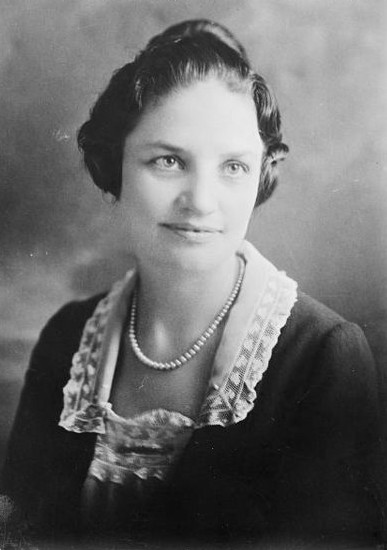
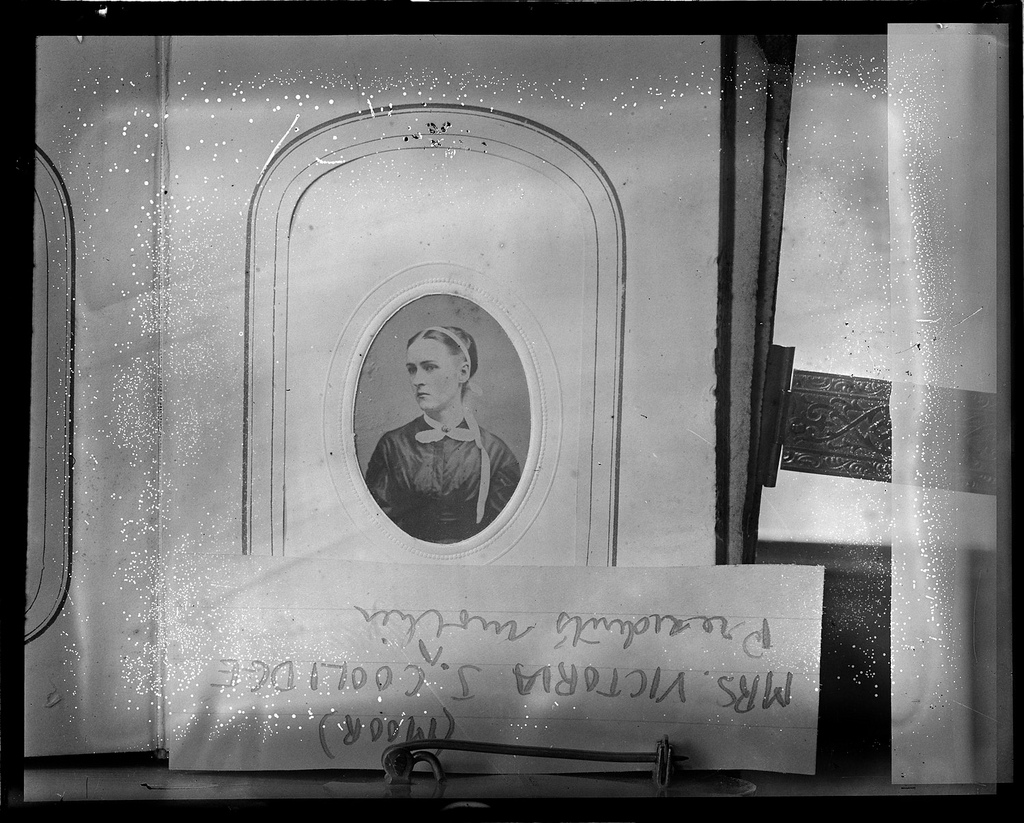
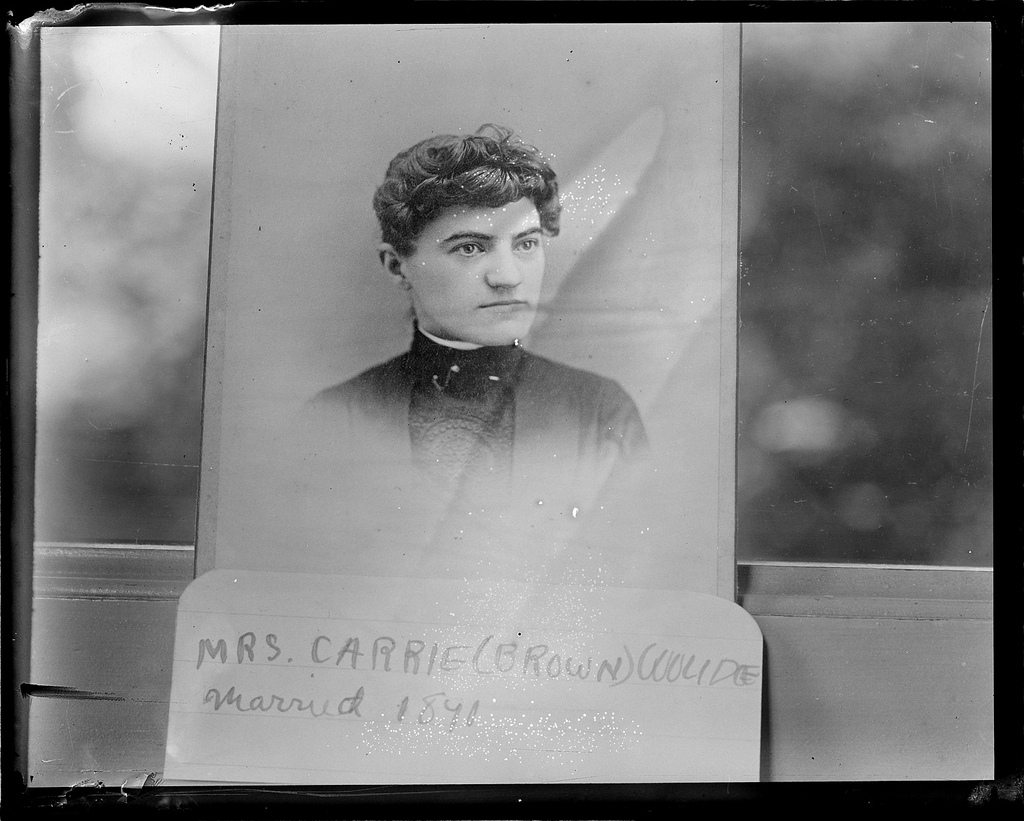
Top: Coolidge’s mother, Victoria Josephine Moor Coolidge, about whom he said, “Whatever was grand and beautiful in form and color attracted her. It seemed as though the rich green tints of the foliage and the blossoms of the flowers came for her in the springtime, and in the autumn it was for her that the mountain sides were struck with crimson and with gold” (‘Autobiography,’ p.13). Bottom: Coolidge’s stepmother, Carrie Althelia Brown Coolidge, a teacher at the Plymouth schoolhouse and the first lady postmaster for the town, married Colonel Coolidge in 1891, who had been a widower for seven years. Of her, President Coolidge wrote, “Loving books and music she was not only a mother to me but a teacher. For thirty years she watched over me and loved me, welcoming me when I went home, writing me often when I was away, and encouraging me in all my efforts” (‘Autobiography,’ p.54). Photos from the Leslie Jones Collection.

On the Equality of Women

Image

Coolidge was not one to join the latest popular movement awarding privileges to one group while denying them to others. To do so is the opposite of equality. Suppressing the differences between men and women not only denies each one’s unique role but it thwarts the realization of equality. As Coolidge would say, “Women have a natural and indisputable place in the affairs of state. We do not want solely a man’s or a woman’s world — we want a human world and we are rapidly achieving it. This does not mean that men and women are to become alike. Rather it requires each of us to make his or her peculiar contribution. Fortunately no two of us are alike. Our civilization will be sturdy and satisfying, rich and dependable…in proportion as we deepen rather than decrease the difference between men and women.” Coolidge did not see people as monolithic groups. He ably measured the individual by his or her character. In fact, he saw more potential in people than they usually saw in themselves.

Coolidge was among those who believed women, naturally conservative in outlook “not only for themselves but for their posterity,” would render a “great benefit” by voting with sound moral values. Suffrage, to Coolidge, was not about placating a demographic. “Nothing can be safer…than the informed judgment of the mothers of the land.” Notice, what made the country secure was not empathy with or identity as a woman but informed judgment. The voter must understand how his and her decisions impact the future. Progress comes through the moral character each individual possesses. Skin color, gender, and party affiliation were unessential to genuine equality. This standard was illustrated by those with whom Coolidge worked.

Image

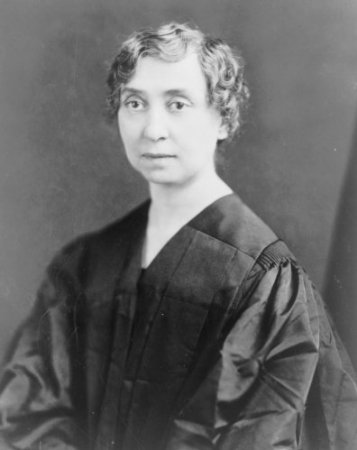
Though the first President to nominate a woman to the Federal Judiciary, Coolidge was not seeking symbolism. His choice was Genevieve Cline, a self-taught expert in customs law who adroitly surveyed the complex terrain of tariff policy. She had developed this fascination as a young lady and, after many years of hard work, had established her own private practice in Cleveland. She eventually took on the challenging work of merchandise appraiser for the Treasury Department until her confirmation to the U. S. Customs Court in May 1928. Through it all, she consistently refused special treatment for herself, expecting the quality of her work, not her gender, to measure justice. She bravely asserted in 1949 that, “There is no gender in the law. No one says ‘man lawyer’ so why say ‘woman lawyer?’ ” For Judge Cline, justice must remain blind to incidentals to remain just.

Image

Though appointed before Coolidge rose to the Presidency, Mabel Walker Willebrandt was retained and encouraged to keep doing her duty. After she took heat for criticizing certain federal district attorneys over selective enforcement of the law, Coolidge encouraged, “Keep plugging away at ’em.” Willebrandt was the Assistant Attorney General of the United States. Her unshakeable commitment to the law meant setting aside any personal reservations about the Volstead Act. Prohibition enforcement, enacted by the people through Constitutional amendment, applied impartially to everyone alike. For Willebrandt, the law did not depend upon having empathy for people’s plights. The law remained fair when it was blind to those particulars.

Image

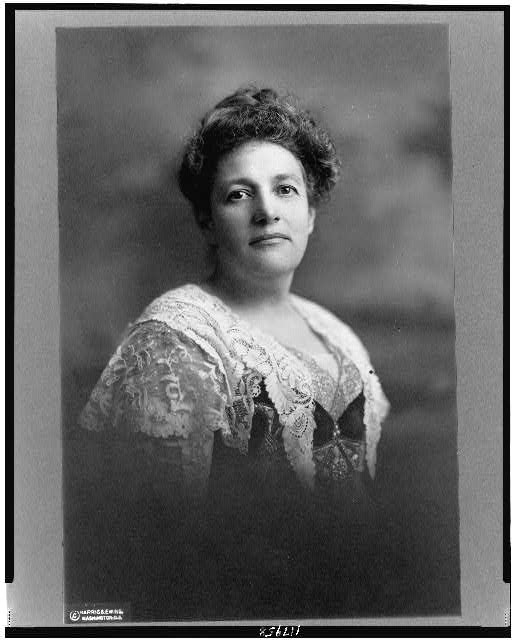
One of seven Republican women to serve during the Harding-Coolidge years, Florence Kahn demonstrated that faithful public service can be accomplished without catering to “women’s issues.” Mrs. Kahn, having supported her husband in his Congressional work, decided to run for his seat after his sudden death in 1924. Her sense of obligation prompted her to serve, forging a strong conservative record representing San Francisco over six terms. At any time, she could have appealed to her identity as a woman, or even a Jewess, to engender support for legislation. She refused. The merits of each issue must stand or fall on their own. While she believed women should serve, Kahn never accepted the premise that women needed special legislation for their “issues.” Asked why not, she said: “I am not specifically interested in so-called women’s questions, as all national positions are sexless.” Kahn did not represent women, she would say, she represented her district. Building strong military preparedness, enabling constructive economy, and meeting national obligations to veterans and their families were important policies for everyone. Governmental affairs are not segmented into gender-specific issues. They are borne by all and pertain to all. Therein lies equality.

For Representative Kahn, Assistant Attorney General Willebrandt, Judge Cline, and President Coolidge, what the nation required was not special allowance for irrelevant differences, but a deeper appreciation for the ways our distinct gender roles complement each other. When men and women exercise informed judgment as citizens, contributing together toward common goals, a vibrant liberty under an impartial and truly equal law can be preserved for the next generation.

 Further Reading

Brown, Dorothy M. “Mabel Walker Willebrandt: A Study of Power, Loyalty and Law.” Knoxville, TN: University of Tennessee Press, 1984.

“Florence Prag Kahn,” in “Women in Congress, 1917-2006. Prepared under direction of Committee on House Administration by Office of History and Preservation, U.S. House. Washington: Government Printing Office, 2006.

Fowler, Russell. “Coolidge and the Supreme Court.” Journal of Supreme Court History 25 (November 2000): 271-295.

Goodhue, Norman H, “No Gender in Law, Says Woman Judge,” LA Times, April 17, 1949, p. C1.

Keyes, Frances Parkinson, “Seven Successful Women,” Delineator (July 1928): 16.

Levstik, Frank R. “Cline, Genevieve, Rose.” Notable American Women: The Modern Period: A Biographical Dictionary. Cambridge: Harvard University Press, 1986.

Willebrandt, Mabel Walker. “The Inside of Prohibition.” Indianapolis: Bobbs-Merrill, 1929.