“The Nation’s Christmas Tree,” 1926

No, it is not in Washington, D.C., but rests across the continent among the ancient forests of California. Declared by President Calvin Coolidge in 1926 to be the “Nation’s Christmas Tree” the “General Grant” sequoia in California’s Kings Canyon National Park is the third largest tree in the world, behind “General Sherman” and “President,” named for Warren Harding in 1923. This very deliberate designation for a tree as far removed as possible from the Nation’s capital underscores where our thirtieth President placed American identity: among the People themselves, not under an omnipresent shadow of Government. Estimated at over 1600 years of age, the tree stands 267 feet in height and 107.6 feet in circumference.
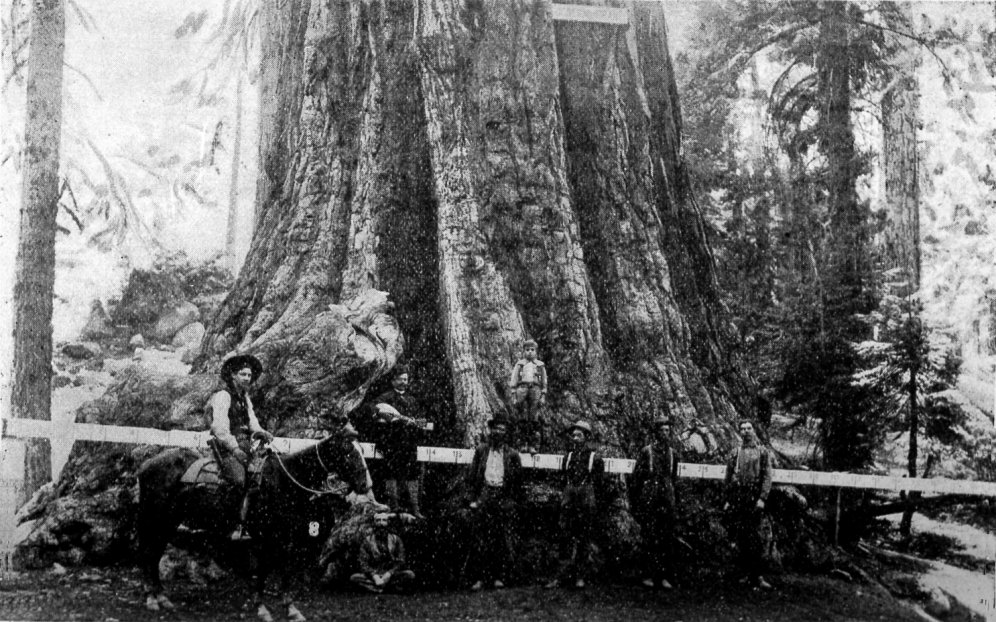
Base of the tree, photo taken in 1907.

Base of the tree, photo taken in 1907.

The "Nation's Christmas Tree" in the middle of summer. The snow on the ground reminds us how aptly named it was by President Coolidge. It is here, in the beauty of America's sequoias that the Christmas Tree finds its most distinctive representation.

The “Nation’s Christmas Tree” in the middle of summer. The snow on the ground reminds us how aptly named it was by President Coolidge. It is here, in the majesty of America’s sequoias, that the Christmas Tree finds its most distinctive representation.
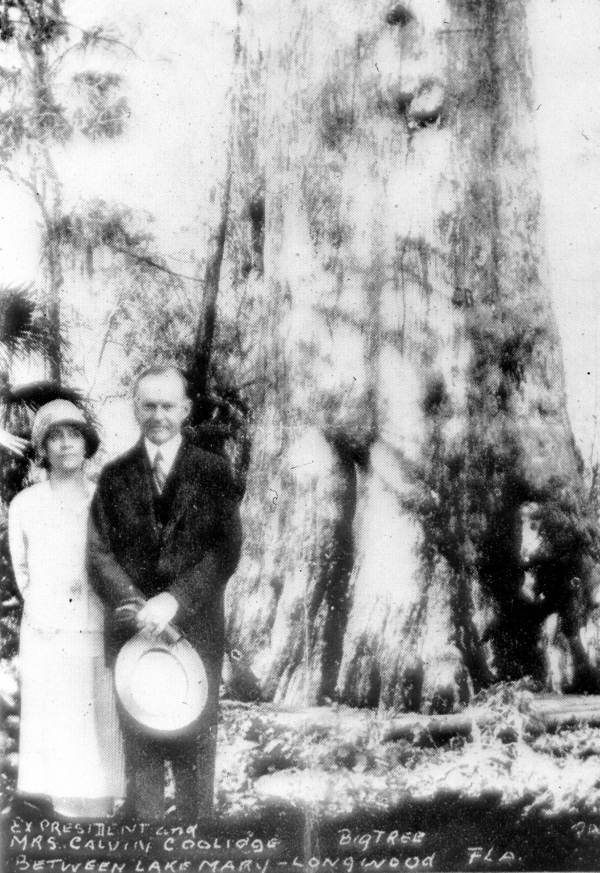
As documented by James C. Clark in his research on Presidents in Florida, this picture widely circulated soon after President Coolidge's visit to the Longwood area in 1929 was a case of doctored photography. The superimposed image of the Coolidges beside the 3500 year old "Senator" was circulated anew after it caught fire and collapsed in 2012.

As documented by James C. Clark in his book, Presidents in Florida, this picture of another very big tree was widely circulated soon after President Coolidge’s visit to the Lake Wales area in February 1929 despite being a case of doctored photography. The superimposed image of the Coolidges beside the 3500 year old cypress tree known as “The Senator” was circulated anew after the tree caught fire and collapsed in 2012 (Clark pp.92-93).
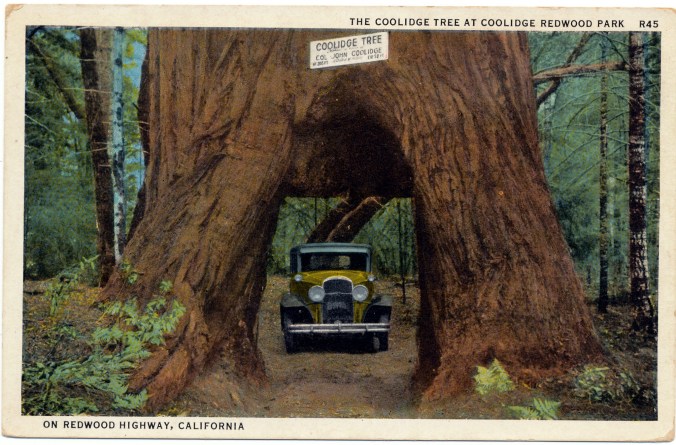
The Coolidge Tree, California

The Coolidge Tree, California

Among several trees to wear the Coolidge name across the country through the years, most of them were planted by either President or Grace Coolidge personally. This one, however, in Coolidge Redwood Park, is set apart from the others because it was named for the President’s father, Colonel John Coolidge. Here it sits, photographed for postcards in 1931, at 305 feet in height and 58 feet in circumference.

Union Station, 1928

Union Station, 1928

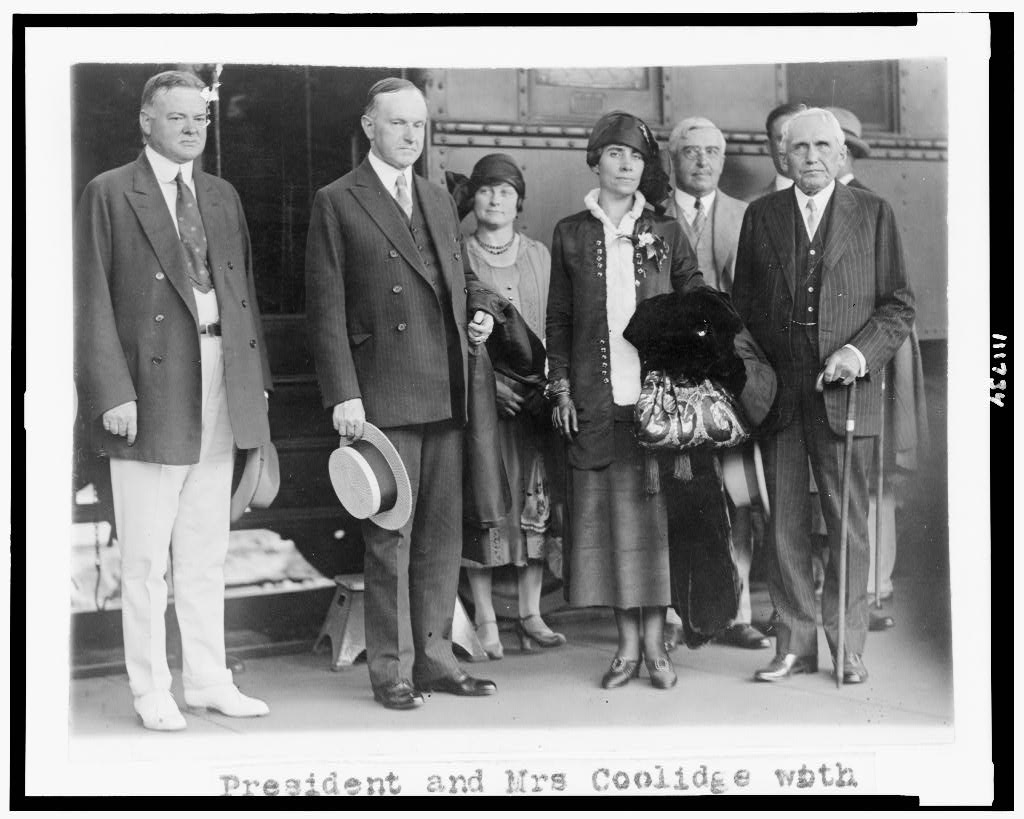
Here the President stands beside Mrs. Coolidge and a gathering of some of the most influential officers of the Coolidge Administration, L to R: Secretary of State Frank B. Kellogg and Mrs. Kellogg, Secretary of Labor James J. Davis, First Lady Grace Coolidge, the President, unidentified man, former Secretary of the Interior Hubert Work, serving at the time of the photograph as Chairman of the Republican National Committee, Secretary of the Navy Curtis D. Wilbur, Mrs. Lou Hoover, soon-to-be President Herbert Hoover and finally Secretary of War Dwight F. Davis and Mrs. Helen Davis. Who is standing directly behind President Coolidge?

This is not the first time Union Station in Washington, D.C. has been preserved as the hub for transitional photographs between what was and what would be, as these other snapshots illustrate.

President and Mrs. Harding beside the Coolidges outside Union Station en route to the Inauguration, March 1921.

President and Mrs. Harding beside the Coolidges outside Union Station en route to the Inauguration, March 1921.

Senator Henry Cabot Lodge, a long-time political antagonist of Coolidge's advancement, stands beside Mrs. Coolidge and the Vice President, who stands beside outgoing Vice President Thomas Marshall and Mrs. Marshall. While not evident in this picture, Mr. Marshall possessed a keen sense of humor, hitting it off with the new VP almost immediately. The Marshalls helped the Coolidges get situated in Washington and became firm friends with his successor and the lovely Mrs. Coolidge. Photo taken in 1921.

Senator Henry Cabot Lodge, a long-time political antagonist of Coolidge’s advancement, stands beside Mrs. Coolidge and the Vice President, who stands beside outgoing Vice President Thomas Marshall and Mrs. Marshall. While not evident in this picture, Mr. Marshall possessed a keen sense of humor, hitting it off with the new VP almost immediately. The Marshalls helped the Coolidges get situated in Washington and became firm friends with his successor and the lovely Mrs. Coolidge. Photo taken in 1921.

President and Mrs. Coolidge returning from summer in Swampscott, MA, with Secretary of Commerce Herbert Hoover and new Secretary of State, Frank B. Kellogg, 1925.

President and Mrs. Coolidge returning from summer in Swampscott, MA, with Secretary of Commerce Herbert Hoover and new Secretary of State, Frank B. Kellogg, 1925.

Sometimes, however, the photograph simply points back to what had been, remembering the great collaborations of the Coolidge team in the Twenties.

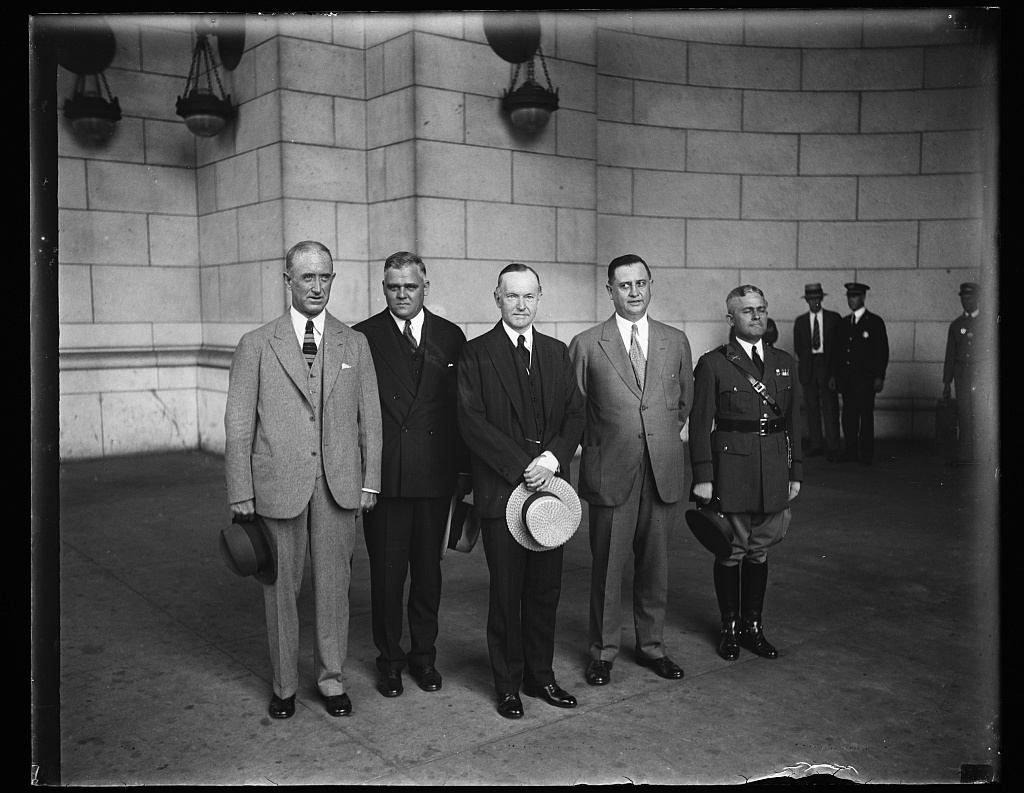
President Coolidge stands beside two of his greatest partners in policy: Secretary Frank B. Kellogg in foreign affairs and Secretary Andrew W. Mellon in domestic business, particularly tax policy.

President Coolidge stands beside two of his greatest partners in Administration policy: Secretary Frank B. Kellogg, in foreign affairs, and Secretary Andrew W. Mellon, in domestic business, especially on taxes and budgetary policy.

Taken the following year, 1929, as President Coolidge steps aside from the Presidency, Colonel Starling and Everett Sanders stand with their Chief one last time as the Coolidge years come to a close.

Taken in 1929, as President Coolidge steps aside from the Presidency, Colonel Starling, Everett Sanders and two unidentified men stand with their Chief one last time as the Coolidge years come to a close.