“Calvin Coolidge and Race: His Record in Dealing with the Racial Tensions of the 1920s”

This excellent essay by Alvin S. Felzenberg highlights in bold relief how courageous and characteristically sensible Mr. Coolidge was when it came to race. It is widely unknown that he was the first President to push forward a national discussion on these issues, not Lyndon Johnson or any of Coolidge’s five predecessors. But that is not all he did. He also publicly confronted the Klan in public speeches and events around the nation, he acted decisively to end segregation policies inherited from the Wilson years and he reminded Congress of their Constitutional duty to uphold equality under the law through anti-lynching legislation. Even more, his correspondence with various folks looks like a “who’s who” of minority leaders of the 1920s. He commuted the prison sentence of Marcus Garvey. He detested the veiled racism of affirmative action and made sure that his appointment of people like Perry Howard to the Justice Department were made for their character and competence not their color. He kept an open door in his pursuit of advice from attorneys like Ruth W. Whaley and educators like Howard University’s Emmett Scott, who praised Coolidge’s defense of “ordered liberty,” understood by Americans at the time as responsible self-government. “Law and order” for “blacks” was not a racist code phrase, it was that wonderful coupling of freedom with responsibility. Scott continued,

This address brought great encouragement to thoughtful representatives of the twelve million colored people of the United States. The principles above stated by you include most or all of what they hold near and dear in connection with their citizenship. The one thing for which they have struggled since the Republican Party conferred upon them … freedom and enfranchisement has been this American ideal of “ordered liberty.” The colored people suffer many disabilities among them persecution by a hooded order which seeks to exclude them from the privileges of American citizenship. They also suffer from discrimination in the Federal service and from segregation in many Departments of our government. This discrimination is a legacy which has come to your administration. They know Calvin Coolidge. They know his traditional friendship and they know of his distinguished services in behalf of their race.

Perhaps most importantly, while one President (Woodrow Wilson) was promoting a truly bigoted spin on America’s past, the novel turned film “The Birth of a Nation,” Senator Coolidge was instrumental in shutting it down in Boston theaters. His unbiased respect for all people was simply who he was, not a device to win political power. He is ignorantly attacked today as another racist relic of our prejudiced past. The truth, if actually sought however, shows that minorities had few friends as brave and loyal as Mr. Calvin Coolidge.
Reagan on the Thirtieth President

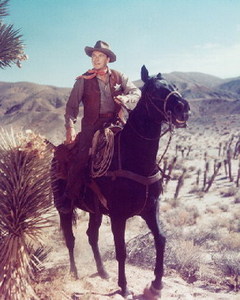
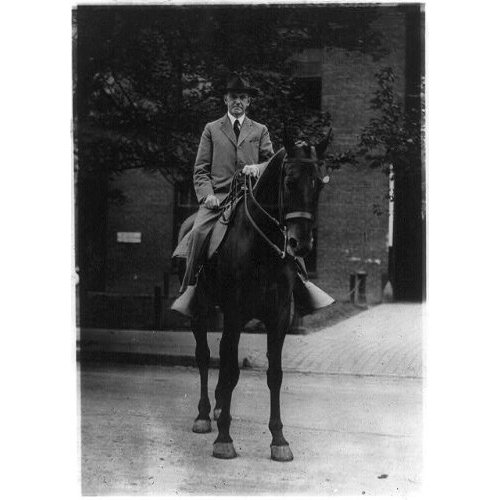
When Reagan and Coolidge come up in the same sentence, it usually has something to do with Reagan’s placement of Coolidge’s portrait in the Cabinet Room shortly after Reagan’s inauguration in 1981. But not as well known is the radio program in which Reagan explained his reasons for recognizing the hidden worth of this predecessor. If the press corps had been tuning in during August of 1975, they might have better understood Reagan’s actions six years later. They might also have paused to consider what Coolidge accomplished, but then that could be asking too much. On this sixth day of February, Reagan’s one hundred and second birthday, here is an excerpt from that program entitled “Images,”

“Some day it might be worthwhile to find out how images are created–and even more worthwhile to learn how false images come into being…All of us have grown up accepting with little question certain images as accurate portraits of public figures–some living, some dead. Very seldom if ever do we ask if the images are true to the original. Even less so we question how the images were created. This is probably more true of Presidents in our country because of the intense spotlight which centers on their every move…One was Calvin Coolidge the dry, unexciting New Englander who is more often than not remembered as a lacklustre almost laughable figure who just happened to live in the White House for a while…Are these…images true or false? I’ll list a few facts & you can figure out the answer for yourself. Calvin Coolidge–the man H. L. Mencken said had been weaned on a pickle. Was he a kind of do nothing President in one of those lulls in our Nation’s history? If so we should have such lulls today. There was better than full employment–jobs were competing for workers. The cost of living went down 2.3%, the Federal budget was actually reduced and some of the National debt accumulated in WWI was paid off. During Silent Cal’s presidency the number of automobiles owned by Americans tripled and a great new industry, radio, went from $60 million in sales to $842 million. They laughed when Calvin Coolidge said ‘the business of America is business,’ but we had true peace & prosperity–those things we are promised so often but given so seldom…Well as I say you can make up your own mind about the images versus the man but maybe we ought to go back and see what they did that we aren’t doing. This is Ronald Reagan–Thanks for listening” (“Reagan In His Own Hand” pp.252-3). Image Image

On History

“We review the past not in order that we may return to it but that we may find in what direction, straight and clear, it points into the future” — CC, “The Green Mountains” on the occasion of the one hundred and fiftieth anniversary of the settlement of Burlington, Vermont, June 12, 1923. The entire address can be found in “The Price of Freedom” (Amsterdam: Fredonia Books, 2001, a reprint of the 1924 edition), p.357.

The past year of political campaigning presented plenty of straw man arguments. One of the most frequently repeated is the claim that some still stand in the way of progress as a nation because they are stuck in the past. They wish to return the country to a time of failed policies, economic inequality and corruption, it is claimed. The twenties are a favorite “proof” of that false premise. But when historical facts are actually consulted, the results show a stunning and genuine success:

The national debt had skyrocketed from $5 billion in July 1917 to $14 the following year and over $27 the summer after that as a result of the First World War. Unemployment stood at 11.7 % by 1921. Consumer price inflation had jumped to well above 20%. Real suffering was experienced not only by returning veterans unable to find employment but also entire sectors of economic activity. Then came the most decisive turn-around policy in recent history: Spending, which stood at $18.5 billion, was actually hacked to $6.4 within one year. By 1923 spending had been chopped down to $3.3 billion. The top tax rate, which had been a stifling 77% under Democrat Woodrow Wilson, was forced down with across-the-board cuts to 25% during the Coolidge years. Unemployment fell to 3.2%. The national debt was paid down to $16.9 billion by the end of Coolidge’s term. This means debt reduction and tax cuts can be accomplished simultaneously. Inflation plummeted and revenues soared to unprecedented levels: the top income earners were paying over $700 billion by the end of the decade. But weren’t “the rich” getting richer off the backs of the poor? Hardly! By 1928, the top income earners carried 61% of the tax burden while the poorest paid 1% or none at all. Gross National Product grew annually at a robust 4.7% every year of the Coolidge Presidency. 1.9% is neither recovery nor growth. Incomes all across the spectrum went up as wages increased with the ability to keep more of one’s earnings. The tax rolls were hardly static: those earning over $100,000 (the top tier in the twenties) experienced an average income increase of 15%, while the group grew nearly four times its size at the start of the decade. The number of those in the “middle class” (earning between $10-100,000) rose 84% while those at the bottom shrank. Upward mobility and sound economics were the hallmarks of the Coolidge years. Success was no less real than it was for us during the Bush years. The subsequent recession which deepened into more than a decade of Depression did not come from these policies. That is where modern candidates try to make hay out of historical ignorance. Herbert Hoover ushered in a decisive sea change in economics when he came to office in March 1929. The market continued to roar for the next seven months in spite of it. By then, it was Hoover who forgot what made the widespread success of the decade possible. Spending went back up 47%, taxes increased 63% and the Hoover’s interventionist style followed by the massive legislative obstructions under FDR prevented as swift a recovery as was accomplished in 1922. So, next time President Obama or any other uninformed “expert” on history asks if we want to emulate the “failures” of the Twenties…let’s take them up on that offer.