“Does cutting taxes really shrink government?”

“Does cutting taxes really shrink government?”

Three weeks before the passage of the Revenue Act of 1928, the President was analyzing the results of his administration’s formula: cut taxes, enforce constructive economy and retire debt with surplus. The President was not pleased, however. The reason was not in making the case for cuts and shrinking expenditures. The reason was not in retiring the national debt, which would be reduced $5.4 billion over the course of five and a half years, a feat not replicated since. Had the rate of reduction been constant, the debt would have been eliminated in just over fifteen years. The reason was in the incessant temptation by those around him to spend the “surplus revenue.”

The administration’s plan had worked beyond everyone’s expectations. It had worked so well that Congress was eager to start spending all that extra money. The President wanted it returned in cuts and put toward the debt. It was becoming increasingly clear that tax cuts were going to be tougher and tougher to sell as surpluses grew larger and larger. Ironically, thanks to Coolidge being “too successful,” spending would be even harder to restrain in the future than it was in the present.

The fiscal year would yield a surplus of $398,000,000, well beyond even the President’s initial figures. But as Coolidge lists all the projects Congress wanted, it not only made future tax reductions impossible but would have overturned them with increases to cover government profligacy: the flood bill, $500 million, the farm bill, $400 million, the Boulder Dam bill, $125 million, the pension bill, $15 million, the salary bill, $18 million, the Muscle Shoals bill, $75 million, the Post Office pay bill, $20 million, a reduction of post payments costing another $38 million, the corn borer, $7 million, and $6 million for “vocational training,” just to name a few. Meanwhile, the President observed, tax reduction between $203 and $289 million remained before Congress as he spoke. “If all these bills went through and became law I should think it would not only endanger tax reduction at the present time, but would make necessary the laying of additional taxes.” This was an impermissible step backward, not forward. As the President reminded reporters early the following month, “the surplus was secured, of course, by very careful management of expenditures…” not by spending it all away. 

The size of the surplus and the urge to spend it, however strong, did not make indulging the desire any more responsible with the people’s money than in lean years. Government, not unlike children, has to learn self-control. The existence of “more somewhere” does not free government to find it and spend it with impunity.

“We must have no carelessness in our dealings with public property or the expenditure of public money. Such a condition is characteristic either of an undeveloped people, or of a decadent civilization…We must have an administration which is marked, not by the inexperience of youth, or the futility of age, but by the character and ability of maturity. We have had the self-control to put into effect the Budget system, to live under it and in accordance with it. It is an accomplishment in the art of self-government of the very highest importance. It means that the American Government is not a spendthrift, and that it is not lacking in the force or disposition to organize and administer its finances in a scientific way. To maintain this condition puts us constantly on trial. It requires us to demonstrate whether we are weaklings, or whether we have strength of character” — President Coolidge, June 30, 1924.

Amity Shlaes’ thought-provoking piece recalls that even good policies can carry unintended side effects that have the potential to destroy the gains made. Tax cuts are but one part of the whole. President Coolidge knew this firsthand and if trends back toward expansive government are to be checked, it will demand from us, informed and engaged citizens, the same unwavering self-restraint and courage he demonstrated. The times also require statesmen, mature men and women, who take the whole task seriously of restoring limited government, not merely one element of tax policy. Tax cutting without the people’s determination for making government shrink can be cast aside when expediency calls it time to spend. Such was the bitter pill of the Reagan years. When what is easy is allowed to prevail over what is right, self-government suffers and liberty loses.
On Responsibilities

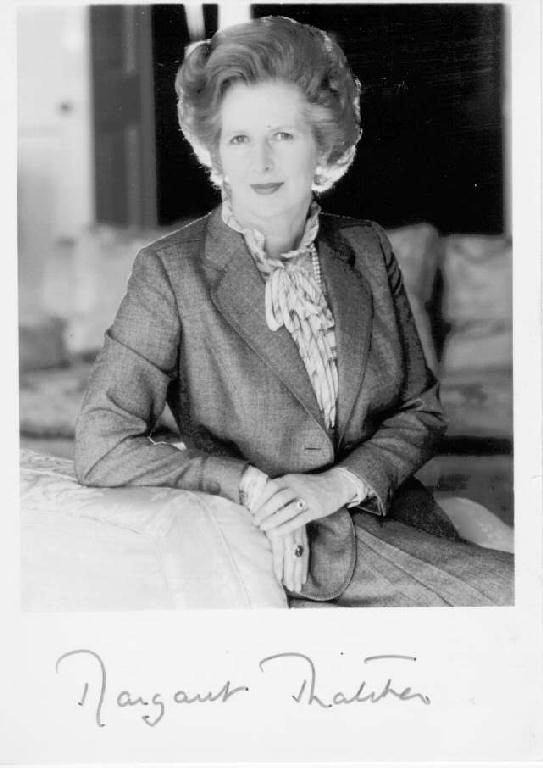
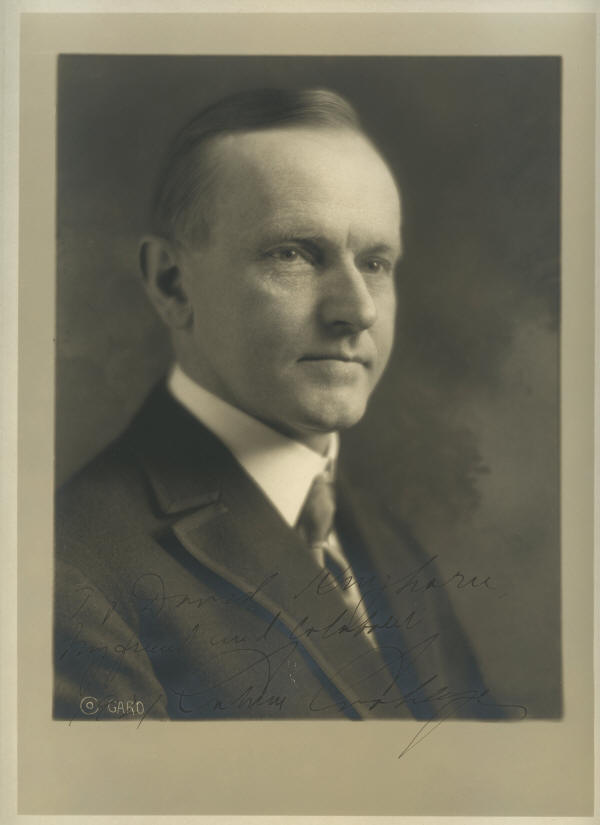
As today marks the passing of Baroness Margaret Thatcher, the “Iron Lady,” who served as Britain’s Prime Minister from 1979 to 1990, it is necessary to remember that her convictions were not new. They were shared by none other than Americans like President Coolidge. Thatcher was born in a relatively small market town called Grantham in England, in the second year of Coolidge’s presidency, during the same fall that his secretary, C. Bascom Slemp, was preparing a collection of his speeches, which would be published the next year as “The Mind of the President.” In that collection, Coolidge would express an unshakable optimism in the ability of Americans to govern themselves, saying, “The institutions of our country rest upon faith in the people. No decision that the people have made in any great crisis has ever shown that faith in them has been misplaced. It is impossible to divorce that faith which we have in others from the faith which we have in ourselves.”

Perhaps entirely unaware of these words, Prime Minister Thatcher would echo that same confidence in her people to retain their self-sufficiency, “If our people feel that they are part of a great nation and they are prepared to will the means to keep it great, a great nation we shall be, and shall remain.” She would affirm in the same 1980 speech, “[I]t is not the State that creates a healthy society. When the State grows too powerful people feel that they count for less and less. The State drains society, not only of its wealth but of initiative, of energy, the will to improve and innovate as well as to preserve what is best. Our aim is to let people feel that they count for more and more. If we cannot trust the deepest instincts of our people we should not be in politics at all. Some aspects of our present society really do offend those instincts. Decent people do want to do a proper job at work, not to be restrained or intimidated from giving value for money. They believe that honesty should be respected, not derided. They see crime and violence as a threat not just to society but to their own orderly way of life. They want to be allowed to bring up their children in these beliefs, without the fear that their efforts will be daily frustrated in the name of progress or free expression.”

Coolidge in 1914, as Thatcher’s father was going to war, would praise self-sufficiency and warn against the destructive actions of government activity, “The people cannot look to legislation generally for success. Industry, thrift, character, are not conferred by act or resolve. Government cannot relieve from toil. It can provide no substitute for the rewards of service. It can, of course, care for the defective and recognize distinguished merit. The normal must care for themselves. Self-government means self-support.”

Thatcher would again sound familiarly Coolidge-like in a 1987 interview, when she observed, “I think we have gone through a period when too many children and people have been given to understand ‘I have a problem, it is the government’s job to cope with it!’ or ‘I have a problem, I will go and get a grant to cope with it!’; ‘I am homeless, the government must house me!’ and so they are casting their problems on society and who is society?

“There is no such thing! There are individual men and women and there are families, and no government can do anything except through people and people look to themselves first.

“It is our duty to look after ourselves and then also to help look after our neighbour and life is a reciprocal business and people have got the entitlements too much in mind without the obligations.” 

Coolidge, in retirement, would presage the danger of the entitlement mindset and its parent, unrestrained government spending, “This country was not made on the theory that we should ‘eat, drink, and be merry, for tomorrow we die’…Instead of falling back and falling down on the claim that the world owed them a living, they moved forward and moved up on the principle that they owed the world the duty of providing for themselves…One of the most astounding spectacles is the complacency with which people permit themselves to be plundered by extravagant governmental expenditure under the pretense of taxing the rich to help the poor. The poor are not helped but hurt…A higher tax means real wages are lower. The cost of living is higher. The chance to work is less. Every home is burdened. Its value is decreased. The Congress and the legislatures know these results of extravagance…Those who demand appropriations inspire all the fear. Aggregate state and town debt, national and local taxes are increasing enormously. Unless the people resist vigorously and immediately they will be overwhelmed.”

Speaking again, forty-nine years later, Thatcher explained the same harmful mentality underway in Britain, namely, “to add to public spending takes away the very money and resources that industry needs to stay in business let alone to expand. Higher public spending, far from curing unemployment, can be the very vehicle that loses jobs and causes bankruptcies in trade and commerce. That is why we warned local authorities that since rates are frequently the biggest tax that industry now faces, increases in them can cripple local businesses. Councils must, therefore, learn to cut costs in the same way that companies have to.”

Baroness Thatcher is no longer with us but her principles endure. They remain necessary no less now than in 1980 or in 1925. They are necessary because they truly understand human nature and are grounded in the moral responsibilities of people both to themselves and to each other. For Coolidge, in the same year Thatcher was born, declared, “I favor the policy of economy, not because I wish to save money, but because I wish to save people. The men and women of this country who toil are the ones who bear the cost of the Government. Every dollar that we carelessly waste means that their life will be so much the more meager. Every dollar that we prudently save means that their life will be so much the more abundant…If extravagance were not reflected in taxation, and through taxation both directly  and indirectly injuriously affecting the people, it would not be of so much consequence. The wisest and soundest method of solving our tax problem is through economy…Whenever taxes become burdensome a remedy can be applied by the people; but if they do not act for themselves, no one can be very successful in acting for them.”

Such is the benefit coupled with the responsibility of self-government taught by British Prime Minister Thatcher and the American who preceded her, President Calvin Coolidge.

ImageImage


Remembering a President’s Inaugural

             Image

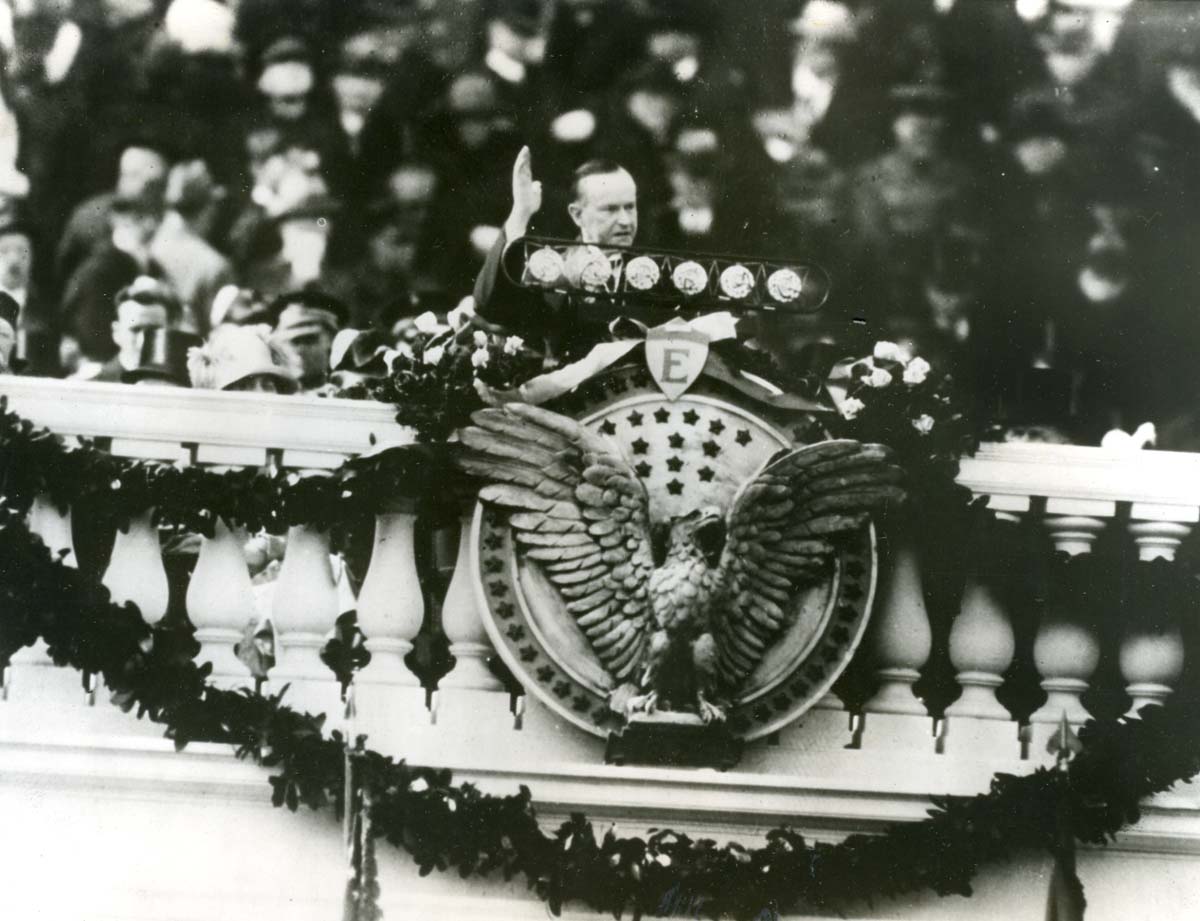
This morning while waiting in line, a news network reminded its viewers of the March 4, 1933 inaugural address of Franklin D. Roosevelt. To hear the reverence in the voices of those on the air, one would think any history worth remembering began with that infamously famous Presider over Depression, New Deal and World War. The thirty-six March 4th inaugurations before that time — 144 years of history — simply aren’t worth mentioning. One of those neglected thirty-six deserves mention here. In fact, it deserves our attention and study. It was March 4, 1925, the occasion of President Coolidge’s first formal inauguration after a resounding electoral victory in his own right the previous November. It is on this day, eighty-eight years ago, that he declared,

          If extravagance were not reflected in taxation, and through taxation both directly and indirectly injuriously affecting the people, it would not be of so much consequence. The wisest and soundest method of solving our tax problem is through economy. Fortunately, of all the great nations this country is best in a position to adopt that simple remedy. We do not any longer need war-time revenues. The collection of any taxes which are not absolutely required, which do not beyond reasonable doubt contribute to the public welfare, is only a species of legalized larceny. Under this Republic the rewards of industry belong to those who earn them. The only constitutional tax is the tax which ministers to public necessity. The property of the country belongs to the people of the country. Their title is absolute. They do not support any privileged class; they do not need to maintain great military forces; they ought not to be burdened with a great array of public employees. They are not required to make any contribution to Government expenditures except that which they voluntarily assess upon themselves through the action of their representatives. Whenever taxes become burdensome a remedy can be applied by the people; but if they do not act for themselves, no one can be very successful in acting for them.

Those are words worth remembering today. When self-government is responsibly exercised in this way, we have no reason to fear for the continuance of liberty under law.