On Expecting Too Much Of Government…And Too Little Of Ourselves

Image

“If some current statements are to be taken seriously we are expecting too much from free government…We demand entire freedom of action and then expect the government in some miraculous way to save us from the consequences of our own acts. We want the right to run our own business, fix our own wages and prices, and spend our own money, but if depression and unemployment result we look to government for a remedy.

“We insist on producing a farm surplus, but think the government should find a profitable market for it. We overindulge in speculation, but ask the government to prevent panics. Now the only way to hold the government entirely responsible for conditions is to give up our liberty for a dictatorship. If we continue the more reasonable practice of managing our own affairs we must bear the burdens of our own mistakes. A free people cannot shift their responsibility for them to the government. Self-government means self-reliance” — Calvin Coolidge, October 17, 1930

“When people are bewildered they tend to become credulous. We are always in danger of expecting too much of the government. When there is distress such expectations are enlarged…That is the danger now…A large expenditure of public money to stimulate trade is a temporary expedient which begs the question…Business does not need more burdens but less. The sound way to relieve distress is by direction action [by people themselves]…The people have more power than any government to restore their own prosperity” – November 28, 1930

“Some confusion appears to exist in the public mind as to the proper function of the national government in the relief of distress, whether caused by disaster or unemployment. Strictly construed, the national government has no such duties. It acts purely as a volunteer…In the case of unemployment, relief is entirely the province of the local government which has agencies and appropriations for that purpose…Every government should spend its own money. Otherwise the appropriating agency has no control over the disbursing agency and no check on extravagance” – December 5, 1930.

“…[I]nstead of letting the market take its own course there is always a great temptation to try some artificial remedy. Of late this has run to the device of having the public treasury assume in some way the burden of absorbing the losses of those who have suffered. It is the duty of the government to provide highways and waterways…But local government must relieve the needy. In the general field of business, whether of industry or agriculture, government interference in an attempt to maintain prices out of the treasury is almost certain to make matters worse instead of better. It disorganizes the whole economic fabric. It is a wrong method because it does not work. It is better for every one in the end to let those who have made losses bear them than to try to shift them on to some one else. If we could have the courage to adopt this principle our recovery would be expedited. Price fixing, subsidies and government support will only produce unhealthy business” — December 22, 1930.

“Another proposal to be made in the name of relieving unemployment will undoubtedly be an extension of government ownership…The government has never shown much aptitude for real business…The most free, progressive and satisfactory method ever devised for the equitable distribution of property is to permit the people to care for themselves by conducting their own business. They have more wisdom than any government” — January 5, 1931.

“Left alone without the paralyzing interposition of the government, the people have a better opportunity for progress, prosperity and happiness than can ever be secured from any official bureau” – March 27, 1931.

“With the convocation of representatives of various lines of industry have come proposals for controlling and standardizing business. Almost all these suggestions are for artificial rules of conduct to save a situation from the inevitable consequences of the force of natural laws. If business is to be controlled from the outside, the liberty of action and power of initiative will be greatly circumscribed. If standardization is adopted in its entirety, the result is rigid fossilization which prevents progress. Neither the state nor the Federal governments can supply the information and wisdom necessary to direct the business activity of the nation…The experience, skill and wisdom necessary to guide business cannot be elected or appointed. It has to grow up naturally from the people. The process is long and fraught with human sacrifice, but it is the only one that can work” — May 1, 1931.

“In the end the security of nations and men must be sought within themselves by observing the command to do justice, love mercy and walk humbly” — May 12, 1931.

“The centralization of power in Washington, which nearly all members of Congress deplore in their speech and then support by their votes, steadily increases…The farmer who was the shining example of sturdy independence has intrusted the government with finding him a market. Now the wage earner is to look to the same source to find employment. Individual self-reliance is disappeared and local self-government is being undermined.

“A revolution is taking place which will leave the people dependent upon the government and place the government where it must decide questions that are far better left to the people to decide for themselves. Finding markets will develop into fixing prices, and finding employment will develop into fixing wages. The next step will be to furnish markets and employment, or in default pay a bounty and dole. Those who look with apprehension on these tendencies do not lack humanity, but are influenced by the belief that the result of such measures will be to deprive the people of character and liberty” – June 20, 1931.
On Wages and Upward Mobility

Image

Speaking in Plymouth, Massachusetts, on September 1, 1919, Governor Calvin Coolidge could have been critical of national conditions, its economic disparity and bleak situation coming out of war and into a still very uncertain peace. It remained to be seen how smooth an adjustment into peacetime America could accomplish. There was much unrest throughout the country and the Wilson administration’s Progressive rhetoric combined with the Justice Department’s prosecution of political threats continued to keep Americans on edge, a palpable anxiety which hovered over the Nation like a cloud.

1919 was not only the year of the Boston Police Strike but witnessed steel, coal and general strikes from Seattle to Johnstown, Pennsylvania. The immense power of the strikers to halt operations throughout the country reminded people they were not to be crossed without serious consequences. The incessant claims that ours was an unfair and inequitable system took a special kind of courage to publicly confront. Governor Coolidge, eight days before most of Boston’s law enforcement would vote to walk away from their duty, would address those gathered in Plymouth in full display of just that kind of courage. He would tackle the heart of the issue head-on covering the issues of labor, wages, equality and opportunity.

He began with sincere praise for America’s exceptionalism, “…[F]or it was here that for the first time in history a government was founded on a recognition of the sovereignty of the citizen which has irresistibly led to a realization of the dignity of his occupation….For the first time in five years it comes at a time when the issue of world events makes it no longer doubtful whether the American conception of work as the crowing glory of men free and equal is to prevail over the age-old European conception that work is the badge of the menial and the inferior. The American ideal has prevailed on European battle-fields through the loyalty, devotion, and sacrifice of American labor. The duty of citizenship in this hour is to strive to maintain and extend that ideal at home.”

In Coolidge’s estimation, unceasing discontent and perpetually-stirred criticism rendered no benefit to anyone and solved nothing — in fact, they were drains of energy when the challenges to be faced demanded constructive effort and optimism on the part of everyone. Creating a false perception that forced Americans into fixed classes to be constantly pitted against each other was not only dishonest but destructive if improvement and progress were to be continued. Fostering dissension and enmity between those perceived to be “Haves” and “Have Nots” was a denial of the Founding and a deceitful manipulation of the real property owners America empowers, the people themselves.

Coolidge continued, “We have known that political power was with the people, because they have the votes. We have generally supposed that economic power was not with the people, because they did not own the property. This supposition, probably never true, is growing more and more to be contrary to the facts. The great outstanding fact in the economic life of America is that the wealth of the Nation is owned by the people of the Nation. The stockholders of the great corporations run into the hundreds of thousands, the small tradesmen, the thrifty householders, the tillers of the soil, the depositors in savings banks, and the now owners of government bonds, make a number that includes nearly our entire people.”

Citing the figures of Massachusetts alone proved this assertion and laid bare the simplistic notion that justice could be legislated after “assuming that we can take from one class and give to another class.” The “property class” was already one and the same as the “employed class.” The interdependence of interests made it impossible to separate them and preserve what was good or just for either one. Reflecting on the fact that Massachusetts was an industrial state, he raised a series of questions that illustrated the path America would have to take to grow. It lay not in the direction of jealousies, hatred and class warfare but in expanding opportunity, not regulation, and raising prosperity for everyone through policies that encourage profits and its by-product, employment. He asked, “How can our people be made strong? Only as they draw their strength from our industries. How can they do that? Only by building up our industries and making them strong. This is fundamental. It is the place to begin. These are the instruments of all our achievement. When they fail, all fails. When they prosper, all prosper. Workmen’s compensation, hours and conditions of labor are cold consolations, if there be no employment. And employment can be had only if some one finds it profitable. The greater the profit, the greater the wages.”

In this economic axiom, Coolidge made clear the need, not to demonize profits, but to welcome them as a legitimate part of unchaining America’s economic potential. Coercive legislation was not the answer to higher wages. Clearing away the hampering clutter of controls that made people’s participation in the marketplace unprofitable was the solution. This raised wages. The increase in value of each individual’s labor is not determined by penalizing growth and punishing employment. The increase in value manifests itself in higher wages. The value of the individual’s work is as limitless as that person’s potential. Yet, it grows in proportion to the profitability of the enterprise to which a person’s labor is invested. If profits are suppressed, expansion of opportunity stops and, sooner or later, so does employment itself.

Governments, inept at accurately gauging the value of labor cannot set wage rates without harming growth and continued employment. In short, Governments in the business of setting wages always hurt the most vulnerable Americans, the very people wage laws claim to be helping.

Coolidge reminds us of these obvious and yet repeatedly forgotten truths. If we genuinely want everyone to prosper, we can only accomplish it by building up, not tearing down, America’s engine of growth. We do this not through constant appeals to prejudice and anger but through constructive work, encouraging the opportunities to be found in a marketplace of growing value and expanding opportunity. In such an environment, employment, higher wages, increasing profits and upward mobility are made possible for anyone with the will and determination to achieve his or her highest potential. That potential, the ability to work for yourself and keep the rewards of that labor is an American concept. It is through this recognition of the dignity of work, what Coolidge called the “crowning glory” of a free and equal people, that so extraordinary a success has been enjoyed here in America.

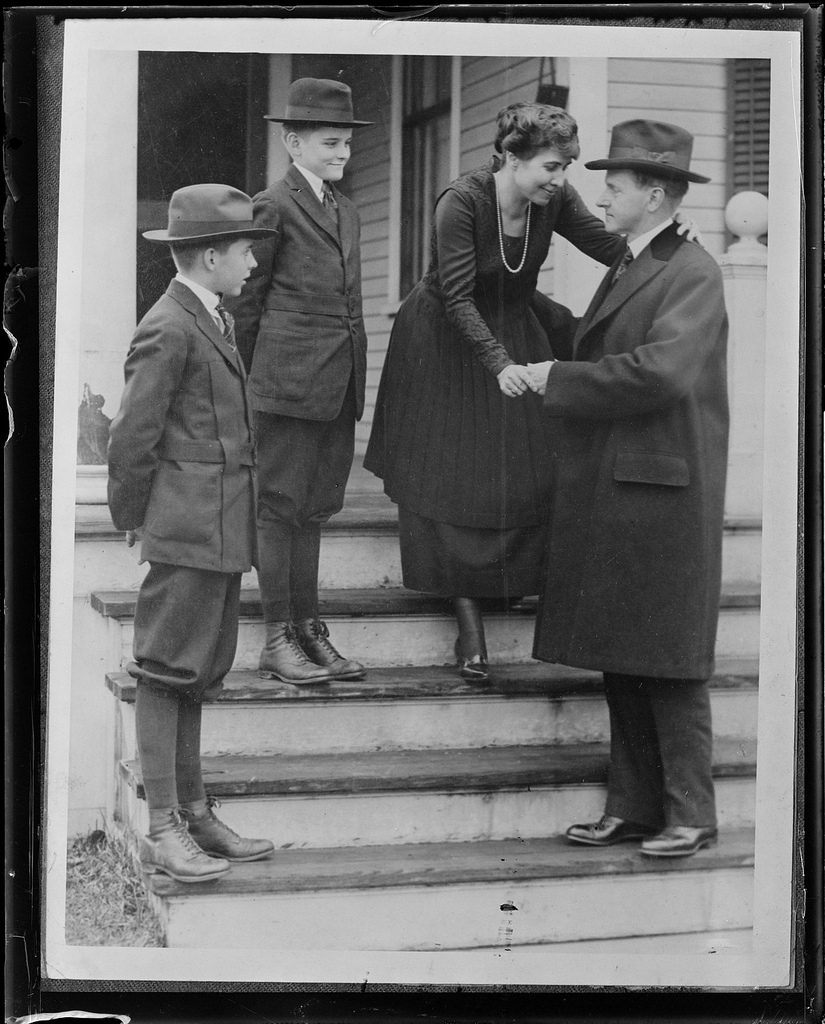
Governor CC at home

Economic power cannot be repeatedly stifled and thwarted without an accompanying loss to the people’s political power. Both powers are inseparably joined. While the force of Government fails whenever it attempts to harness capitalism for its own, vastly different ends, America still proves that freedom works.

On Term Limits

ImageOn August 20, we spoke of Calvin Coolidge’s thoughts on the limits of Presidential authority. It would be another twenty years before the passage of the Twenty-Second Amendment which codified President Washington’s self-imposed custom of serving only two terms. Attempted by a handful of previous Presidents, including the most recent third run of Theodore Roosevelt in 1912, it was actually shattered by Franklin Roosevelt in 1940, who would win a fourth term in 1944. After FDR’s death in 1945, Vice President Truman succeeded to the office as a majority of Americans had come to see the wisdom of Washington’s custom and move to protect it with Constitutional provision. Passing the Congress in March 1947, and securing final ratification by two-thirds (thirty-six) of the states on February 27, 1951, Section 1 of the Amendment made clear it would not apply to the current occupant, President Truman, declaring:

“No person shall be elected to the office of the President more than twice, and no person who has held the office of President, or acted as President, for more than two years of a term to which some other person was elected President shall be elected to the office of the President more than once. But this Article shall not apply to any person holding the office of President when this Article was proposed by the Congress, and shall not prevent any person who may be holding the office of President, or acting as President, during the term within which this Article becomes operative from holding the office of President or acting as President during the remainder of such term.”

Truman would be free to run again in 1952, but after losing the New Hampshire primary to Senator Kefauver, he reluctantly bowed out, announcing soon thereafter he would not be a candidate for another term. What one can do is not equivalent to what one should do.

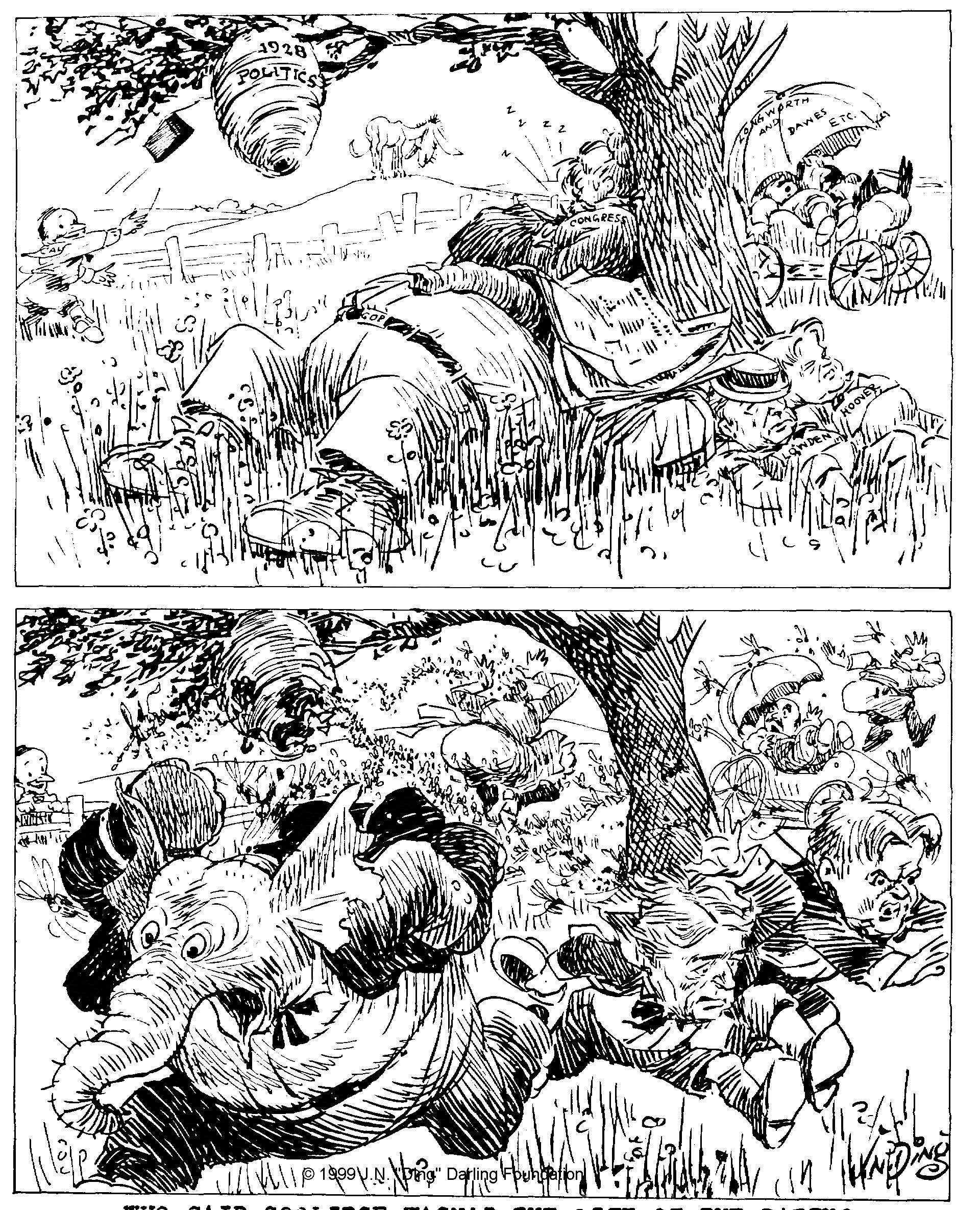
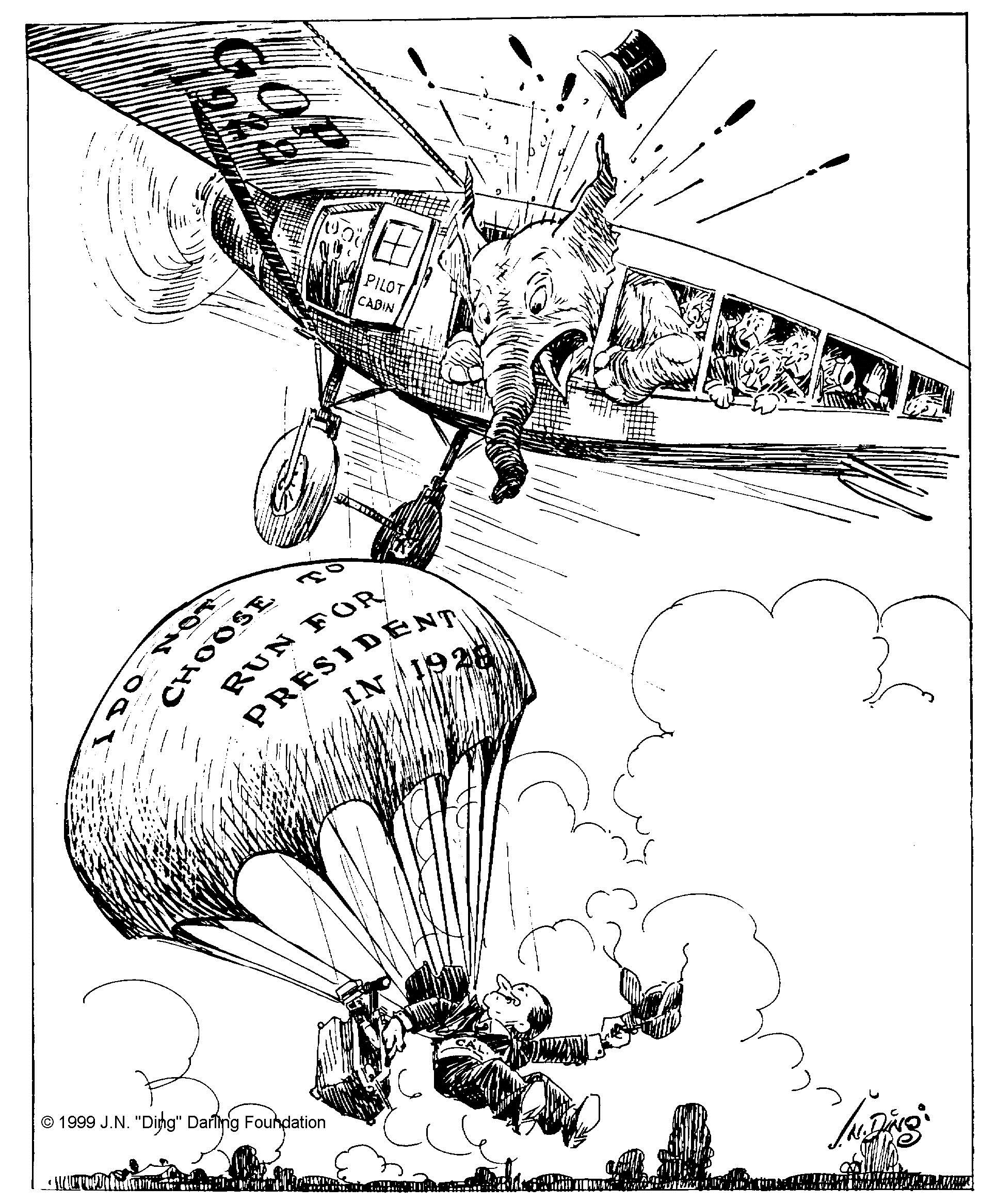
What did Coolidge have to say about the one hundred and thirty year example set by Washington? As already noted, it would be two decades before the passage of the Twenty-Second Amendment. However, it may come as a surprise to us now that talk of formal limits on a third term were gaining steam in the months leading up to Coolidge’s notorious press conference on August 2, 1927. Few Presidential statements caused as much uproar in those years as did his “I do not choose to run for President in nineteen twenty-eight.” Speculation was rampant as to what Coolidge actually meant and what he would do next. If he would not be the nominee, who would?ImageThree interpretations quickly took shape, each explained by scholars Cyril Clemens and Athern Daggett in the June 1945 issue of The New England Quarterly. First, Coolidge neither wanted nor would accept renomination for the Presidency. Second, Coolidge, while not wanting the office, remained open to the prospect if the people renominated him. Third, Coolidge wanted to be President again but played politically coy to gain support.

The final interpretation, generally held by those who perceived him to be a conniving and selfish politician, like any other, attributes motives to the man that simply do not correspond to the facts. There was no question Coolidge would have had renomination unopposed in 1928. He had two, if not three, potential challengers heading into 1924, yet openly pursued the nomination at that time, even after tragically losing his youngest son and any pride he held for the “glory” of the Presidency. He had no reason to calculate for what was readily available to him four years later. But more to the point, his words and actions — in sum, his character — do not conform to this interpretation.

He meant what he said and his respect for the institutions and duties of the Office outweighed his own importance. He never saw himself as so great or indispensable that retaining power meant more to him than preserving the integrity of a very properly limited Presidential authority. He observed the virtue of self-control. It was through this self-imposed denial of executive power that the people were best served in their constitutional system. He had served his purpose, completing the work given for him to accomplish. The time had come for others to lead. It was indeed a wholesome thing to come back to the people from which he was drawn, serving as a private individual and nothing more. He knew that liberty is safeguarded when public servants know, and abide by, naturally imposed limits.

Some would mistakenly attribute a belief that serving four more years would constitute a violation of the “third-term policy” in Coolidge’s estimation. It did not. He had only served one full term and could legitimately stand for another. He made this plain in his Autobiography, “I do not think that the practice [no third term] applies to one who has succeeded to part of a term as Vice President.” If he had, Coolidge would have served ten years, longer than any other President up to that time. He would likely agree that Truman could have pursued a second term in 1952, while concurring that his choice to retire was the right one.

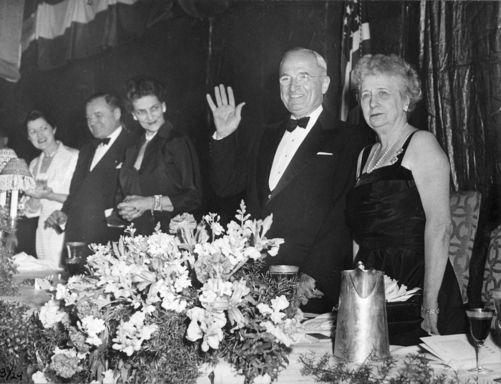
President Truman at the Jefferson-Jackson Dinner, March 29, 1952, at which he announced: "I shall not be a candidate for reelection. I have served my country long, and I think efficiently and honestly. I shall not accept a renomination. I do not feel that it is my duty to spend another 4 years in the White House."

President Truman at the Jefferson-Jackson Dinner, March 29, 1952, at which he announced: “I shall not be a candidate for reelection. I have served my country long, and I think efficiently and honestly. I shall not accept a renomination. I do not feel that it is my duty to spend another 4 years in the White House.”

The strength of our Republic, Coolidge understood, never rested on the coercion of legislation. Not even a Constitutional Amendment could correct human nature, as was evident for all to see during the fourteen years of Prohibition enforcement. It relied on the surpassing might of moral rectitude and religious character in the heart of each individual. It was this which gave force to the legal and constitutional framework of our nation, not the other way around. Our system was a moral agreement. It would fail without virtue in the people and those it chooses to lead. Laws, like people, had natural limits. As Coolidge would say of the Eighteenth Amendment, “[A]ny law which inspires disrespect for the other laws — and good laws — is a bad law.” It would prove destructive if people ignored the wisdom of self-denial by empowering one man with authority for an unlimited time.

Writing as much for the future as for the present, former President Coolidge shared the same suspicions articulated by the Founders whenever people are entrusted with unconstrained power for indefinite periods of time. “A President should not only not be selfish, but he ought to avoid the appearance of selfishness. The people would not have confidence in a man that appeared to be grasping for office. It is difficult for men in high office to avoid the malady of self-delusion. They are always surrounded by worshipers. They are constantly, and for the most part sincerely, assured of their greatness. They live in an artificial atmosphere of adulation and exaltation which sooner or later impairs their judgment. They are in grave danger of becoming careless and arrogant. The chances of having a wise and faithful public service are increased by a change in the presidential office after a moderate length of time.”

As a Washington Post editorial is the latest in a line of calls to repeal the Twenty-Second Amendment, the argument is put forth that democratic choice has been somehow circumvented by term limits. Subjecting Presidents to third or fourth-term rejection by voters would rather supply a greater check upon their abuse of power than reinforcing Washington’s rationale, he asserts. After all the only reason for limits in the first place was political partisanship, the writer incorrectly assumes. We would ask whether this opinion writer at the Post would still maintain this argument if, as the original Amendment provided, it did not apply to the current occupant, who would still be bound to term limits? Party politics was not the reason self-applied term limitations were established over two centuries ago.

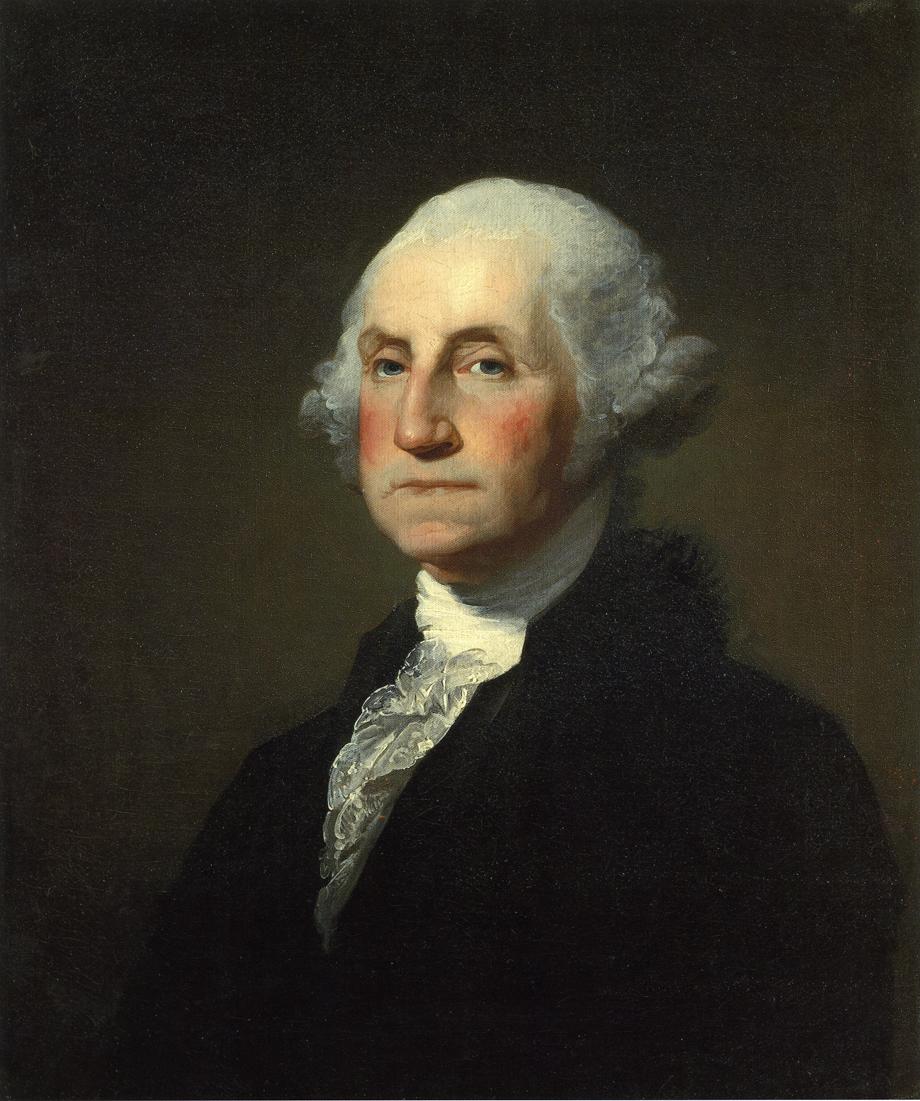
Gilbert_Stuart_Williamstown_Portrait_of_George_Washington

It is conveniently forgotten why Washington established this example, stating on that occasion,

“[I]t appears to me proper, especially as it may conduce to a more distinct expression of the public voice, that I should now apprise you of the resolution I have formed, to decline being considered among the number of those out of whom a choice is to be made…Satisfied that if any circumstances have given peculiar value to my services, they were temporary.”

For Washington, it was gratifying to him that “choice and prudence” invited him to lay down the Presidency. Though patriotic obligation did not forbid it, his wish to retire, wisdom and the people’s ability to choose did preclude it. These words, Coolidge later realized, were not unlike his own that August day in 1927. What one can do is not equivalent to what one should do. What is right for the country demands a subordination of self, these two men understood.

ImageThe power of the people to decide who leads is taken from them, whether a law exists or not, by the presumption that one man can be safely entrusted with additional power for an indeterminate time. “Emergencies” can be contrived and prolonged but experience confirms the soundness of Washington’s example. Even, as Coolidge pointed out, Presidential second terms have only served to confirm Washington’s sagacity. It is echoed in the self-denial of Coolidge, who surrendered the most powerful position in the world not because the law demanded it be done, though that would be reason enough for him. He surrendered its power because he approved of what Washington did, respected the credibility of the Office and subjected himself to the electoral judgment of the people. Free of a sitting President’s influence, however “in demand” he was, people could decide for themselves. They did so and vindicated the checks, even the “unwritten” ones, we impose on our leaders. He walked away gladly, relieved that America still regarded one of the most popular Presidents in history — himself — to be secondary to their commitment to limited government. As Clemens and Daggett ask, “Who can say that he did not choose wisely?”

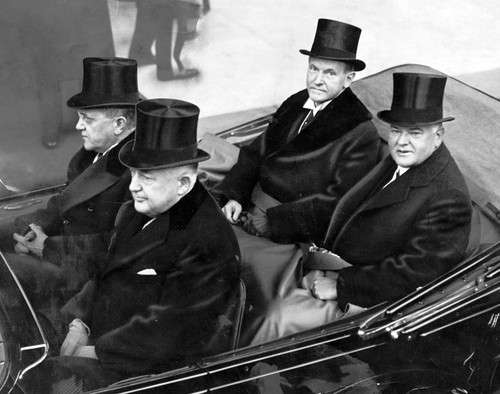
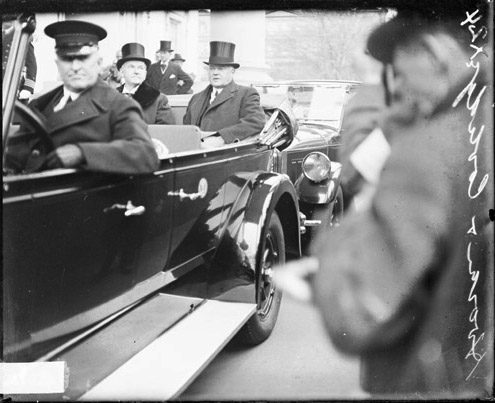
Outgoing President Coolidge looking past the White House to retirement, March 4, 1929

Outgoing President Coolidge, looking past the White House, to retirement, March 4, 1929