On Reverence

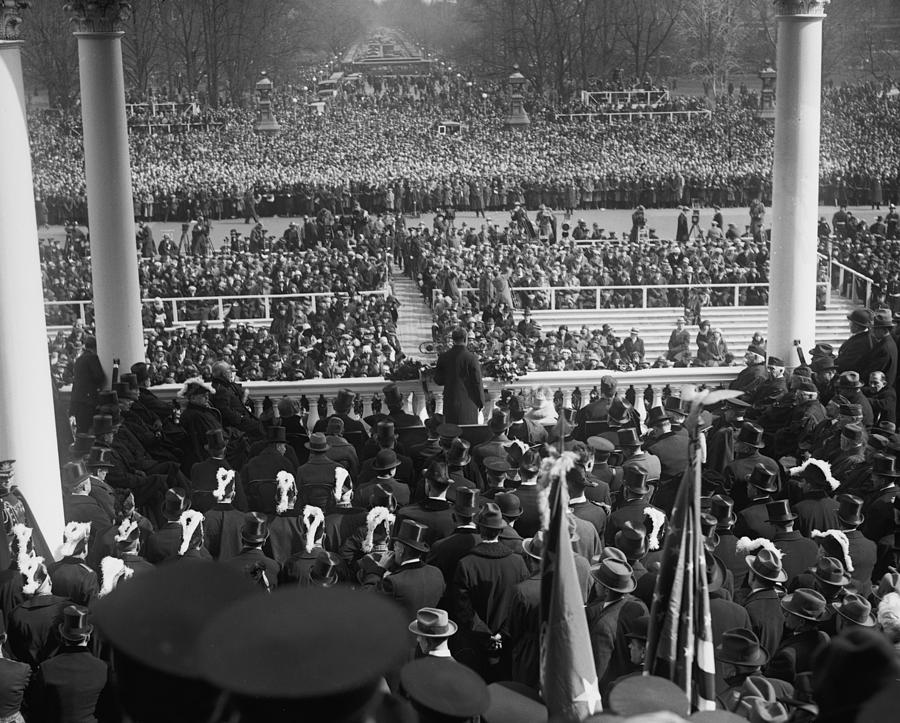
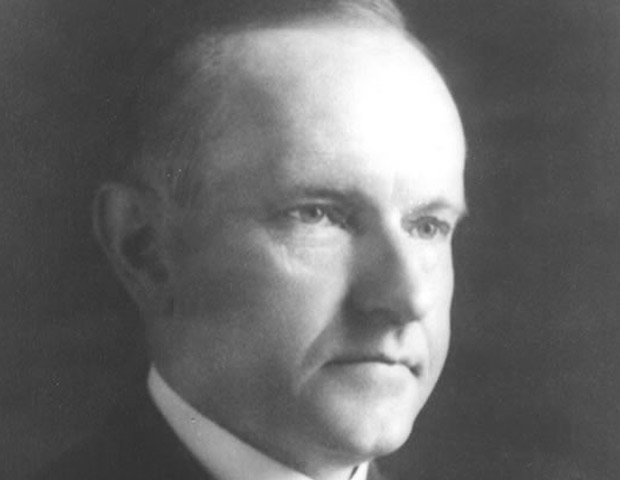
Few individuals had as remote a likelihood of reaching the highest position of leadership in America as Calvin Coolidge. He enjoyed none of the privileged connections of Franklin D. Roosevelt. He had little of the physical charm of a John F. Kennedy or Ronald Reagan. He never led armies to battle like Washington or Eisenhower did. Yet he understood that leadership is more than these. Leadership is not held by birthright. Leadership is not being served, but serving, as Christ made clear. Coolidge looked back over his public life and recognized that it was not his own greatness on display, for “[a]ny man who has been placed in the White House can not feel that it is the result of his own exertions or his own merit. Some power outside and beyond him becomes manifest through him. As he contemplates the workings of his office, he comes to realize with an increasing sense of humility that he is but an instrument in the hands of God” (The Autobiography, p.235).

To acknowledge such a truth is not the indication of weakness. Weakness is the hubris of far too many of our sitting politicians who have come back to their states and districts with something more dangerous than deluded self-importance. Passionately voicing our will, be it in phone calls, emails, or now in town halls is a personal affront to their superior ability and judgment. Senator McCain’s recent town hall comments about “not needing to be lectured to” (be it by the very people he is supposed to represent) reiterates the arrogance of the Washington culture. What is missing in nearly every area of culture is reverence. It is mocked and assaulted, but it anchors us to the solid foundation of our first principles.

Coolidge’s abiding sense of humble perspective is more than a cynical political calculation, it was a genuine attitude of reverence for the source of our nation’s power, success and future — none other than God Himself. Speaking to the Holy Name Society gathered in Washington eighty-nine years ago this September, a grateful President recognized something greater than he or the almighty establishment was there. He said, “The foundation of our independence and our Government rests upon our basic religious convictions. Back of the authority of our laws is the authority of the Supreme Judge of the world, to whom we still appeal for their final justification…It seems to me perfectly plain that the authority of law, the right to equality, liberty and property, under American institutions, have for their foundation reverence for God. If we could imagine that to be swept away, these institutions of our American government could not long survive. But that reverence will not fail. It will abide…The institutions of our country stand justified both in reason and in experience. I am aware that they will continue to be assailed. But I know they will continue to stand. We may perish, but they will endure. They are founded on the Rock of Ages.” 
Image

On the Power of the President

Image

“While it is wise for the President to get all the competent advice possible, final judgments are necessarily his own. No one can share with him the responsibility for them. No one can make his decisions for him. He stands at the center of things where no one else can stand. If others make mistakes, they can be relieved, and oftentimes a remedy can be provided. But he can not retire. His decisions are final and usually irreparable. This constitutes the appalling burden of his office. Not only the welfare of…his countrymen, but oftentimes the peaceful relations of the world are entrusted to his keeping. At the turn of his hand the guns of an enormous fleet would go into action anywhere in the world, carrying the iron might of death and destruction. His appointment confers the power to administer justice, inflict criminal penalties, declare acts of state legislatures and of the Congress void, and sit in judgment over the very life of the nation. Practically all the civil and military authorities of the government, except the Congress and the courts, hold their office at his discretion. He appoints, and he can remove. The billions of dollars of government revenue are collected and expended under his direction. The Congress makes the laws, but it is the President who causes them to be executed. A power so vast in its implications has never been conferred upon any ruling sovereign” — Calvin Coolidge, The Autobiography, pp.199-200 [1929] 

On Lafayette and Foreign Affairs

Image

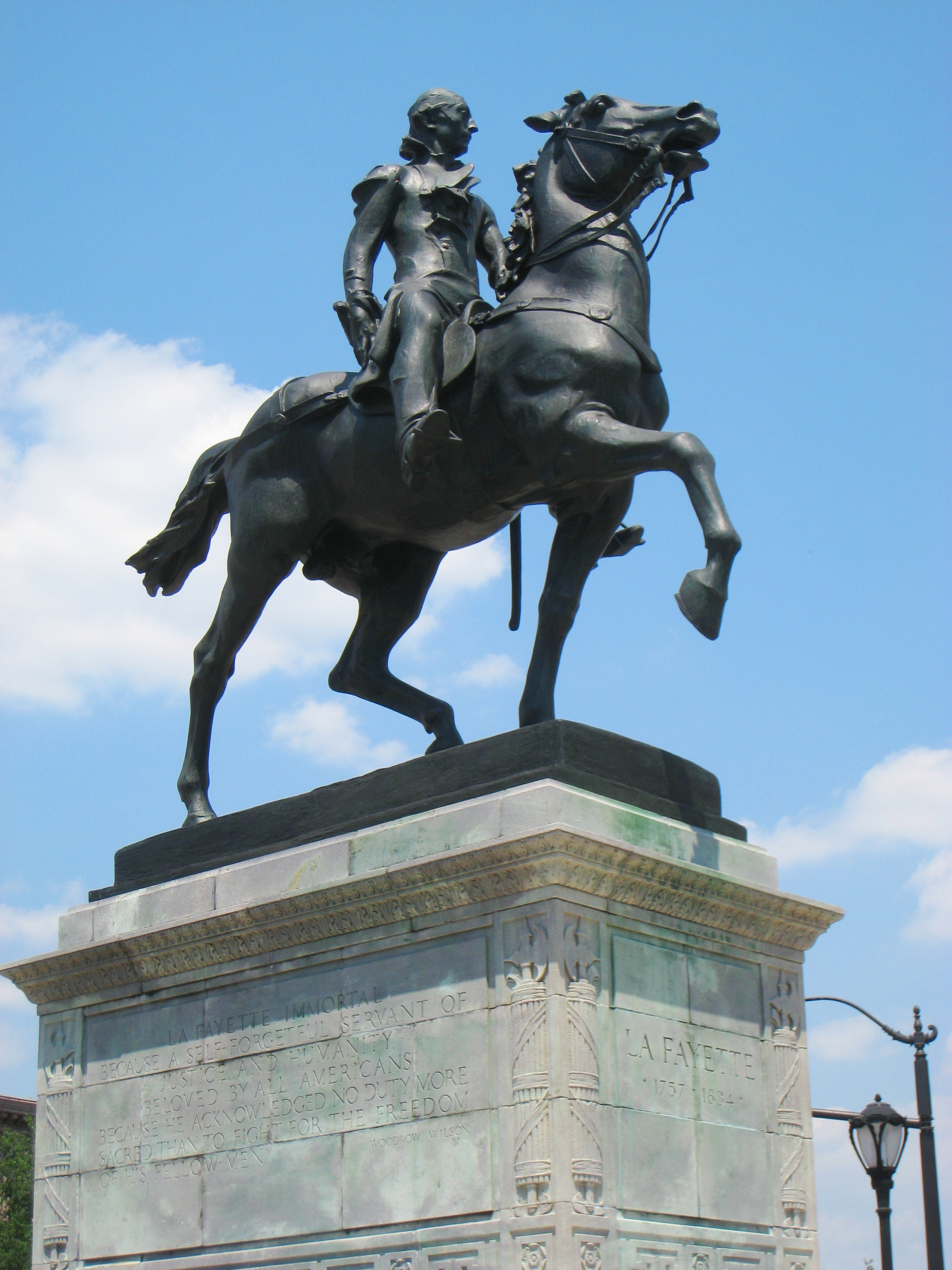
Tomorrow, September 6, marks two important occasions: the birthday of and official farewell to Lafayette by President John Quincy Adams during the French patriot’s last visit to America in 1825. President Coolidge, a century later, upon dedicating the monument to Lafayette placed in Baltimore, Maryland, observed that “[h]is picture to me seems always to have the enthusiasm and freshness of youth, moved with the high-minded and patriotic purpose of maturity. He displayed the same ambition for faithful service, whether he was leading his soldiers in the last charge for American liberty at Yorktown or rebuking the mob at Paris for its proposal to make him king. His part in the French Revolution is well known. He served the cause of ordered liberty in America; he was unwilling to serve any other cause in France…He represents a noble and courageous dedication to the service of freedom. He never sought for personal aggrandizement, but under heavy temptation remained loyal to the great Cause. He possessed a character that will abide with us through the generations. He loved his fellowmen, and believed in the ultimate triumph of self-government.”

As Coolidge continued to reflect upon the freedoms Lafayette fought to preserve in a constitutional republic, he surveys the substance of liberties protected by that document. Coolidge recognized also the deliberate limits placed on the government so that the rights of even the smallest minority — the individual — cannot be deprived of those protections by an ambitious, irresponsible majority.

Coolidge then turns to foreign affairs, hitting upon the true basis for sound foreign policy: guarding independence in our decisions and our interests. Respect, Coolidge shows, comes as a result of that tenaciously guarded independence; not as a product of surrendering it. Being afraid to lead, refusing to use America’s moral power for good, is not the route to successful foreign policy, in other words.

President Coolidge, decried as too provincial for the global burdens of the office, understood the situation far better than the “smartest of the smart” think they do now, as he declared what American foreign policy had been for its first one hundred and fifty years, “We have always guarded it [i.e., independence] with the utmost jealousy. We have sought to strengthen it with the Monroe Doctrine. We have refrained from treaties of offensive and defensive alliance. We have kept clear from political entanglements with other countries. Under this wise and sound policy America has been a country on the whole dedicated to peace, through honorable and disinterested relations with the other peoples of the earth. We have always been desirous not to participate in controversies, but to compose them,” that is, to bring calm back to each situation.

The result? “What a success this has brought to us at home, and what a place of respect and moral power it has gained for us abroad…” No wonder serious statesmen and genuine patriots are astonished at the pathetic equivocations and reckless display of weakness from our current leadership regarding Syria and everywhere else in the world.

Coolidge points to solid ground for future American foreign policy, “To continue to be independent we must continue to be whole-hearted American. We must direct our policies and lay our course with the sole consideration of serving our own people. We cannot become the partisans of one nation, or the opponents of another. Our domestic affairs should be entirely free from foreign interference, whether such attempt be made by those who are without or within our own territory. America is a large country…It has room within its borders for many races and many creeds. But it has no room for those who would place the interests of some other nation above the interests of our own nation.”

“I want to see America set the example to the world both in our domestic and foreign relations of magnanimity. We cannot make over…people…We must help them as they are, if we are to help them at all, I believe that we should help, not at the sacrifice of our independence, not for the support of imperialism, but to restore…a peaceful civilization. In that course lies the best guarantee of freedom. In that course lies the greatest honor which we can bestow upon the memory of Lafayette.”

Image