On Jefferson, Impeachment of Judges and State Nullification

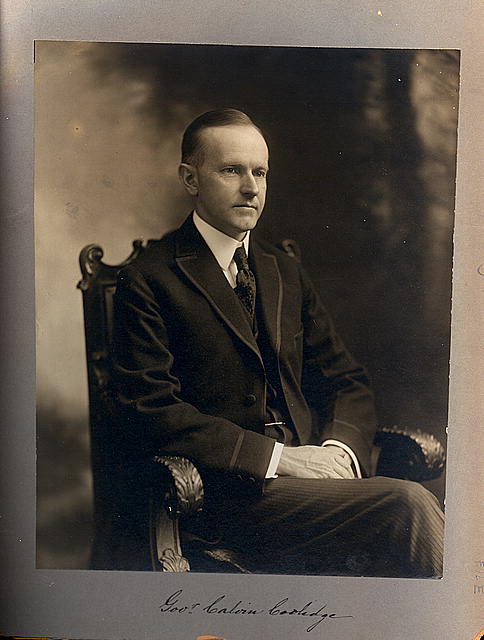
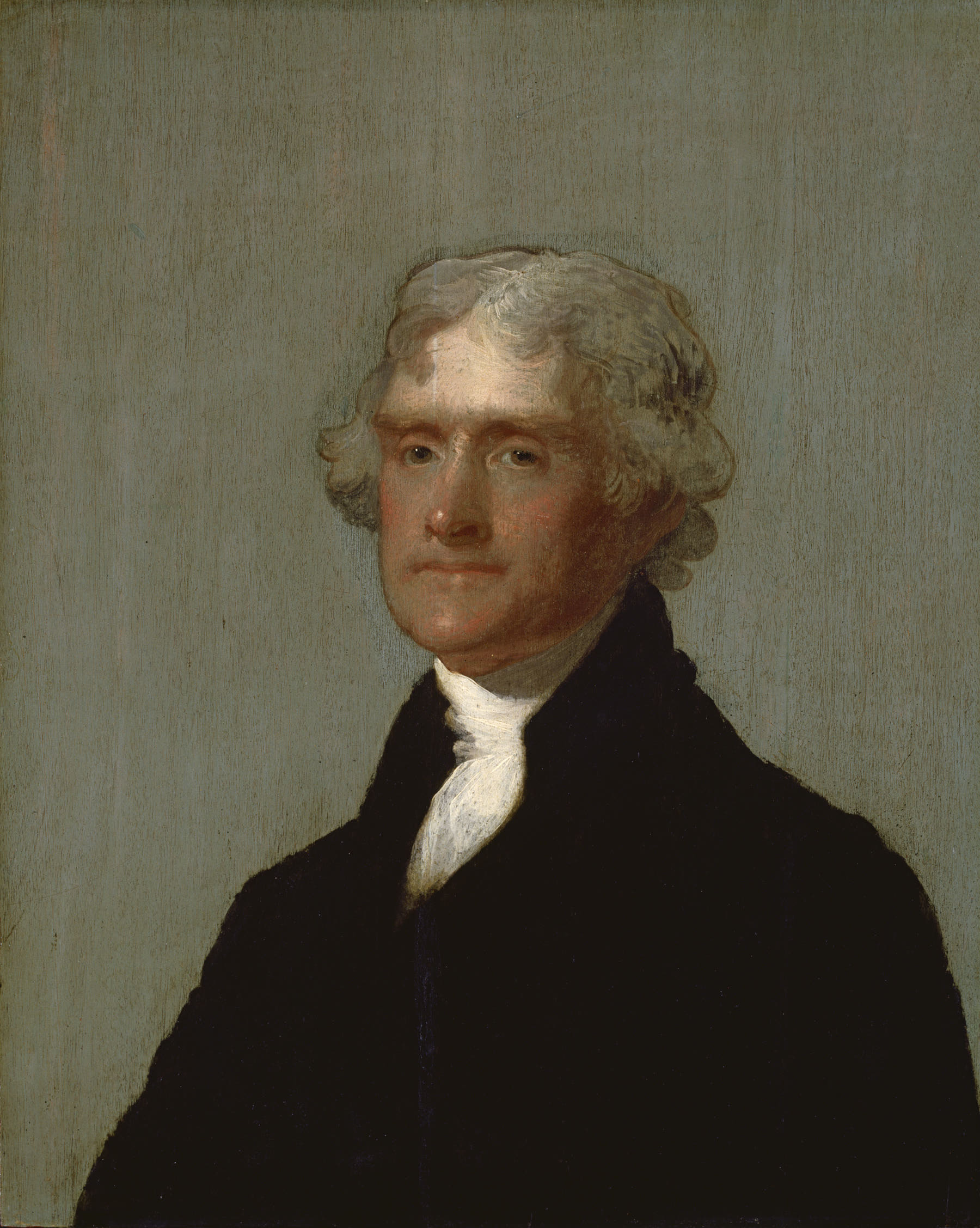
“President Jefferson seems to have entertained the opinion that even the Supreme Court should be influenced by his wishes and that failing in this a recalcitrant judge should be impeached by a complaisant Congress. This brought him into sharp conflict with John Marshall, who resisted any encroachment upon the independence of the Court. In this controversy the position of Marshall has been vindicated…In spite of all his greatness, anyone who had as many ideas as Jefferson was bound to find that some of them would not work. But this does not detract from the wisdom of his faith in the people and his constant insistence that they be left to manage their own affairs. His opposition to bureaucracy will bear careful analysis, and the country could stand a great deal more of its application. The trouble with us is that we talk about Jefferson but do not follow him. In his theory that the people should manage their government, and not be managed by it, he was everlastingly right” (Calvin Coolidge, ‘The Autobiography,’ pp.214-5).

The independence of the Judiciary, even with the partisan campaigning of Justice Chase and perceived activism of Marshall, was the larger issue. If the courts were to retain autonomy as an equal branch in the national government without manipulation by the President or reprisal from Congress, it had to stand firm. Asserting its independence kept it from becoming subservient to either form of interference. It preserved the ability of the people to find justice. If the Court had simply deferred, the people would have lost liberty, having no legal recourse or remedy from either Executive will or Legislative preference. It maintained the Constitutional equilibrium and kept the courts open to the people’s claims.

Due to the intense unpopularity of the Eighteenth Amendment, ushering in Prohibition, the states sought to find ways to override it. Nullification, even in the leading state of Massachusetts became a distinct possibility. The state legislature went so far as to pass a bill making possible the sale of small amounts of beer and alcohol in the state. It was a direct challenge to make void a Constitutional amendment by legislative act. It came to Governor Coolidge’s desk in May of 1920. Vetoing the measure with a firm rebuke, Coolidge registered his dissent, “There can be no constitutional instruction to do an unconstitutional act. The authority of the law is questioned in these days all too much. The binding obligation of obedience against personal desire is denied in many quarters. if these doctrines prevail all organized government, all liberty, all security are at an end. Force alone will prevail. Can those intrusted with the gravest authority set any example save that of the sternest obedience to law? Can Massachusetts afford to take any position which may turn out to be, which can anywhere be interpreted to be, an act of nullification? If rights are infringed the way to the court is open. The cases are pending which will undoubtedly decide the question here raised. Let the Supreme Court of the United States talk. The Massachusetts method of determining the authority of the law ought always to be by litigation and never by nullification, which is legislative direct action” (Coolidge, ‘The Price of Freedom,’ p.407).

It is clear that while in recent years state and federal legislation, allowed to pass without due deliberation for all concerned, is seeking but does not possess Constitutional supremacy. They are legislative acts not Constitutional Amendments. They are the products of surrendering legislative independence to the will either of the Executive or the pressure lobbied upon them by interested minorities. To a natural law theorist like Coolidge, such actions are neither right nor representative of true law. The Amendment process, ignored because the legislation is not widely desired or supported, has been supplanted by making legislatures and even courts defer to hastily crafted and recklessly passed rules for society. Even so, to Coolidge, nullification was not the answer. The Constitution did not protect the right of states to do wrong any more than it did the National Government. If the law is to change, state nullification was not the way to accomplish it. Both repeal and the Constitutional amendment process are available means.

Until then, the courts must retain their independence from Congress, the President and political pressure groups to hear claims impartially and without interference. Unpopular legislation will undo itself when reality catches up to administration. The states already possess the power of implementation and will expose bad laws for what they are until repeal occurs. But nullification, such as that argued by Thomas Woods, reaches outside the Constitutional framework for an escape clause that, when it functioned under the Articles of Confederation, did not prevent the chaos that ensued.

     Image

On Federalism

Coolidge does not seem to have fully perceived the harm done by his youthful support for the Seventeenth Amendment, which stripped the influence of the states on the national government and removed the insulation of the Senate from the same popular impulses pressuring the House. In fact, how costly have been the consequences (in both obstructing good legislation and passing the bad) of so drastic a transformation to this unique body? The two houses of Congress were not intended by the Framers to serve the same purpose. The distinct differences between House and Senate were thrown away too hastily by those who did not thoroughly consider the costs of changing the constitutional design.

Despite his earlier support of the Senate’s alteration, Coolidge is unique among modern presidents for consistently holding a high regard for the Constitutional balance of federalism, defining a sufficient sphere of authority for the States, limiting the scope of national governance and preserving the responsibility of local decision-makers over their own affairs. By so doing, the balance of orderly liberty is kept. For Coolidge, this was more than pandering for votes. It was a necessary mechanism to ensure government remained limited especially in times of emergency. It was not to be bartered away but existed for just such occasions when the temptation was greatest to seize the reins from state or local authorities. The danger to people’s liberties was too great, even were he to exercise such powers cautiously. Coolidge knew that with the best of intentions, government would not remain limited for long even when the storm passed.

But for Coolidge, the threat of national overreach was not the only potential problem, the prospect that the States would abuse their authority was also very real. Remembering his experiences with State politics in Boston, Coolidge knew legislatures and municipalities could pass equally as reckless regulations against an individual’s freedoms. The restrictions imposed by Mayor Bloomberg of New York City and by Governor Hickenlooper of Colorado on “gun control” are but two examples of such abuses.

It was on the 150th anniversary of the Virginia Resolutions for Independence, that President Coolidge came to the College of William and Mary on May 15, 1926, summing up the value of that federalist balance with these words,

“While we ought to glory in the Union and remember that it is the source from which the States derive their chief title to fame, we must also recognize that the national administration is not and can not be adjusted to the needs of local government. It is too far away to be informed of local needs, too inaccessible to be responsive to local conditions. The States should not be induced by coercion or by favor to surrender the management of their own affairs. The Federal Government ought to resist the tendency to be loaded up with duties which the States should perform. It does not follow that because something ought to be done the National Government ought to do it. But, on the other hand, when the great body of public opinion of the Nation requires action the States ought to understand that unless they are responsive to such sentiment the national authority will be compelled to intervene. The doctrine of State rights is not a privilege to continue in wrong-doing but a privilege to be free from interference in well-doing. This Nation is bent on progress. It has determined on the policy of meting out justice between man and man. It has decided to extend the blessing of an enlightened humanity. Unless the States meet these requirements, the National Government reluctantly will be crowded into the position of enlarging its own authority at their expense. I want to see the policy adopted by the States of discharging their public functions so faithfully that instead of an extension on the part of the Federal Government there can be a contraction.”

The following year would test this principle to its limits as floods would devastate first the Mississippi River Basin in April and then New England, including Coolidge’s beloved state of Vermont, in November. The damage came not only in the property destroyed but the lives lost. The most intense pressure fell on Coolidge to visit the areas, spearhead the effort to aid and rebuild and otherwise take decisive action. He deliberately held back. He dispatched Secretary Hoover to collaborate with state and local officials, not always successfully or deferentially. Those who do not understand our Constitutional system condemn Coolidge as “cold” and “unfeeling,” for his decision. They overlook the strength it took to withstand the urge to involve himself, especially when it concerned his home state. Principles mattered more. There would be no recovering the balance lost to local decision-making once he, the President, used powers he could not rightly claim. It was the burden of free people to exercise responsibilities over their lives and property, even when nature interjected. National Government was not there to spare folks from life’s consequences, however unpleasant the price.

The fight to grant flood relief would not subside quickly and while Coolidge kept much of the spending down, the drive to appropriate money, especially with an even larger surplus expected in 1928, was too much for both House and Senate to resist. Interestingly, the argument that convinced Coolidge to finally relent on a smaller relief bill was the fact that States and local governments were already paying into the sum being levied (Barry, ‘Rising Tide,’ p. 406). Federalism was working. The States and local authorities were taking responsibility for their own expenses. Had the Senate remained less constrained by public passions, as the Framers intended, it is not improbable that even the drastically reduced $296 million (which would become closer to $1 billion, in reality) flood relief measure could have been struck down before reaching the President’s desk.

Image

      The waters roaring through Springfield, Vermont in 1927

Image

              Forty foot deep floods along the waterfront of Cape Girardeau, Missouri, spring of 1927

Image

                     When the levees broke and the Mississippi flooded, it is estimated some 300,000

                     people were displaced in as many as ten states. Coolidge would not see their

                     freedoms eroded further with government’s good intentions supplanting local

                     oversight.

“Every dollar that we carelessly waste means that their life will be so much the more meager. Every dollar that we prudently save means that their life will be so much the more abundant. Economy is idealism in its most practical form” — President Coolidge, March 4, 1925

Governor Calvin Coolidge

Governor Calvin Coolidge

John Derbyshire, speaking as the character Chai, writes of Coolidge, “Closer study revealed some harmonics. Humor, certainly. Something in the turn of the mouth…something impish, irreverent, boyish. Yet a steadiness in the eyes–a certitude weightier than mere smugness. Beneath the clerkishness, great strength and wisdom. I trusted this man at once, and wanted to know him better” (‘Seeing Calvin Coolidge in a Dream,’ p.23).

The trust he earned went deeper than his office, it went to the soundness of his character, the power of his philosophy, the confidence without arrogance that he conveyed and the consistency of his actions.

This is what makes him so threatening to those who reject the finality of what the Founders discovered regarding human nature and society. In place of truths like equality before God and a government of limited power, there has come an institutionalized inequality maintained through a virtually unlimited control by a few. America’s experiment of self-government, with its moral nature cut away, is fast becoming the playground of despots and libertines.

It is up to us, serious-minded and mature citizens, to summon the courage and responsibility necessary to be worthy of freedom.