Here is an awesome half-hour presentation of the life and landmark accomplishments of Calvin Coolidge by superb scholar Jerry Wallace to the Wichita Pachyderm Club. His irreplaceable volume Calvin Coolidge: Our First Radio President has contributed so much toward shattering the myth that Cal was too inept and silent to make use of the new medium of radio. In fact, Mr. Wallace explains that far from being a failure, Calvin Coolidge bequeaths an historic legacy as not only a masterful communicator but effectual doer and successful President. This is well worth the listen!
religion
The Coolidge Women

Florence (upper left) and Grace Coolidge (lower right) join others at the christening of the liner SS President Coolidge, February 21, 1931. The vessel’s sister ship, the SS President Hoover, had been christened the previous December by First Lady Lou Hoover. Standing beside her hull, Grace christened the ship with a bottle of water from one of the springs near the Homestead in Plymouth. These two merchant ships were the largest built up to that time, each 645 feet in length, with gross tonnage of 21,936.
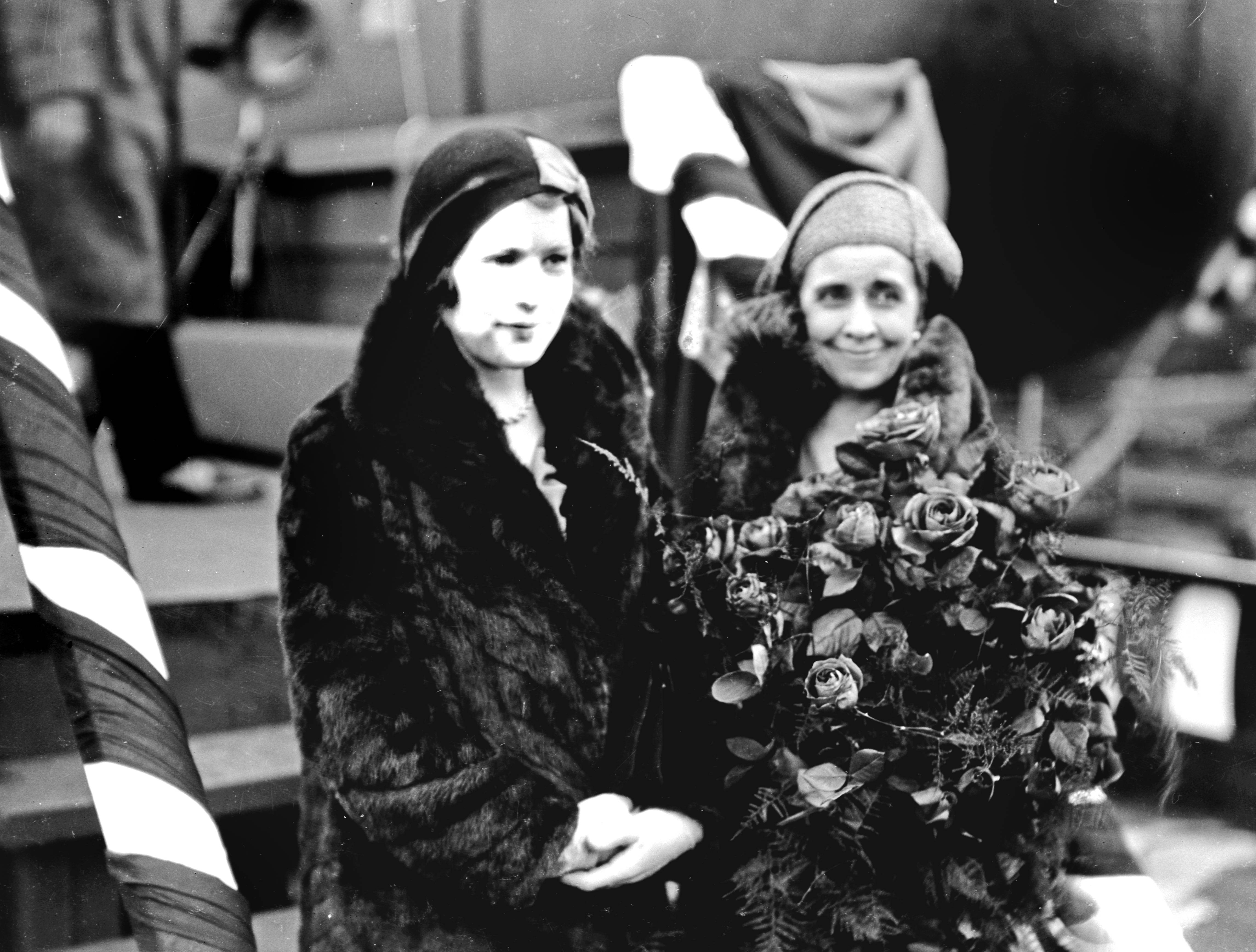
Both Mrs. Coolidge and Mrs. Coolidge stand for their picture at the dock in Newport News, Virginia. Thanks go to Norfolk Public Library for the use of these pictures from the 1931 christening.
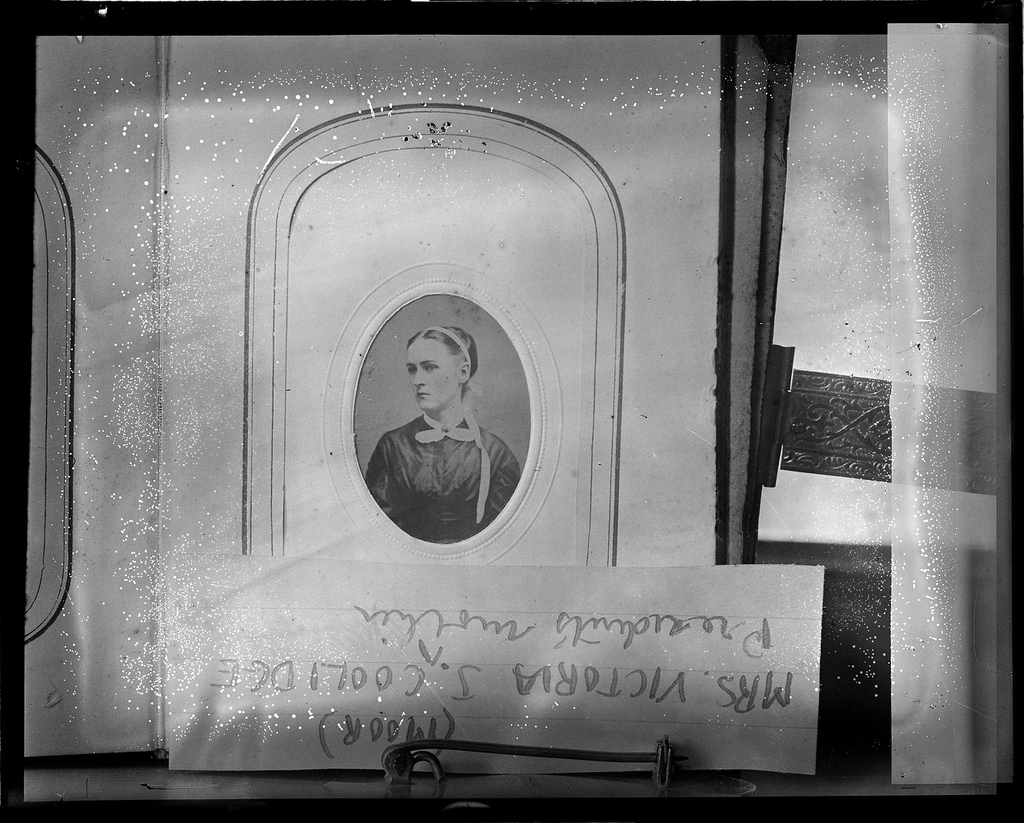
The President’s mother, Victoria Josephine Moor Coolidge. Of her, Calvin once wrote: “Whatever was grand and beautiful in form and color attracted her. It seemed as though the rich green tints of the foliage and the blossoms of the flowers came for her in the springtime, and in the autumn it was for her that the mountain sides were struck with crimson and gold.” She died at age 39, when Calvin was 12 years old.
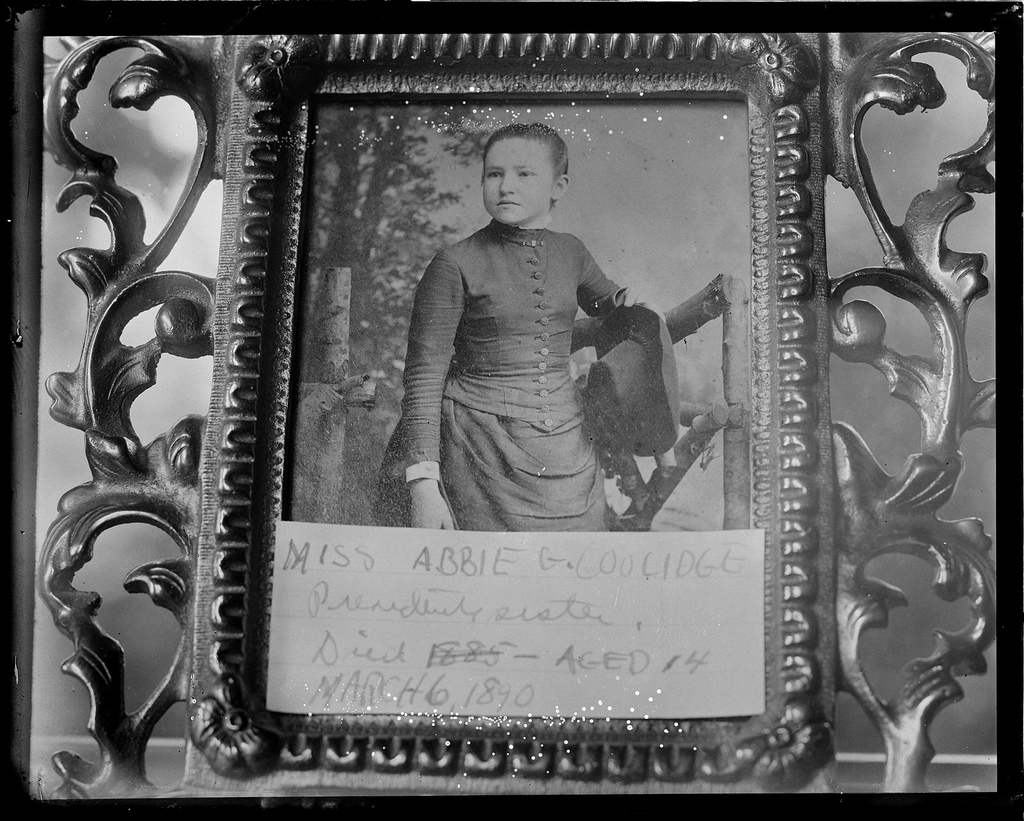
The President’s sister, Abigail Gratia Coolidge, three years his junior. Of her Calvin wrote: “The memory of the charm of her presence and her dignified devotion to the right will always abide with me.” She died at age 14 of appendicitis.
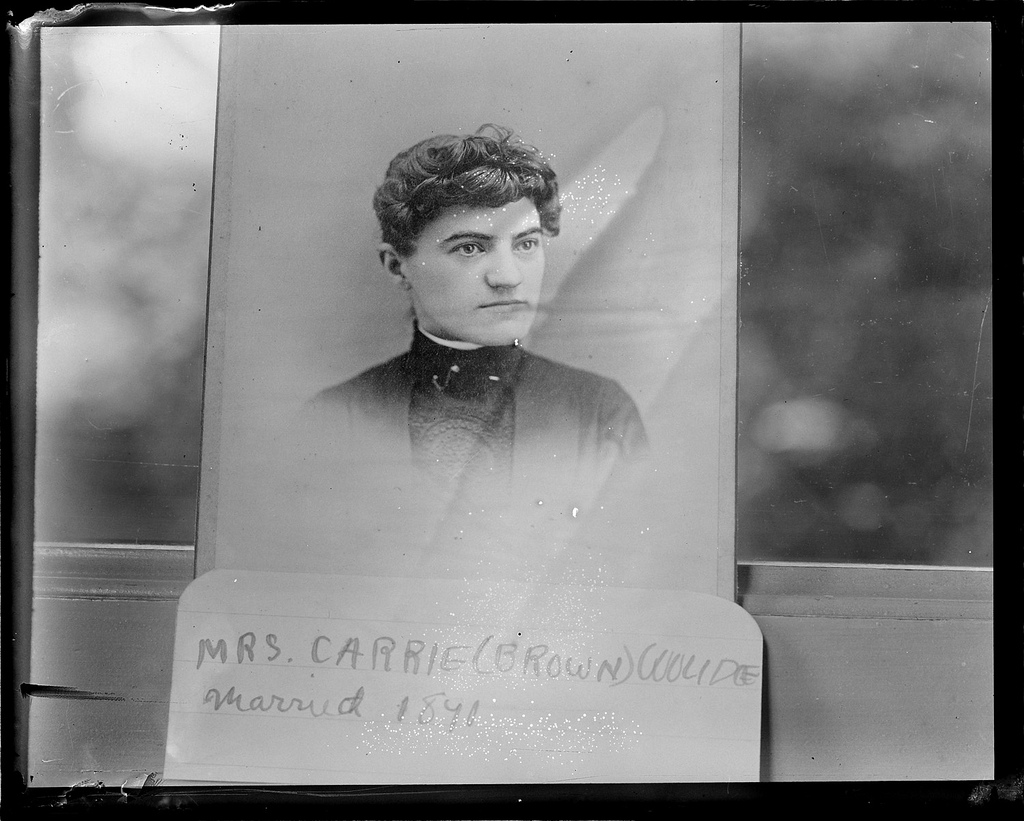
The President’s stepmother, Carrie A. Brown Coolidge, married his father, the Colonel in September 1891. She had been and would continue to be an active participant in the life of Plymouth for many years as a teacher and postmaster. Loving him as her own son, Calvin’s stepmother would be another great influence for good in his life at a crucial time. Of her he once said, “For thirty years she watched over me and loved me, welcoming me when I went home, writing me often when I was away, and encouraging me in all my efforts.” She passed away in 1920 just before his election to the Vice-Presidency.
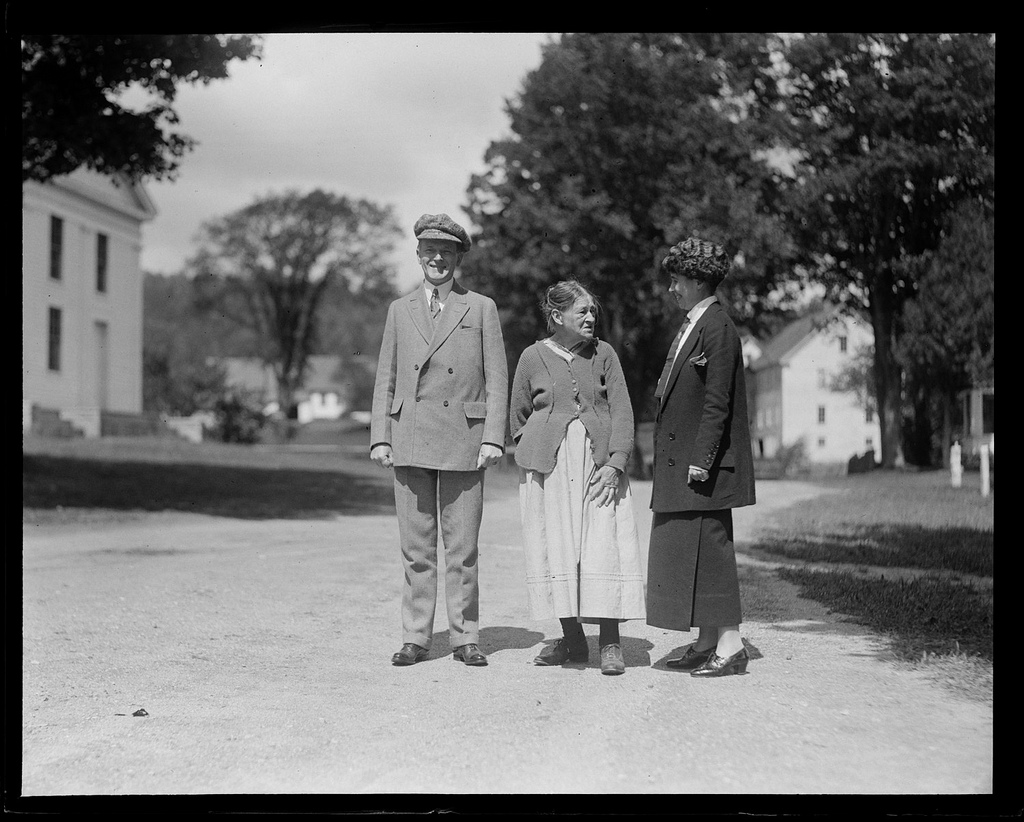
The President’s maternal aunt, Gratia E. Moor, while technically not a Coolidge (by surname), she was his mother Victoria’s older sister. Here he and Grace enjoy time with her during a visit to Plymouth.
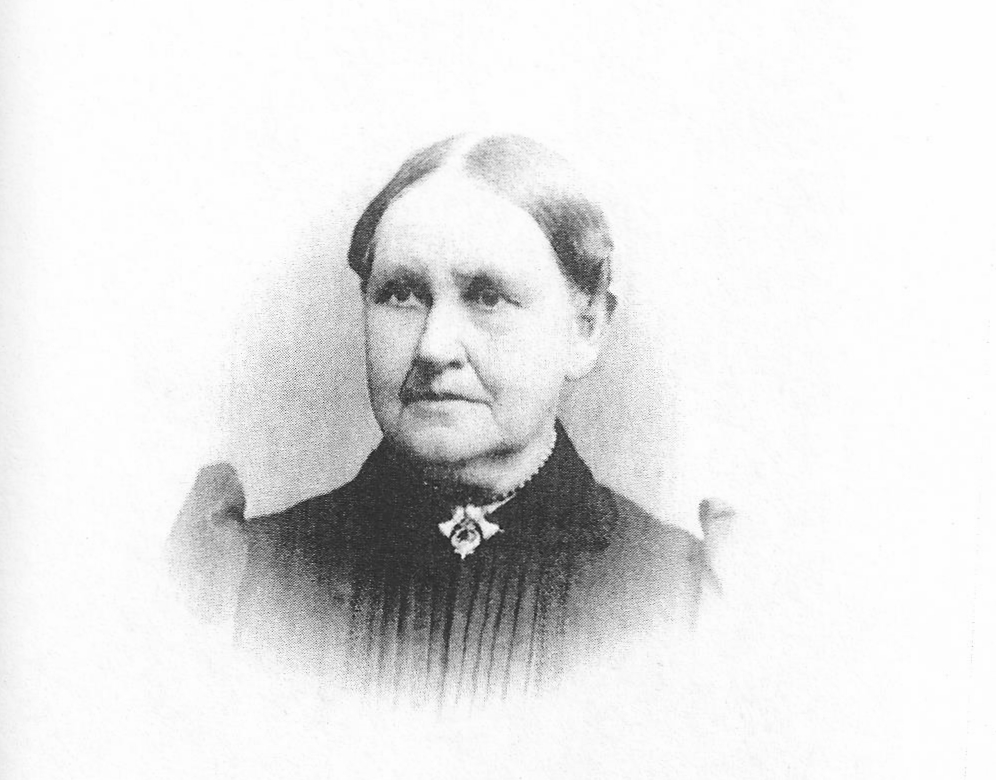
The President’s paternal grandmother, Sarah Almeda Brewer Coolidge, known as “Aunt Mede,” also left a deep impression on Calvin’s life. The wife of Calvin Galusha Coolidge, she lived to see her grandson meet and marry Grace. Of “Aunt Mede” he recalled, “She was a constant reader of the Bible and a devoted member of the church, who daily sought for divine guidance in prayer. I stayed with her at the farm much of the time and she had much to do with shaping the thought of my early years. She had a benign influence over all who came in contact with her. The Puritan severity of her convictions was tempered by the sweetness of a womanly charity. There were none whom she ever knew that had not in some way benefited by her kindness.”

The indomitable Aurora Pierce, friend, housekeeper and member of the family, she could handle just about anything thrown her way. She was the essence of a hardy New England pioneer woman. She knew how to cook for Calvin and was one of the few who could issue orders to him without fear. When she was told of his death on January 5, 1933, she wept.
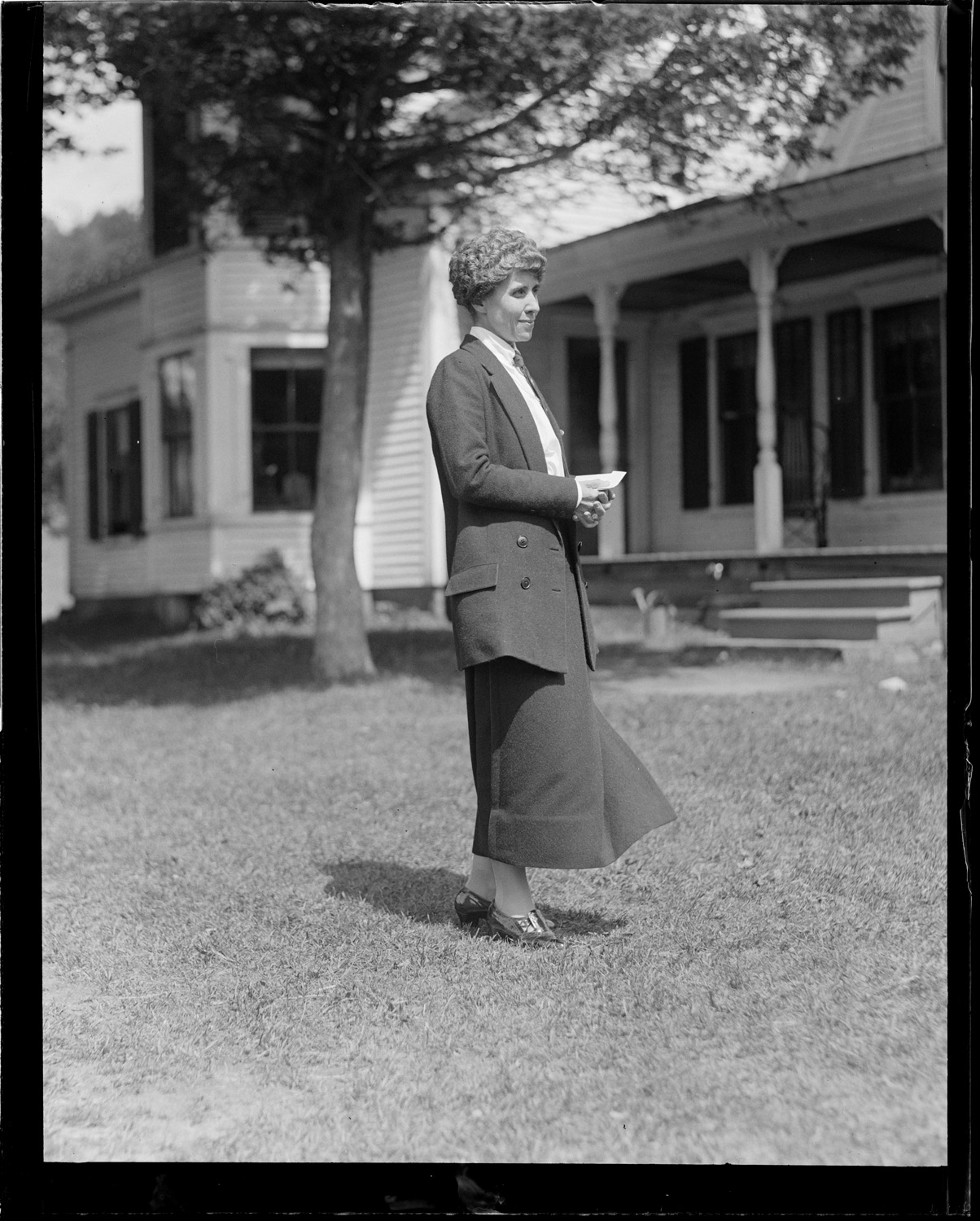
Grace Anna Goodhue Coolidge, “the sunshine and the joy of his life–his rest when tired–his solace in time of trouble,” as Miss Randolph observed (Ishbel Ross, Grace Coolidge and Her Era p.188).
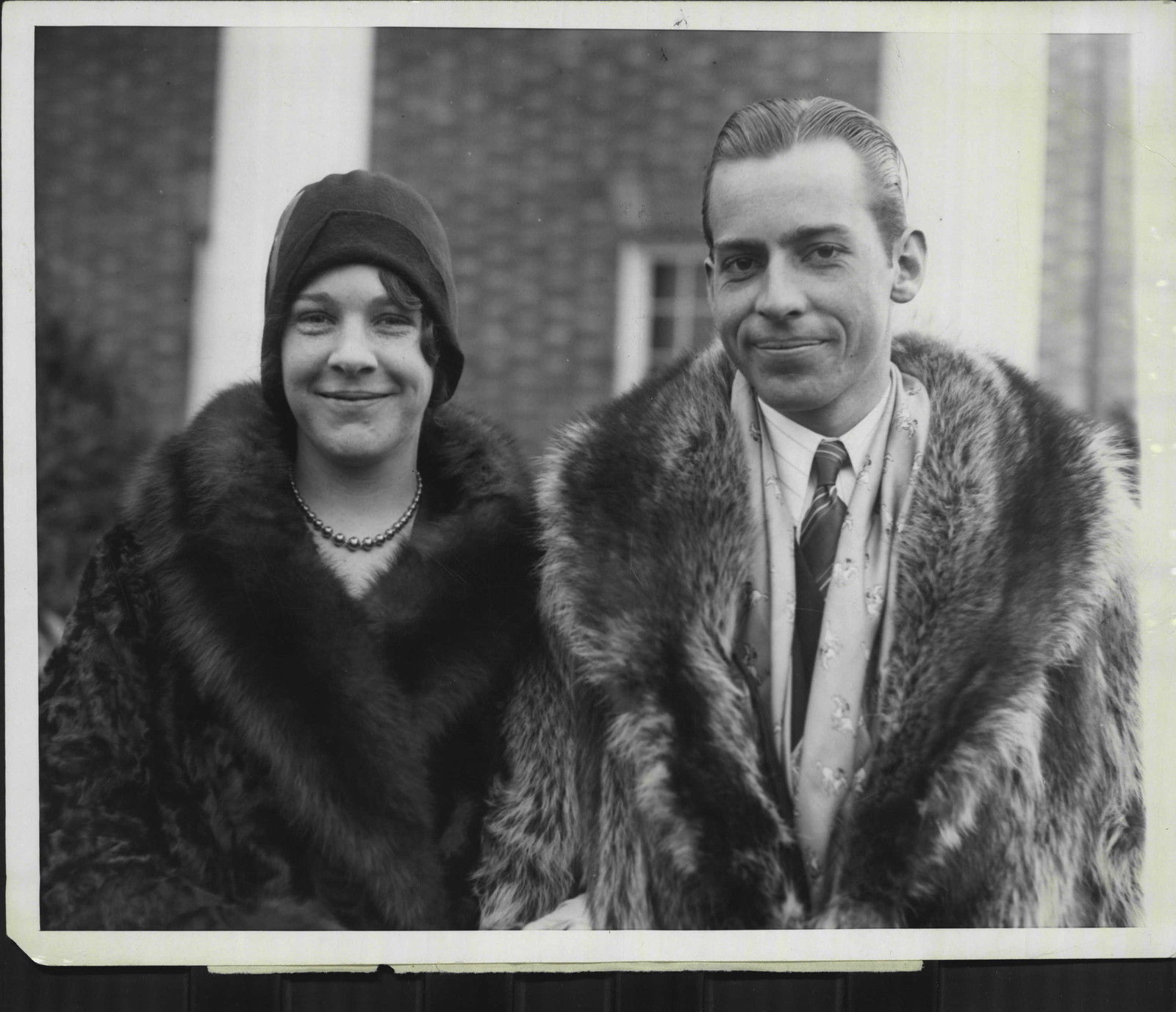
The President’s oldest son, John, and Florence Trumbull during their engagement, 1928. Calvin and Grace loved the young lady who would become their daughter.
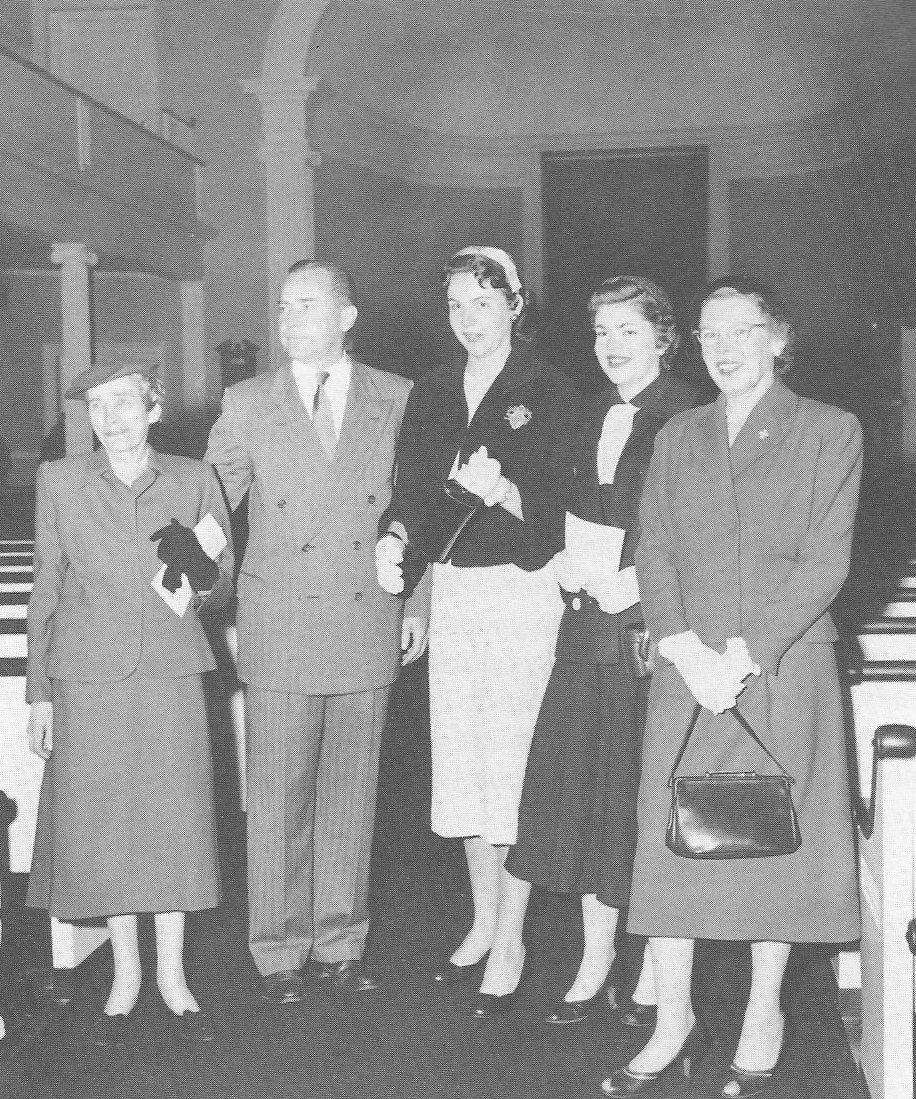
The Coolidge family at the dedication of the Calvin Coolidge Memorial Room in Forbes Library, September 1956. This would prove to be Grace’s final public appearance. Her “Precious Four,” as she called children John and Florence with granddaughters Cynthia and Lydia, are featured in Gloria May Stoddard’s fine book, Grace and Cal: A Vermont Love Story, p.153). The original photograph is found in the holdings of Forbes Library.
On Being “Progressive”
Asked to define the terms “reactionary” and “progressive” during one of his 521 press conferences, President Coolidge responded that his answer would likely not be helpful. After all, the definition was in the “eye” of the definer. Having experienced the back and forth of politics for twenty years before even reaching the White House, Coolidge had seen just about everything. Illustrating his point, he explained, “That reminds me a little of the old definition of ‘orthodoxy’ and ‘heterodoxy.’ I think they used to say that ‘orthodoxy’ was ‘my doxy’ and ‘heterodoxy’ was ‘your doxy.’ Sometimes the person is not well thought of and he is labeled as a reactionary. Sometimes if he is well thought of he is called a progressive. As a matter of fact all the political parties are progressive” (The Talkative President, p.9).
This was not some cynical resignation to the “way the real world works” but rather a refusal to surrender the term progress to be freely redefined and misappropriated by any one side of the political arena. The word carried a positive good and he would not be drawn in to an acceptance of a false premise. Coolidge did not stop there. One of his most profound contributions to the science of political thought revolves around the enduring importance political parties do have in our system. “I can’t conceive of a party existing for any length of time that wasn’t progressive, or of leadership being effective that wasn’t progressive.”
The key is not a denial of progress, or an eradication of all that has preceded us but rather connecting founding truths to our current situation. Progress is not progress which cuts all ties with the universal truths encapsulated in our Declaration and applied in our Constitution. This seemingly paradoxical concept for a progress that retains long-established, foundational ideals is expressed when Coolidge, two years later, said, “It is often asserted that the world has made a great deal of progress since 1776, that we have had new thoughts and new experiences which have given us a great advance over the people of that day, and that we may therefore very well discard their conclusions for something more modern. But that reasoning can not be applied to this great charter. If all men are created equal, that is final. If they are endowed with inalienable rights, that is final. If governments derive their just powers from the consent of the governed, that is final. No advance, no progress can be made beyond these propositions. If anyone wishes to deny their truth or their soundness, the only direction which he can proceed historically is not forward, but backward toward the time when there was no equality, no rights of the individual, no rule of the people. Those who wish to proceed in that direction can not lay claim to progress. They are reactionary. Their ideas are not more modern, but more ancient, than those of the Revolutionary fathers.” Quite a profundity from a man inaccurately and unfairly dismissed as an intellectual lightweight, characterized as a “do-nothing” president and classified as a vapid reactionary, don’t you agree?

 The Importance of the Obvious