On Honoring Our Veterans

As Senate Democrats continue to back the President’s cherry-picking approach on which public sites to shut down and who deserves funding, veterans simply do not contribute anything to their Party agenda that merits respect or support. In the midst of what is supposed to be a Government “shutdown,” we saw the reinforcement of the World War II Memorial fencing by seven Park Service employees. At the same time, the Normandy American Cemetery and Memorial in France has been chained shut “due to the U.S. Government shutdown.” So, we are spending money to reinforce gates and place guards at closed sites because we no longer have the money to keep them open?

Meanwhile, Camp David, the Presidential retreat, is kept open. The Blue Angels and NASA programs have long been shut down as visible symbols of American achievement and patriotism. Now Senator Harry Reid is refusing every effort to fund the National Guard, salaries for Reserve personnel, veterans’ services, and museums and parks. Taking all of these together, combined with the rabid attacks by Democrats against our military for serving in Iraq and Afghanistan during the previous administration, it forces the question: What do the Democrats have against our Armed Forces? Of course, they do not have value to the agenda.

Calvin Coolidge, upon being officially informed of his nomination as Vice Presidential candidate, spoke at length on what the country needed. He saw America suffering under a militant White House, continuing to prosecute the powers of wartime in peace. When a return to respect for our laws and institutions was needed, President Wilson and his Party kept the hostility and obstruction going. Evading their responsibilities to govern, the Democrats had assumed control at the expense of the people’s sovereignty. Millions were now unemployed, many of them World War I veterans and their families. The economy was stagnating under high taxation rates extracted by the Internal Revenue Service. A culture of fear was being perpetuated by Wilson’s Justice Department. The Democrats were shirking the duty they held not only to all the people but to those who had served. The unrestrained waste of the people’s substance had to be stopped. It was time to change those in charge. What they were doing was wrong and the first opportunity for the people to correct the direction in which America was going came with the 1920 election. As we know the people took their country back decisively, sweeping the White House, the Congress and state governments across the land.
Image

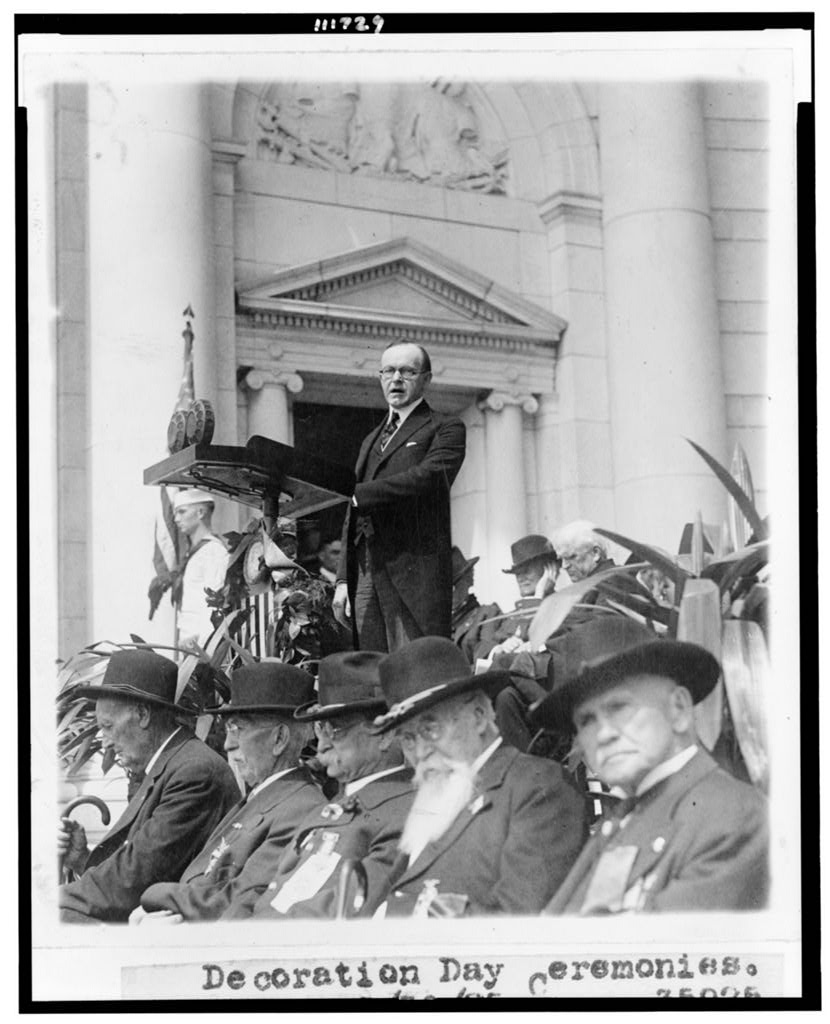
When it came to veterans, while there could be no price quantified for what they had sacrificed, America had an obligation to them they could not pass off to anyone else. Coolidge said,

Whenever in the future this nation undertakes to assess its strength and resources, the largest item will be the roll of those who served her in every patriotic capacity in the world war. There are those who bore the civil tasks of that great undertaking, often at heavy sacrifices, always with the disinterested desire to serve their country. There are those who wore the uniform. The presence of the living, the example of the dead, will ever be a standing guaranty of the stability of our republic. From their rugged virtue springs a never-ending obligation to hold unimpaired the principles established by their victory. Honor is theirs forevermore.

The form this honor should take is what compelled Coolidge to stand on principle against cash payments to veterans, or any other special demographic. He knew what the perception of a Government giving money away does even to good and honest people. He knew that no amount could adequately recompense those who risked all, some giving life itself, for America’s ideals. When he vetoed measures to bestow cash bonuses to veterans, he acted with full awareness of what it might cost him politically. Principle mattered more to him. The principle of honoring sacrifice to Coolidge did not consist of merely appropriating money to show that “we care” but by embracing a deeper, more profound respect and reverence for what our veterans have done. The Congress of his day, overrode his veto.

Americans had made promises to veterans and those promises must be kept. Coolidge continued,

Duty compels that those promises, so freely made, that out of their sacrifices they should have a larger life, be speedily redeemed. Care of dependents, relief from distress, restoration from infirmity, provision for education, honorable preferment in the public service, a helping hand everywhere, are theirs not as a favor but by right. They have conquered the claim to suitable recognition in all things.

This recognition would be desecrated, however, if honoring our veterans became nothing more than a cash giveaway. More is required than simply to throw money at the problem and walk away. Unless we take up the service of those who served, no amount we give purchases the compassion and respect we owe. By helping the veteran who lives next door, providing for the assistance of his family, supporting the education and upward mobility of our defenders, wherever they are, ensuring the wounded are healed, the forsaken encouraged and the war-torn are built up, we are meeting that obligation. Responsible government appropriates the funds but it accomplishes nothing without the active participation of you and me serving those who served.

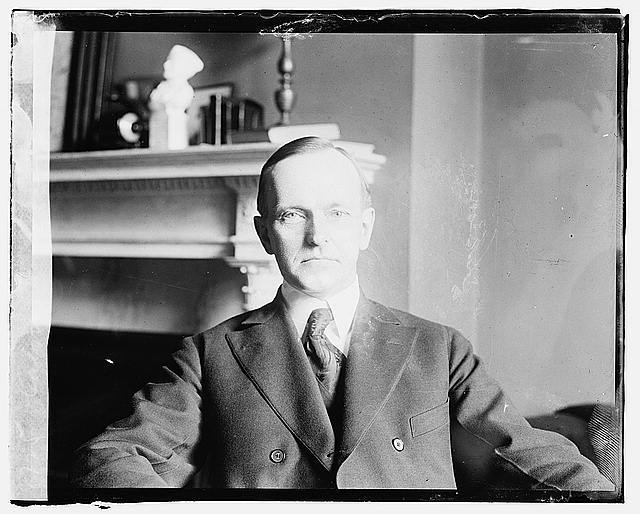
On numerous memorials across our nation, what Coolidge said next is fittingly preserved for posterity on the stones we have established in recognition of our veterans’ sacrifices. He reminds us still, “The nation which forgets its defenders will be itself forgotten.”

Image

On the Limbaugh Theorem

Image

It is unimaginable that America would ever see, let alone re-elect, such a dearth of leadership as we now experience. It is a far fall from the Presidential strength of character demonstrated on either side of the aisle from Reagan and F.D.R. to Coolidge and  Cleveland. It tests the bounds of reality to try to understand why someone so hostile to America’s history and institutions could find such prevalent support.

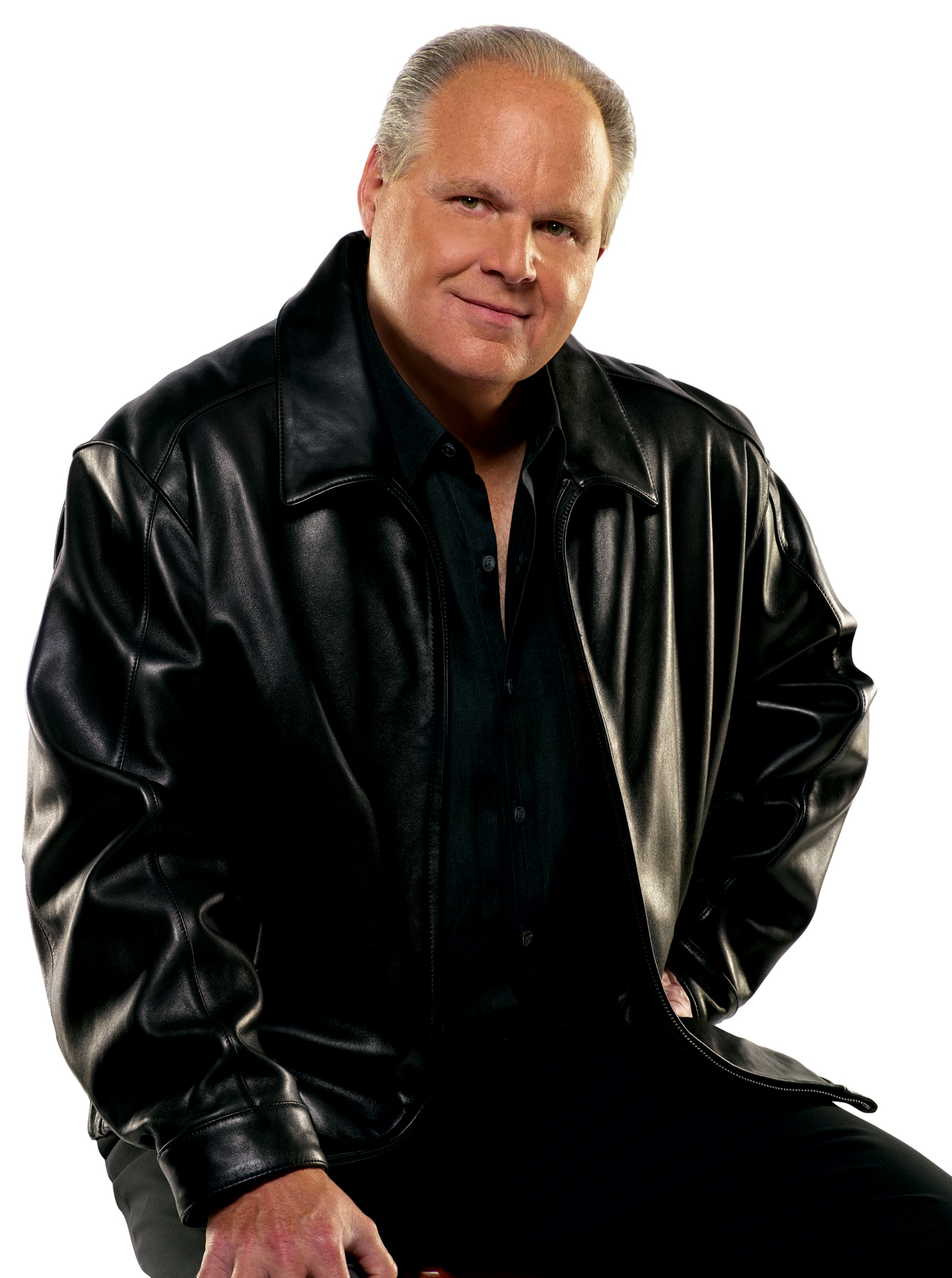
Rush Limbaugh has proffered an explanation for this utterly irrational disconnect between Obama and any accountability for his own policies with the “Limbaugh Theorem.”

Image

Instead of tracing effects directly to their causes, too many are willing defenders of policies that are indefensible. The not too distant past would indict this attitude. Coolidge appreciated that history was more than a dry series of dates and dead people. He said, “If we could better understand what they said and did to establish our free institutions, we should be less likely to be misled by the misrepresentations and distorted arguments of the hour, and be far better equipped to maintain them [our free institutions].”

Professing to finally espouse the colorblindness of an enlightened modernity, this current attitude claims to be free at last from what mired past generations in racism and ignorance. In reality, this politically correct culture has camped atop a mountain piled high with the soft bigotry of low expectations. Unable to see beyond the irrelevant color or race of the President to properly discern the destructiveness of this man’s political agenda — his own policies free of any opposition for the last five years — this culture seems ready and willing to declare one preeminent political axiom, “As the first black President, he can do no wrong.”

Should it ever be whispered that his actions were less than irreproachable, the fact that he has a certain skin color cancels out any criticism. This ultimate form of affirmative action should be insulting to anyone, regardless of color, race or political persuasion. It is an insult to reason.

Any disagreement is dismissed as racially-driven. He cannot be wrong or else we are instantly back to an unredeemed “Jim Crow” America, as opposed to the peace and unity in which we now live, this new day hailed to be the transformational age of Obama. The popular perception that all progress would be undone by pointing out the failures of one who happens to be a certain color is too much for this culture to allow. Obama cannot be blamed for anything he has done because…he inherited it, he is being obstructed by Republicans, he is not being understood, he was forced to work with a deck stacked against him by the Founders or any number of contorted explanations that try to justify him at all costs. This lone individual is too big to fail, even if it means America is to be sacrificed for his sake. 

The Limbaugh Theorem further explains that faith in America is what is being lost, instead of the credibility of absentee leadership. In time past, people were able to know failure when they saw it and reverse course at the ballot box. Hoover in 1932 and Carter in 1980 are prime examples. Now, as Coolidge himself struggled to understand, the artificial world of the political mind is becoming reality by perception.

Still, the perpetual campaign of this administration shows that even the President knows he has yet to fully convince a large cross-section of the electorate. The Office has known reprobates and autocrats before but it has never known anyone quite like this man. The combination of ambition for power with arrogance and animus toward the nation over which he has been elected makes him unlike anyone else who has occupied the White House. Yet, he is merely human. It is the pervasive force of political correctness maintained by those who carry his water (the First Lady is not the only one carrying water these days) that has kept him insulated from the consequences of his policies. Without the smoke and mirrors, the Wizard is no more immune from consequences than the rest of us in Oz are.

As Coolidge reflected upon his time in Washington, he observed there are two minds at work with which the President must deal. “One is the mind of the country,” he noted, “largely intent upon its own personal affairs, and, while not greatly interested in the government, yet desirous of seeing it conducted in an orderly and dignified manner for the advancement of the public welfare. Those who compose this mind wish to have the country prosperous and are opposed to unjust taxation and public extravagance…In general, they represent the public opinion of the land.”

“The immediate authority with which the President has to deal is vested in the political mind. In order to get things done he has to work through that agency…It is a strange mixture of vanity and timidity, of an obsequious attitude at one time and a delusion of grandeur at another time, of the most selfish preferment combined with the most sacrificing patriotism. The political mind,” Coolidge discerned, “is the product of men in public life who have been twice spoiled. They have been spoiled with praise and they have been spoiled with abuse. With them nothing is natural, everything is artificial.”

Then Coolidge draws a conclusion that forms the basis for the Limbaugh Theorem. The political mind, given to the artificial as it is, readily connects the Congress with all that is wrong with inside-the-Beltway thinking. Consequently, Coolidge identifies, “the President comes more and more to stand as the champion of the rights of the whole country.” This ability to equate the President with responsibilities outside, even transcendent of, the inner workings of Washington “is one of the reasons that presidential office has grown in popular estimation and favor, while the Congress has declined.” Moreover, the perception, however real or fake it may be, that “the President is willing to assume responsibility, while his party in the Congress is not,” makes the country feel that he is able to resolve the gridlock as the people’s “champion.”

Coolidge would be appalled at the extent of the destruction through lawless coercion this President has unleashed. Coolidge made clear that the President, whoever it may be, is rightly “held solely responsible for his acts.” Mr. Coolidge would never have condoned the repeated and flagrant disregard for the Office, the shirking of daily responsibilities owed to the country or the systematic protection this President continues to receive from any substantive criticism of his policies. Coolidge does help explain how the Limbaugh Theorem became possible. He does so by describing how the perception of the Presidency as “the champion of the people” easily translates into its corrupted form as the perpetual Washington outsider, able to fix the nation’s problems free of partisanship, free of the corruption of politics, and now free of both Constitutional limits and electoral consequences.

On Lafayette and Foreign Affairs

Image

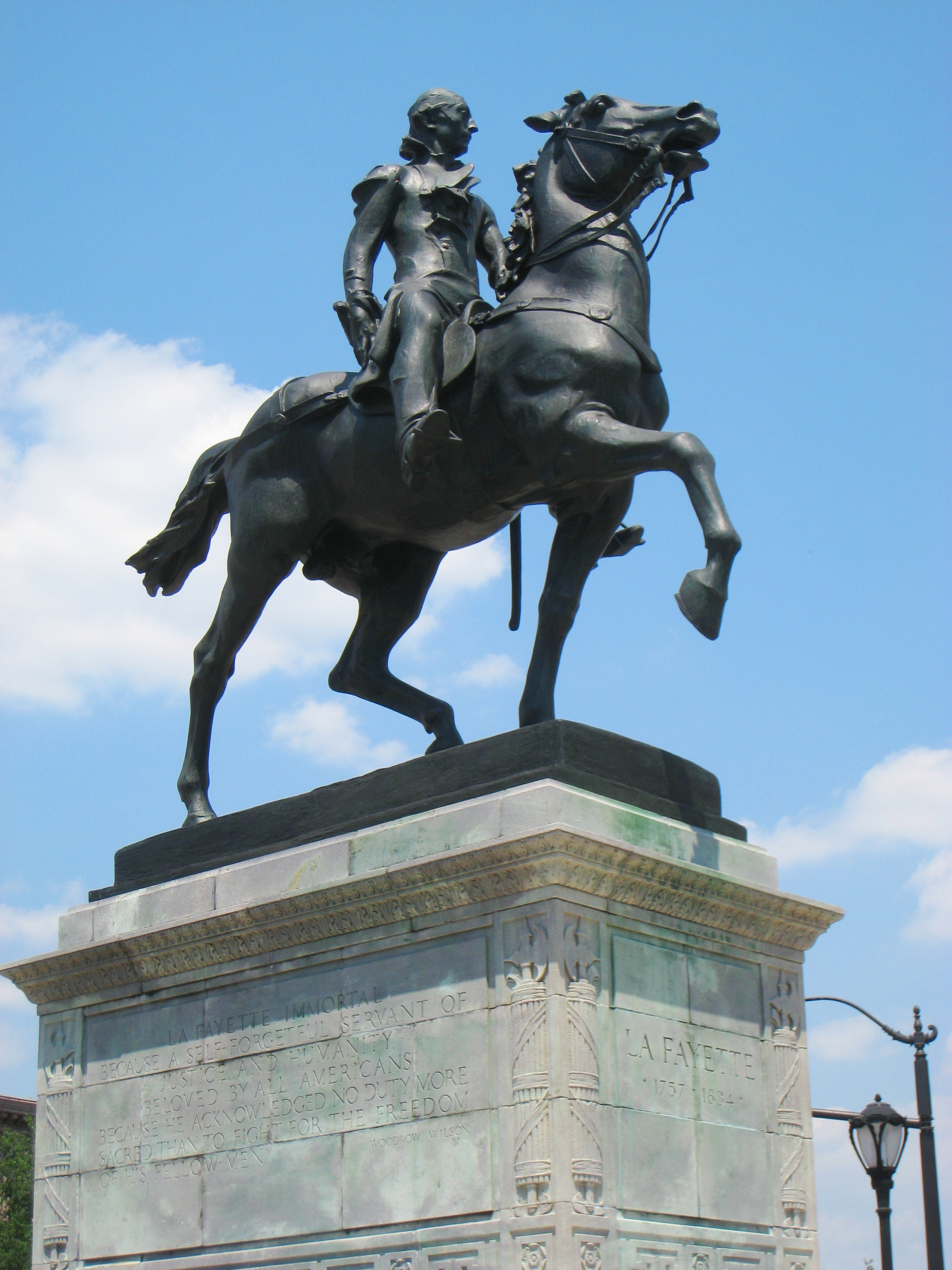
Tomorrow, September 6, marks two important occasions: the birthday of and official farewell to Lafayette by President John Quincy Adams during the French patriot’s last visit to America in 1825. President Coolidge, a century later, upon dedicating the monument to Lafayette placed in Baltimore, Maryland, observed that “[h]is picture to me seems always to have the enthusiasm and freshness of youth, moved with the high-minded and patriotic purpose of maturity. He displayed the same ambition for faithful service, whether he was leading his soldiers in the last charge for American liberty at Yorktown or rebuking the mob at Paris for its proposal to make him king. His part in the French Revolution is well known. He served the cause of ordered liberty in America; he was unwilling to serve any other cause in France…He represents a noble and courageous dedication to the service of freedom. He never sought for personal aggrandizement, but under heavy temptation remained loyal to the great Cause. He possessed a character that will abide with us through the generations. He loved his fellowmen, and believed in the ultimate triumph of self-government.”

As Coolidge continued to reflect upon the freedoms Lafayette fought to preserve in a constitutional republic, he surveys the substance of liberties protected by that document. Coolidge recognized also the deliberate limits placed on the government so that the rights of even the smallest minority — the individual — cannot be deprived of those protections by an ambitious, irresponsible majority.

Coolidge then turns to foreign affairs, hitting upon the true basis for sound foreign policy: guarding independence in our decisions and our interests. Respect, Coolidge shows, comes as a result of that tenaciously guarded independence; not as a product of surrendering it. Being afraid to lead, refusing to use America’s moral power for good, is not the route to successful foreign policy, in other words.

President Coolidge, decried as too provincial for the global burdens of the office, understood the situation far better than the “smartest of the smart” think they do now, as he declared what American foreign policy had been for its first one hundred and fifty years, “We have always guarded it [i.e., independence] with the utmost jealousy. We have sought to strengthen it with the Monroe Doctrine. We have refrained from treaties of offensive and defensive alliance. We have kept clear from political entanglements with other countries. Under this wise and sound policy America has been a country on the whole dedicated to peace, through honorable and disinterested relations with the other peoples of the earth. We have always been desirous not to participate in controversies, but to compose them,” that is, to bring calm back to each situation.

The result? “What a success this has brought to us at home, and what a place of respect and moral power it has gained for us abroad…” No wonder serious statesmen and genuine patriots are astonished at the pathetic equivocations and reckless display of weakness from our current leadership regarding Syria and everywhere else in the world.

Coolidge points to solid ground for future American foreign policy, “To continue to be independent we must continue to be whole-hearted American. We must direct our policies and lay our course with the sole consideration of serving our own people. We cannot become the partisans of one nation, or the opponents of another. Our domestic affairs should be entirely free from foreign interference, whether such attempt be made by those who are without or within our own territory. America is a large country…It has room within its borders for many races and many creeds. But it has no room for those who would place the interests of some other nation above the interests of our own nation.”

“I want to see America set the example to the world both in our domestic and foreign relations of magnanimity. We cannot make over…people…We must help them as they are, if we are to help them at all, I believe that we should help, not at the sacrifice of our independence, not for the support of imperialism, but to restore…a peaceful civilization. In that course lies the best guarantee of freedom. In that course lies the greatest honor which we can bestow upon the memory of Lafayette.”

Image