On John Adams

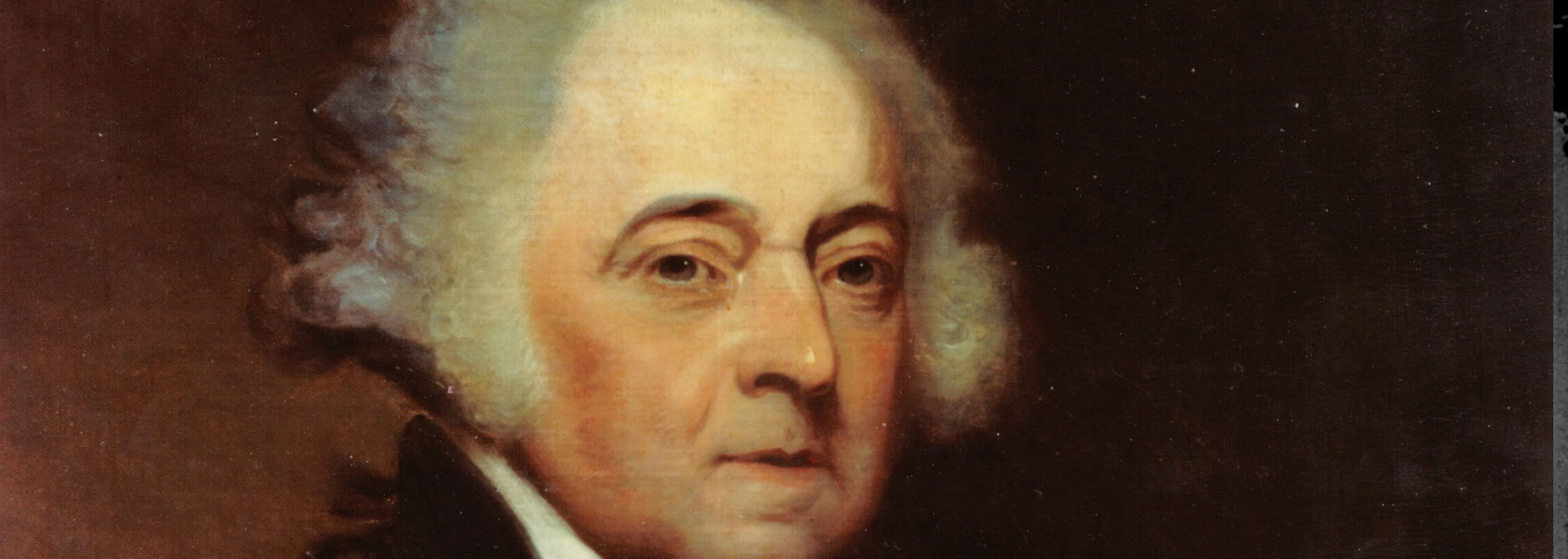
July is a pivotal month for America. It marks the culmination of many years’ labor to bring thirteen discordant colonies around one solemn purpose, united in the essentials of independence, self-government and liberty under law. It was on this day that the Continental Congress actually voted, without dissent, for independence, accepting the resolution proposed by Richard Henry Lee back on June 7. Two days later, the day we now observe to mark the occasion, those gathered approved the Declaration drafted by Jefferson and presented to the Congress by its principal author (Jefferson), alongside John Adams, Benjamin Franklin, Roger Sherman and Robert Livingston. At the center of this difficult task, at nearly every phase, was the tenacious John Adams of Massachusetts. It is perhaps not an overstatement to say that he truly was the driving force behind independence. Prodding, pushing, resolving, shouting above the din of opposition, John Adams deployed all of his energies and abilities to persuade his fellow colonists that nothing less than a complete and total independence is our future.

Free men and women, not only enjoying our God-given liberties, but exercising our moral obligations to keep them was the vision of Adams and those who stood in defiance of tyranny on this day, two hundred and thirty-seven years ago. It was a repudiation of permanent servitude to a distant authoritarian government, subsisting on what it deigns to allow us. It was an advance beyond the old, failed system of absolute monarchs who dictated the terms of life and death to subjects. It was also a summons to restore the rights and obligations of a people already free to stand on their own, free in their lives, property and persons…a freedom given, not by the approval of government, but by the Creator and Supreme Lawgiver.

It would be another son of Massachusetts, President Calvin Coolidge, who would offer a fitting tribute to this tireless and brave champion of ordered liberty. Delivered in Cambridge, July 3, 1925, to commemorate John Adams’ nomination of George Washington as commander of the Army, Coolidge said,

“I suppose if we were to pick any two men out of that gathering, to be set down as something other than politicians, Washington and sturdy old John Adams would be well toward the top of the polling. Though they approached the matter from utterly different angles, they were both led by the sagacity of great politicians to the same conclusion. To both, the crisis was essentially national. A nation must be created to deal with it…All this we look back upon as illumined statesmanship. But statesmanship is nothing more than good, sound politics, tested and proven. That is what it was when John Adams conceived the great strategy of calling a man of the South to the chief command. A more provincial man might have dreamed of Massachusetts, aided by the other colonies, taking and holding the lead and garnering the lion’s share of glory. But Adams was planning in terms of a nation, not of provinces…It was a stroke of political genius that Adams, soul of Puritanic idealism, should have moved the adoption of the army by Congress and the selection of Washington as commander in chief.

“…Let it ever be set down to the glory of Massachusetts that John Adams made George Washington Commander in Chief of the Continental Armies and John Marshall Chief Justice of the United States. Destiny could have done no more.”

It was Adams, at this critical juncture, who placed the righteous prospects of a United States before his own ambitions, the narrow passions of the moment or the instant gratification of anyone’s ambitions, and carried the day triumphant for the self-determination of every one of us down to modern time. The bold action taken by Adams exemplifies that our independence rests on character, the selfless sacrifice of his and every generation, to ensure that true freedom continues.
Image

On Citizen-Soldiers

As yesterday marked the 238th anniversary of the United States Army, it is worthy of remembering that it stands strongly today as a force of volunteers. They are citizens who stand in readiness to defend us and our liberties, uphold America’s sense of obligation to others, and fight for real peace. They, more than anyone else, yearn for lasting peace but they also know it requires the will to wage war on evil. The example is one of duty, not privilege; service, not benefits. This force of Americans demonstrates that liberty requires more than merely the enjoyment of one’s freedoms but the giving of self to retain and perpetuate the high estate of being American. Coolidge would explain our voluntary example of citizenship this way in a letter written in July 1924,

“Our country has always relied chiefly for its defence upon the readiness of its patriotic manhood to take up arms when necessity presented. After the great military effort of the United States in the World War, our army was demobilized more rapidly and completely than that of any other warring nation.” As Coolidge said earlier that same year, however, “The ways of our people are the ways of peace. They naturally seek ways to make peace more secure.”

He understood that our military exemplifies to the world a character diametrically opposite to world powers of the past. America’s volunteer army demonstrates that peace comes not through policies of conquest and occupation, such traits do not define the citizen-soldier. Peace is attained, not at any price, but by summoning both the will to sacrifice for it in battle and the discipline to live it when the fight is done. America’s citizen-soldiers, in striving for peace while willing to wage war, have demonstrated this “impossible” ideal to the world for almost two-hundred and forty years. For that they deserve our gratitude and enduring respect.

“America and the War,” 1920

“America and the War,” 1920

In this speech recorded for the campaign of 1920, Calvin Coolidge addresses the national transition that followed the conclusion of war the previous year and what makes a strong basis for peace. He reflects upon the high inheritance of American citizenship and our firm defense of liberty. He then calls us to remember that it is in the exercise of moral power, the selfless service we render to each other as fellow citizens, that constitutes progress.

The text of the message is as follows:

“Works which endure come from the soul of the people. The mighty in their pride walk alone to destruction. The humble walk hand in hand with providence to immortality. Their works survive.

“When the people of the colonies were defending their liberties against the might of kings, they chose their banner from the design set in the firmament through all eternity. The flags of great empires of that day have gone, but the stars and stripes remain. It pictures a vision of a people whose eyes are turned to the rising dawn. It represents of the hope of a father for his posterity. It was never flaunted for the glory of royalty, but to be born under it is to be the child of a king, and to establish a home under it is to be the founder of a royal house. Alone of all flags, it expresses the sovereignty of the people which endures when all else passes away. Speaking with their voice, it has the sanctity of revelations. He who lives under it and disloyal to it is a traitor to the human race everywhere. What could be saved if the flag of the American nation were to perish?

“America has many glories. The last one that she would wish to surrender is the glory of the men who have served her in war. While such devotion lives, the nation is secure. Whatever dangers may threaten from within or without, she can view them calmly. Turning to her veterans, she can say: ‘These are our defenders. They are invincible. In them is our safety.’ 

“After more than five years of the bitterest war in human experience, the last great stronghold of force surrendering to the demands of America and her allies agreed to cast aside the sword and live under the law. America decided that the path of the Mayflower should not be closed. She decided to sail the seas. She decided to sail not under an Edict of Potsdam, cramped in narrow lands, seeking safety in unarmed merchant men painted in fantastic hues as the badge of an infinite servitude; but she decided to sail under the ancient Declaration of Independence, choosing her own course, maintaining security by the guns of her ships of the LINE, flying at the mast the stars and stripes forever, the emblem of a militant liberty.

“With peace has come prosperity. Burdens have been great, but the strength to bear them has been greater. The condition of those who toil is higher, better, more secure than in all the ages past. Out of the darkness of a great conflict has appeared the vision of a nearer, clearer than ever before, the life on earth and less under the deadening restraint of course more and more under the vitalizing influence of reason. Moral power has been triumphing over physical power. Education will tend to bring reason and experience of the past into the solution of the problems of the future. We must look to service and not selfishness, for service is the foundation of progress. The greatest lesson that we have to learn is to seek ever the public welfare, to build up, to maintain our American heritage.”