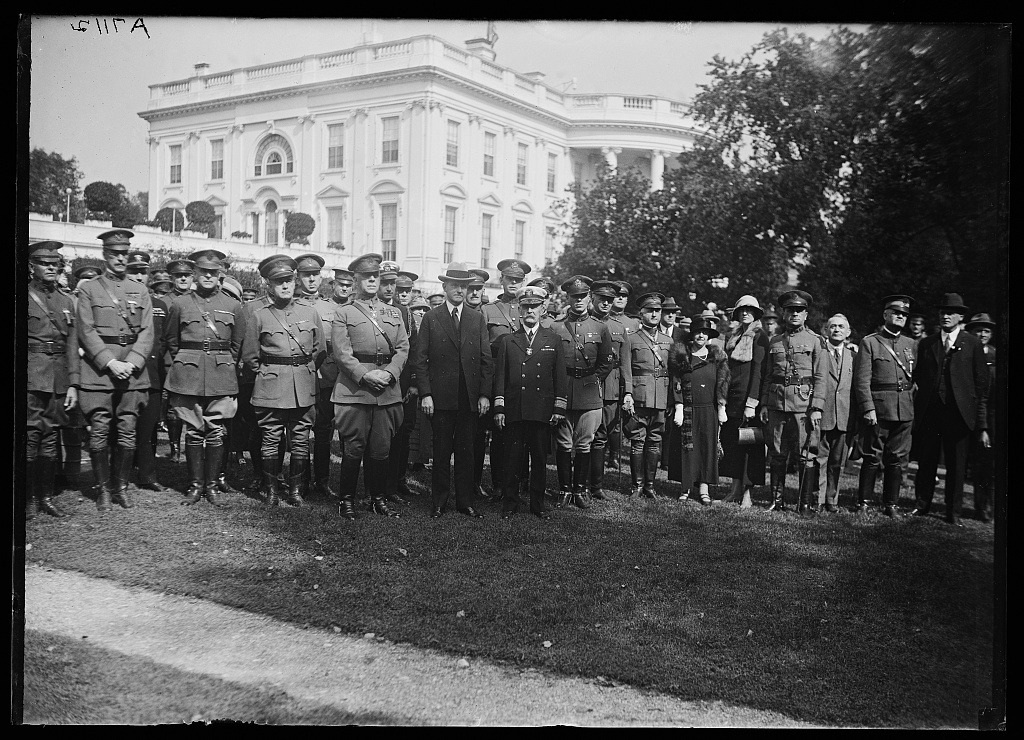
On National Defense

Image

The Reagan Doctrine, summarized as “Peace through Strength,” is rightly praised for its sensible protection of our interests and the conscientious pursuit of peace in our dealings with the world. However, it did not start with Reagan. Among the many debts the “Great Communicator” derives from his predecessors, his pursuit of peace through preparedness owes some credit to President Coolidge. While Coolidge certainly preceded the prospect of nuclear proliferation in our time, the struggle for world power was no less prevalent then. The principles remain unchanged because they stem from human nature.

In the first of his three-part series on “Promoting Peace” published after leaving the White House, Calvin Coolidge outlines the immense task of preventing war through adequate defense. Coolidge certainly understood the complexity of the problem and this enabled him to distill it down to its essence: a question of human nature. He writes,

When the test comes the people will give up almost any other human right to secure safety and protection. Whenever anarchy imperils a state a military dictator always appears, because they prefer him to the lawlessness of the mob…In protecting its citizens abroad as well as at home the government, in reality, is only protecting itself. To refuse and neglect to do this is nothing short of national suicide.

     This principle is so well understood and so long established that nations accord to a foreign country, whenever the rights of its citizens are threatened or violated, the privilege of sending its naval and marine forces to protect them without considering such intervention an act of war.

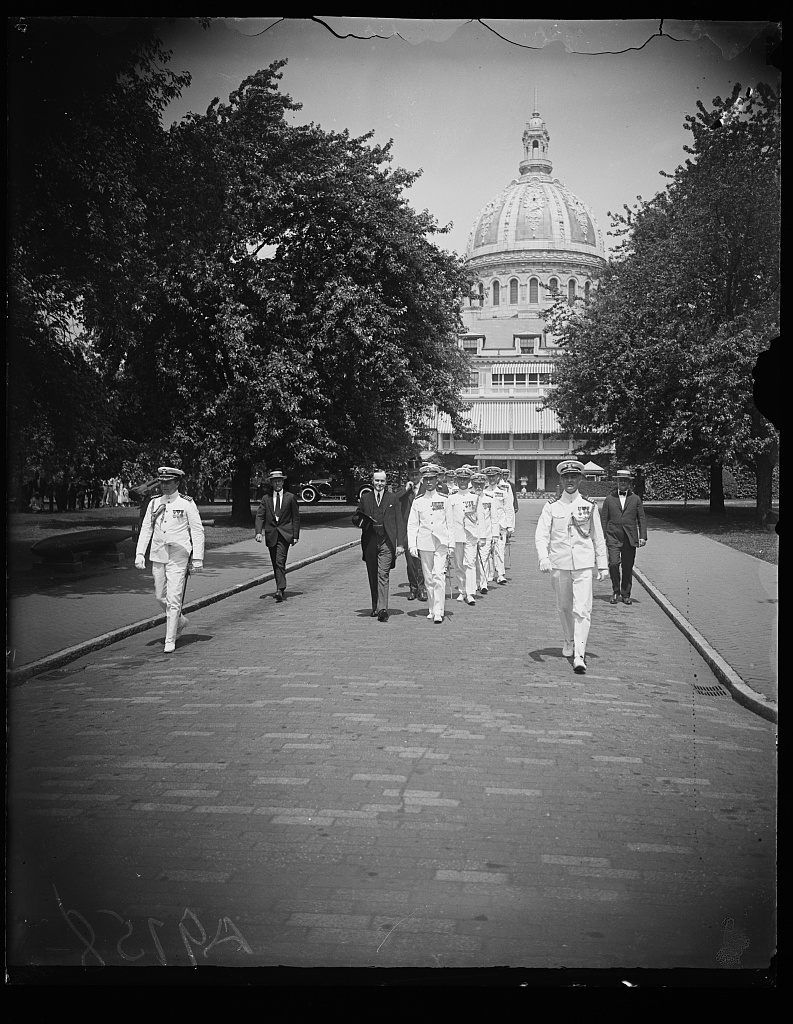
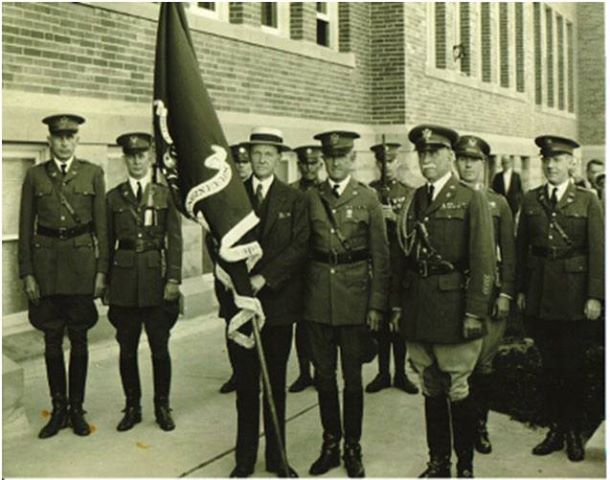
     One of the methods by which each government undertakes to preserve order so that it may protect its people from domestic violence and foreign hostilities is known as preparation for national defense. The great object that it all seeks to accomplish is peace…We do not have these [police, Army and Navy] for the purpose of making war, but for the purpose of preserving peace. The ability to protect the people within its borders and to insure to them the security which can only come from the orderly administration of law is so much and so peculiarly the first requisite of every government that under international usage civilized nations do not recognize a government which can not or does not meet these obligations. 45060v CC at Naval Academy 1925
As the inordinate power of the current regime grows, it becomes ever more apparent how far removed it is from this essential purpose of lawful order and national defense.

While Coolidge ensured the ratification of Kellogg’s Pact against war, he understood good government protects its citizens from lawless violence. At the same time, he knew that no measure could ever eradicate conflict completely. What he worked to maintain was an adequate force to meet evil, understanding that the unjust and violent are enabled when national defense is neglected. The former President continues,

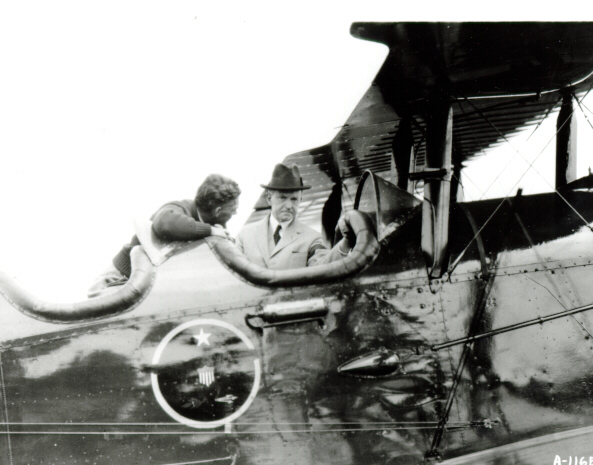
No sure way has ever been found to prevent war. We all realize that it is one of the most hideous afflictions to which mankind is subject. Opinions may differ as to whether nations with adequate military forces are more likely to enjoy peace than those which neglect their defenses. In the last analysis, this is a question of dealing with human nature. Every one knows that if there were no police our cities would be ransacked within twenty-four hours. I very strongly suspect that if there were but one nation in the world supplied with an army and a navy, and, to make the supposition as strong as possible, if that nation were our own, it would not be long before the other nations had been overrun. It seems to me that it is almost a moral certainty that we should find some excuse for taking that action. But when we know that other countries have a considerable ability to defend themselves, it is human nature for us to regard them with a more wholesome respect and be more careful about violating their rights. If we reverse this picture we can likewise conclude that if others know we are prepared to defend ourselves they will be less likely to commit offenses against us. coolidge bolling field 9-9-24
We perform no favors by taking up the burden of each nation’s duty to self-defense. The lessons of the Great War taught him that. Europe would again defer to America for its rescue in World War II and, it seems, in every conflict since. Coolidge saw danger in the policy of making the world “safe for democracy.” Likewise, we only enable our rights to be ransacked and our lives taken if we indulge our enemies through a lack of preparedness. An absence of resolve and an absolute refusal to use force only encourage injustice to continue with impunity against our citizens and their rights. What constitutes an adequate defense, then?

The President answers,

They should be large enough so that others would see there would be a great deal of peril involved in attacking us. They should not be so large that our country would feel we would undergo no peril in attacking others…I have ventured the opinion that war would have broken out in Europe much earlier than 1914 if those countries had not been prepared to resist attack. I also believe that some of them were overprepared…Adequate defense does not require a return to the conditions which then existed, but rather requires their avoidance.

The question of defense, like a coin, has another side. Military might has natural limitations. It can grow too large and thereby undermine its goal to preserve peace. Defenses, however lethal or expansive, will never permanently override human nature’s “determination to be free.” What about individuals who have ideological, instead of national, loyalties? What of those who freely embrace death for their radical dream, like islamofascists?

Coolidge summarizes,

That the wrongdoer, whether it be the individual or the nation, can be checked by force is apparent, but no force will be found adequate for an extended period to impose upon any considerable body of people a system which is recognized by the general standards of humanity as injustice and servitude. Such an attempt would create a revolt in which it would be found that the victims would rather die than yield. While an army and navy can be very useful to protect a nation from wrongful attack and unjust aggression, they cannot afford an absolute guarantee against war. Preparation for defense seems to me to be necessary in the world as we find it at the present time, and is useful, but it is well to recognize that there are limits beyond which it does not and cannot go in preserving peace…

Both sides of our obligation need equal care. This means understanding clearly that the use of national defense is not the evil here. Lawless and abusive destroyers of our citizen’s lives and liberties are the evil here, as Coolidge concludes,

…[W]e should take every precaution to prevent war, of which adequate defense is one. But we should also take every precaution to protect ourselves to the fullest possible extent from its ravages, if it does come. The Army and Navy serve the double purpose of prevention and defense. The individual and the race have not progressed beyond the point where they need the teaching and effect of discipline. We require not only the existence, but the outward manifestation, of authority.

Without the policeman impartially enforcing the law, and the members of our military and National Guard prepared to do their duty, peace is impossible. Without a national defense ready to use strength to confront the individual or nation who takes American lives, exacting life for life, the murderous and lawless continue emboldened. Reagan and Coolidge both understood that the problem was embedded in human nature. The bully, the criminal, and the despot best understand the language of force. Reason and law mean little to them without physical demonstration. It is by exercising our duties of adequate national defense that law and peace are reestablished, evil men and women are deterred and a balance of righteous force restored.
Image

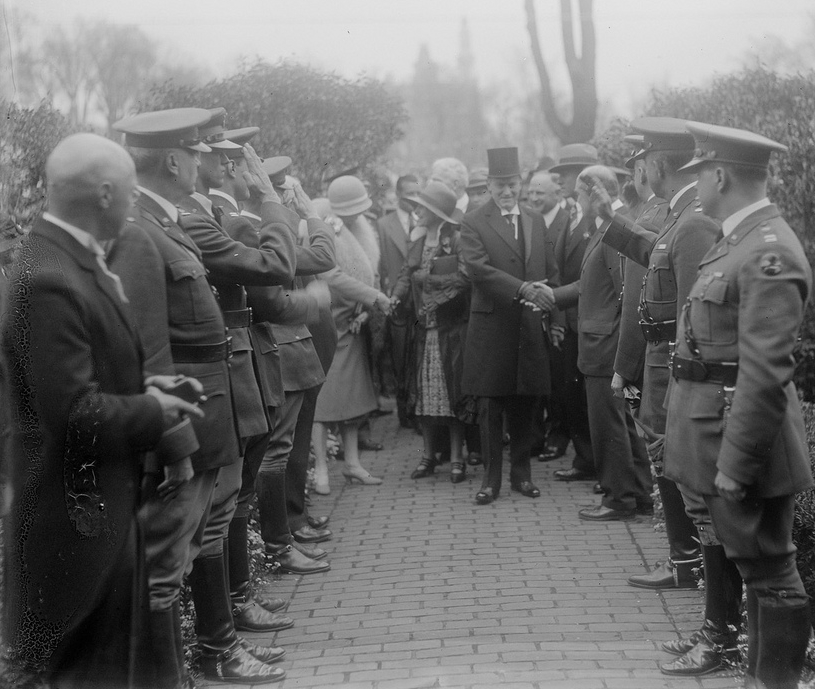
998243_10151699964766321_1262093981_n SD National Guard

On those Roaring Twenties

Image

Historian Paul Johnson


It is fitting that those who helped drive the Reagan Revolution forward humbly credit their inspiration to the shy, quiet man from Vermont, Calvin Coolidge. In a very real way he bequeathed the essential recipe for the successes of the 1980s. While the ingredients were not precisely followed in every respect, especially concerning the payment of debt, the principles contained such power that even Congressional spending could not slow it down.

President Reagan’s combination of political saavy, biting wit, unassuming competence and ability to cut through the complex and see the simple essence of an issue derived not merely from his life’s experiences, they found inspiration from his study of Coolidge. Reagan, after all, like several of the men and women who comprised his team of “revolutionaries,” first came to understand the world during the Coolidge Era and in the years shortly thereafter. The lessons “Silent Cal” taught in both word and action left abiding impressions on future Secretaries of the Treasury (Donald T. Regan) and Defense (Caspar Weinberger) and future Attorney General Edwin Meese III, along with many others.

Two scholars, in particular, were returning to Coolidge’s record in order to reassess his very real achievements. In 1982, Thomas B. Silver, in Coolidge and the Historians, would lead this effort and unearth most of the shoddy and partisan reporting against the thirtieth president and the 1920s. In 1984, Paul Johnson, in the sixth chapter of his Modern Times: The World from the Twenties to the Nineties, would roll back the shroud thrown over not only the genuine triumphs of the Roaring Twenties but also the legacy of Mr. Coolidge. As Mr. Johnson would reflect on this reserved and disciplined leader, he would not only find him to be “the most internally consistent and single-minded of modern American presidents” but he, like all of history’s great men, was not an intellectual. To Mr. Johnson, that is a very good thing because “[a]n intellectual is somebody who thinks ideas are more important than people.” Wilson and Hoover approached the world this way while Coolidge, and Reagan, did not. To Coolidge and Reagan, people were the preeminent focus of their policies. The “smartest ones in the room” miss that all-too-obvious truth. People were genuinely benefited by Coolidge’s leadership.

Johnson could accurately survey the Twenties not as an aberration of gross materialism or empty gains but as an unprecedented prosperity that was both “very widespread and very solid” (p.223). “It was,” Johnson corrects, a prosperity “more widely distributed than had been possible in any community of this size before, and it involved the acquisition, by tens of millions, of the elements of economic security which had hitherto been denied them throughout the whole of history. The growth was spectacular.”

As a direct result of Coolidge prosperity, national income jumped from $59.4 to $87.2 billion in eight years, with real per capita income climbing from $522 to $716. Millions of workers purchased insurance for the first time, a phenomenon of a healthy economy Obama is deliberately ignoring. Savings quadrupled during the decade. Ownership in fifty stocks or more reveals the vast majority were not “the rich,” but housekeepers, clerks, factory workers, merchants, electricians, mechanics and foremen. Union membership plummeted from just over 4 million at the outset of the 1920s to 2.5 million by 1932. As small and large businesses succeeded, people were able to provide holidays with pay, insurance coverage and pensions as well as other benefits, giving substance to Coolidge’s dictum that “large profits mean large payrolls” thereby making “collective action superfluous,” as Johnson observes (p.225). Home ownership skyrocketed to 11 million families by 1924.

Perhaps the most obvious index of prosperity could be seen in automobile ownership. What began as a novelty for just over 1 million Americans in 1914 (with less than 570,000 produced annually) exploded into 26 million owners with over 5.6 million autos produced annually by 1929. Air travel was fast becoming the normal mode for “regular” folks and classes were rapidly dissolving from upward mobility. In 1920 a meager $10 million was spent on radios. By 1929 that figure had surpassed $411 million, which was itself small compared to the $2.4 billion spent on electronic devices as a whole in the Twenties.

These years were not, as some would claim later, removed from an appreciation of the past. The expansion of education is “[p]erhaps the most important single development of the age” (Johnson 225). Spending on education increased four times what it was in 1910, from $426 million to $2.3 billion. But unlike today’s habit of throwing money at the problem, it brought results. Illiteracy actually went down over fifty-percent. A “persistent devotion to the classics,” with David Copperfield at the head of the list, defined the decade. Culture was reaching the homes of those who had once been the least connected Americans through reading clubs, youth orchestras and “historical conservation” movements that would restore sites like Colonial Williamsburg.

“The truth is the Twenties was the most fortunate decade in American history, even more fortunate than the equally prosperous 1950s decade, because in the Twenties the national cohesion brought about by relative affluence, the sudden cultural density and the expressive originality of ‘Americanism’ were new and exciting” (p.226).

The problem, as Mr. Johnson concludes, with the expansion of the Twenties was not that it was “philistine or socially immoral. The trouble was that it was transient. Had it endured, carrying with it in its train the less robust but still (at that time) striving economies of Europe, a global political transformation must have followed which would have rolled back the new forces of totalitarian compulsion, with their ruinous belief in social engineering, and gradually replaced them with a relationship between government and enterprise closer to that which Coolidge outlined…” More of the same policies would have prevented much of what followed in the 1930s and beyond. “[M]odern times would have” indeed “been vastly different and immeasurably happier.” The purpose served by Coolidge “minding his own business,” as he put March 1, 1929, was perhaps more a forecast of his successors than an introspection. If only Hoover had been listening more carefully. The downturn in 1929 would certainly have more closely resembled the depression of 1921 and, with the Harding-Coolidge recipe of “masterful inactivity,” have spared millions of lives the terrible suffering and avoidable loss brought on by Hoover’s spending and Roosevelt’s “New Deal.”

On John Adams

July is a pivotal month for America. It marks the culmination of many years’ labor to bring thirteen discordant colonies around one solemn purpose, united in the essentials of independence, self-government and liberty under law. It was on this day that the Continental Congress actually voted, without dissent, for independence, accepting the resolution proposed by Richard Henry Lee back on June 7. Two days later, the day we now observe to mark the occasion, those gathered approved the Declaration drafted by Jefferson and presented to the Congress by its principal author (Jefferson), alongside John Adams, Benjamin Franklin, Roger Sherman and Robert Livingston. At the center of this difficult task, at nearly every phase, was the tenacious John Adams of Massachusetts. It is perhaps not an overstatement to say that he truly was the driving force behind independence. Prodding, pushing, resolving, shouting above the din of opposition, John Adams deployed all of his energies and abilities to persuade his fellow colonists that nothing less than a complete and total independence is our future.

Free men and women, not only enjoying our God-given liberties, but exercising our moral obligations to keep them was the vision of Adams and those who stood in defiance of tyranny on this day, two hundred and thirty-seven years ago. It was a repudiation of permanent servitude to a distant authoritarian government, subsisting on what it deigns to allow us. It was an advance beyond the old, failed system of absolute monarchs who dictated the terms of life and death to subjects. It was also a summons to restore the rights and obligations of a people already free to stand on their own, free in their lives, property and persons…a freedom given, not by the approval of government, but by the Creator and Supreme Lawgiver.

It would be another son of Massachusetts, President Calvin Coolidge, who would offer a fitting tribute to this tireless and brave champion of ordered liberty. Delivered in Cambridge, July 3, 1925, to commemorate John Adams’ nomination of George Washington as commander of the Army, Coolidge said,

“I suppose if we were to pick any two men out of that gathering, to be set down as something other than politicians, Washington and sturdy old John Adams would be well toward the top of the polling. Though they approached the matter from utterly different angles, they were both led by the sagacity of great politicians to the same conclusion. To both, the crisis was essentially national. A nation must be created to deal with it…All this we look back upon as illumined statesmanship. But statesmanship is nothing more than good, sound politics, tested and proven. That is what it was when John Adams conceived the great strategy of calling a man of the South to the chief command. A more provincial man might have dreamed of Massachusetts, aided by the other colonies, taking and holding the lead and garnering the lion’s share of glory. But Adams was planning in terms of a nation, not of provinces…It was a stroke of political genius that Adams, soul of Puritanic idealism, should have moved the adoption of the army by Congress and the selection of Washington as commander in chief.

“…Let it ever be set down to the glory of Massachusetts that John Adams made George Washington Commander in Chief of the Continental Armies and John Marshall Chief Justice of the United States. Destiny could have done no more.”

It was Adams, at this critical juncture, who placed the righteous prospects of a United States before his own ambitions, the narrow passions of the moment or the instant gratification of anyone’s ambitions, and carried the day triumphant for the self-determination of every one of us down to modern time. The bold action taken by Adams exemplifies that our independence rests on character, the selfless sacrifice of his and every generation, to ensure that true freedom continues.

Image