On Government Dependence and the Meaning of Freedom

cc_040823_11
“The individual, instead of working out his own salvation and securing his own freedom by establishing his own economic and moral independence by his own industry and his own self-mastery, tends to throw himself on some vague influence which he denominates society and to hold that in some way responsible for the sufficiency of his support and the morality of his actions. The local political units likewise look to the States, the States look to the Nation, and nations are beginning to look to some vague organization, some nebulous concourse of humanity, to pay their bills and tell them what to do. This is not local self-government. It is not American. It is not the method which has made this country what it is. We can not maintain the western standard of civilization on that theory. If it is supported at all, it will have to be supported on the principal of individual responsibility. If that principle be maintained, the result which I believe America wishes to see produced inevitably will follow.

“There is no other foundation on which freedom has ever found a permanent abiding place. We shall have to make our decision whether we wish to maintain our present institutions, or whether we wish to exchange them for something else. If we permit some one to come to support us, we cannot prevent some one coming to govern us. If we are too weak to take charge of our own mortality, we shall not be strong enough to take charge of our own liberty. If we can not govern ourselves, if we cannot observe the law, nothing remains but to have some one else govern us, to have the law enforced against us, and to step down from the honorable abiding place of freedom to the ignominious abode of servitude.

“…If there is to be a continuation of individual and local self-government and of State sovereignty, the individual and locality must govern themselves and the State must assert its sovereignty. Otherwise these rights and privileges will be confiscated under the all-compelling pressure of public necessity for a better maintenance of order and morality. The whole world has reached a stage in which, if we do not set ourselves right, we may be perfectly sure that an authority will be asserted by others for the purpose of setting us right” — President Calvin Coolidge, at Arlington National Cemetery, May 30, 1925.
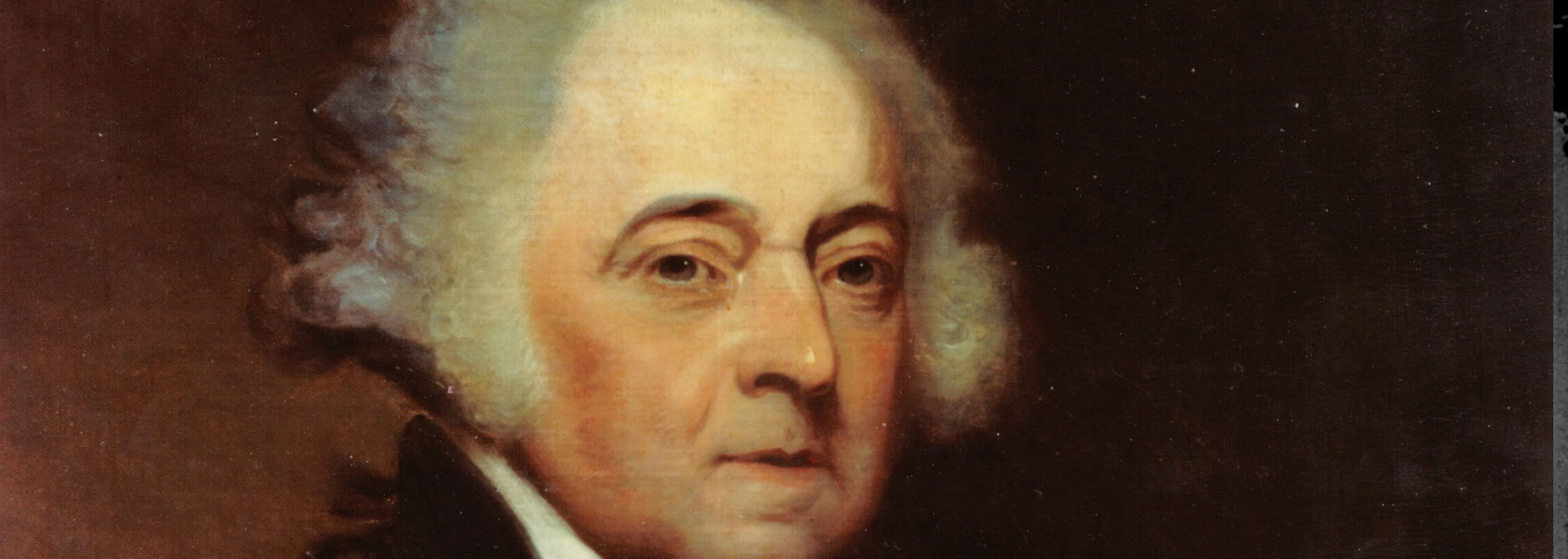
On John Adams

July is a pivotal month for America. It marks the culmination of many years’ labor to bring thirteen discordant colonies around one solemn purpose, united in the essentials of independence, self-government and liberty under law. It was on this day that the Continental Congress actually voted, without dissent, for independence, accepting the resolution proposed by Richard Henry Lee back on June 7. Two days later, the day we now observe to mark the occasion, those gathered approved the Declaration drafted by Jefferson and presented to the Congress by its principal author (Jefferson), alongside John Adams, Benjamin Franklin, Roger Sherman and Robert Livingston. At the center of this difficult task, at nearly every phase, was the tenacious John Adams of Massachusetts. It is perhaps not an overstatement to say that he truly was the driving force behind independence. Prodding, pushing, resolving, shouting above the din of opposition, John Adams deployed all of his energies and abilities to persuade his fellow colonists that nothing less than a complete and total independence is our future.

Free men and women, not only enjoying our God-given liberties, but exercising our moral obligations to keep them was the vision of Adams and those who stood in defiance of tyranny on this day, two hundred and thirty-seven years ago. It was a repudiation of permanent servitude to a distant authoritarian government, subsisting on what it deigns to allow us. It was an advance beyond the old, failed system of absolute monarchs who dictated the terms of life and death to subjects. It was also a summons to restore the rights and obligations of a people already free to stand on their own, free in their lives, property and persons…a freedom given, not by the approval of government, but by the Creator and Supreme Lawgiver.

It would be another son of Massachusetts, President Calvin Coolidge, who would offer a fitting tribute to this tireless and brave champion of ordered liberty. Delivered in Cambridge, July 3, 1925, to commemorate John Adams’ nomination of George Washington as commander of the Army, Coolidge said,

“I suppose if we were to pick any two men out of that gathering, to be set down as something other than politicians, Washington and sturdy old John Adams would be well toward the top of the polling. Though they approached the matter from utterly different angles, they were both led by the sagacity of great politicians to the same conclusion. To both, the crisis was essentially national. A nation must be created to deal with it…All this we look back upon as illumined statesmanship. But statesmanship is nothing more than good, sound politics, tested and proven. That is what it was when John Adams conceived the great strategy of calling a man of the South to the chief command. A more provincial man might have dreamed of Massachusetts, aided by the other colonies, taking and holding the lead and garnering the lion’s share of glory. But Adams was planning in terms of a nation, not of provinces…It was a stroke of political genius that Adams, soul of Puritanic idealism, should have moved the adoption of the army by Congress and the selection of Washington as commander in chief.

“…Let it ever be set down to the glory of Massachusetts that John Adams made George Washington Commander in Chief of the Continental Armies and John Marshall Chief Justice of the United States. Destiny could have done no more.”

It was Adams, at this critical juncture, who placed the righteous prospects of a United States before his own ambitions, the narrow passions of the moment or the instant gratification of anyone’s ambitions, and carried the day triumphant for the self-determination of every one of us down to modern time. The bold action taken by Adams exemplifies that our independence rests on character, the selfless sacrifice of his and every generation, to ensure that true freedom continues.

Image

On Equality

When Coolidge spoke of the “American ideal” being that of equality, he had something very distinctive in mind. He was not talking about a communal utopia with perfect conformity, no property ownership, no borders, no religious, political or economic disparities. He was not endorsing our current slavery to “political correctness,” where any sensible standards of behavior, speech or thought deemed “insensitive” or “offensive” to someone somewhere sometime must be repeatedly apologized for and repaid with deserved ostracism. He lived in reality. He was not self-deluded or so naive to feel an equality of outcome was both possible or desirable in the real world. We are all equal before our Creator, but to expect an equality of results, especially built on the shifting sands of our morally confused culture, is the height of self-deception.

Coolidge understood that equality is only possible with fixed standards of conduct, established by our traditions, our customs and our morality. Without being anchored in Christ’s standard: treating each person as we would expect to be treated in mutual respect with God-given value, we are powerless against every cultural wind pulling us here and there. We are experiencing that anchor-less existence now, groping for some kind of authority that will take the place of what we have discarded.

When Coolidge spoke of equality, he had something more essential that the superficial differences of appearance, gender, upbringing. It was an appeal to rise above the artificial and work to attain higher standards. “Not that all are equal in degree, — there are differing glories, as of sun, and moon and stars, — but all are equal in kind, tolerating no class distinction, no privilege, save that which comes from service; no plutocrat, no proletariat, no authority, save that which is derived from the consent of the people.”

The George Orwell description of socialism as “equality, with some more equal than others,” was repugnant to Coolidge not because we all deserved to share equally in stuff, or we all deserved to be equally miserable. Coolidge knew the victim mentality was destructive, always empowering a few to use authority in fostering dependence and eroding self-reliance. The American ideal was a society built on the merit of service, not the authoritarian enforcement of what the people must accept as normal, fair or for their own good. The basis for equality under law is not dispensed by government, it comes from the consent of the governed. Anything less will always fail.

Image

“The sovereignty of the people means the sovereignty not of a self-selected few. It means the supremacy of the matured convictions of all the people. Our franchise is not granted to class or caste. It is the acquired right of all Americans.”