On Great Examples

     “This Governor of Massachusetts, deep in public service, was by temperament a private man. In public reticent and unwilling to speak, he conversed constantly in closed meetings, in quiet conferences, and on the telephone….he never said more than he had to, and he said it once…His program was not one of sweeping changes, but one of small steps toward his goals: curtailed expenditures, reduced indebtedness, and increased legislative self-discipline…His administration was unspectacular and widely praised; he had not been expected, or elected to introduce grand reforms…He was the classic man-behind-the-scenes. Avoiding limelight and applause, he was a man who ‘knew,’ a collector of information, an acute observer who had many sources…With an easy private approach to individuals, he won their confidence; with sound perceptions, he gained their respect. His colleagues knew that he could keep a secret. He was honest, not extravagantly frank, and eminently sensible, with a deep knowledge of men and a wide grasp of affairs” (Carolyn W. Johnson’s book, pp.24, 29, 39).

One could read these descriptions and easily mistake them as a characterization of Calvin Coolidge. They were, instead, all about the man who had served as Governor while Coolidge rose in county politics, married Grace and found a living demonstration of the principled public service he would come to exemplify. The man was Winthrop Murray Crane. Nineteen years Coolidge’s senior, Crane had begun in business, working up through his family mills to secure the contract for printing paper currency for the nation.

He would establish a solid record as Governor, earn appointment to the Senate to complete the term of the late incumbent and serve eight years in Washington, returning again to a quiet service in his home state in 1913. It would conveniently coincide with Coolidge’s election as President of the State Senate, giving the younger Coolidge the benefit of Crane’s political wisdom and approach to leadership.

When older men fail to exert the influence for good and young men take the advantage of experience for granted, society suffers for it. When young men instead seek out their peers or surround themselves with equally short-sighted “mentors,” devoid of character, rights and responsibilities are both at risk. Like the naive young Rehoboam in 1 Kings 12, who divided the kingdom because of his pride, we are living in times that need wise men and women.

In offering his thoughts on so valuable a friend, worthy example and faithful public servant, President Coolidge, writing five years after the great man’s passing, introduced a biography of him entitled, “W. Murray Crane: A Man and Brother,” with these words: “More people trusted him than any one else of who I can think, because of his broad human sympathy. He seemed to have a fellow feeling for every one to such an extent that he could make their wants and desires his own. He had a broader comprehension of American life, reaching from the humblest fireside through all the various activities of the business and political world, than any other man of his time. Of course many others excelled him in special directions and in details, but in the broad grasp of the whole he had no superior. He was a product of that intensive effort that has long characterized the men of prominence in his region, one of the best examples of American life on both its material and spiritual sides. The world is distinctly better because he lived in it.”

Though rising to the Presidency some day may not be in our future, we can resolve to exercise  integrity and genuinely demonstrate for the young what trustworthy service and sound judgment are supposed to be. Who knows what powerful examples for good we can leave? It may be that we are the next Mr. Crane to a future Calvin Coolidge.

                                                           Image

                         Image

                    Included in “Calvin Coolidge: The Man From Vermont” by Claude M. Fuess
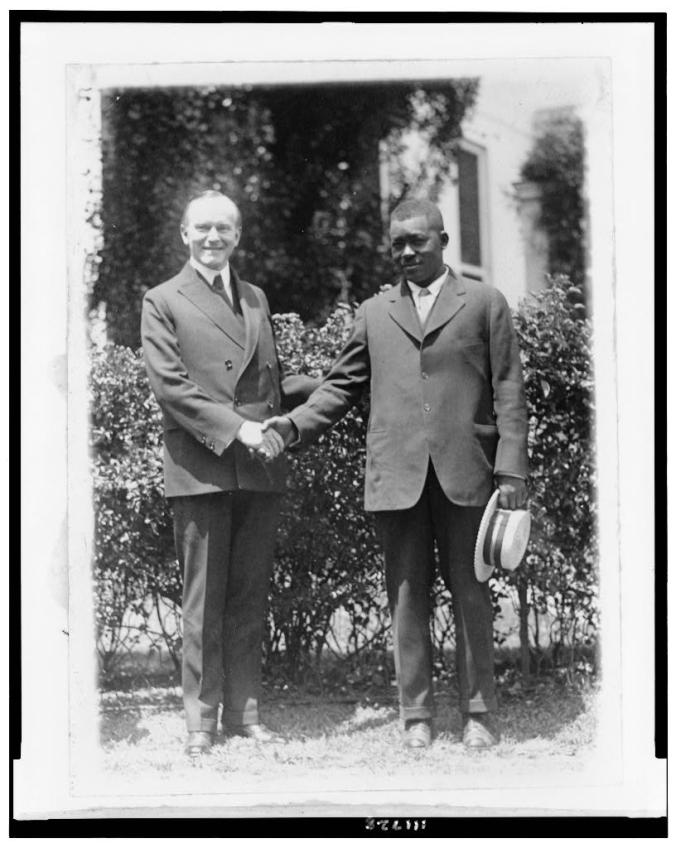
President Coolidge Recognizing Thomas Lee

President Coolidge recognizing Thomas Lee

Tom Lee, working for a levee repair contractor along the Mississippi, was returning from Helena, Arkansas to Memphis, Tennessee, on the afternoon of May 8, 1925. Alone and operating the company’s motorboat, he came to Cow Island Bend 16 miles south of the city when he saw the steamboat M. E. Norman. Passing it on the left, he happened to look back a half-mile upriver to see the vessel had begun listing and the wheel had stopped. The steamboat suddenly capsized but Mr. Lee had already turned around, heading back to the scene.

The Norman was a 114 foot boat, included a crew of 10 and was bringing several engineers and their families out to enjoy the River while they dined and surveyed project sites along the riverbanks. Listening to lectures, most of the engineers were below decks at the time and when the Norman capsized it disoriented everyone, trapping most below. Mr. Lee made five trips to shore, saving 32 people.

Twenty days later, he was honored at the White House by President Coolidge for his quick thinking and heroic rescue. The people of Memphis have placed a Memorial to him in their city, which reads, in part: “He has a finer monument than this–an invisible one – a monument of kindliness, generosity, courage and bigness of heart – his good deeds were scattered everywhere that day and into eternity.” Here, the President is publicly respecting the selfless service of a brave American. The political fallout for so public an endorsement mattered not to him.

On Humility

A quality well-known to those who knew him was Mr. Coolidge’s humility. He knew, as he wrote to his father, being “the most powerful man in the world,” meant high responsibilities not lofty privileges. It was not an opportunity to “live large,” clothing himself in the trappings of his glory. During his lifetime, he had seen certain men become President only to equate the majesty of the Office with the excellence of the person. He knew the dangers of arrogance. He was never fooled to think that it was proper, even for a President, to govern by the force of his personality. He had seen President Wilson try and disastrously fail on that score. Mr. Coolidge raised the dignity of the office during his time, that is for sure, but he distinguished between the greatness of the Presidency from the absence of greatness in him. He was simply chosen from the sovereign people to serve for a short time and then “be one of them again.”

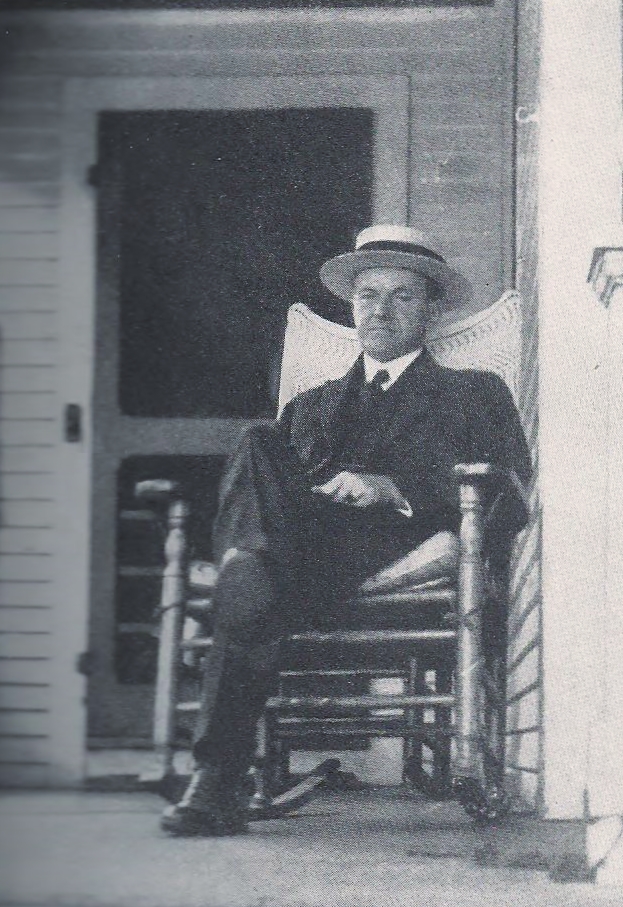
His desire to be a private citizen again was unfortunately never entirely restored. It cannot be easy to rediscover “normalcy” for anyone who has once been a President. But he earnestly tried. Prompted to speak in retirement, he accepted only under the most compelling pressure because he refused to accept it was his place to assume the mantle again as a kind of unofficial public authority or “Deputy President.” His humility was such that he could no longer do many of the things he loved to do, such as sit on his front porch. He disdained the ostentatious displays of attention showered on him because of the Presidency. He would tolerate it for the sake of the Office while he held it, but he refused to suffer it after the White House.

He disapproved of Presidential pensions and would not take a cent of public support. He would work for himself. It was writing that primarily occupied his time and even that weighed on his mind with the obligations of producing a product worth publishing, meeting deadlines, and not taking advantage of the credentials he could have claimed to accept more than a piece was worth.

His long-time law partner, Mr. Hemenway, recalled three occasions of Mr. Coolidge’s many expressions of simple unaffectedness, the first one in the midst of being President, that underscored his persistent humility. Mr. Hemenway, writing for Good Housekeeping in April 1935, recounts:

     “While he was President, I had a note in longhand from him one day, as follows:

                                                                                                Sept. 13, 1928

     ‘My Dear Mr. Hemenway:–

            ‘You have at Hampton safety deposit 2 Lib Bonds $50 each. See if any are due Sept 15

      current and if so have Tr. Co. collect them and credit my acct.

                                                                                          ‘Yours

                                                                                       ‘Calvin Coolidge’

     “That note shows his far-reaching recollection of detail. Here you witness the President of the United States, the problems of a nation on his desk, with an income of $75,000 a year and $25,000 more for traveling expenses and entertainment, plucking out of his innumerable mental pigeonholes the relatively insignificant matter of two $50 Liberty bonds on which the interest of $2.12 was due!

     “To show his kind-heartedness and his liberality I recall one occasion when I was in need of funds owing to the closing of a local bank. I was seated at my desk deeply buried in thoughts that were not particularly cheerful when he came through the connecting doorway from his office, walked over to me, and placed a slip of paper on my blotter. As he turned away and went back to his room, he said quietly,

     ‘And as much more as you want.’

     “It was a check for $5,000.”

The final memory shared by Mr. Hemenway humorously highlights the former President’s unchanged outlook after life in the White House.

     “The splendor and pomp of Washington and the Presidency never changed his early valuations of life. He was simple and unaffected to the last degree. He liked foot comfort. In the old days he would slip off his shoes and put both stockinged feet in his wastebasket where they wouldn’t be seen. Once, however, he was taken off his guard. A woman client came into his office while he feet were planted in the wastebasket. He got a good laugh out of it afterward–although he certainly did not enjoy the surprise at the moment.”

                         Image

“We draw our Presidents from the people. It is a wholesome thing for them to return to the people. I came from them. I wish to be one of them again…They have only the same title to nobility that belongs to all our citizens, which is the one based on achievement and character, so they need not assume superiority. It is becoming for them to engage in some dignified employment where they can be of service as others are” — Calvin Coolidge, The Autobiography, 1929, pp.242-3.