On Reuniting the States

On Reuniting the States

Return of the Confederate battle flags to Virginia, North Carolina and Texas on December 16, 1927. An earlier attempt by President Cleveland in 1887 met with successful opposition by the Grand Army of the Republic (Union veterans) as “trophies” of the War that should not be returned. It would be “treasonous” according to the large body of obstinate veterans.

President Theodore Roosevelt, through a careful coordination with Congress, restored a partial collection of battle flags to the Southern states in 1905, taking them from storage by the War Department in Washington.

Like so many old wounds, however, President Coolidge did not evade the controversy for fear that it would cost political support. Coolidge upheld just dealings toward all, whether it was the full citizenship for all tribes or fair honor due Southern Americans who fought just as valiantly as the Yankees did for principled reasons. It was overdue time to lay aside hostility, heal old grievances, and reestablish peace between Americans, North and South.

He recognized his duty included leadership by example to help reunite the country around the essentials we share as Americans. It would not be right to misuse a President’s influence by keeping us divided and at war with one another. He was as much an advocate of peace at home as he was abroad.

“Does cutting taxes really shrink government?”

“Does cutting taxes really shrink government?”

Three weeks before the passage of the Revenue Act of 1928, the President was analyzing the results of his administration’s formula: cut taxes, enforce constructive economy and retire debt with surplus. The President was not pleased, however. The reason was not in making the case for cuts and shrinking expenditures. The reason was not in retiring the national debt, which would be reduced $5.4 billion over the course of five and a half years, a feat not replicated since. Had the rate of reduction been constant, the debt would have been eliminated in just over fifteen years. The reason was in the incessant temptation by those around him to spend the “surplus revenue.”

The administration’s plan had worked beyond everyone’s expectations. It had worked so well that Congress was eager to start spending all that extra money. The President wanted it returned in cuts and put toward the debt. It was becoming increasingly clear that tax cuts were going to be tougher and tougher to sell as surpluses grew larger and larger. Ironically, thanks to Coolidge being “too successful,” spending would be even harder to restrain in the future than it was in the present.

The fiscal year would yield a surplus of $398,000,000, well beyond even the President’s initial figures. But as Coolidge lists all the projects Congress wanted, it not only made future tax reductions impossible but would have overturned them with increases to cover government profligacy: the flood bill, $500 million, the farm bill, $400 million, the Boulder Dam bill, $125 million, the pension bill, $15 million, the salary bill, $18 million, the Muscle Shoals bill, $75 million, the Post Office pay bill, $20 million, a reduction of post payments costing another $38 million, the corn borer, $7 million, and $6 million for “vocational training,” just to name a few. Meanwhile, the President observed, tax reduction between $203 and $289 million remained before Congress as he spoke. “If all these bills went through and became law I should think it would not only endanger tax reduction at the present time, but would make necessary the laying of additional taxes.” This was an impermissible step backward, not forward. As the President reminded reporters early the following month, “the surplus was secured, of course, by very careful management of expenditures…” not by spending it all away. 

The size of the surplus and the urge to spend it, however strong, did not make indulging the desire any more responsible with the people’s money than in lean years. Government, not unlike children, has to learn self-control. The existence of “more somewhere” does not free government to find it and spend it with impunity.

“We must have no carelessness in our dealings with public property or the expenditure of public money. Such a condition is characteristic either of an undeveloped people, or of a decadent civilization…We must have an administration which is marked, not by the inexperience of youth, or the futility of age, but by the character and ability of maturity. We have had the self-control to put into effect the Budget system, to live under it and in accordance with it. It is an accomplishment in the art of self-government of the very highest importance. It means that the American Government is not a spendthrift, and that it is not lacking in the force or disposition to organize and administer its finances in a scientific way. To maintain this condition puts us constantly on trial. It requires us to demonstrate whether we are weaklings, or whether we have strength of character” — President Coolidge, June 30, 1924.

Amity Shlaes’ thought-provoking piece recalls that even good policies can carry unintended side effects that have the potential to destroy the gains made. Tax cuts are but one part of the whole. President Coolidge knew this firsthand and if trends back toward expansive government are to be checked, it will demand from us, informed and engaged citizens, the same unwavering self-restraint and courage he demonstrated. The times also require statesmen, mature men and women, who take the whole task seriously of restoring limited government, not merely one element of tax policy. Tax cutting without the people’s determination for making government shrink can be cast aside when expediency calls it time to spend. Such was the bitter pill of the Reagan years. When what is easy is allowed to prevail over what is right, self-government suffers and liberty loses.

On Coolidge and the West

                                Image

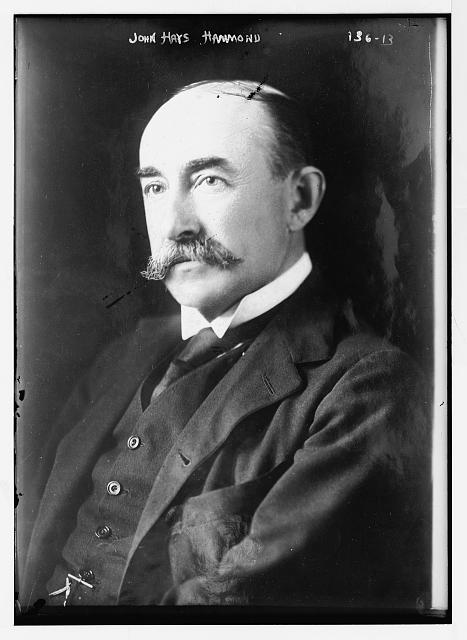
John Hays Hammond Sr. served as Chairman of the Coal Commission, as a coal strike threatened to be the first real domestic test of President Harding’s successor, Calvin Coolidge. Without coal, people were going to be hard-pressed to heat their homes and survive the cold winter. In what President Coolidge would call “our coup,” he collaborated with Commissioner Hammond to work out a way to resolve the conflict while shrewdly using the Governor of Pennsylvania, Gifford Pinchot (who was positioning himself as the heir of TR in order to take the GOP presidential nomination in the following year by championing his own progressive “handling” of the strike), as the implementer of their report. It worked only by removing imposed government solutions and turning to the folks directly concerned to make it succeed, all to the chagrin of Governor Pinchot.

Looking back on those days, Mr. Hammond offers this appraisal of President Coolidge and his impact on voters, especially those in the West. Most striking is that it runs contrary to the partisan and even vindictive appraisals of those who were denied special favor (like “Ike” Hoover, the usher) or had an agenda to implement (like “Art” Schlesinger). Hammond writes,

     “It was most fortunate for the country that a man of Calvin Coolidge’s type succeeded to the presidency. He had an estimable record for probity and executive ability during both his Massachusetts governorship and the vice-presidency. Sitting in at Cabinet meetings during the Harding administration had given him special knowledge of national problems.

     “His slightly rigid personality manifested caution and sanity. His eccentricities were safe ones. There was no derision in the anecdotes that were told of him, and the laughter of the people at hundreds of Coolidgisms only served to increase their belief in him as a wise and forceful leader. After the miasma of suspicion created by the scandals of the Harding administration, the country soon showed implicit confidence in Coolidge…”

     Commissioner Hammond, a renowned mining engineer and native of California, assessed the affect of Coolidge on the West, “To me, as a Westerner who had grown to pride himself on his knowledge of the psychology of that part of the country, one of the most amazing things about Calvin Coolidge was that he came to supersede even Theodore Roosevelt in the popular affections of the West. Everything about Roosevelt had been the antithesis of Coolidge: his strenuous activities, his love of exciting adventures, his physical daring, his aggressiveness, and his ebullient manner. It has always seemed phenomenal to me that Coolidge, without any effort on his part, could have won the West. It may perhaps be explained by the fact that West admired Roosevelt as an individual and Coolidge as a president.”

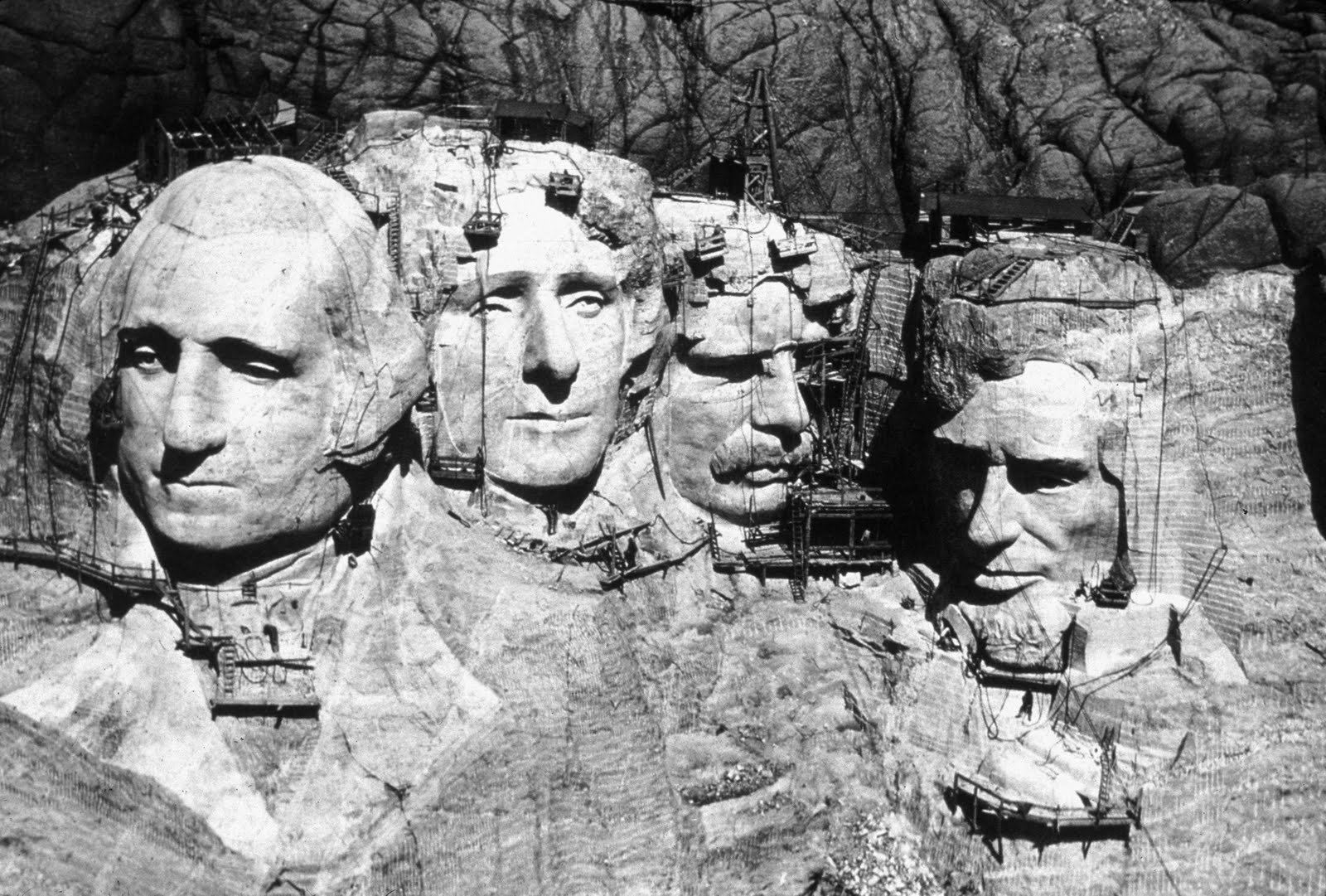
     It is noteworthy that the only life-size statue of the thirtieth president stands in downtown Rapid City, South Dakota. It seems that Gutzon Borglum’s second mistake (after misusing President Coolidge’s written contributions to the Rushmore project) was in placing the wrong president to Lincoln’s right.

                                           Image

                      Image